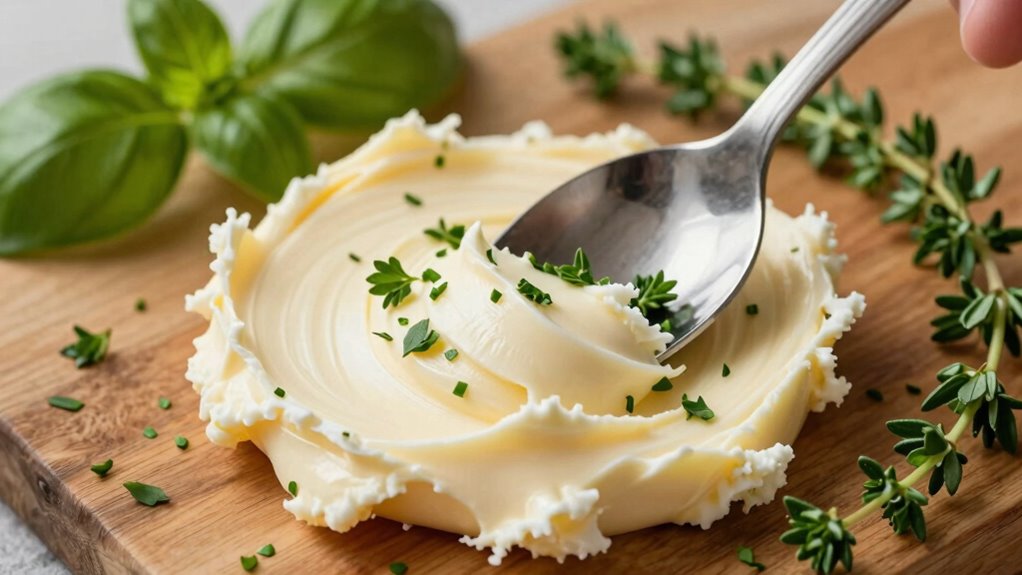

To mix herbs into butter evenly, start by softening the butter to a spreadable, not greasy, consistency, about 15-20 minutes at room temperature. Finely chop your herbs to avoid large chunks and incorporate them gradually with a fork or spatula, stirring constantly to guarantee even distribution. For a smoother blend, you can briefly pulse the herbs and butter in a food processor. If you continue, you’ll discover tips to perfect your herb butter every time.

Get kitchen staples and gadgets delivered free — and shop member deals
- Fast, free delivery on millions of items
- Access to Prime Big Deal Days deals on October 6–7
- Prime Video, Amazon Music and more included
Key Takeaways
- Finely chop herbs before mixing to ensure even distribution throughout the butter.
- Soften butter to a spreadable consistency by leaving it at room temperature for 15-20 minutes.
- Gradually incorporate herbs into the softened butter, stirring continuously with a fork or spatula.
- Use gentle mixing techniques to prevent smashing herbs and maintain even dispersal.
- Chill the herb butter for 30 minutes to allow flavors to meld and ensure uniformity.
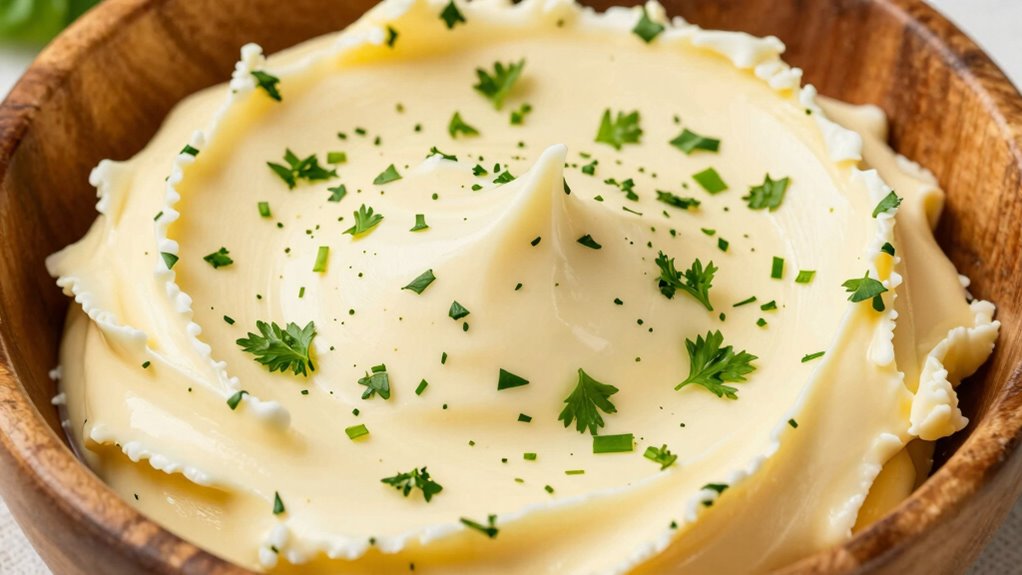
Ever wondered how to incorporate herbs into butter so they’re evenly distributed? It’s a common question, especially if you want a smooth, flavorful spread without uneven pockets of herbs. The key is understanding how butter consistency and proper herb storage play vital roles in achieving that perfect blend. To start, you need fresh herbs that are properly stored. Herb storage is essential because fresh herbs tend to lose their flavor and moisture quickly if not kept correctly. Wrap them in a damp paper towel, place them in a resealable plastic bag, or store them in an airtight container in the fridge—these methods keep herbs fresh and vibrant, making them easier to incorporate into butter. Proper herb preservation also helps maintain their essential oils and flavor compounds, which are crucial for a well-balanced herb butter. Additionally, the quality of herbs can significantly impact the final flavor, so choosing fresh, vibrant herbs is always recommended.
Proper herb storage keeps herbs fresh and vibrant, ensuring even distribution in butter.
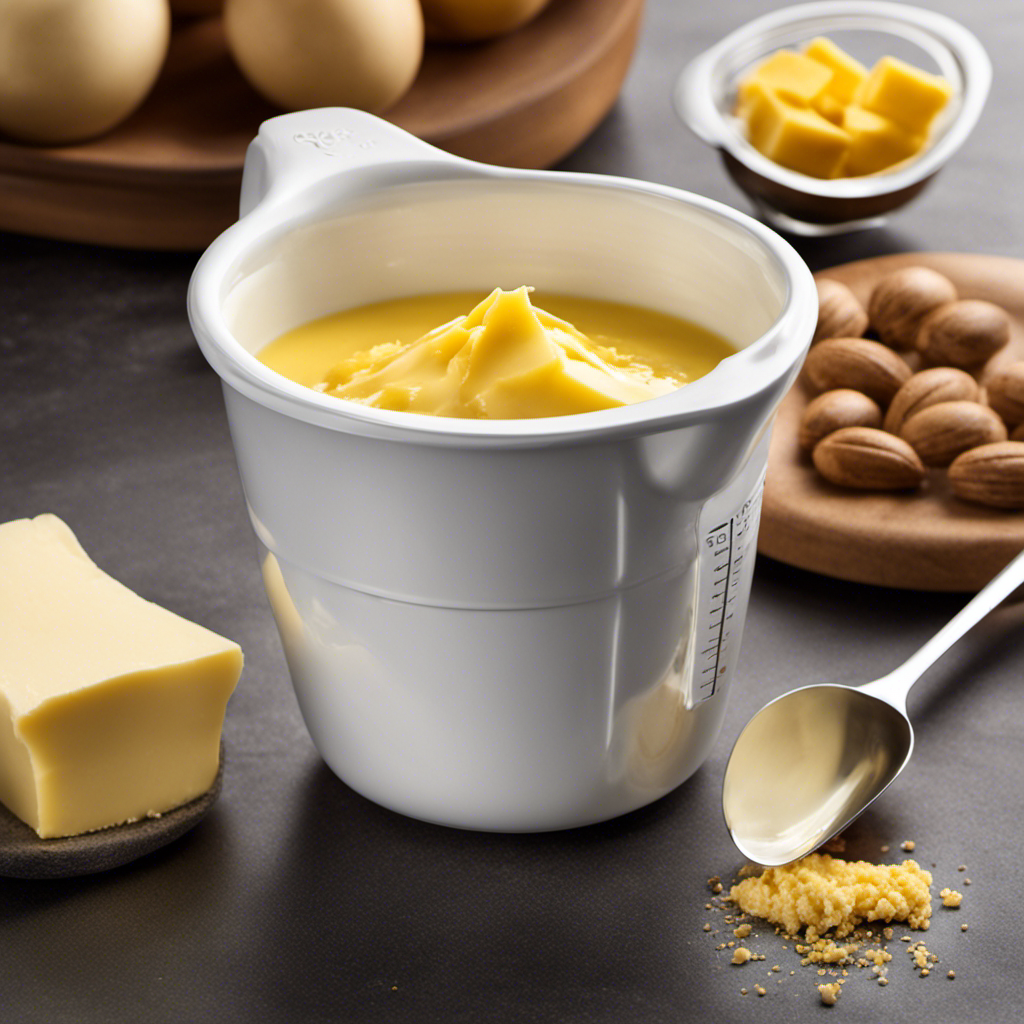
Next, consider the butter’s consistency. For even herb distribution, you want the butter to be soft but not melted. When butter is too cold, it’s difficult to mix thoroughly, resulting in uneven herb dispersion. On the other hand, if it’s too warm, it becomes greasy and loses its shape. To reach the ideal consistency, leave the butter out at room temperature for about 15-20 minutes. It should be soft enough to easily stir but still hold its shape. This soft, spreadable state allows the herbs to integrate seamlessly without clumping. Proper butter temperature ensures a smooth mixture and prevents the herbs from sticking together or clumping. Keeping the butter at the right temperature also helps in achieving a uniform mixture, which is essential for consistent flavor throughout.
Once your butter is at the right consistency and your herbs are fresh and well-stored, chop the herbs finely. Smaller pieces distribute more evenly throughout the butter, preventing large bits from sticking together or causing uneven flavor pockets. Mix the herbs into the softened butter gradually, stirring continuously. Using a fork or a spatula helps to evenly incorporate the herbs without smashing them down too much. If you want an extra smooth texture, you can even blend the herbs into the butter using a food processor for a few seconds, but be careful not to over-process, or you’ll turn your mixture into a herb-infused paste rather than a nicely spreadable butter.
To guarantee the herbs are evenly distributed, take your time during mixing. Once combined, transfer the herb butter to a container and refrigerate for about 30 minutes. Chilling helps the flavors meld and allows the herbs to settle evenly throughout the butter. When you’re ready to use it, you’ll find every slice or spread offers a consistent burst of herb flavor, thanks to your careful preparation. By paying attention to herb storage and maintaining the right butter consistency, you’ll master the art of evenly mixing herbs into butter every time.
As an affiliate, we earn on qualifying purchases.
Frequently Asked Questions
Can I Use Dried Herbs Instead of Fresh for Better Mixing?
Yes, you can use dried herbs instead of fresh for better mixing. Dried herbs are more concentrated, so use about one-third of the amount you’d use for fresh herbs. When mixing into butter, crushed dried herbs distribute more evenly and blend well. Just keep in mind that dried herbs can be more potent, so taste as you go to avoid overpowering the butter’s flavor.
How Long Should Herb-Infused Butter Be Stored?
Herb-infused butter should be stored in an airtight container in the refrigerator, and you can typically keep it for up to two weeks. For herb preservation, make sure to label the container with the date. If you want to store it longer, consider freezing it for up to three months. Proper storage duration helps maintain flavor and prevents spoilage, ensuring your butter stays fresh and flavorful for your culinary needs.
What’s the Best Type of Butter for Herbal Infusion?
You should use unsalted, high-fat butter like European-style or cultured butter for herbal infusions, as their rich fat content enhances herb potency and creates a smooth, creamy butter consistency. Some believe that the quality of butter directly influences infusion strength, but research suggests that higher fat butter more effectively absorbs herbal flavors and oils. So, opt for a premium, high-fat butter to maximize flavor and potency in your herbal butter.
Can I Freeze Mixed Herb Butter for Later Use?
Yes, you can freeze mixed herb butter for later use. Freezing helps with herb preservation and maintains flavor retention effectively. To do this, shape the butter into a log or small portions, wrap tightly in plastic wrap or place in an airtight container, and store in the freezer. When needed, just thaw it in the fridge. This method keeps your herb-infused butter fresh and flavorful for weeks.
Are There Any Herbs That Don’T Blend Well With Butter?
Some herbs, like basil and parsley, can struggle to blend well into butter because their delicate herb flavor and moisture content affect butter consistency. Basil’s high water content might make the butter too soft or cause separation, while parsley can add excess moisture. To keep a smooth, evenly flavored butter, it’s best to finely chop these herbs and incorporate them gradually, or consider drying them slightly beforehand.
Conclusion
Now that you know the best way to mix herbs into butter evenly, you can elevate your cooking effortlessly. Curiously, some chefs believe that gently warming the butter beforehand helps the herbs incorporate more uniformly, but recent studies suggest that simply softening the butter at room temperature works just as well without risking uneven mixing. So, trust your instincts, follow these tips, and enjoy perfectly flavored butter every time—no fancy tricks needed!
Halloween Picks
halloween
As an affiliate, we earn on qualifying purchases.