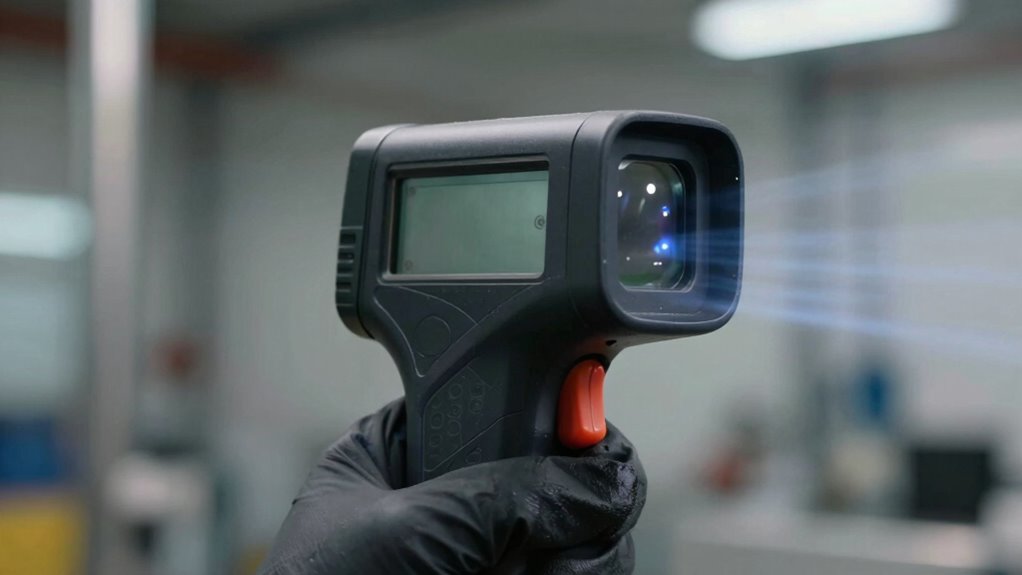

Infrared thermometers are useful for quick, contactless surface temperature checks, helping you reduce contamination risks. However, they aren’t accurate for all surfaces, especially shiny or reflective ones, because these emit less infrared radiation. Environmental factors like humidity, drafts, or direct sunlight can also distort readings, making them less reliable. Understanding these limitations can help you get better results. If you want to learn more about how to improve their accuracy, keep exploring.

Get kitchen staples and gadgets delivered free with Prime
- Fast, free delivery on millions of items
- Prime Video, Amazon Music and more included
- Member-only deals all year
Key Takeaways
- Infrared thermometers provide quick, contactless surface temperature readings but are less accurate on reflective or shiny surfaces.
- Environmental factors like ambient temperature, drafts, or direct sunlight can distort infrared temperature measurements.
- They measure surface temperature, which may not reflect internal or core body temperatures accurately.
- Surface emissivity differences affect infrared readings, requiring proper settings or techniques for accuracy.
- External conditions such as humidity and dust can impact the reliability of infrared thermometer measurements.
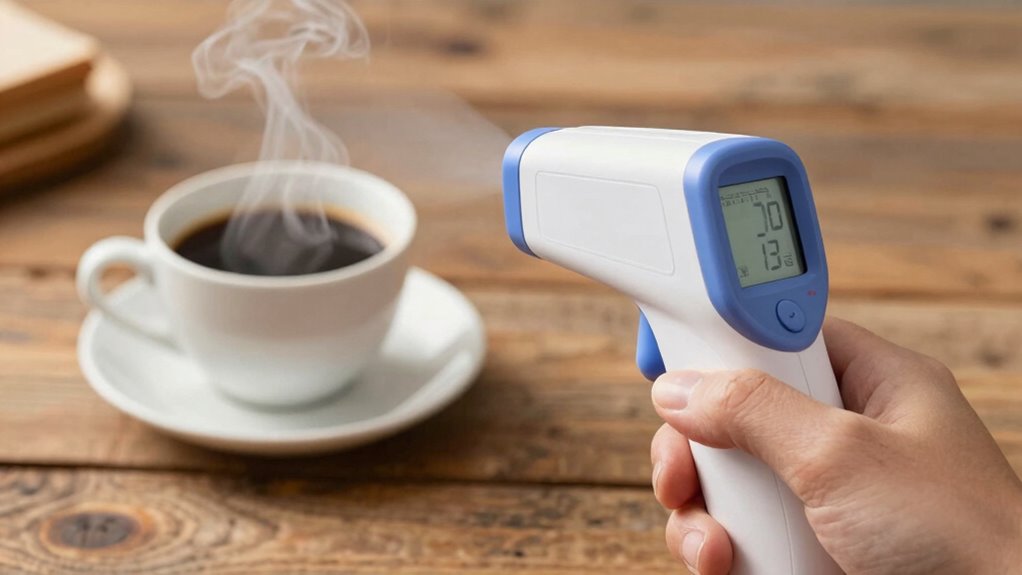
Infrared thermometers have become a popular tool for quick and contactless temperature readings, especially during health crises. They offer a convenient way to measure temperature without physical contact, reducing the risk of contamination. But while they’re useful in many situations, they aren’t perfect for every application. Understanding their limitations helps guarantee you use them correctly and interpret their readings accurately.
Infrared thermometers are quick, contactless tools with limitations—understanding these ensures accurate readings and safe usage.
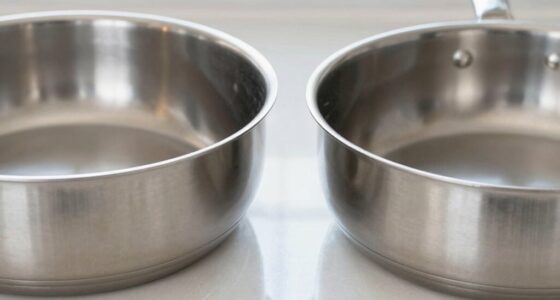
When you point an infrared thermometer at a surface, it measures the surface temperature by detecting the infrared radiation emitted. This process is quick and often reliable for many surfaces, but it’s vital to recognize that surface temperature isn’t always the same as core body temperature or internal temperature. For example, if you’re using it on a shiny or reflective surface, you might get a misleading reading because reflective surfaces can emit less infrared radiation, causing the thermometer to underestimate the temperature. In such cases, the reading won’t accurately reflect the true temperature of the object or surface underneath.
Ambient accuracy is another factor to take into account. The accuracy of infrared thermometers depends heavily on the surrounding environment. High ambient temperatures, drafts, or direct sunlight can affect the reading, making it less reliable. If you’re in a hot or cold room, or if there’s a breeze, the device may pick up the temperature of the air around it rather than the object’s surface. This can lead to inaccuracies, especially if you’re trying to monitor precise temperature changes or diagnose health conditions. To improve accuracy, it’s best to use the thermometer in a stable environment, away from direct sunlight or drafts. Additionally, understanding that surface emissivity varies between objects helps ensure more accurate readings, as some surfaces emit infrared radiation more efficiently than others. Being aware of emissivity differences can help you select the right settings or techniques for different surfaces. Also, knowing how temperature fluctuations impact readings can further improve measurement reliability. Recognizing that environmental factors such as humidity and dust can also influence the measurements is important for obtaining consistent results.
Products Worth Considering
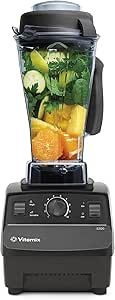
Vitamix 5200 Professional-Grade Blender, 64 oz. Container, Black

Vitamix Propel Series 750 Professional-Grade Blender, 4 Programs, Black

KitchenAid 28 oz Cold Brew Coffee Maker, KCM4212
As an affiliate, we earn on qualifying purchases.
Frequently Asked Questions
Can Infrared Thermometers Measure Internal Body Temperature Accurately?
You can’t rely on infrared thermometers for accurate internal body temperature measurement. They’re designed for surface readings, so their internal accuracy is limited. Infrared thermometers work best for quick, non-invasive checks of forehead or ear temperatures, but they have measurement limitations when it comes to internal body temperature. If you need precise internal readings, traditional oral or rectal thermometers are more reliable.
Are Infrared Thermometers Safe for Children and Infants?
Think of infrared thermometers as a gentle lighthouse guiding you through a storm—they’re safe for children and infants when used correctly. You can rely on them for quick readings, but remember their infrared limitations. Always guarantee proper technique to protect children’s safety. These devices are a helpful tool, but they don’t replace traditional methods for accuracy. Use them wisely, and you’ll navigate your child’s health with confidence and care.
How Often Should I Calibrate My Infrared Thermometer?
You should calibrate your infrared thermometer at least once a year to guarantee equipment accuracy. If you use it frequently or notice inconsistent readings, consider more frequent calibration, such as every few months. Regular calibration helps maintain measurement reliability, especially when precise temperature readings matter most. Always follow the manufacturer’s recommendations for calibration frequency, and check the device against a known temperature source to confirm accuracy.
Do Infrared Thermometers Work Well in Cold or Hot Environments?
Infrared thermometers can work well in hot or cold environments if you account for environmental interference and surface emissivity. Extreme temperatures might cause readings to be less accurate, especially if surfaces have low emissivity. To get reliable results, make sure you calibrate your device regularly, avoid reflective surfaces, and understand how environmental factors like wind or moisture impact measurements. Proper technique helps overcome environmental challenges and ensures accurate temperature readings.
Can Infrared Thermometers Detect Fever in Sweaty or Damp Skin?
Infrared thermometers struggle to detect fever accurately on sweaty or damp skin because sweat interference affects surface temperature readings. When skin is moist, the thermometer picks up the temperature of the sweat rather than your actual skin temperature, leading to inaccurate results. For reliable fever detection, it’s best to use a thermometer on a dry, clean forehead or ear, where surface temperature reflects core body temperature more accurately.
Conclusion
While infrared thermometers are handy for quick, non-contact temperature readings, they’re not foolproof. You might think they work perfectly every time, but factors like surface emissivity and environmental conditions can skew results. It’s worth questioning the assumption that they’re universally accurate. Use them wisely, but don’t rely solely on their readings—combine with other methods for the most reliable results. Sometimes, traditional thermometers still hold the key to true accuracy.