Adding butter to boiling liquids won’t reliably stop your pot from overflowing, as it only temporarily changes surface tension and doesn’t address the main cause. While the fats might slightly reduce foam or bubbling for a short while, they aren’t a foolproof solution. To better prevent spills, it’s more effective to lower the heat, stir occasionally, or use other proven techniques. If you want to discover more about safe and effective ways to control boiling over, keep exploring.

Get kitchen staples and gadgets delivered free with Prime
- Fast, free delivery on millions of items
- Prime Video, Amazon Music and more included
- Member-only deals all year
Key Takeaways
- Butter can temporarily reduce foam but doesn’t reliably prevent boiling over.
- It alters surface tension but doesn’t address the core cause of overflow.
- Proper techniques like lowering heat or using a wooden spoon are more effective.
- Using butter may cause spills or safety hazards if not monitored carefully.
- Relying solely on butter is ineffective; active supervision and proper methods are recommended.
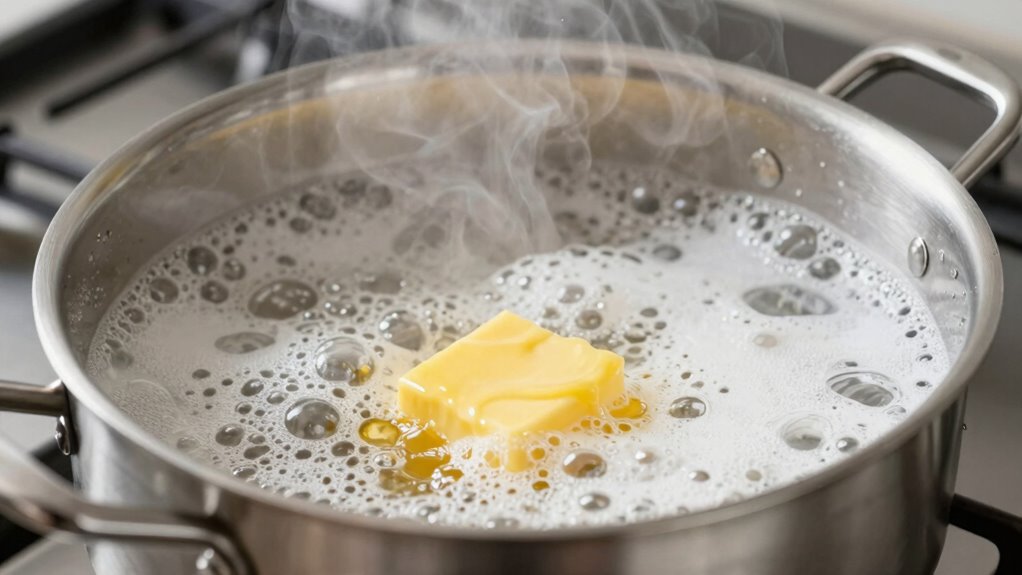
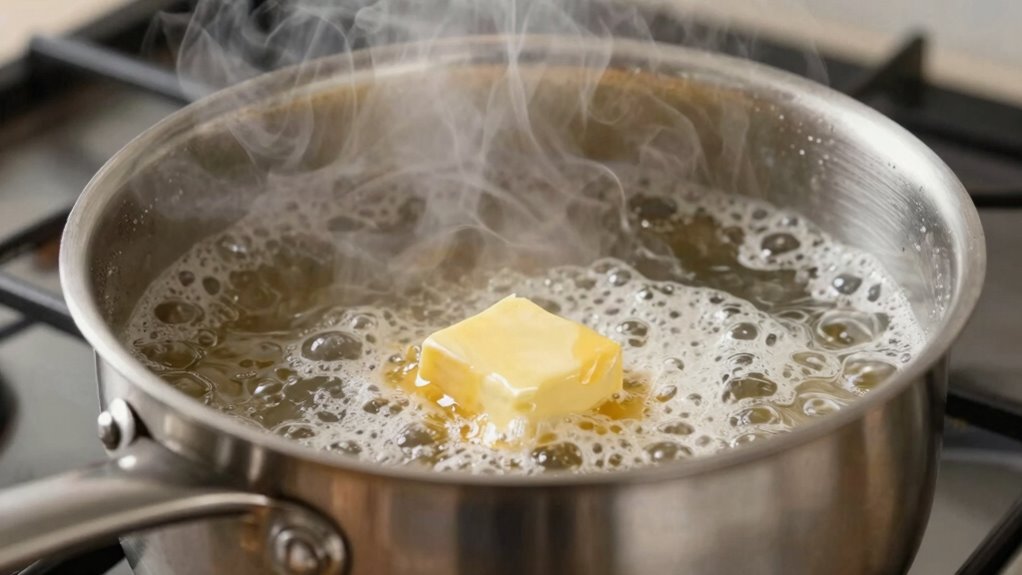
Ever wondered if adding butter to boiling water or liquids can prevent them from overflowing? It’s a common question, especially when you’re trying to avoid messy stovetops or potential kitchen accidents. While some folks swear by this trick, it’s important to understand the science behind it and how it fits into safe cooking techniques. Using butter in this way isn’t a guaranteed method, but it can sometimes help manage the rapid bubbling that causes pots to spill over.
Adding butter may help reduce foam, but safe techniques like lowering heat are more reliable.
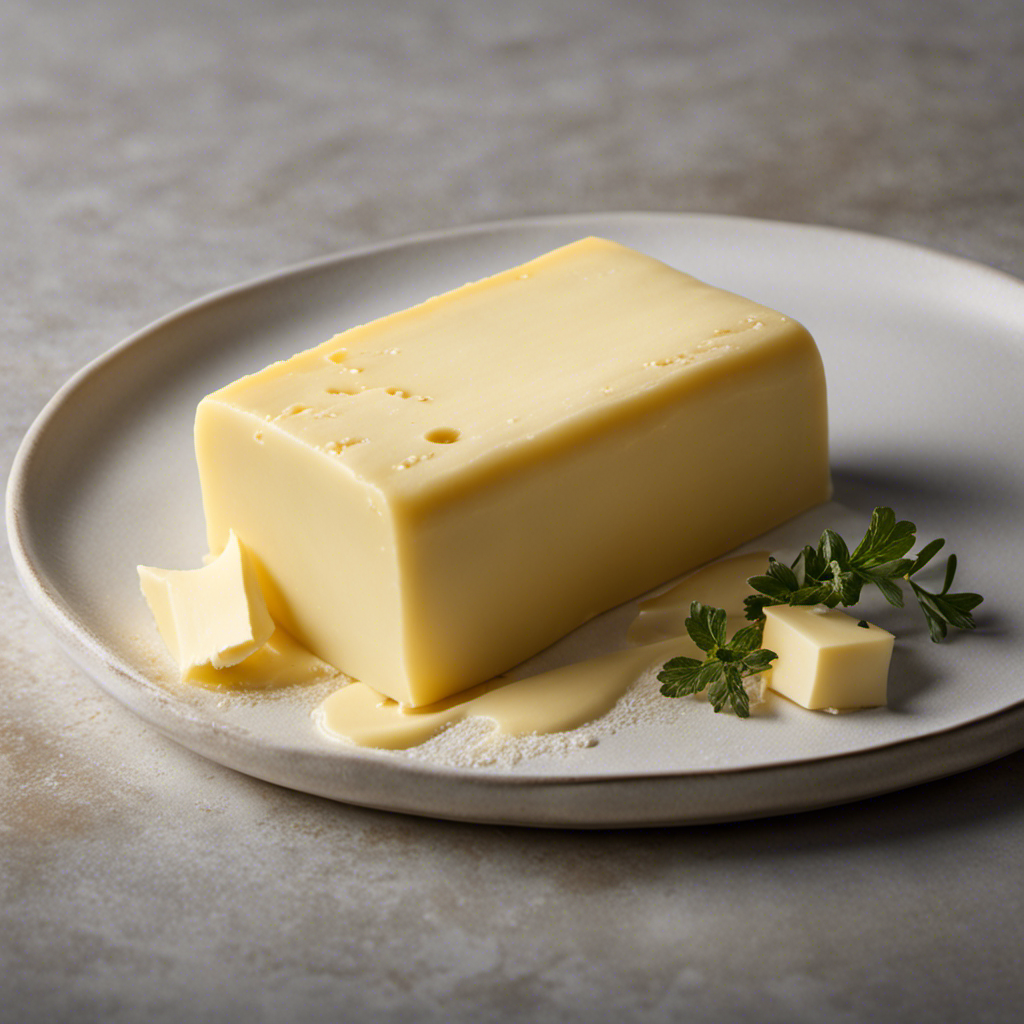
When you’re cooking, especially with starchy foods like pasta or rice, the boiling process inevitably produces foam and bubbles that can quickly rise and spill over. Adding butter might seem like a simple fix, but it’s more about how it affects the surface tension of the liquid. The idea is that the fats in butter could weaken the foam’s stability, making it less likely to spill over. However, this isn’t a foolproof approach and often works better as a temporary measure rather than a reliable solution. Additionally, understanding the role of surface tension in boiling liquids can help you better manage the process and prevent overflows. Incorporating kitchen safety principles such as monitoring the heat and using proper cooking tools can further minimize risks and improve your overall cooking experience. Recognizing the importance of preventative techniques can make your cooking safer and more efficient, reducing the likelihood of accidents.
In terms of cooking techniques, many chefs and home cooks rely on more predictable methods to prevent overflows. For example, placing a wooden spoon across the top of the pot or reducing the heat once it reaches a boil are more consistent and safe techniques. These methods are rooted in kitchen safety principles, as they help control the cooking process and prevent accidents. Adding butter might seem like a quick fix, but it doesn’t address the underlying cause of boiling over, which is the buildup of bubbles and foam. Relying solely on butter or similar tricks can lead to spills, burns, or even fire hazards if you’re not attentive.
It’s also worth noting that adding butter can change the flavor of your dish, which might be desirable in certain recipes but not in others. If you’re aiming for a clean, mess-free stove, it’s better to stick with proven techniques. Keep an eye on your pot, stir occasionally, and turn down the heat once things start boiling vigorously. These steps promote safer and more effective cooking, reducing the risk of accidents and ensuring your food cooks properly.
As an affiliate, we earn on qualifying purchases.
Frequently Asked Questions
Does Butter Prevent All Types of Pots From Boiling Over?
Butter doesn’t prevent all types of pots from boiling over. While some believe it can reduce foam, it’s not a reliable solution for every pot. For better kitchen safety, consider alternative methods like lowering the heat, using a wooden spoon across the pot’s surface, or placing a lid slightly askew. These tips help prevent spills and keep your cooking safer, rather than relying solely on butter.
How Much Butter Should Be Used to Prevent Boiling Over?
Think of butter as a tiny shield for your pot—just a teaspoon or two of softened butter works best. Use a small amount, about 1 to 2 teaspoons, depending on your pot’s size, to coat the surface. The butter’s consistency helps create a barrier, and at the right cooking temperature, it reduces foam buildup. Too much butter, though, can cause messes, so keep it light and precise.
Can Butter Be Used With Non-Stick Cookware Safely?
Yes, you can use butter with non-stick cookware safely, but you should be cautious about cooking safety and kitchen utensils. Butter’s low melting point can sometimes cause sticking or residue, so use it sparingly. Avoid scraping with metal utensils to protect the non-stick surface. Instead, opt for silicone or wooden spoons. Properly maintaining your cookware and practicing safe cooking habits help guarantee butter use remains safe and effective.
Are There Any Health Concerns Using Butter to Prevent Boiling Over?
Using butter to prevent boiling over isn’t the safest choice if you have dairy allergies or cholesterol concerns. Butter contains dairy proteins and saturated fats, which can trigger allergic reactions or raise cholesterol levels in some people. If you’re worried about health, consider alternatives like vegetable oil or a splash of water instead. These options avoid dairy and are healthier for cholesterol management, making them better choices for preventing spills.
Is Butter More Effective Than Other Kitchen Remedies?
Butter isn’t more effective than other kitchen remedies at stopping pots from boiling over, but it does add flavor enhancement to your dishes. Its fat creates a barrier on the surface, which may help prevent splatters, yet simple cooking techniques like lowering heat or using a wooden spoon across the pot top are usually more reliable. If you want flavor and practicality, combining butter with good cooking techniques works best.
Conclusion
So, can butter really stop pots from boiling over? While it might seem like a quick fix, it’s not a foolproof solution. Butter can temporarily reduce foam, but it won’t prevent the pot from boiling over entirely. Instead, keep an eye on your pot, stir regularly, and adjust the heat as needed. Stay attentive, stay calm, and avoid the mess—because in the kitchen, prevention is always better than cleanup.
NFL season / tailgating Picks
team gear
As an affiliate, we earn on qualifying purchases.