
TL;DR

Get kitchen staples and gadgets delivered free with Prime
- Fast, free delivery on millions of items
- Prime Video, Amazon Music and more included
- Member-only deals all year
While most Americans oppose the cruelty of factory farming, few are willing to stop eating animal products. This contradiction is driven by psychological defenses, making change difficult. The issue remains unresolved as awareness alone does not lead to action.
Despite widespread disapproval of animal cruelty on factory farms, most Americans continue to eat meat and other animal products, highlighting a persistent psychological conflict known as the ‘meat paradox.’
Recent surveys, including one by Faunalytics and another by Pew Research Center, show that a majority of respondents consider factory farming practices ‘somewhat unacceptable’ or ‘very unacceptable,’ yet eating meat remains morally acceptable to most. Researchers such as Hank Rothgerber from Bellarmine University explain that this disconnect stems from cognitive dissonance and willful ignorance about the realities of factory farming practices.
Studies have shown that many people avoid learning about the cruelty involved in factory farming, and some even actively dissociate meat from its animal origins to ease their discomfort. For example, experiments reveal that people tend to devalue animals’ moral status after consuming meat products like beef jerky, and some choose to ignore or avoid images of animal suffering altogether.
Why It Matters
This contradiction complicates efforts to promote animal welfare and reduce factory farming’s environmental and ethical impacts. Understanding the psychological barriers is crucial for developing effective interventions that can help shift consumer behavior and improve animal welfare standards.
As an affiliate, we earn on qualifying purchases.
Background
The ‘meat paradox’ has long challenged advocates and policymakers seeking to reform factory farming. Despite growing awareness and moral opposition, cultural and psychological factors sustain high levels of meat consumption. Previous efforts to inform consumers about animal cruelty have often been met with resistance, as many prefer to remain willfully ignorant or rationalize their behavior.
“Most people don’t want to know how cruel factory farms are, and even when they do, they often choose to ignore it to avoid guilt.”
— Hank Rothgerber, psychology professor at Bellarmine University
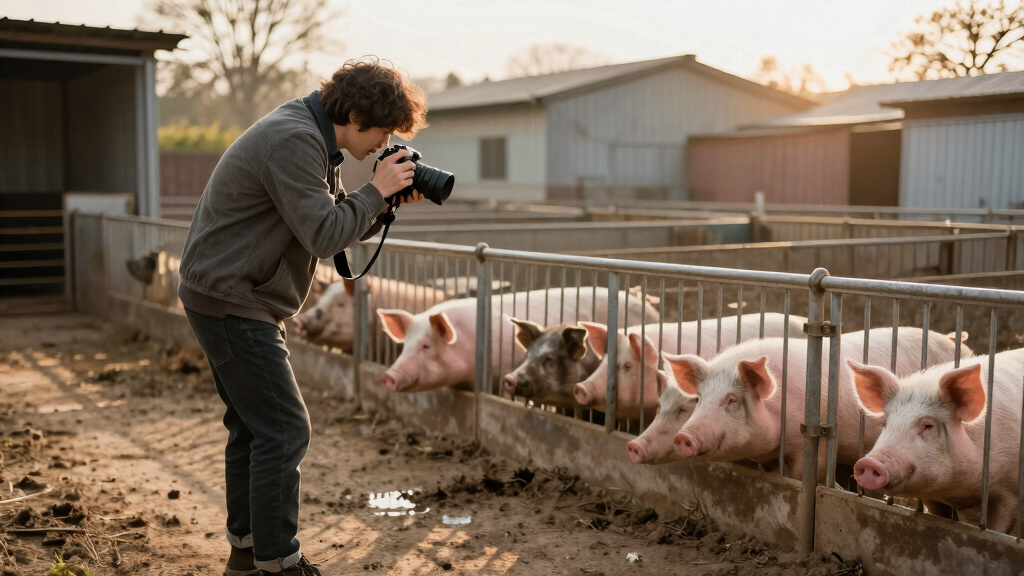
“One-third of respondents preferred to look away from images of pig suffering, showing how deeply people try to avoid confronting cruelty.”
— A researcher involved in the 2017 study on visual avoidance
What Remains Unclear
It remains unclear whether increasing awareness alone can lead to significant behavioral change, or if more targeted psychological interventions are necessary to overcome resistance rooted in cognitive dissonance.
What’s Next
Researchers and advocates are exploring interventions that address the psychological roots of the meat paradox, such as reducing willful ignorance and reframing animal welfare messages. Policy discussions and consumer campaigns are expected to evolve as understanding of these barriers deepens.
Key Questions
Why do people continue to eat meat despite disliking factory farm practices?
Many people experience cognitive dissonance and use psychological defenses like ignorance, dissociation, or moral rationalizations to reconcile their eating habits with their dislike of animal cruelty.
Can increased awareness of factory farming practices lead to reduced meat consumption?
Not necessarily. Studies suggest that awareness alone often triggers avoidance or denial rather than behavioral change, indicating that deeper psychological barriers must be addressed.
What strategies could help resolve the meat paradox?
Effective approaches may include interventions that reduce willful ignorance, promote empathy, and reframe the moral considerations around animal welfare, though research is ongoing.
Why is it difficult to change consumer behavior on this issue?
Because eating meat is deeply embedded in cultural, social, and psychological frameworks, and many people prefer to avoid confronting the cruelty involved, making behavioral change complex.
Fall Picks
fall essentials
As an affiliate, we earn on qualifying purchases.