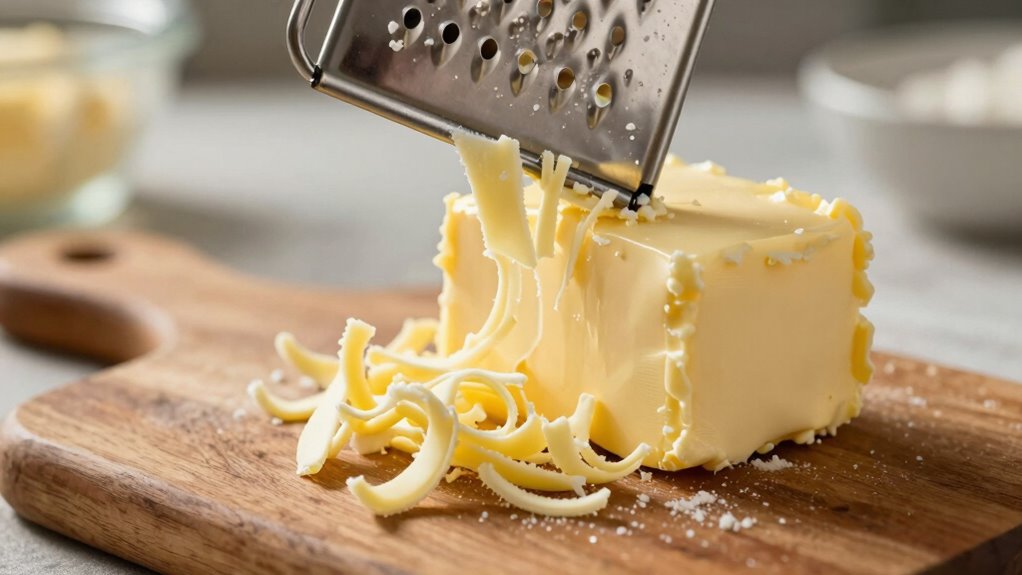
To grate frozen butter for better biscuits, keep the butter well-wrapped and cold until just before grating. Use a box grater or fine shredding tool, applying gentle, steady pressure to avoid melting or squishing. Return the butter to the freezer if it softens. Make certain your tools are dry, and handle the butter carefully. Mastering these steps guarantees your biscuits turn out flaky and perfect—stay tuned for more tips to elevate your baking skills.

Get kitchen staples and gadgets delivered free with Prime
- Fast, free delivery on millions of items
- Prime Video, Amazon Music and more included
- Member-only deals all year
Key Takeaways
- Keep butter fully frozen until just before grating to prevent melting and maintain coldness.
- Use a box grater or microplane with gentle, steady pressure for fine, even shreds.
- Ensure tools and butter are dry to improve grip and prevent sticking during grating.
- Return butter to the freezer immediately if it begins to soften during the process.
- Handle frozen butter carefully to avoid squishing or injury, maintaining optimal flakiness in biscuits.
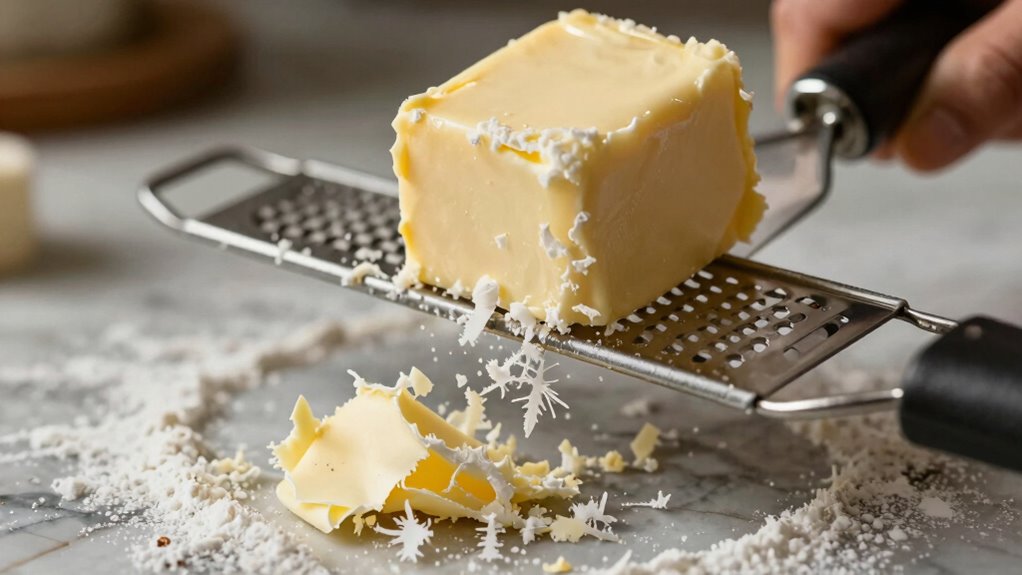
Grating frozen butter is a simple trick that can considerably improve your biscuit dough, resulting in flakier, more tender biscuits. The key is to keep your butter properly stored beforehand, as butter storage plays a vital role in making this process smooth. You want your butter well-chilled, ideally frozen solid, which makes grating effortless and ensures it melts evenly during baking. When storing butter, wrap it tightly in plastic or foil and keep it in the coldest part of your freezer. This prevents oxidation and keeps the butter fresh, so it’s ready to be grated whenever you’re ready to bake. Proper storage also helps maintain the butter’s quality, making your baking process more consistent. Ensuring your butter is stored in an airtight environment helps preserve its freshness and prevents freezer burn, both of which can affect the final texture of your biscuits. Additionally, using high-quality butter can further enhance the flavor and texture of your baked goods.
Keep your butter frozen solid and well-wrapped for effortless grating and perfect flaky biscuits.
When it’s time to grate, your goal is to produce small, uniform pieces that incorporate seamlessly into the flour. The traditional method involves using a box grater, but if you don’t have one on hand, alternative grating tools come in handy. A microplane or fine shredding disc on a food processor can do the trick, giving you finely grated butter without much effort. These tools are especially useful if you need a quick, consistent result, and they help you avoid the mess that sometimes comes with grating frozen butter on a standard box grater. Additionally, using the right tool can reduce the risk of injury when handling frozen ingredients. Proper grating technique ensures you get the best results while keeping your fingers safe.
Handling frozen butter can be tricky, but once you get the hang of it, it’s a game-changer for biscuit making. Keep your butter in the freezer until the moment before you grate it. When ready, use a gentle, steady pressure to avoid squishing or melting the butter. If your butter becomes too soft during the process, pop it back in the freezer for a few minutes to firm up. It’s all about maintaining its cold temperature to get the best flaky layers in your biscuits. Proper technique and cold butter handling are essential to achieving the perfect texture. Practicing patience and ensuring your tools are dry can also help make the process smoother and more effective.
Products Worth Considering

Breville Smart Grinder Pro Conical Burr Coffee Grinder, Brushed Stainless Steel

Ninja Foodi Air Fryer 10 Qt DualZone 6-in-1 Black DZ302

De'Longhi Dinamica Plus Fully Automatic Espresso Machine
As an affiliate, we earn on qualifying purchases.
Frequently Asked Questions
Can I Grate Butter if It’s Partially Thawed?
Yes, you can grate butter if it’s partially thawed, but keep in mind that butter’s temperature affects your grating techniques. Slightly softened butter may be more challenging to grate smoothly, so work quickly to prevent melting. For best results, make sure your butter is still firm but not rock-hard. Use a sharp grater and gentle pressure, and consider chilling the grater if needed. This way, you’ll get perfect grated butter for your biscuit dough.
What Tools Are Safest for Grating Frozen Butter?
Did you know that using the right tools can reduce grater injuries by 50%? For grated frozen butter, opt for a box grater with a sturdy handle and sharp, wide blades. Keep the butter firm but slightly thawed for better control. Always prioritize grater safety by holding it firmly and working slowly. This way, you guarantee consistent butter texture for your biscuits while avoiding slips or cuts.
How Should Grated Butter Be Stored Before Baking?
You should store grated butter in an airtight container or tightly wrapped in plastic wrap to prevent moisture loss and absorb odors from the fridge. Keep it cold until you’re ready to use, following freezing tips to maintain freshness. Place the grated butter in the coldest part of your fridge, ideally for no longer than a day, to ensure it stays firm and ready for baking your biscuits.
Does Grated Butter Affect Biscuit Texture Compared to Cubed?
Grated butter creates a different butter consistency compared to cubed, leading to more even distribution in your dough. This results in increased biscuit flakiness because the butter melts quickly during baking, creating steam and layers. You’ll notice a lighter, airier texture with grated butter. In contrast, cubed butter may not distribute as evenly, potentially producing denser biscuits. So, grated butter enhances flakiness and guarantees a more tender, flaky biscuit.
Can This Method Be Used for Other Baked Goods?
Yes, you can use grated frozen butter for other baked goods like scones, pie crusts, and muffins. It helps incorporate butter evenly, resulting in a flaky texture and better flavor enhancements. This method also speeds up the mixing process and guarantees a consistent butter distribution, making your baked goods tender and delicious. So, try grating frozen butter for a variety of recipes to improve their texture and flavor profile.
Conclusion
Grating frozen butter makes it easier to incorporate evenly into your biscuit dough, resulting in flakier, more tender biscuits. By using this simple technique, you’ll save time and guarantee consistent distribution of butter, which is key to perfect baking results. Did you know that using cold ingredients can increase the flakiness of baked goods by up to 30%? Next time, give this method a try—you’ll notice a difference in texture and taste that’s well worth it.