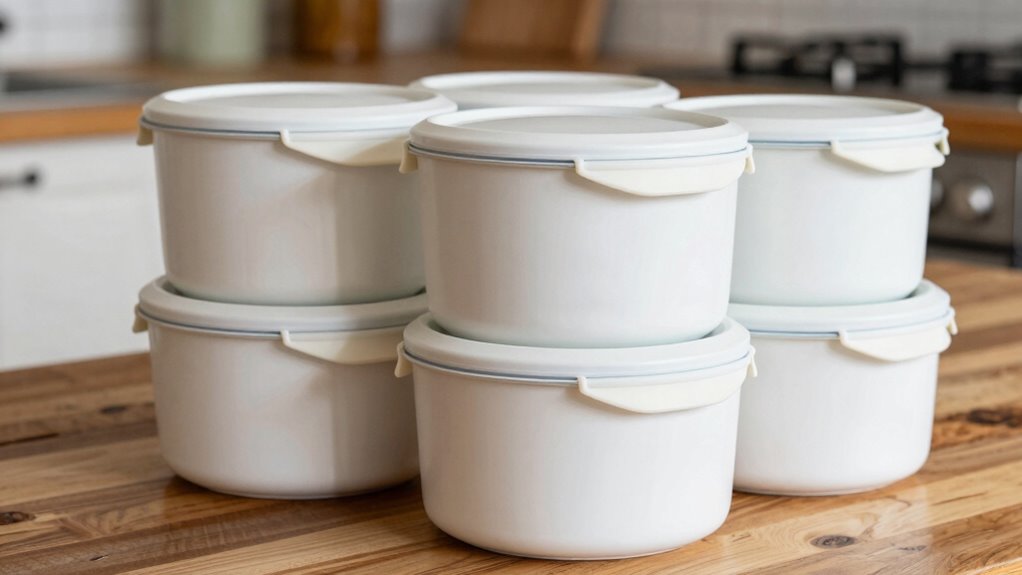

Airtight flour containers only keep flour fresh if the moisture level is low initially. If your flour is already damp or humid conditions are present, the container can’t reverse moisture or prevent spoilage. Excess humidity causes clumping, mold, and spoilage even inside airtight seals. To make your storage effective, you need to manage humidity beforehand. Keep your flour in a cool, dry place and use moisture control methods—there’s more to guarantee long-term freshness if you keep exploring.

Get kitchen staples and gadgets delivered free with Prime
- Fast, free delivery on millions of items
- Prime Video, Amazon Music and more included
- Member-only deals all year
Key Takeaways
- Airtight containers prevent moisture ingress only if the stored flour starts with low moisture levels.
- High initial humidity in flour can lead to clumping and spoilage, regardless of container seal.
- Proper moisture management before storage is essential for airtight containers to be effective.
- Using desiccants and maintaining a dry storage environment helps keep moisture low initially.
- Regular monitoring of humidity levels ensures flour remains dry and preserves container effectiveness.
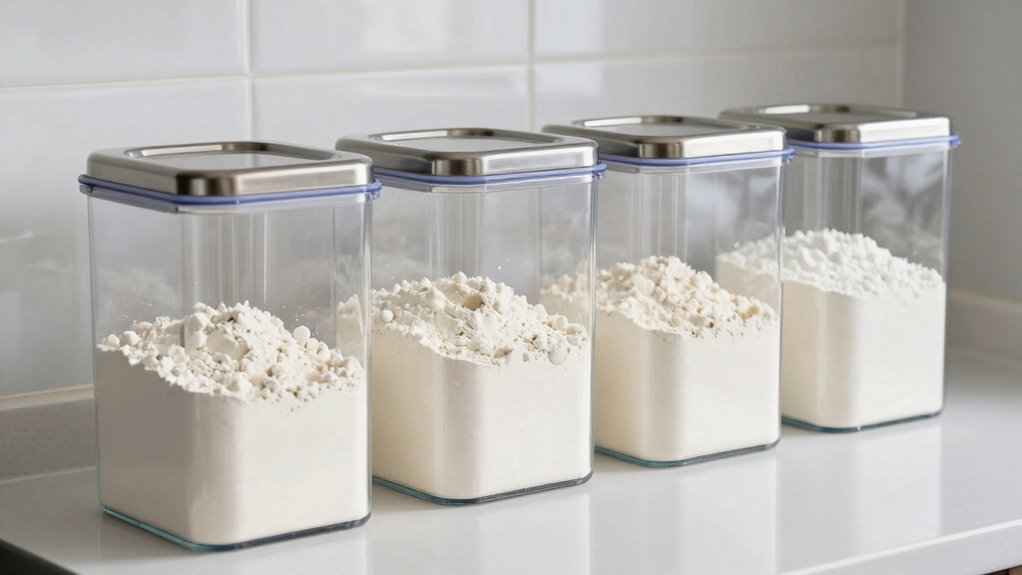
Airtight flour containers can keep your flour fresh and free from pests, but they only work effectively if the flour starts with low moisture levels. Moisture is the enemy when it comes to storing flour, as excess humidity can cause clumping, spoilage, or mold growth. To maximize the benefits of airtight containers, you need to pay close attention to humidity control. If your environment is humid, even the best container may not prevent moisture from seeping in or condensing inside. In such cases, using desiccants or storing flour in a cool, dry place can help maintain ideal dryness. Proper humidity management is essential to prevent moisture buildup that can compromise flour quality. The choice of container material plays a vital role in how well your flour stays fresh. Airtight containers come in various materials such as plastic, glass, and metal. Plastic containers are lightweight and inexpensive but can sometimes be permeable to moisture if not designed with quality seals. Glass containers provide an excellent barrier to air and moisture, making them a popular choice for those seeking ideal humidity control. Metal containers, often made of tin or stainless steel, also offer excellent protection from external humidity and pests. Whichever material you choose, guarantee it has a tight-fitting lid that creates an effective seal to prevent moisture intrusion. Additionally, understanding moisture levels in your storage environment is crucial for maintaining flour quality over time. Proper storage practices extend beyond just choosing the right container. Keep your flour in a cool, dry area away from direct sunlight or heat sources, which can increase humidity levels and promote spoilage. Using a hygrometer can help you monitor humidity levels in your storage space, giving you early warning if conditions become too damp. When storing flour in humid environments, consider using additional moisture barriers or dehumidifiers to further protect your supply. Ensuring proper air circulation around stored flour can also help prevent condensation and moisture buildup. If your environment tends to be humid, consider storing your flour in smaller portions to reduce exposure to moisture, and always reseal the container tightly after each use. Regularly inspecting your storage setup and being aware of humidity control techniques can help ensure your flour remains fresh for longer periods.
airtight flour storage container with moisture control
As an affiliate, we earn on qualifying purchases.
As an affiliate, we earn on qualifying purchases.
Frequently Asked Questions
Can Airtight Containers Prevent Flour From Going Rancid Over Time?
Airtight containers can help prevent flour from going rancid if you store them properly. They keep moisture and air out, which slows spoilage and maintains freshness. For effective flour storage, choose durable containers made of sturdy materials that won’t crack or warp over time. Keep the containers in a cool, dark place, and make certain they stay sealed tightly after each use to prolong flour’s shelf life and prevent rancidity.
How Often Should I Check Moisture Levels in My Flour?
You should check moisture levels in your flour every few weeks, like a vigilant gardener tending delicate blooms. Regular moisture monitoring guarantees your storage techniques keep humidity at bay, preventing mold and rancidity. Keep an eye on it more often if the weather shifts or you notice any clumping. Staying attentive helps preserve freshness, so your flour remains ready to transform into delicious baked goods, not a soggy mess.
Are There Specific Materials Better for Moisture Control in Containers?
You should choose containers made from durable materials like glass or high-quality plastic, as they resist moisture and preserve freshness. Look for sealing mechanisms that create an airtight seal, preventing moisture from entering. These features guarantee your flour stays dry and usable longer. Avoid flimsy or porous materials that can compromise the seal and let in humidity, which ruins the flour’s quality. Proper material and sealing are essential for effective moisture control.
Can Humidity Levels in My Kitchen Affect Container Effectiveness?
Humidity fluctuations in your kitchen can definitely impact container sealing. Think of your containers like a sponge—if the air is humid, moisture seeps in and compromises their effectiveness. When humidity levels rise, the airtight seal might no longer keep flour dry, making it prone to clumping or spoilage. To maintain ideal freshness, try to keep your kitchen’s humidity steady and use containers with good sealing features.
Do Airtight Containers Need Special Lids to Maintain Low Moisture?
Airtight containers don’t necessarily need special lids, but good seal integrity is essential. Look for containers with well-designed lids that create a tight, secure seal to prevent moisture from entering. The lid design should include features like silicone gaskets or locking mechanisms. These elements help maintain low moisture levels inside, keeping your flour fresh and dry, especially in humid environments. Proper lid design ensures your flour stays protected longer.
Conclusion
So, as you carefully seal your flour in that airtight container, remember—its effectiveness hinges on your starting moisture level. If moisture creeps in, it could quietly invite mold or clumps, lurking just beneath the surface. Will you notice the subtle signs before it’s too late? Keep an eye on your flour, and stay vigilant. Because in this quiet battle against spoilage, every breath and every seal counts—waiting silently to reveal what’s hidden inside.
Halloween Picks
halloween
As an affiliate, we earn on qualifying purchases.