To fine-tune your glaze for spicy honey-butter wings, start by balancing the liquid ingredients like honey, melted butter, and hot sauce to control thickness. Use small amounts of thickening agents like cornstarch or xanthan gum if needed. Apply the glaze in thin, even layers and reheat gently to maintain gloss and smoothness. If you encounter issues, adjusting temperature or ingredient ratios can fix them—you’ll find many tips if you keep exploring.

Get kitchen staples and gadgets delivered free with Prime
- Fast, free delivery on millions of items
- Prime Video, Amazon Music and more included
- Member-only deals all year
Key Takeaways
- Adjust liquid ratios (honey, butter, hot sauce) based on wing size and spice level for desired glaze thickness.
- Use natural thickeners like cornstarch or xanthan gum to quickly achieve the perfect consistency.
- Reheat glaze gently and gradually to maintain its silky texture and gloss without over-thickening.
- Apply glaze in thin, even layers with brushes or spoons, reapplying lightly for a glossy, well-coated finish.
- Store and reheat glaze properly to prevent thickening or separation, ensuring consistent quality and appearance.
As an affiliate, we earn on qualifying purchases.
Understanding the Ideal Consistency for Your Glaze
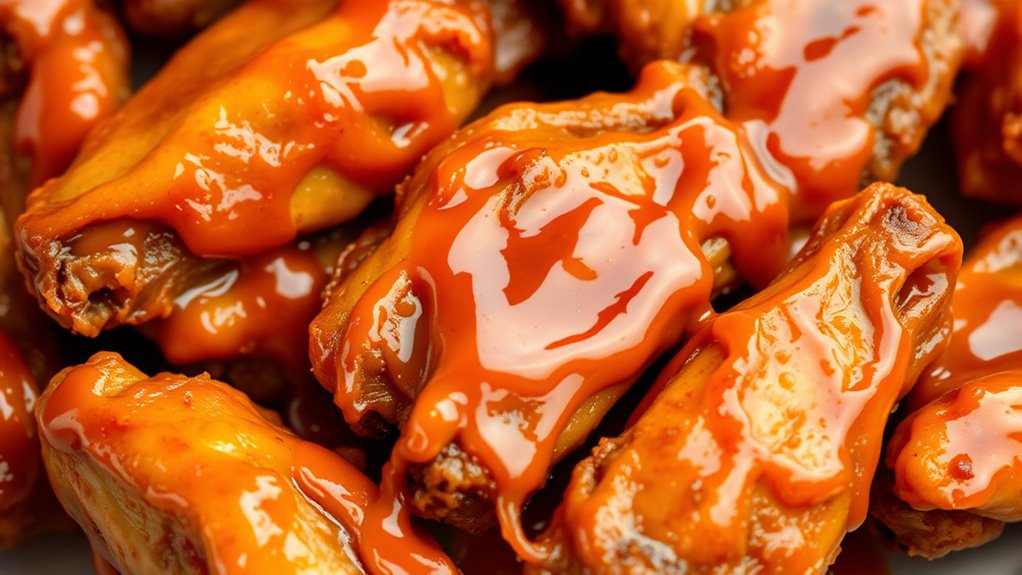
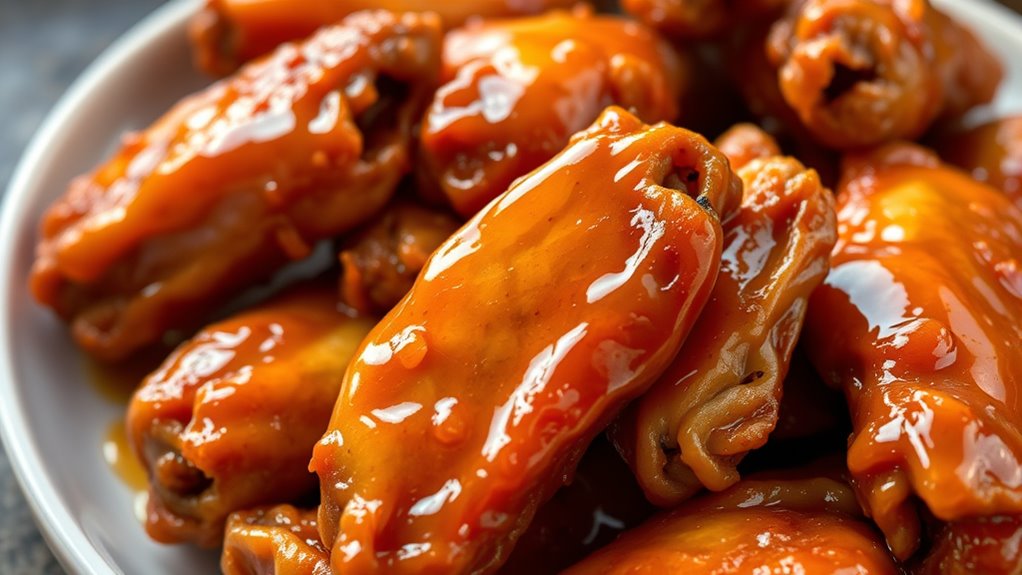
To achieve the perfect glaze for your spicy honey-butter wings, it’s essential to understand its ideal consistency. A well-balanced glaze should coat the wings smoothly without feeling too runny or too thick. This helps maintain flavor balance, ensuring sweetness from honey complements the heat and richness of butter. When adjusting consistency, ingredient substitutions matter; for example, swapping honey for maple syrup may alter thickness, so you might need to tweak other ingredients. Keep in mind that a slightly thicker glaze will cling better, giving you a glossy finish and enhanced flavor. Pay attention to how the glaze flows and adheres. Achieving the right consistency is key to delivering a flavorful, visually appealing final product. Additionally, understanding the culinary properties of butter and honey can guide you in fine-tuning your glaze to achieve optimal texture and taste.
Adjusting Liquid Ratios for Perfect Thickness

Adjusting the liquid ratios in your glaze allows you to fine-tune its thickness for the perfect coating. If your glaze is too thick, it may not evenly coat larger wings or achieve the desired glaze shine. If it’s too thin, it can slide off or soak in too much. To get it just right:
Adjust your glaze with liquid tweaks for perfect coating and shine.
- Increase liquid (honey, butter, or hot sauce) for a thinner glaze, ideal for larger wings or a lighter spice level.
- Decrease liquids to create a thicker, more adhesive glaze for smaller wings or a spicier coating.
- Consider wing size: bigger wings need slightly more liquid to ensure coverage without running.
- Adjust gradually, tasting and observing the consistency after each change, to match your spice level preference and wing size perfectly.
- Monitoring the glaze consistency throughout the process helps achieve a balanced thickness suitable for your desired coating.
Selecting the Right Thickeners and Bindings
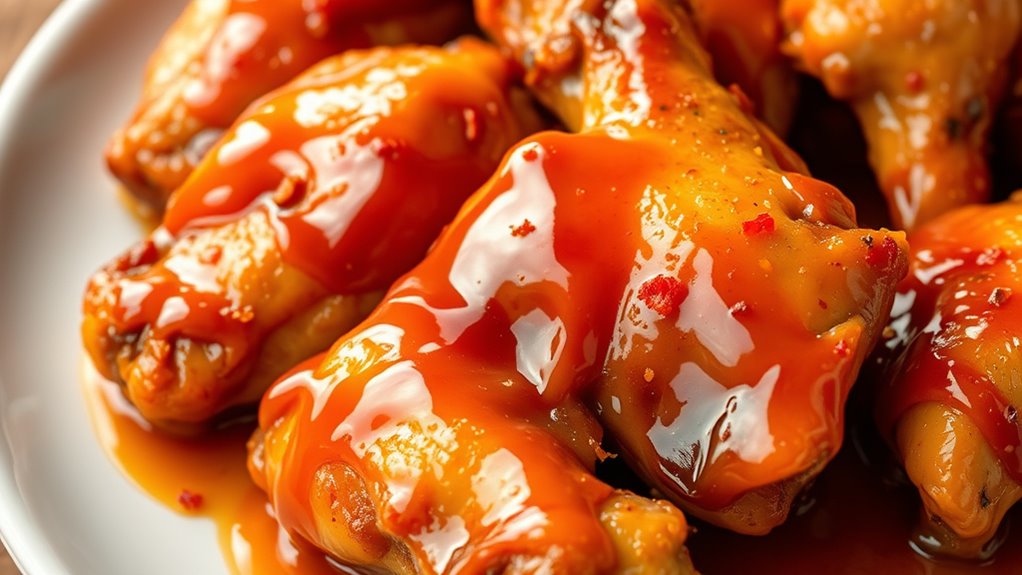
Choosing the right thickeners and binding agents is key to achieving the perfect texture for your wings. You want options that enhance consistency without overpowering the flavors. Let’s explore effective choices that hold everything together beautifully. Incorporating multi-functional furniture or versatile thickeners can help streamline your cooking process and improve the overall presentation.
Choosing Effective Thickeners
How do you guarantee your spicy honey-butter wings have the perfect consistency? The key lies in choosing effective thickeners that complement your spice infusion and honey viscosity. Here are tips to contemplate:
- Use cornstarch or arrowroot for quick thickening without altering flavor.
- Consider xanthan gum for a smooth, stable glaze that resists separation.
- Adjust the amount based on honey viscosity—thicker honey needs less thickening agent.
- Test small batches to find the right balance, ensuring your glaze isn’t too runny or overly stiff.
- Monitoring the contrast ratio can help you visualize how different glaze thicknesses impact the appearance of your wings.
Binding Agents for Texture
Selecting the right binding agents is essential for achieving the perfect texture in your spicy honey-butter wings. If you want a balanced spice level that doesn’t overpower the glaze, choose binders that enhance cohesion without dulling heat. For larger wing sizes, thicker binding agents like cornstarch or arrowroot can hold up well, ensuring the glaze sticks evenly. Smaller wings might need lighter agents, such as egg wash or flour, to prevent clumping. Consider how the spice level influences moisture; spicier sauces may require more binding power to prevent runoff. Your goal is a smooth, glossy coating that clings well, regardless of wing size or heat intensity. Experiment with different binders to find the perfect combination for your desired texture and flavor balance. Additionally, understanding the types of bicycle races can inspire new ideas for themed wings or catering events.
Techniques for Achieving a Smooth, Glossy Finish
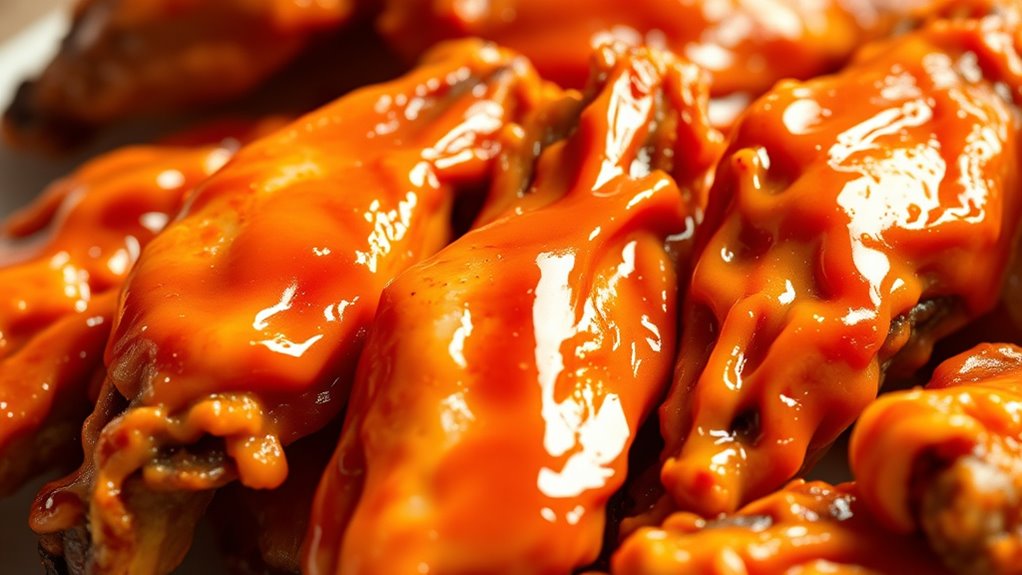
To get that perfect gloss on your wings, focus on applying the glaze evenly and in thin layers. Make sure to brush or pour the glaze carefully to avoid drips or uneven spots. With the right technique, you’ll achieve a beautiful, lustrous shine that makes your wings look irresistible.
Proper Glaze Application
Achieving a smooth, glossy finish on your spicy honey-butter wings requires careful glaze application techniques. To guarantee even coverage and shine, follow these steps:
- Use a brush or spoon to apply the glaze in thin, uniform layers.
- Avoid pouring excess glaze; too much can create a sticky, uneven surface.
- Work quickly to prevent the glaze from pooling or dripping.
- For added gloss, lightly reapply after initial coating, focusing on areas with uneven shine.
- Incorporate proper techniques for applying glaze, such as maintaining a consistent thickness and working in multiple light layers, to ensure the best finish.
Achieving a Lustrous Shine
Once you’ve applied the glaze evenly, enhancing its shine requires a few simple techniques. To achieve a smooth, glossy finish, gently heat the wings in a hot oven or under a broiler for a few minutes. This causes the glaze to melt slightly, creating a lustrous surface. Be mindful of the spice level, as too much heat can intensify the heat while reducing shine. For serving suggestions, present the wings on a clean platter to highlight their glossy appearance. You can also brush on a light layer of honey or butter before the final heat to boost the shine further. These steps ensure your wings look as appetizing as they taste, with a beautiful, inviting gloss that complements their flavor. Incorporating techniques from tuning can inspire you to fine-tune every detail for a perfect finish.
Temperature’s Role in Glaze Behavior

Temperature plays a crucial role in how the honey-butter glaze behaves on your wings. Proper temperature control ensures the glaze reaches the right consistency without over-thickening or burning. If the temperature gets too high, the glaze might start boiling aggressively, leading to uneven coating or burning. To master this, keep these points in mind:
- Use medium heat to prevent glaze boiling and maintain steady simmering.
- Stir constantly to distribute heat evenly and avoid hotspots.
- Watch for gentle bubbles—these indicate ideal temperature, not rapid boiling.
- Remove from heat quickly once the desired thickness is achieved, to prevent over-thickening.
Controlling temperature helps you craft a glossy, flavorful glaze that perfectly coats your wings without burning or becoming too thin.
Tips for Reheating and Reapplication of Glaze
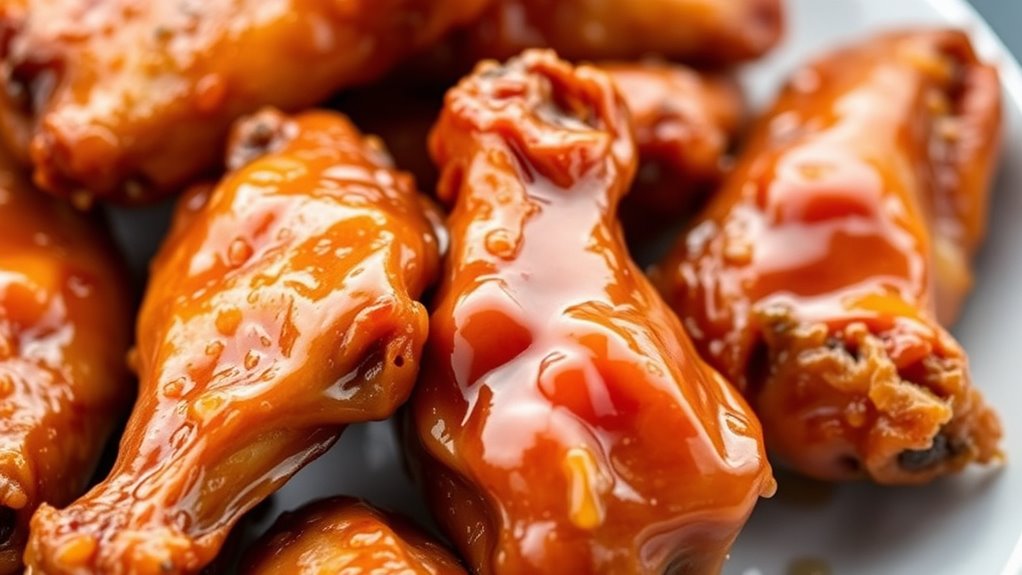
Reheating and reapplying your honey-butter glaze requires careful attention to maintain its ideal consistency and flavor. Use gentle reheating techniques, such as warming the glaze in a saucepan over low heat or microwaving in short bursts, stirring frequently to prevent burning or separation. This ensures the glaze remains smooth and easy to spread. When reapplying, follow effective glaze reapplication methods by brushing or drizzling instead of pouring, which helps control thickness and coverage. If the glaze thickens during storage, add a small splash of warm water or butter and stir well to restore its silky texture. Avoid overheating, as it can alter the flavor. Proper reheating and reapplication preserve the glaze’s sweet, spicy profile and glossy appearance on your wings. Maintaining consistency is key to achieving the perfect balance of flavor and texture.
Troubleshooting Common Glazing Issues

Despite careful preparation, you might encounter common glazing issues like uneven coverage, thickening, or a runny texture. To fix these problems, consider these tips:
- Adjust the heat: Too high, and the glaze thickens or burns; too low, and it stays runny. Find a balance for smooth application.
- Thin the glaze: Add a splash of warm water or honey to loosen a thickened glaze without compromising flavor pairing.
- Chill the glaze: Refrigerate briefly if it’s too runny, then reheat gently before applying for better control.
- Use presentation tips: Apply in thin, even layers, and consider drizzling for a professional look. Proper glaze thickness enhances flavor pairing and presentation.
Frequently Asked Questions
Can I Make the Glaze Spicy Without Altering Its Thickness?
You can make the glaze spicy without modifying its sauce consistency by adding a spice infusion. Simply stir in finely chopped chili peppers, hot sauce, or cayenne pepper gradually until you reach your desired heat level. This method maintains the glaze’s thickness while giving it a spicy kick. Just be cautious with the amount, tasting as you go, to ensure the spice infusion enhances without overpowering the overall flavor.
What Are Alternative Sweeteners for a Different Flavor Profile?
Start with sweeteners that spice up your sauce and spark new sensations. You can swap honey with maple syrup for mellow richness or agave nectar for a smooth sweetness. Stevia offers a natural, calorie-free alternative, while brown sugar adds a caramelized kick. Each alternative sweetener introduces unique flavor variations, allowing you to craft a glaze that’s tailored to your taste, transforming your wings into a tantalizing treat with exciting, evolving flavors.
How Long Can I Store Leftover Honey-Butter Wing Glaze?
You can store leftover honey-butter wing glaze in an airtight container in the refrigerator for up to a week. To guarantee its freshness, follow refrigeration tips like keeping it at a consistent temperature and avoiding cross-contamination. Always check for any signs of spoilage, such as off smells or mold, before using it again. Proper storage duration and refrigeration tips help maintain the glaze’s flavor and safety for future use.
Is There a Vegan or Gluten-Free Option for This Glaze?
You can make a vegan or gluten-free glaze by using vegan substitutes like agave nectar or maple syrup instead of honey. For thickening, opt for gluten-free thickeners such as cornstarch or arrowroot powder. These options help you achieve a similar sticky glaze without animal products or gluten. Just mix and heat until the desired consistency is reached, and enjoy a delicious, inclusive version of your spicy honey-butter wing glaze.
How Do I Prevent the Glaze From Burning During Broiling?
To prevent the glaze from burning during broiling, you should lower the baking temperature and keep a close eye on it. Broil at a moderate heat, around 375°F, to slow down glaze caramelization. You can also move the wings further from the heat source or reduce broiling time. Regularly check to avoid scorching, and consider applying the glaze in thinner layers to prevent burning while still achieving that perfect shine.
Conclusion
Getting your honey-butter wing glaze just right can make all the difference—about 80% of chefs say perfect glaze consistency boosts flavor and presentation. By fine-tuning your thickness, adjusting liquids, and mastering techniques, you’ll create a glossy, flavorful coating every time. Remember, a little practice goes a long way, and don’t forget to think about temperature’s effect. With these tips, your wings will be irresistible, crispy, and beautifully glazed, making every bite a spicy-sweet delight.
Halloween Picks
halloween
As an affiliate, we earn on qualifying purchases.