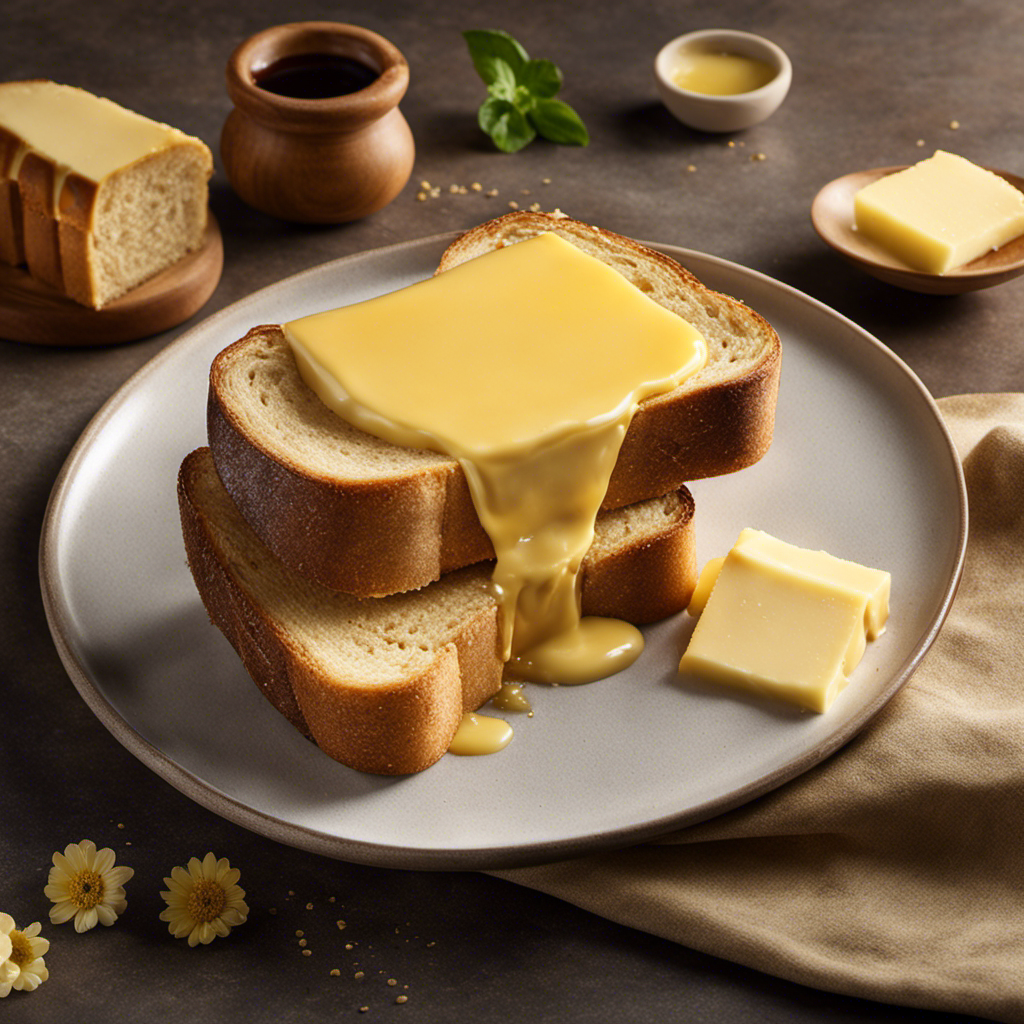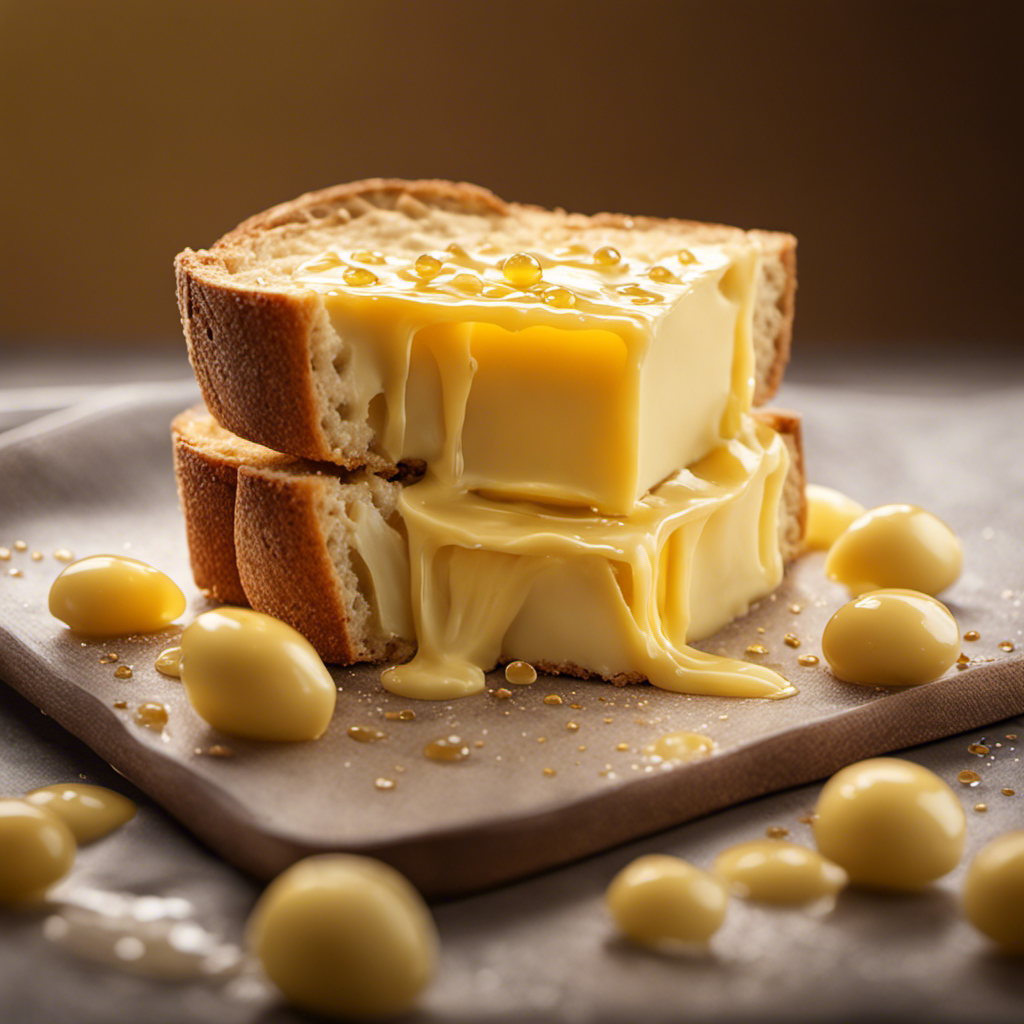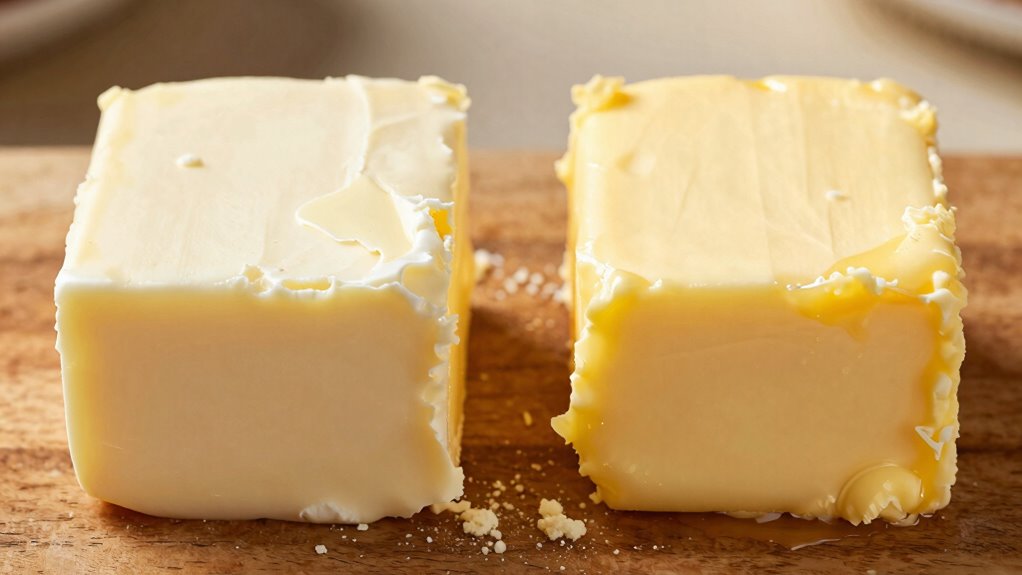

The main difference between butter for baking and cooking lies in how you use it to influence texture and flavor. In baking, butter melts to create tender, flaky layers and adds subtle sweetness, helping lift doughs and batters. In cooking, butter enhances flavor, adds richness, and creates smooth sauces or glossy finishes. Understanding these roles helps you control your dishes better—if you want to master the nuances, there’s more to discover below.

Get kitchen staples and gadgets delivered free — and shop member deals
- Fast, free delivery on millions of items
- Access to Prime Big Deal Days deals on October 6–7
- Prime Video, Amazon Music and more included
Key Takeaways
- Baking butter typically has a higher fat content and is often unsalted to control flavor and texture in baked goods.
- Cooking butter is usually salted, enhancing flavor and used for sautéing, sauces, and finishing dishes.
- Baking butter melts uniformly to create tender, flaky textures, while cooking butter’s melting influences flavor development and sauce consistency.
- Baking butter’s role focuses on texture and structural support, whereas cooking butter emphasizes flavor layering and richness.
- Clarified or browned butter is preferred for cooking to develop nutty, toasted flavors, unlike regular baking butter used for texture.
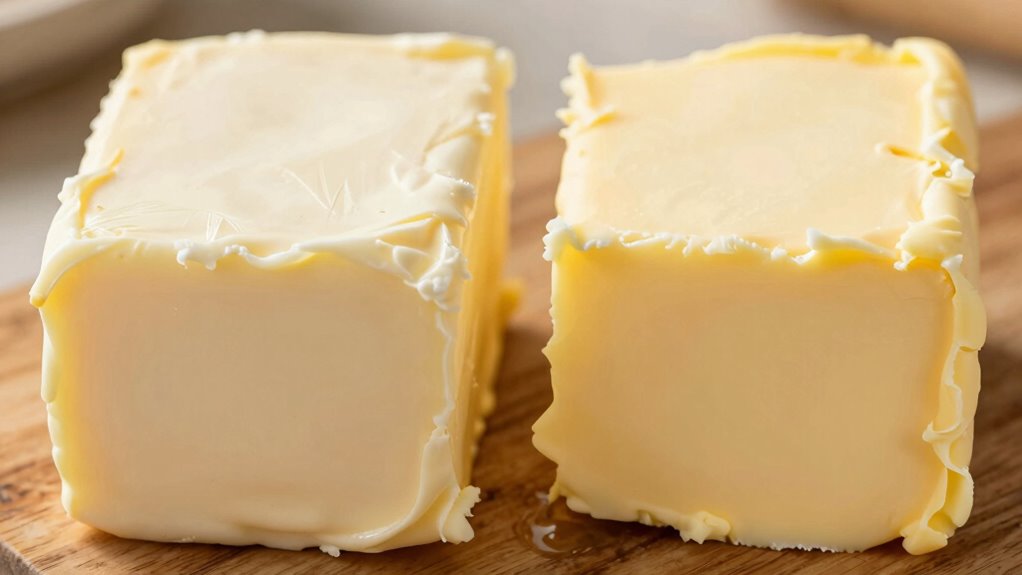
Have you ever wondered why butter is a staple ingredient in so many baking and cooking recipes? The answer lies in its incredible ability to influence both flavor and texture. When you use butter for baking, you’re not just adding richness; you’re also creating a foundation for flavor enhancements and texture modifications that can transform simple ingredients into something extraordinary. In baked goods like cookies, cakes, or pastries, butter’s role goes beyond taste—it helps develop a tender crumb, a flaky layers, or a crisp exterior. Its fats melt during baking, creating steam that lifts and lightens doughs and batters. This process results in a delicate, airy texture that’s hard to replicate with substitutes. Plus, butter’s natural flavor infuses baked items with a subtle sweetness and a depth that enhances other ingredients, making each bite more satisfying.
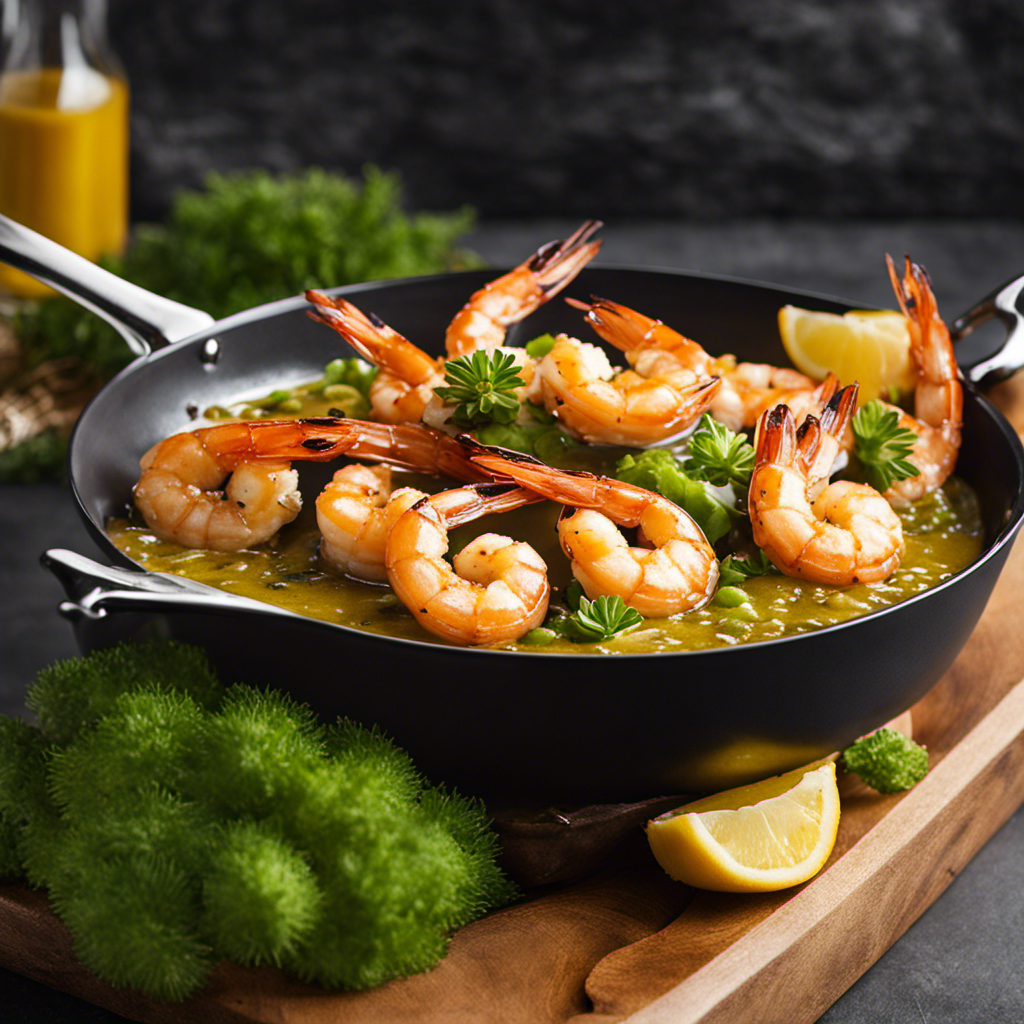
On the other hand, when you’re cooking with butter, its primary function often shifts toward flavor enhancement and the development of complex tastes. Sautéing vegetables or finishing a sauce with butter adds a rich, velvety finish that elevates the dish. Here, butter’s flavor compounds are released at moderate heat, enriching the overall taste profile. It also plays a role in texture modifications, helping to create a smooth, glossy sauce or a luscious finish to meats and seafood. Unlike in baking, where butter’s melting creates lift and structure, in cooking, it’s more about layering flavors and smoothing out textures. The heat applied during cooking allows butter to brown and develop a nutty, toasted flavor—known as a “beurre noisette”—which adds a depth that’s impossible to achieve with oil alone. Additionally, understanding how butter’s melting behavior differs between baking and cooking can help you better control your recipes. Recognizing the role of fats in different culinary processes further enhances your ability to master various dishes. Exploring how emulsification occurs when incorporating butter into sauces can also improve your culinary results. Knowing how butter reacts to heat and its behavior in different environments can greatly influence the outcome of your culinary efforts. Moreover, understanding how fat composition impacts cooking and baking results allows for more precise recipe adjustments.
In essence, the difference between butter for baking and butter for cooking boils down to how you want it to interact with your ingredients. For baking, you focus on its ability to modify textures—making doughs tender, flaky, or crisp—and on flavor enhancements that make baked goods irresistible. For cooking, you rely on its capacity to enrich flavors and alter textures in sauces, sautés, and finishes. Understanding these nuances allows you to select the right type of butter or the right approach, ensuring your dishes turn out just as you envision. Whether you’re aiming for a perfect flaky croissant or a silky sauce, choosing the right butter and knowing its role can make all the difference in your culinary creations.
As an affiliate, we earn on qualifying purchases.
Frequently Asked Questions
Can I Substitute Butter for Baking With Butter for Cooking?
Yes, you can substitute cooking butter for baking butter, but be aware it might affect flavor enhancement and texture modification in your baked goods. Cooking butter often has a different fat content or salt level, which can alter sweetness or richness. For best results, choose unsalted butter for baking, and consider adjusting other ingredients to maintain the desired flavor and texture. Always taste and tweak as needed to achieve your perfect bake.
Does the Fat Content Differ Between Baking and Cooking Butters?
Think of butter’s fat content like a chameleon, changing subtly with its purpose. Generally, baking butters tend to have a slightly higher fat content, which enhances flavor and richness, while cooking butters often have a lower melting point for quick heat. This difference influences their flavor profile and melting point, making baking butters more suitable for textures and rich tastes, whereas cooking butters excel at quick sautéing.
Which Butter Is Better for Frying: Baking or Cooking Butter?
For frying, you should choose cooking butter because it has a higher smoke point, which prevents burning. It also allows for better flavor enhancement without breaking down quickly, and its texture modification helps achieve a crisp exterior. Baking butter might melt faster and burn at lower temperatures, which can ruin your dish. So, stick with cooking butter to guarantee your fried foods stay flavorful, crispy, and perfectly cooked.
How Does Salt Content Vary Between Baking and Cooking Butters?
Imagine salt levels as the seasoning of a story—baking butters often have a higher salt content, adding subtle richness to sweet treats, while cooking butters typically have less, letting flavors shine through. This difference influences flavor profiles, with salted baking butters enhancing desserts, and unsalted cooking butters offering versatility. You choose based on whether you want a pinch of salt or a cleaner, neutral taste for your dish.
Is Cultured Butter Preferred for Baking or Cooking?
Cultured butter is preferred for baking because of its rich, tangy flavor profile that enhances baked goods. Its complex taste can add depth to pastries and bread. When storing cultured butter, keep it in an airtight container in the refrigerator to preserve its flavor and quality. For cooking, regular unsalted butter works well, but if you want a more nuanced flavor, cultured butter can elevate your dishes with its distinctive taste.
Conclusion
Whether you’re baking a delicate cake or sautéing vegetables, choosing the right butter is like selecting the perfect brush for a masterpiece. Baking butter, with its creaminess, whispers sweet secrets to your treats, while cooking butter adds depth and character to savory dishes. Think of it as selecting the right instrument to craft your culinary symphony. With this knowledge, you’re now armed to turn everyday ingredients into culinary poetry—your kitchen’s canvas awaits your masterpiece.
NFL season / tailgating Picks
team gear
As an affiliate, we earn on qualifying purchases.