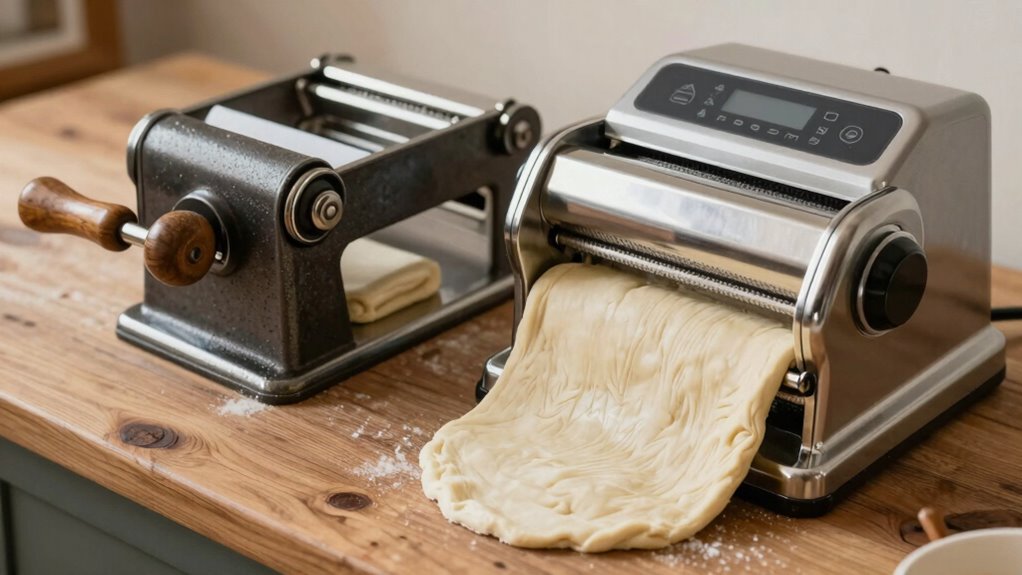
When choosing between manual and electric dough sheeters for home use, consider how much baking you do and your preference for effort versus convenience. Manual sheeters are affordable and give you full control but can be tiring for larger batches. Electric models save time and effort, making them ideal if you bake often or in bigger quantities. To find the best fit for your needs and discover more tips, keep exploring this guide.

Get kitchen staples and gadgets delivered free with Prime
- Fast, free delivery on millions of items
- Prime Video, Amazon Music and more included
- Member-only deals all year
Key Takeaways
- Manual sheeters offer control and affordability, ideal for casual home baking with smaller batches.
- Electric sheeters save time and effort, suitable for frequent or larger home baking projects.
- Manual models are simpler, easier to maintain, and more durable for occasional use.
- Electric sheeters require regular cleaning and maintenance but provide consistent results with adjustable settings.
- Consider space, budget, and environmental impact when choosing between manual and electric options for home use.
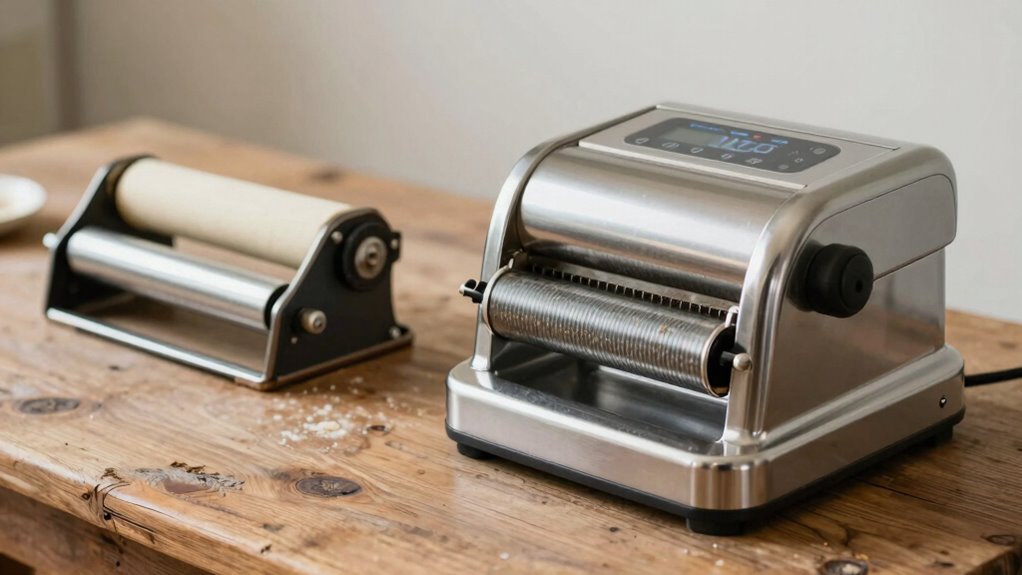
When choosing a dough sheeter, understanding the differences between manual and electric models is vital for making the right decision. Both types serve the same purpose—helping you roll out consistent, even dough quickly—yet they vary markedly in operation, convenience, and maintenance. As a home baker, you need to weigh these factors carefully to find the best fit for your kitchen. Manual sheeters rely on your physical effort. They often have hand cranks or rollers that you turn to feed dough through, giving you more control over thickness and pressure. This can be advantageous if you enjoy a hands-on approach and want a simple, low-cost tool. However, manual models require more physical effort, especially when working with larger batches or thicker dough, which could lead to fatigue over time. Additionally, manual sheeters are typically more affordable and easier to store, making them suitable for smaller kitchens or casual bakers.
Manual dough sheeters offer control and affordability but require more physical effort for larger batches.
Electric dough sheeters, on the other hand, automate the rolling process with motorized rollers. They considerably reduce your effort, allowing you to produce consistent results with less physical strain. Plus, electric models often come with adjustable settings, so you can easily select your desired thickness without guesswork. This convenience makes electric sheeters ideal for frequent baking or larger projects at home. Still, they tend to be more expensive and require more space. When considering either type, think about dough sheeter maintenance. Manual models are generally simpler, with fewer parts that could break down, making upkeep straightforward. Electric models, while more convenient, have motors and electrical components that require regular cleaning and occasional servicing. Proper maintenance guarantees smooth operation and preserves the longevity of your investment. Additionally, understanding the importance of safety when operating these machines is essential to prevent accidents and ensure long-term use. Regular safety checks can help identify potential issues early and prevent accidents related to moving parts or electrical components. Moreover, being aware of the environmental impact of your equipment choices can help you make more sustainable decisions in your baking practices. Paying attention to energy consumption when selecting an electric model can further contribute to your eco-friendly baking habits.
manual dough sheeter for home baking
As an affiliate, we earn on qualifying purchases.
As an affiliate, we earn on qualifying purchases.
Frequently Asked Questions
How Much Space Do Dough Sheeters Typically Require?
Dough sheeters usually need about 2 to 4 feet of space in length, depending on the model. You should consider storage considerations, as larger electric models can take up significant room, making them less portable. If space is limited, a manual sheeter might be more practical because it’s smaller and easier to store. Think about portability concerns if you plan to move or store the sheeter frequently.
Are Electric Sheeters Safer for Beginners?
Electric sheeters are generally safer for beginners because they come with safety features like emergency stop buttons and automatic shut-offs. Their beginner-friendly design minimizes the risk of accidents, making it easier to operate without extensive training. You don’t have to control the pressure manually, reducing the chances of mishaps. Overall, electric models provide a safer, more user-friendly experience for those new to dough sheeting.
Can Manual Sheeters Handle Large Batches Efficiently?
Manual sheeters can handle large batches, but it’s like trying to lift a mountain with your bare hands! They’re perfect for smaller or medium-sized batches, thanks to their manual operation and decent batch capacity. However, if you’re working with big quantities regularly, a manual sheeter might wear you out fast. For efficiency, especially with large batches, an electric sheeter is usually the better choice.
What Is the Typical Lifespan of a Dough Sheeter?
A dough sheeter typically lasts 5 to 15 years, depending on durability factors like build quality and usage frequency. Proper maintenance requirements, such as regular cleaning and lubrication, considerably extend its lifespan. You should inspect parts for wear and tear often and follow the manufacturer’s care instructions. Investing in a well-made machine and maintaining it diligently ensures your dough sheeter remains reliable and efficient for years to come.
Are Replacement Parts Easy to Find for Electric Models?
Back in the day, finding replacement parts for electric dough sheeters was a hassle, but now, availability concerns are much lower. You’ll generally find replacement parts easily, especially for popular brands, ensuring your machine keeps rolling smoothly. Still, it’s wise to check with the manufacturer or supplier beforehand. This way, you avoid surprises and get the parts you need quickly, keeping your dough game strong.
Conclusion
Whether you’re drawn to the simplicity of manual dough sheeters or the convenience of electric ones, your choice depends on how you bake. Manual models offer control and a hands-on experience, while electric versions save time and effort. Think about your baking habits—do you crave intimacy or efficiency? Ultimately, both tools shape your kitchen adventures, proving that the right dough sheeter isn’t just about features, but about what inspires you to create.
NFL season / tailgating Picks
team gear
As an affiliate, we earn on qualifying purchases.