
When you use cold butter straight from the fridge, it’s too firm to spread smoothly or mix evenly into your ingredients. The solid fat causes tearing in bread and prevents proper creaming in baked goods, leading to dense or uneven textures. Cold butter also stays in chunks, making it harder to incorporate fully into doughs and batters. To avoid these issues and improve your results, discover how letting butter soften slightly can make a big difference.

Get kitchen staples and gadgets delivered free with Prime
- Fast, free delivery on millions of items
- Prime Video, Amazon Music and more included
- Member-only deals all year
Key Takeaways
- Cold butter is too firm, making it difficult to spread smoothly and causing tearing of bread.
- Solidified butter prevents even mixing, leading to dense or uneven baked goods.
- Cold butter lacks the creamy consistency needed for proper creaming and aeration in recipes.
- Using cold butter disrupts the texture and rise of baked items, resulting in less fluffy results.
- Immediate use of fridge-cold butter hampers optimal blending and can negatively affect final quality.
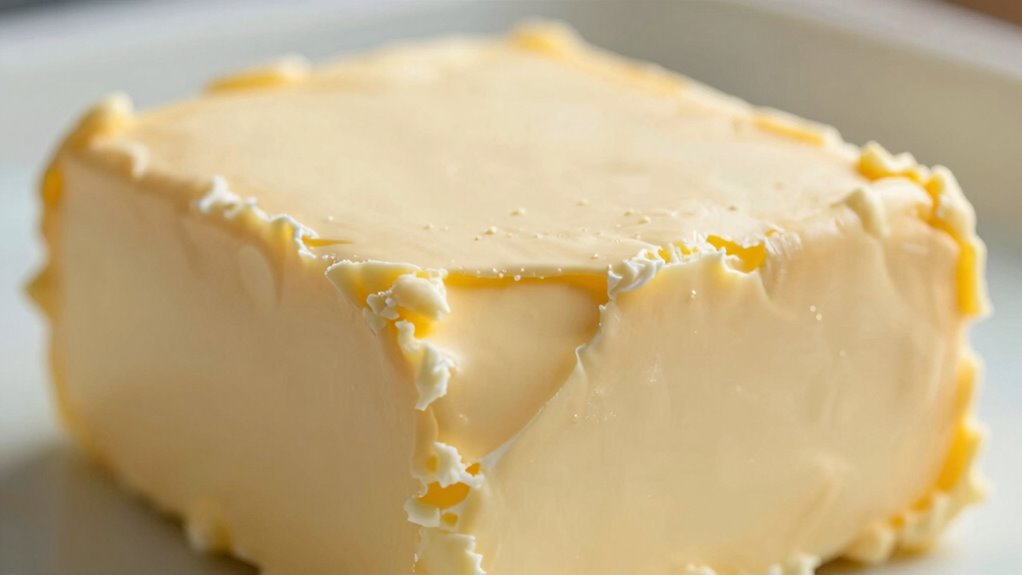
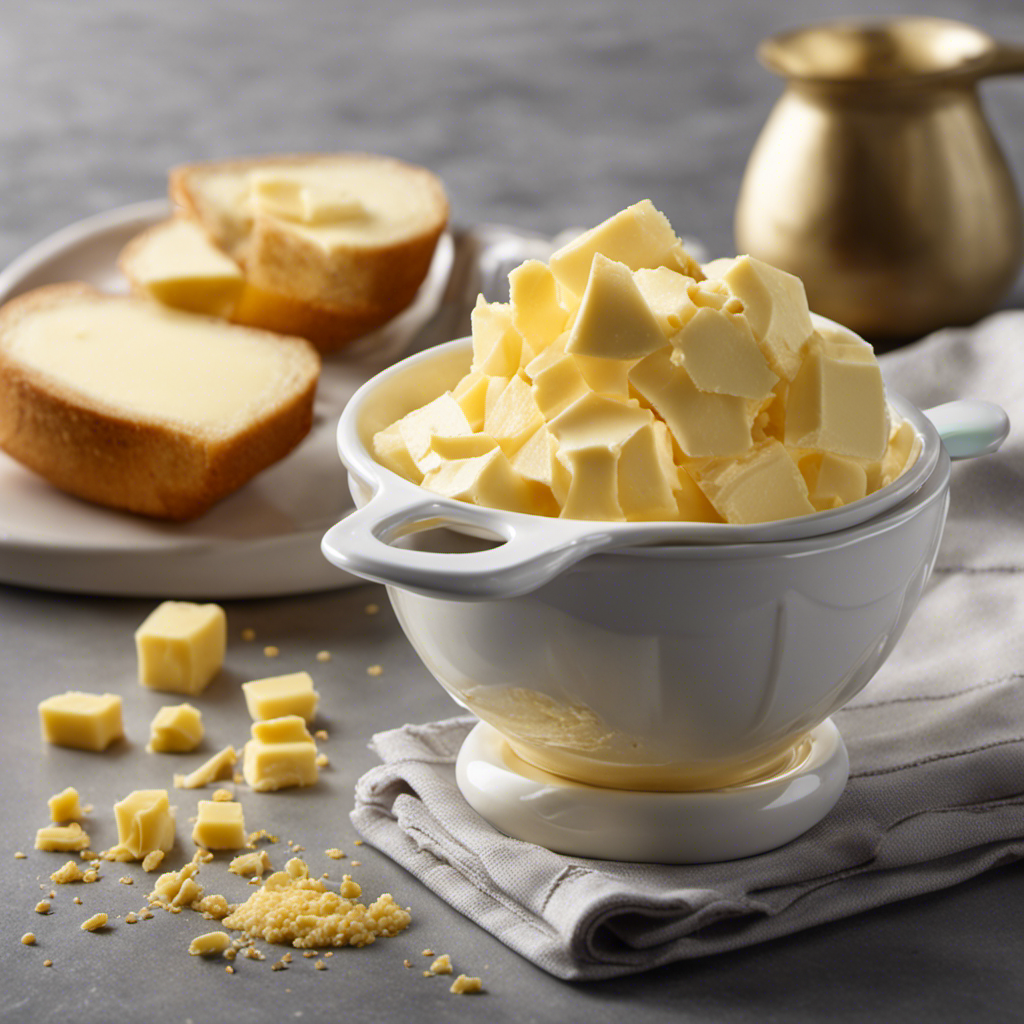
Taking butter straight from the fridge and trying to spread it immediately can ruin the texture of baked goods and toast alike. When butter is cold, it’s firm and difficult to spread smoothly. This often results in tearing bread or creating uneven layers on pastries. But the issue goes beyond just inconvenience; it directly impacts the final outcome of your cooking or baking. Cold butter lacks the creamy consistency you want for spreading, blending, or incorporating into recipes. Instead, it’s stiff and granular, making your efforts frustrating and less effective.
Cold butter from the fridge can ruin your baked goods and toast with tearing or uneven layers.
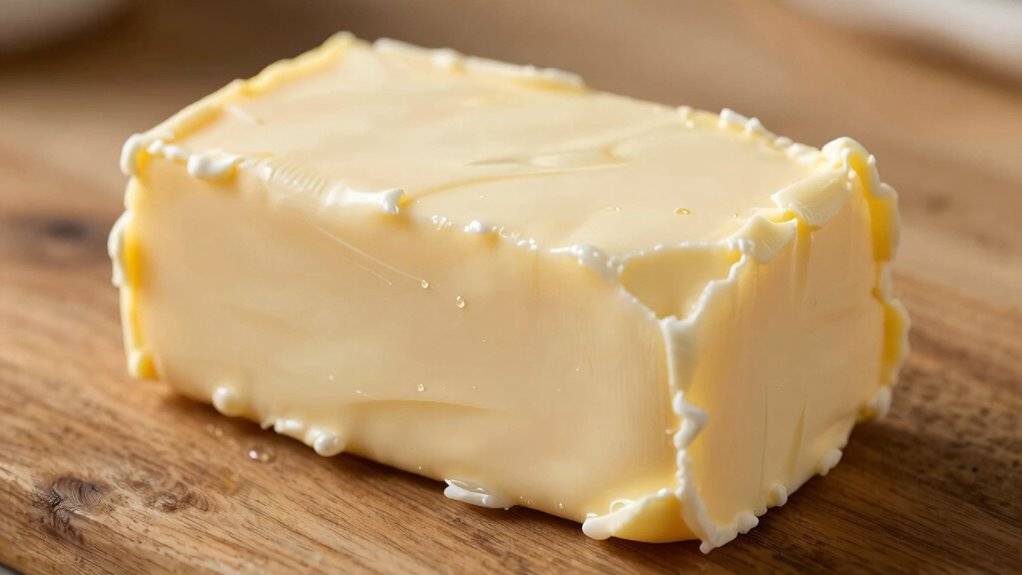
The key to achieving that ideal creamy consistency lies in understanding butter’s melting point variation. Butter isn’t a uniform substance; it contains water, milk solids, and fat, each with different melting points. When butter is cold, these components are solidified, especially the fat, which is what gives butter its structure. As you work with cold butter, you’re effectively fighting against its natural state, which is why it doesn’t spread smoothly. Once it warms slightly—either by resting at room temperature or gently warming—it reaches a state where the fat begins to melt just enough to give you that silky, easy-to-spread texture. This melting point variation among butter’s components is what makes room temperature butter so much more manageable.
Waiting a few minutes before using butter can make a noticeable difference. When you let butter sit out, it softens gradually, achieving that perfect creamy consistency without becoming too runny. It’s also helpful to understand butter’s melting points to better control its behavior during cooking. It’s this texture that contributes to better baking results, too. When incorporated into doughs or batters, softened butter disperses evenly, trapping air and creating lighter baked goods. Cold butter, on the other hand, tends to stay in stubborn chunks, resulting in dense or uneven textures in cookies or cakes. Additionally, understanding the melting point variation within butter can help you better control its behavior during cooking, leading to more consistent and predictable results. Moreover, using softened butter improves the overall texture of your baked treats, making them lighter and fluffier.
Furthermore, trying to work with butter straight from the fridge can interfere with recipes that rely on creaming, such as cookies or muffins. Cold butter won’t trap air properly, leading to less rise and a denser crumb. For spreading on toast or muffins, cold butter tears bread apart rather than gliding smoothly, making your breakfast less enjoyable. To avoid these issues, take your butter out of the fridge about 10 to 15 minutes before use. This small step allows the butter to soften just enough, reducing the impact of melting point variation and ensuring you get that desirable creamy consistency every time.
Products Worth Considering

Le Creuset Signature Enameled Cast Iron Round Dutch Oven, 5.5 qt, Deep Teal

Ninja Artisan 5-in-1 Portable Electric Pizza Oven, Blue & Gold

Cuisinart Stainless Steel Bread Maker, 12 Programs, 2 lb Capacity
As an affiliate, we earn on qualifying purchases.
Frequently Asked Questions
How Long Should Butter Sit Out Before Baking?
You should let butter sit out at room temperature for about 30 minutes before baking. Proper butter storage is key, ensuring it’s soft enough for creaming but not melted. Keep your baking temperature in mind—softened butter blends better and creates a better texture. If you leave it out too long, it may become too warm, affecting your dough’s consistency. So, aim for that 30-minute window for the best results.
Does Room Temperature Butter Affect Flavor?
Room temperature butter acts like a gentle whisper, blending flavors seamlessly. When you let butter sit out, it enhances flavor through better incorporation, making baked goods more flavorful and buttery. Plus, it preserves texture, allowing your treats to stay tender and airy. So, soft butter doesn’t just improve flavor enhancement but also guarantees that your baked goods have the perfect, melt-in-your-mouth texture you’re aiming for.
Can Cold Butter Be Used for Specific Recipes?
Yes, you can use cold butter for specific recipes like biscuits or pie crusts. Cold butter creates flakiness and tender textures, making it ideal. If you need softer butter, consider cold butter alternatives like slightly softened or grated butter. Use butter melting techniques such as cutting it into small pieces or refrigerating it before mixing. This approach helps you control consistency and achieve the desired results in your baking.
How Does Butter Temperature Impact Dough Consistency?
When butter is too cold, it hampers dough elasticity because it doesn’t melt evenly, leading to a crumbly texture. Warm butter, on the other hand, melts more readily, creating a smoother dough that’s easier to work with. If butter is at the right temperature, it combines well with other ingredients, ensuring proper dough consistency and better elasticity. Too cold or too warm butter directly impacts the final baked product.
Is It Better to Soften Butter or Melt It?
It’s better to soften butter than melt it because softened butter preserves the perfect texture for baking. When you soften butter, you control the ideal consistency, ensuring even mixing and fluffiness. Melted butter can make baked goods dense or greasy, ruining texture preservation. Store butter properly in the fridge to keep it firm, then soften it just enough for your recipes. This way, your baked treats turn out light, tender, and flawless every time.
Conclusion
So, next time you reach for cold butter straight from the fridge, picture it as a stubborn block, resisting the warmth and softness needed to blend seamlessly into your baking. Let it sit out and soften, like a gentle sunrise easing into the day. When you give it time, it transforms into a smooth, inviting partner that elevates your recipes. Patience melts away frustrations, turning your baking into a warm, comforting experience.