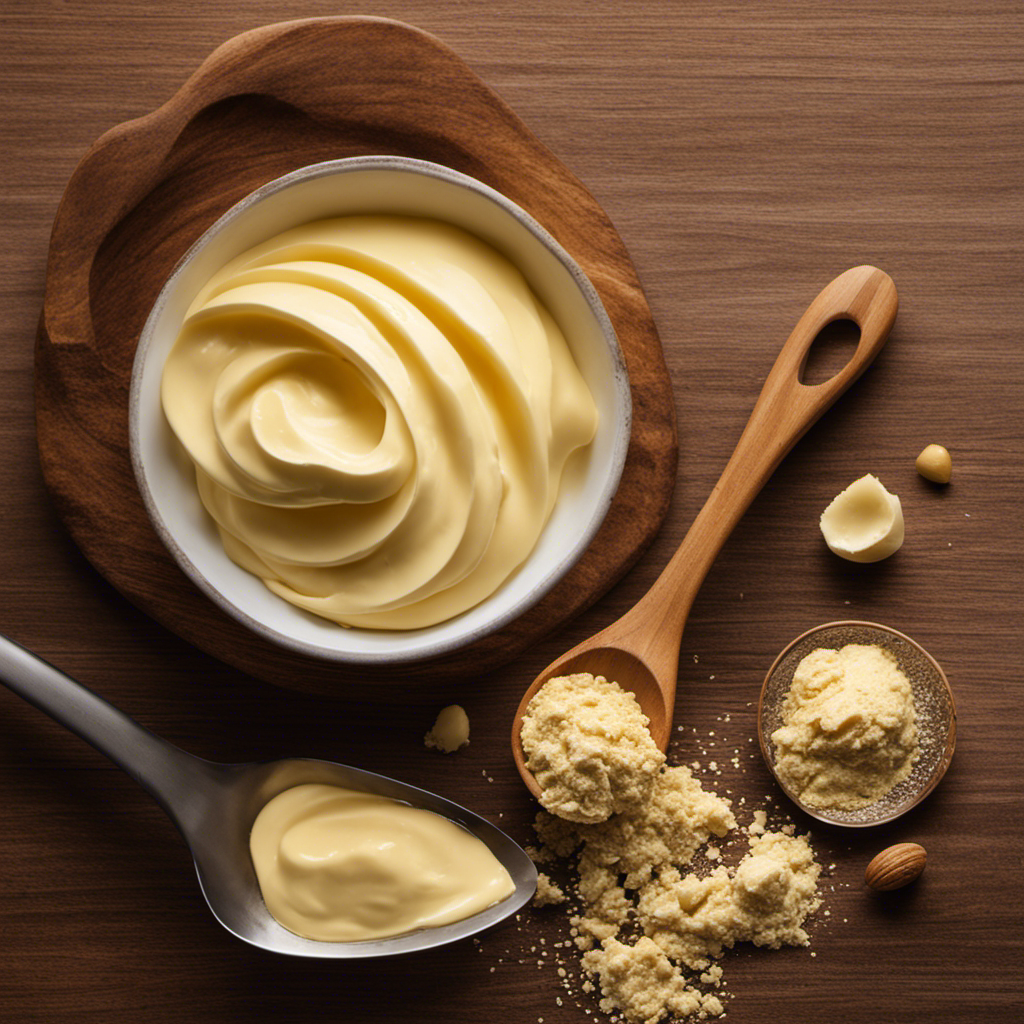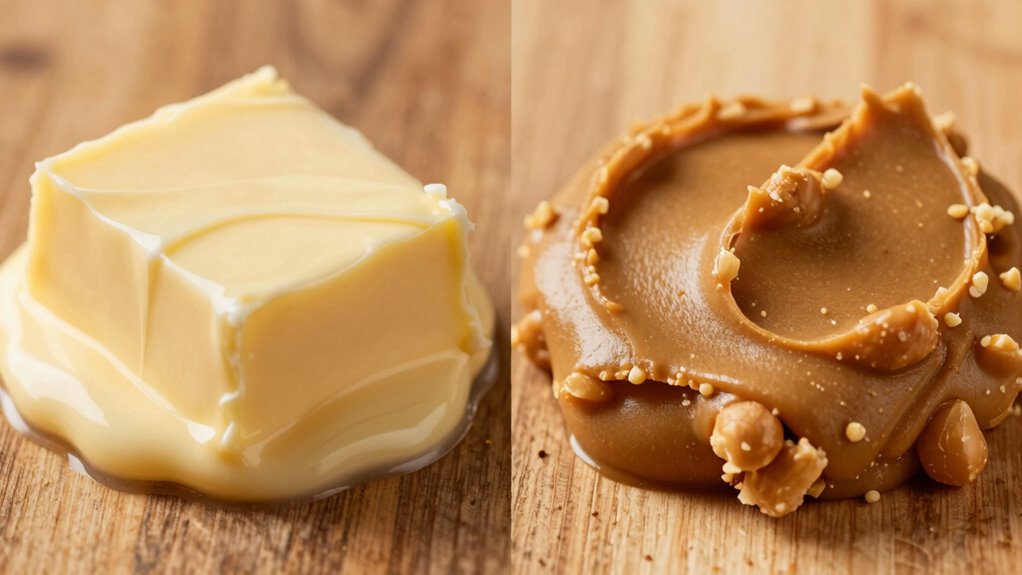

Butter mainly provides dairy fats and small amounts of vitamins, with almost no fiber or plant nutrients. In contrast, peanut butter offers healthy plant-based fats, fiber, and a range of vitamins and minerals that support digestion and heart health. While butter is calorie-dense and impacts cholesterol negatively, peanut butter promotes sustained energy and better nutrition. Want to understand how these differences affect your diet? Keep exploring to discover more.

Get kitchen staples and gadgets delivered free with Prime
- Fast, free delivery on millions of items
- Prime Video, Amazon Music and more included
- Member-only deals all year
Key Takeaways
- Butter is primarily dairy fat with minimal micronutrients, while peanut butter contains plant-based proteins, fiber, and diverse nutrients.
- Butter’s high saturated fat content may raise LDL cholesterol, whereas peanut butter provides healthy fats beneficial for heart health.
- Peanut butter offers a balanced mix of nutrients, including fiber and minerals, unlike butter’s limited nutrient profile.
- The fiber in peanut butter helps regulate blood sugar and support digestion, which butter lacks.
- Their differences in composition and nutrient diversity lead to distinct roles in a healthy diet.
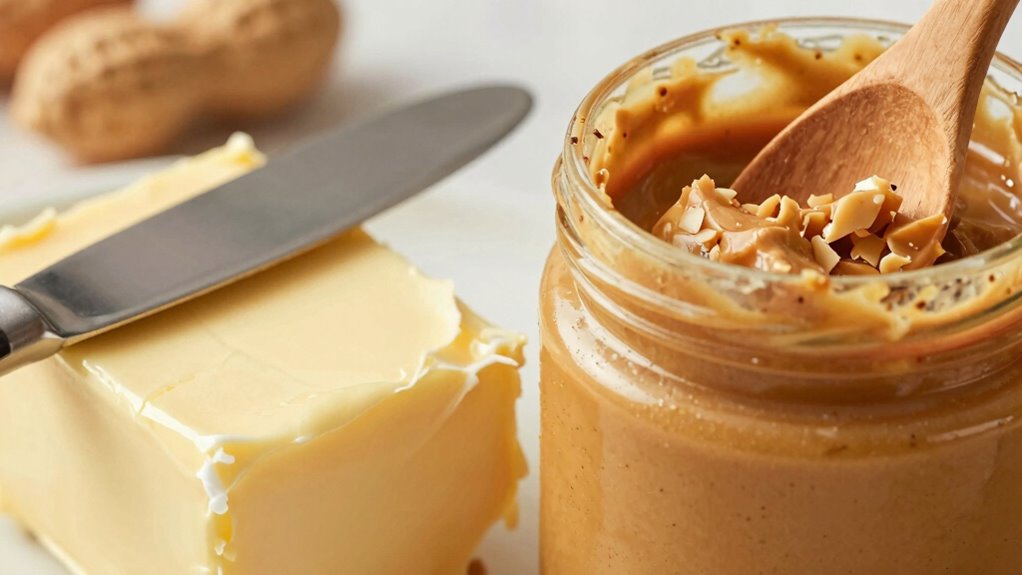
When choosing between butter and peanut butter, understanding their nutritional differences can help you make healthier decisions. Butter is primarily composed of dairy fat, which comes from milk and cream. This dairy fat is high in saturated fats, which can raise your LDL cholesterol levels if consumed excessively. While butter offers some vitamins like A, D, E, and K, its main nutritional contribution is the saturated fat content that can impact your heart health. On the other hand, peanut butter is plant-based and packed with plant protein. This makes it a more protein-rich option, especially for vegetarians or anyone looking to boost their intake of plant-derived nutrients. The plant protein in peanut butter is beneficial for muscle repair and overall body function, and it tends to be accompanied by healthy fats that can support your cholesterol levels when eaten in moderation.
The differences go beyond just fats and proteins. When you look at calories, butter tends to be more calorie-dense due to its high fat content, which means a small amount can pack a significant energy punch. Peanut butter, however, provides a more balanced nutritional profile, offering not only healthy fats but also fiber, vitamins, and minerals. These nutrients contribute to digestive health, immune system support, and sustained energy release. Because peanut butter contains plant protein, it can help you feel full longer, making it a better choice for snacks or meals if you’re aiming for satiety and sustained energy. Additionally, nutritional diversity in peanut butter makes it a more versatile food option that can complement a variety of diets. Incorporating nutrient-dense foods like peanut butter can improve overall dietary quality and support long-term health.
Another key difference lies in their composition. Butter contains almost no fiber or plant-based nutrients, focusing mainly on dairy fats and some trace vitamins. Peanut butter, by contrast, is a more complex food source, offering a combination of healthy fats, plant protein, fiber, and micronutrients like magnesium, potassium, and antioxidants. This makes peanut butter a more nutritionally diverse option that can contribute to your daily nutrient intake in multiple ways. Furthermore, dietary fiber plays a significant role in maintaining healthy digestion and preventing chronic diseases, which is absent in butter but present in peanut butter. Including foods rich in fiber can also help regulate blood sugar levels and support weight management.
natural peanut butter with no added sugar
As an affiliate, we earn on qualifying purchases.
As an affiliate, we earn on qualifying purchases.
Frequently Asked Questions
How Do Butter and Peanut Butter Affect Cholesterol Levels?
Butter can raise your cholesterol levels because it contains saturated fats, impacting your heart health negatively. In contrast, peanut butter, especially when unsweetened and natural, offers healthier fats that may help improve your cholesterol profile. To maintain good heart health, you should monitor your intake of butter and choose peanut butter with minimal additives. Balancing these fats can positively influence your overall cholesterol impact and support your cardiovascular wellness.
Are There Any Allergen Concerns With Butter Versus Peanut Butter?
Yes, there are allergen concerns with both. If you have dairy allergies, butter could trigger a reaction since it’s a dairy product. For nut sensitivities, peanut butter is risky because it contains peanuts, a common allergen. Always check labels and consult with your doctor if you have known dairy allergies or nut sensitivities. Being cautious helps prevent allergic reactions and keeps you safe.
What Are the Environmental Impacts of Producing Each?
You’ll find that producing butter generally has a higher environmental impact than peanut butter, mainly due to its larger carbon footprint from dairy farming. Dairy requires more water, land, and energy, often relying on sustainable farming practices that still emit significant greenhouse gases. In contrast, peanut farming tends to be more environmentally friendly, with a lower carbon footprint, especially when growers adopt sustainable farming methods that reduce environmental strain.
Can Butter or Peanut Butter Be Part of a Low-Carb Diet?
Yes, butter and peanut butter can fit into a low-carb diet. You might enjoy butter for its rich taste pairing with vegetables or meats, and its culinary versatility in cooking and baking. Peanut butter is also an option, especially natural varieties with no added sugar. Just watch your portions, as both are calorie-dense. Incorporate them thoughtfully to add flavor and texture without exceeding your carb goals.
How Do Taste Preferences Influence Their Nutritional Choices?
Your taste influence and flavor preferences greatly shape your nutritional choices. If you prefer rich, creamy textures, you might lean toward butter, while a nutty, savory taste could lead you to peanut butter. These flavor preferences guide you to select foods that satisfy your palate, making it easier to stick to your diet. Recognizing how taste influences your choices helps you make more conscious decisions aligned with your nutritional goals.
Conclusion
Remember, butter and peanut butter are like two different roads in your nutrition journey. While butter is a smooth, dense highway of fats, peanut butter is a lively trail packed with protein and healthy fats. Choosing between them isn’t just about taste—it’s about steering your diet in the right direction. So, when you make your next spread decision, think of it as picking the right path for your health’s adventure.
Halloween Picks
halloween
As an affiliate, we earn on qualifying purchases.