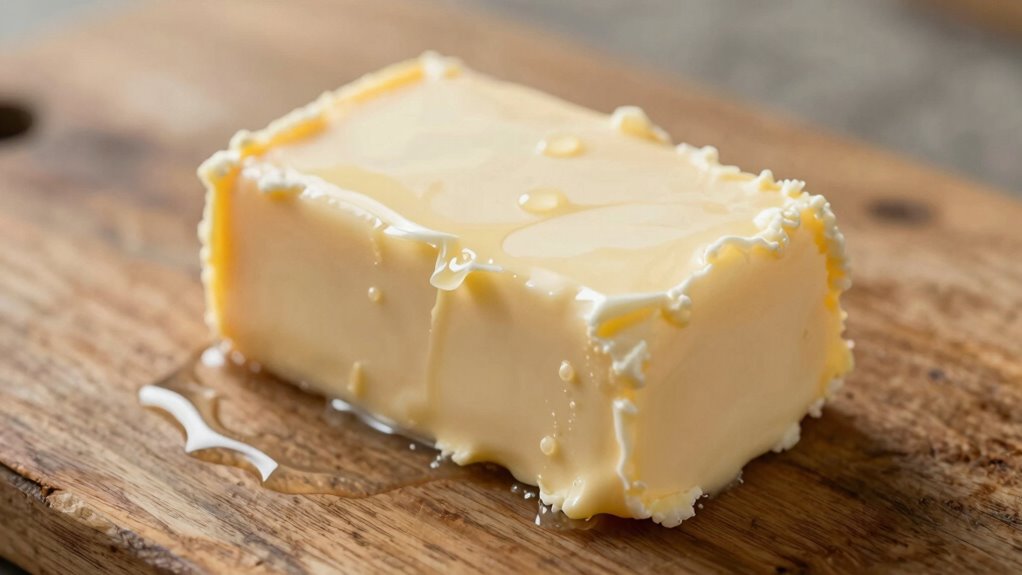

Butter softens unevenly on the counter because its composition varies, including different fats, water, and milk solids. These components melt at different temperatures, causing some parts to become soft faster than others. Processing methods and the type of butter also affect how evenly it softens. External factors like room temperature can play a role too. If you want to understand more about what influences this uneven melting, there’s plenty to explore.
Key Takeaways
- Variations in fat composition, especially fatty acid profiles, cause different melting points within the butter.
- Water and milk solids content affect how uniformly butter softens at room temperature.
- Processing methods influence fat distribution and melting behavior, leading to uneven softening.
- Fluctuating room temperatures can cause parts of butter to soften faster than others.
- Short-chain and long-chain fatty acids melt at different temperatures, creating uneven softening.
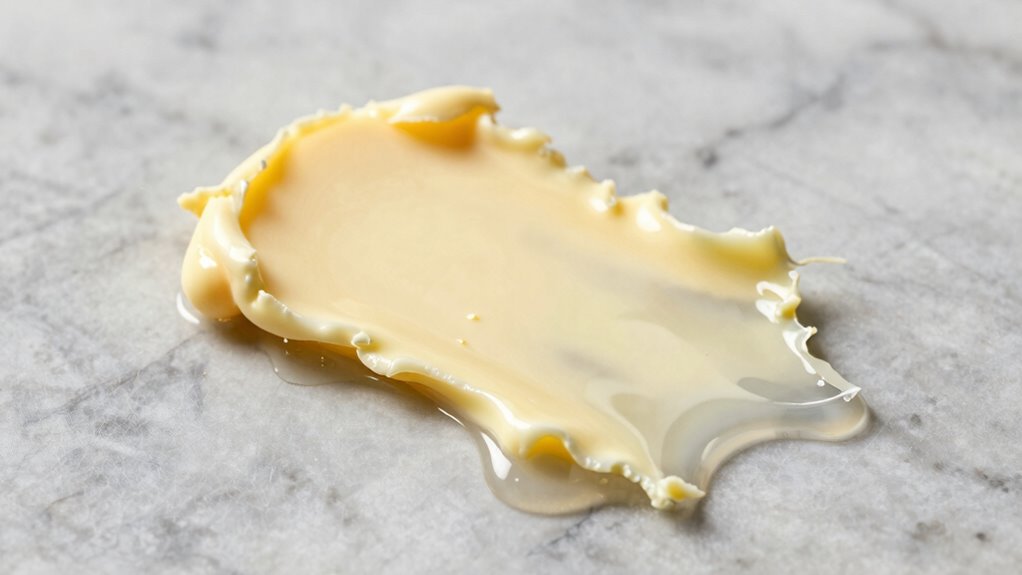
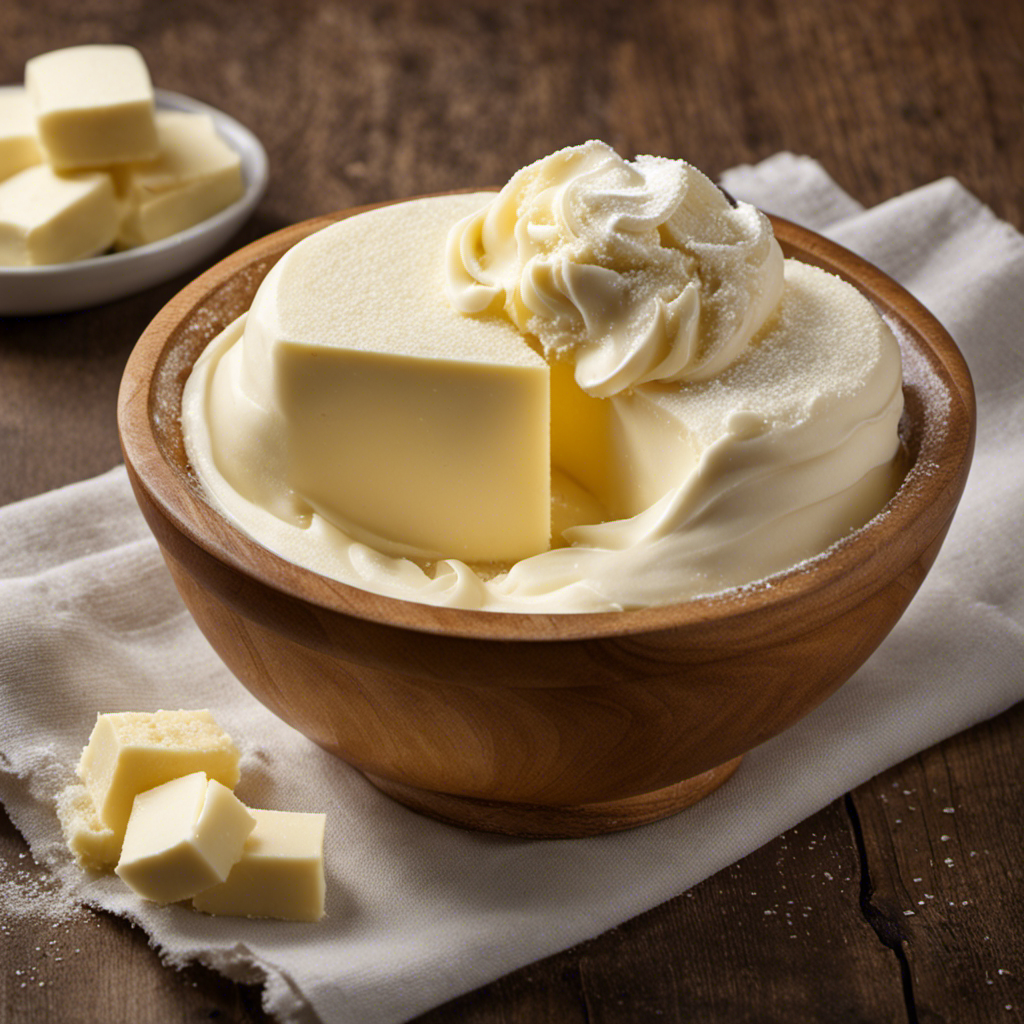
When you leave butter out on the counter, you might notice it softens unevenly, with some parts becoming spreadable while others remain firm. This happens because of melting point variations within the butter itself. Butter isn’t a uniform substance; it’s a complex mixture of fats, water, and milk solids. The fats in butter have different melting points depending on their chemical structure. Some fats, like short-chain fatty acids, melt at lower temperatures, while long-chain fatty acids require higher heat. As a result, when butter warms up, these fats don’t all soften at the same rate, creating uneven melting. You’ll see certain areas become easy to spread, while others stay firm longer. Additionally, the melting point variations are influenced by how the fats are processed during butter production. The temperature at which butter is kept can further influence this melting behavior, especially if it is exposed to fluctuating room temperatures. Fat composition also plays a significant role in how uniformly butter softens, as different types of fats respond differently to heat. Variations in the fatty acid profile can further alter the melting process, resulting in the uneven softening you observe. Butter composition differences play a significant role in how it softens. The ratio of water to fat, as well as the types of fats present, influence the melting behavior. Commercial butter often contains added ingredients or varying fat compositions, which can further affect how it responds to room temperature. For example, European-style butters, which have a higher butterfat content, tend to soften more uniformly because their fats melt more evenly. In contrast, regular butter, often with more water and milk solids, may display more uneven softening because the water and solids don’t melt at the same rate as fats. The specific proportions of these ingredients determine how quickly and evenly butter melts when left out. Variations in fats and water content can significantly impact the softening process. Factors like processing methods also influence how evenly butter softens, depending on how the fats and solids are handled during production.
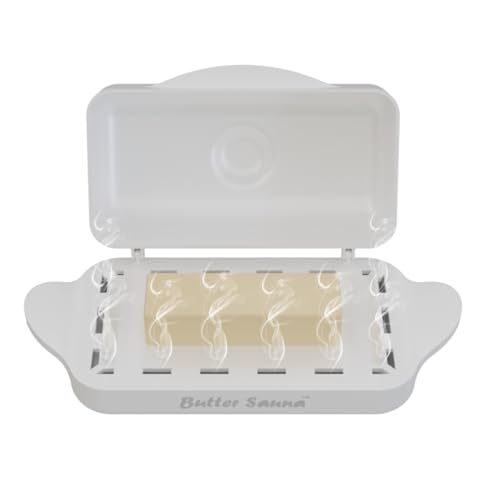
Butter Sauna™ Steam Powered Quick Butter Softening Dish with Flip-Top Lid & Matching Knife, Holds 2 Sticks/European, Tablespoon Measurements, Dishwasher Safe
🧈Effortless Butter Softening – Softens butter to a perfect spreadable consistency in minutes using steam, no microwaving or…
As an affiliate, we earn on qualifying purchases.
As an affiliate, we earn on qualifying purchases.
Frequently Asked Questions
Does the Type of Butter Affect How It Softens?
Yes, the type of butter affects how it softens. Different butters have varying levels of butter crystallization, which impacts their melting and softening behavior. For example, European-style butters with higher fat content soften more evenly, while standard butters with more crystallization can develop texture variation. So, choosing the right butter can help you achieve a smoother, more consistent softness, especially if you want uniform results when baking or spreading.
Can Storage Container Influence Uneven Softening?
Yes, the storage container can influence uneven butter softening. Container material, like metal or glass, affects how heat transfers, leading to uneven softening. A plastic container might insulate the butter differently, causing inconsistent temperature distribution. Additionally, longer storage duration can cause uneven softening, especially if the butter develops a layer of firmness or becomes too cold. To achieve even softening, use a non-metallic container and keep the butter at room temperature for a manageable time.
Does Temperature Fluctuation Impact Butter Softness?
Imagine you’re in a medieval kitchen—just like today’s butter, medieval butter’s softness depends on temperature stability. Fluctuations in temperature cause uneven butter crystallization, leading to inconsistent softening. When your kitchen’s temperature swings, butter doesn’t soften uniformly. Keep your counter’s temperature steady to guarantee even softening; otherwise, the butter’s crystalline structure remains uneven, making it a challenge to spread smoothly. Consistent temperature is the key to perfect, evenly softened butter.
How Does Butter’s Age Affect Its Softening Pattern?
As butter ages, its softening pattern changes due to butter oxidation and seasonal variation. You’ll notice older butter softens unevenly because oxidation affects its structure, making parts softer than others. Seasonal variation also plays a role—during colder months, butter remains firmer, while warmer seasons cause quicker, uneven softening. To guarantee even softening, keep butter at a consistent temperature and consider your local climate’s influence on its aging process.
Is It Better to Soften Butter in the Fridge or at Room Temperature?
Think of butter as a delicate dance partner—softening it at room temperature lets it glide smoothly, preserving flavor retention and achieving perfect texture consistency. If you keep it in the fridge, it stays firm longer, but softening takes more time and can lead to uneven melting. For baking or spreading, room temperature butter is your best bet, ensuring even softness and consistent flavor throughout your culinary creations.

WHOLE FOODS MARKET European Style Salted Butter, 8.8 OZ
European-style salted butter in an 8.8 oz block — rich, creamy, and crafted with a higher butterfat content…
As an affiliate, we earn on qualifying purchases.
As an affiliate, we earn on qualifying purchases.
Conclusion
So, next time your butter softens unevenly, remember it’s just the warmth unevenly reaching different parts. Picture spreading a knife across a patchy surface—some spots glide effortlessly, while others resist. It’s not a flaw but a natural process, like gentle waves shaping a sandy shore. Embrace the imperfections, knowing that with patience, your butter will become perfectly spreadable, just like the smooth, creamy consistency you’re aiming for.

I Can't Believe It's Not Butter!, Light Buttery Spread, 15 oz
Go ahead and enjoy the unbelievable fresh butter taste made with real, simple ingredients from I Can't Believe…
As an affiliate, we earn on qualifying purchases.
As an affiliate, we earn on qualifying purchases.

Butter Dispenser with Lid, Adjustable Dosage Control, Dishwasher Safe, Upgraded 2 Pack Butter Spreader, Perfect for Pancakes, Waffles, Bagels & Toast – Keep Butter Fresh and Mess-Free
Effortless Usage: Our innovative butter spreader dispenses the perfect amount of butter with a simple rotation. Ideal for…
As an affiliate, we earn on qualifying purchases.
As an affiliate, we earn on qualifying purchases.