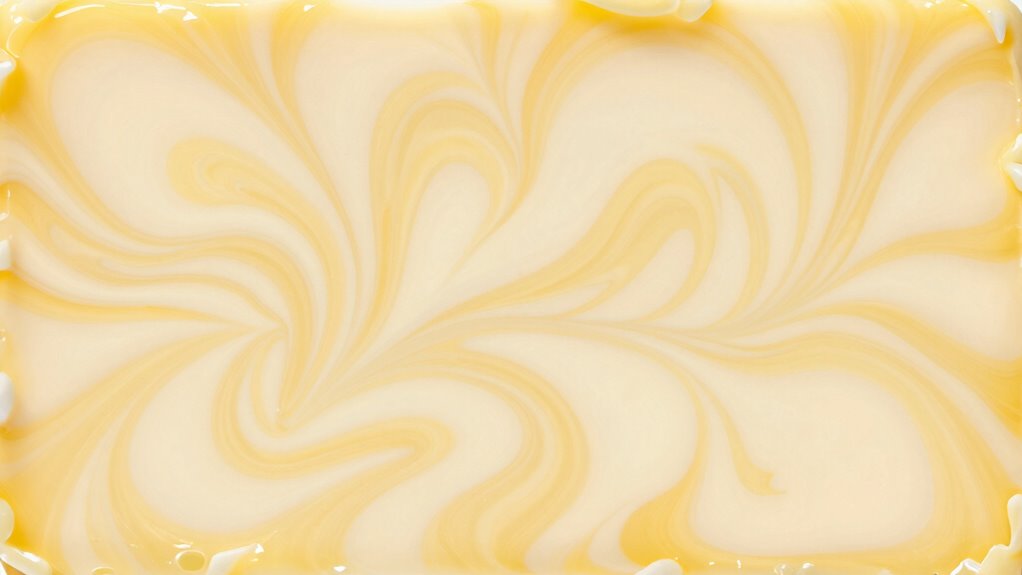
You might notice your butter looks marbled or mottled because it’s a natural result of its composition, not spoilage. Butter is made of fats, water, and milk solids that sometimes don’t fully blend, especially in artisanal varieties. When it melts, uneven distribution of these components causes streaks and patches to appear more prominently. Understanding this natural variation helps you recognize that this mottling is normal—continue exploring, and you’ll discover even more interesting details.

Get kitchen staples and gadgets delivered free with Prime
- Fast, free delivery on millions of items
- Prime Video, Amazon Music and more included
- Member-only deals all year
Key Takeaways
- Butter’s mottled appearance results from the natural mixture of water, milk solids, and fat, not spoilage.
- Variations in composition are due to differences in cream source, processing, and churning methods.
- Melting accentuates mottling by temporarily separating components, making patches and streaks more visible.
- Fully melted butter appears uniform, but initial uneven distribution causes the marbled look.
- Mottling is a natural characteristic indicating incomplete homogenization, not an indicator of spoilage.

If you’ve ever noticed that butter sometimes appears marbled or mottled, you’re not alone. This visual variation often surprises people, especially since butter is usually thought of as a uniform, creamy spread. The reason behind this mottling ties directly to its composition and how it changes during the melting process. Butter isn’t just one simple ingredient; it’s a mixture of water, milk solids, and fat. These components don’t always blend perfectly, which can lead to a streaked or mottled appearance. When you look at butter, you’re actually seeing different layers or regions of fat and water that haven’t fully integrated. This isn’t an indication of spoilage but rather a natural result of how butter is made and stored. Understanding butter composition helps explain why these visual differences occur.
Butter’s mottled look is natural, caused by uneven blending of water, milk solids, and fat during production and melting.
The butter composition plays a key role here. Commercial butter is churned from cream, and during this process, fats separate from the water and milk solids. Depending on factors like the cream’s source, temperature during churning, and the method used, the final product may contain varying amounts of these elements. Sometimes, the fat globules don’t fully homogenize, leaving behind tiny pockets of water or milk solids that appear as mottled streaks or patches. These variations are more noticeable in artisanal or less processed butters, where the blending isn’t as uniform. The butter’s color can also vary slightly, adding to the marbled effect.
The melting process further accentuates these visual differences. When you heat butter, the fat begins to liquefy at around 90-95°F (32-35°C). Because of the uneven distribution of water and milk solids within the butter, some parts melt faster than others. This uneven melting causes the streaks and mottled appearance to become more pronounced. As the butter continues to melt, the different components separate temporarily, making the marbled effect even more visible. Once fully melted, the mixture becomes more uniform, but during the phase change, those streaks are quite prominent.
In essence, the mottled appearance of butter isn’t a flaw or sign of spoilage. It’s a natural consequence of its complex composition and melting behavior. When you see these marbled patterns, it’s a visual cue that butter contains a mixture of fat, water, and solids that haven’t fully homogenized. Understanding this helps you appreciate the natural diversity within butter and realize that, no matter its appearance, it’s still the same delicious, versatile ingredient you trust in your cooking.
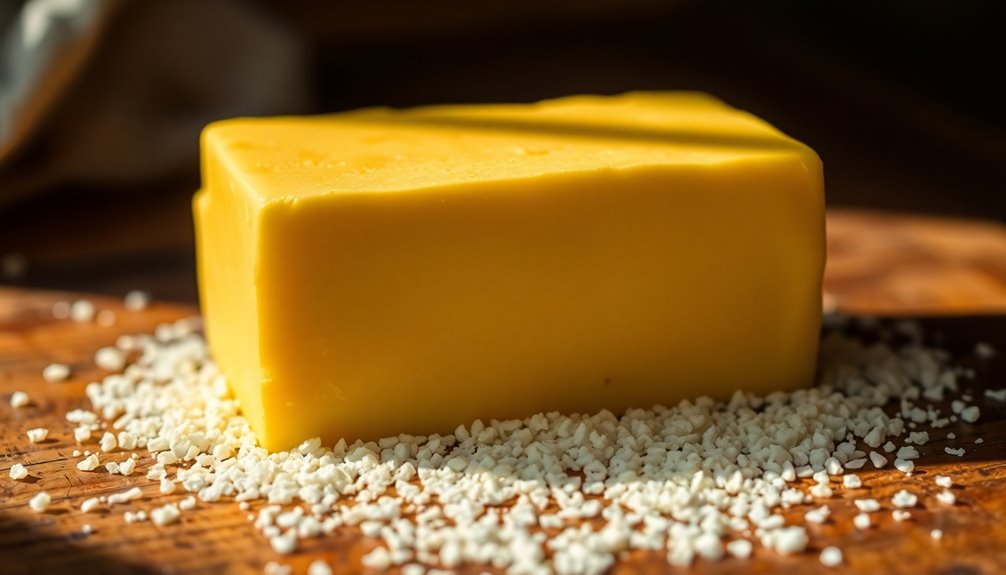
artisanal butter with natural mottling
As an affiliate, we earn on qualifying purchases.
As an affiliate, we earn on qualifying purchases.
Frequently Asked Questions
Does Marbling Affect Butter’s Flavor or Quality?
Marbling in butter can affect its flavor and quality, but often in subtle ways. The flavor variation might be noticeable, adding a richer or more complex taste, while the texture impact tends to be minimal. Marbling results from fat distribution, which doesn’t compromise safety or overall quality. Instead, it adds visual appeal and can enhance the sensory experience, making your butter feel more luxurious and interesting to use.
Can Marbled Butter Be Harmful or Unsafe to Eat?
Marbled or mottled butter isn’t harmful or unsafe to eat, as long as it’s stored properly. Food safety is key, so check for off smells or sliminess before consuming. Poor storage practices, like leaving butter at room temperature too long or exposing it to moisture, can cause visual changes but don’t necessarily mean it’s unsafe. When in doubt, trust your senses; if it looks and smells fine, it’s safe to enjoy.
How Does Butter Marbling Compare to Marbling in Meat?
You might notice butter’s marbling and compare it to meat’s, but they differ considerably. Butter’s color variation results from fat and milk solids, creating a marbling texture that’s smooth and uniform. In contrast, meat marbling involves intramuscular fat strands that add flavor and tenderness. While both display marbling, butter’s variation is safe and natural, whereas meat’s marbling influences taste and texture more distinctly.
Is Marbled Butter an Indicator of Poor Storage or Handling?
Marbled butter isn’t necessarily a sign of poor storage conditions or handling practices. Instead, it can occur naturally due to the presence of milk solids or variations in fat distribution. While improper storage, like exposure to heat or light, might cause changes in texture or color, marbling itself is often normal. To keep butter fresh, store it in a cool, dark place, and handle it gently to maintain its quality.
Can Marbling Occur in Plant-Based or Dairy-Free Butters?
Yes, marbling can occur in plant-based or dairy-free butters. These vegan alternatives often contain plant-based fats like coconut or palm oil, which can separate or crystallize, creating a marbled or mottled appearance. This marbling doesn’t mean the product is bad; it’s a natural part of plant-based textures. Factors like temperature changes or storage conditions can cause this, but it doesn’t impact the quality or safety of your vegan butter.
Conclusion
Next time you see marbled butter, think of it as a beautiful map of flavors, each region telling a different story. Just like a artist’s canvas, those swirls are a natural masterpiece, created by the dance of fat and air. When I first noticed this mottling, I imagined a tiny, bustling city of butter, where different ingredients meet and mingle. Embrace these quirky patterns—they’re proof that even a simple stick of butter has a story to tell.
Halloween Picks
halloween
As an affiliate, we earn on qualifying purchases.