
Using a steam oven can produce bakery-quality bread, but only if you know when to stop the steam. During baking, steam helps your dough expand fully and creates a glossy, crackly crust. If you keep the steam on too long, the crust may stay soft and pale; too early, and you risk limited oven spring. Mastering the timing guarantees a perfect balance of moist crumb and crispy crust, and you’ll discover how to optimize your results as you continue.

Get kitchen staples and gadgets delivered free with Prime
- Fast, free delivery on millions of items
- Prime Video, Amazon Music and more included
- Member-only deals all year
Key Takeaways
- Proper steam timing ensures a crispy crust while allowing full oven spring for optimal loaf volume.
- Releasing steam too early can hinder crust development and reduce oven spring.
- Maintaining steam during the initial phase keeps dough surface moist for better expansion.
- Stopping steam at the right moment promotes a deep, golden crust and glossy appearance.
- Mastering steam control enhances bread texture, crust color, and overall bakery-quality results.

If you want bakery-quality bread at home, steam ovens are a game-changer. They bring professional techniques into your kitchen, allowing you to create crusty loaves with a tender crumb. One of the key advantages of steam ovens is their ability to perform steam infusion during baking, which promotes better crust development. When you start baking, introducing steam helps keep the dough’s surface moist, enabling it to expand fully before the crust sets. This results in a loaf with a shiny, crisp exterior and a soft interior. However, mastering the timing of when to release the steam is crucial; too much steam can hinder crust formation, while too little can prevent optimal oven spring.
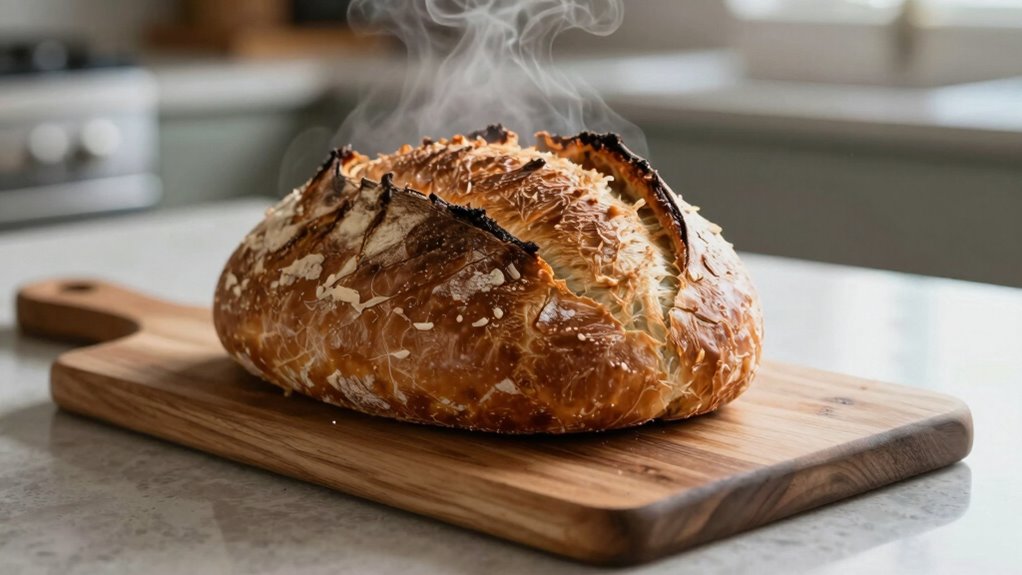
During the initial phase of baking, you want to maximize steam infusion to encourage the dough to rise beautifully. The moisture causes the starches on the surface to gelatinize, which contributes to a glossy, crackly crust. As baking progresses, you need to carefully monitor when to release or reduce the steam. If you keep the steam going for too long, the crust may remain too soft or pale, preventing that satisfying crunch. On the other hand, removing the steam too early can cause the crust to form prematurely, limiting oven spring and resulting in a flatter loaf. The key is to find the sweet spot—usually after the first 10-15 minutes—where the crust has developed enough to hold its shape but still retains enough moisture for the final crust development. Developing an understanding of steam control techniques can help you refine this timing and improve your results.
Maximize steam early on, then carefully release after 10-15 minutes for perfect crust and oven spring.
Knowing when to stop the steam also influences the overall texture of your bread. Proper timing ensures a balance between moist, chewy crumb and a crisp crust. Many home bakers underestimate the importance of controlling steam, but it’s essential for achieving bakery-quality results. You might need to experiment with your specific oven and dough type to perfect this timing. Watching the crust turn a deep, golden hue is a good indicator that it’s time to reduce or stop the steam. Ultimately, mastering the art of steam infusion and understanding when to stop it will elevate your bread from good to exceptional.
In the end, the secret lies in your attention to detail. With practice, you’ll learn to sense the right moment to halt the steam, unlocking the full potential of your oven’s capabilities. This balance will give you bakery-quality bread that boasts an irresistible crust and a tender crumb—just like from your favorite bakery. Recognizing steam infusion as a crucial step can significantly improve your bread-making results. Developing an awareness of how moisture interacts with dough during baking can help you refine your technique and achieve consistently excellent results. Paying close attention to the baking process and understanding how different steam durations affect the final loaf will enable you to make adjustments and perfect your bread every time.
As an affiliate, we earn on qualifying purchases.
Frequently Asked Questions
Can Steam Ovens Replace Traditional Bread Baking Methods Entirely?
Steam ovens can’t fully replace traditional bread baking methods, especially if you’re into artisan techniques. They help create a crispy crust and improve bread fermentation, but some bakers prefer the control of a conventional oven for shaping and scoring. You might use a steam oven for convenience and quality, but for authentic results, mastering traditional methods remains essential. Combining both approaches can yield the best bread you can make.
How Does Steam Affect the Crust’s Texture Over Time?
Steam affects the crust’s texture over time by maintaining crust moisture and influencing dough hydration. When you use steam wisely, it keeps the crust soft initially, allowing the bread to expand fully, then crisps up as the moisture escapes. If you don’t stop the steam at the right moment, the crust can become overly moist or tough, hindering that perfect balance of a glossy, crispy exterior and tender crumb.
Are Steam Ovens Suitable for All Types of Bread?
Steam ovens are suitable for most bread types, especially those that benefit from a crisp crust, like baguettes and artisan loaves. The steam impact helps develop a beautiful, shiny bread crust by creating moisture during baking. However, for bread with a softer crust, like sandwich bread, using steam might not be ideal. You should adjust the steam amount depending on the bread’s desired crust texture for the best results.
What’s the Best Way to Prevent Over-Steaming?
To prevent over-steaming, monitor the steam timing carefully and stop it at the right moment. Keep an eye out for over steaming signs like a soggy crust or excessive moisture. Use a timer to control steam release precisely, and start with shorter steam durations, adjusting as needed. This way, you’ll maintain ideal moisture without overdoing it, resulting in perfectly baked bread with a crisp crust and tender crumb.
How Do Different Steam Levels Influence Bread Flavor?
Different steam levels greatly influence bread flavor by enhancing moisture retention and adding subtle complexity. Higher steam levels boost flavor enhancement by allowing the dough to develop a richer crust and more nuanced taste. Conversely, lower steam levels preserve the bread’s natural flavors, preventing over-moistening. Adjusting the steam carefully ensures your bread gains the desired moisture retention and flavor profile, helping you create bakery-quality loaves every time.
Conclusion
Remember, patience is a virtue, especially when baking bread with a steam oven. Knowing when to stop the steam guarantees your loaf develops that perfect crust and airy crumb. Too much steam, and you risk sogginess; too little, and you miss out on that beautiful shine. Mastering this timing elevates your baking game, proving that sometimes, less truly is more. Trust your senses and intuition—your bread will thank you.
Halloween Picks
halloween
As an affiliate, we earn on qualifying purchases.