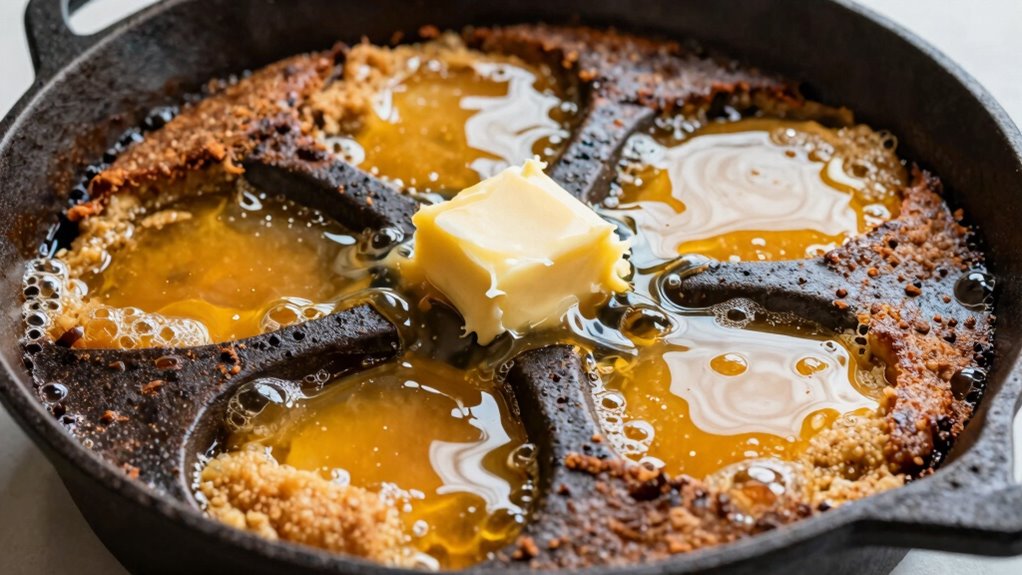
To prep your cornbread pan with butter, make sure it’s soft but not melted to promote even spreading and a crispy crust. Use a pastry brush or paper towel to lightly coat the pan, avoiding pooling or greasiness. Manage the butter’s temperature carefully—too cold and it won’t spread smoothly, too hot and it could burn. Mastering this technique helps create a golden, crispy crust every time; there’s more to perfecting your process below.

Get kitchen staples and gadgets delivered free with Prime
- Fast, free delivery on millions of items
- Prime Video, Amazon Music and more included
- Member-only deals all year
Key Takeaways
- Use softened, mildly warm butter for even spreading and a smooth, thin coating on the pan.
- Apply butter with a pastry brush or paper towel for an even, controlled layer.
- Avoid using hot or melted butter directly to prevent pooling and greasiness.
- Ensure butter covers the entire surface, including sides, for uniform browning and crispy edges.
- Reheat or soften butter as needed to maintain optimal spreading consistency before application.
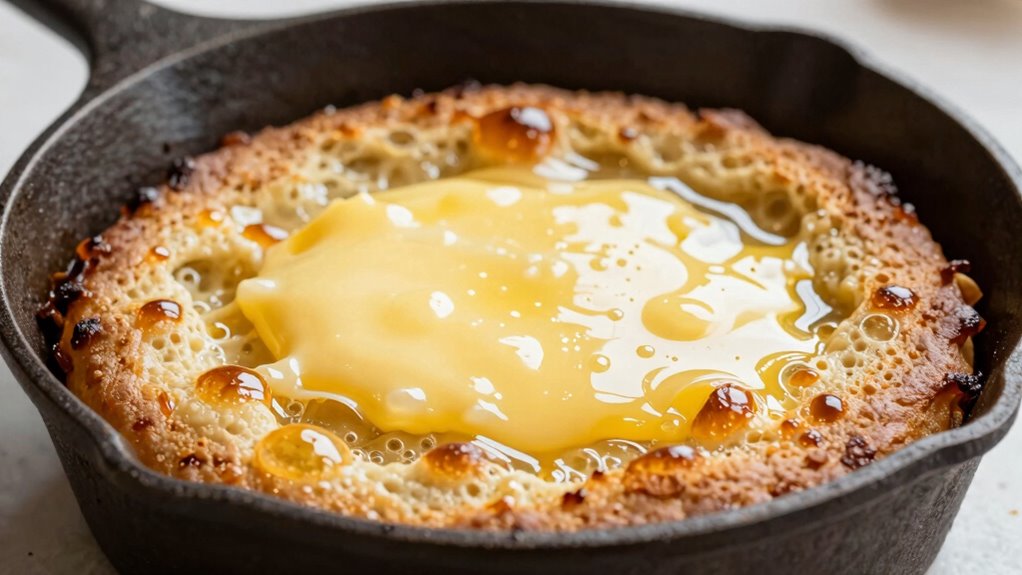
To guarantee your cornbread comes out perfectly golden and crispy, using butter to prep your pan is essential. The key lies in how you handle the butter, especially its temperature. If the butter is too cold, it’ll harden quickly and won’t spread evenly across the pan, leading to uneven browning. If it’s too melted or hot, it could burn or create too much grease, making the cornbread greasy rather than crispy. Ideally, use softened butter—mildly warm but not hot—so it spreads smoothly and coats every surface. This assures a thin, even layer that promotes that desirable golden crust while preventing sticking.
While butter is the traditional choice, you might wonder about alternative fats. Oils like vegetable or canola oil are common substitutes because they’re easy to spread and have a high smoke point, making them less prone to burning at higher temperatures. However, they lack the rich flavor butter imparts, which can enhance the overall taste of your cornbread. If you prefer a dairy-free or vegan option, melted coconut oil can work well, offering a similar high smoke point and subtle sweetness. Still, each alternative fat has its own properties, so paying attention to their temperature and how they interact with the pan is vital. For instance, coconut oil solidifies at cooler temperatures, so melting it thoroughly before use is necessary to create an even coating.
The method you choose for butter application also impacts the final result. Using a paper towel or pastry brush to evenly spread softened butter across the pan ensures a thin, uniform layer. This not only prevents sticking but contributes to that perfect crispy edge you’re aiming for. If you’re using melted butter, pouring a small amount into the pan and swirling it around works well, but be cautious to avoid pooling, which can make parts of your cornbread overly greasy. When working with alternative fats, adjust the quantity accordingly, as some oils are more potent in flavor and moisture than butter. Properly managing the fat temperature is crucial, as it influences how evenly the fats spread and interact with the pan surface. Additionally, understanding the smoke point of your chosen fat helps prevent accidental burning during preheating or baking. Being aware of fat properties, such as melting points and flavor profiles, can further optimize your cornbread outcome. Incorporating the right application technique can make a noticeable difference in achieving the ideal crust. Moreover, carefully monitoring the oil temperature during application can help achieve a more consistent and desirable crust.
Ultimately, the goal is to create a balanced, even coating that promotes browning without excess greasiness. Managing butter temperature is vital—too cold, and it won’t spread; too hot, and it risks burning or creating uneven crusts. When considering alternative fats, choose ones with similar melting points and flavor profiles, and handle them with care to make sure your cornbread turns out beautifully golden and crispy every time.
As an affiliate, we earn on qualifying purchases.
Frequently Asked Questions
Can I Substitute Butter With Margarine or Oil?
Yes, you can substitute margarine or oil for butter when preparing your cornbread pan. Margarine offers a similar flavor and texture, with some flavor variations depending on the brand, while oil creates a lighter, moister result. Keep health considerations in mind, as margarine may contain trans fats, and oil can be healthier. Adjust quantities slightly for best results, and enjoy experimenting with different fats to suit your taste and dietary needs.
Should Butter Be Melted or Softened Before Use?
You should soften butter before using it for greasing your pan. Softened butter has the right butter temperature for easy spreading and even coating, which helps prevent sticking. Avoid melting it completely, as melted butter can create uneven greasing and might leak into the batter. Use a butter knife or paper towel to apply softened butter evenly, ensuring a smooth, non-stick surface for your cornbread.
How Much Butter Is Ideal for Greasing the Pan?
Think of butter as your secret weapon—just enough to coat the pan without overdoing it. For greasing, about 1 to 2 tablespoons of softened butter usually does the trick. Using the right butter consistency allows smooth spreading, ensuring even coverage. With proper greasing techniques, your cornbread won’t stick, and you’ll get that perfect golden crust. Remember, less is more—start small, then add if needed.
Does the Type of Butter Affect the Cornbread’s Flavor?
Yes, the type of butter you use affects your cornbread’s flavor and texture. Unsalted butter offers a pure, creamy butter flavor that enhances the sweetness of the cornbread, while salted butter adds a savory note. Clarified butter provides a richer, smoother texture, making your cornbread more tender. Choosing high-quality butter with a fresh aroma guarantees a better butter flavor and smoother butter texture, resulting in delicious, flavorful cornbread.
Can I Reuse Leftover Butter From Previous Baking?
You can reuse leftover butter, but only if you store it properly—airtight container and refrigeration are key. Remarkably, about 90% of home bakers do reuse butter at least once. For butter preservation, ensure no contamination and use it within a week. Reusing leftover butter is an eco-friendly choice, saving money and reducing waste, but always check for off smells or discoloration before using it in your next baking project.
Conclusion
Think of your buttered pan as a blank canvas ready for your cornbread masterpiece. When you coat it just right, you’re setting the stage for a golden, crispy crust that sings with every bite. With each brush of butter, you’re laying down a foundation of flavor and texture. So, take your time, embrace the process, and watch your cornbread rise to perfection—turning your kitchen into a warm, inviting symphony of deliciousness.
Halloween Picks
halloween
As an affiliate, we earn on qualifying purchases.