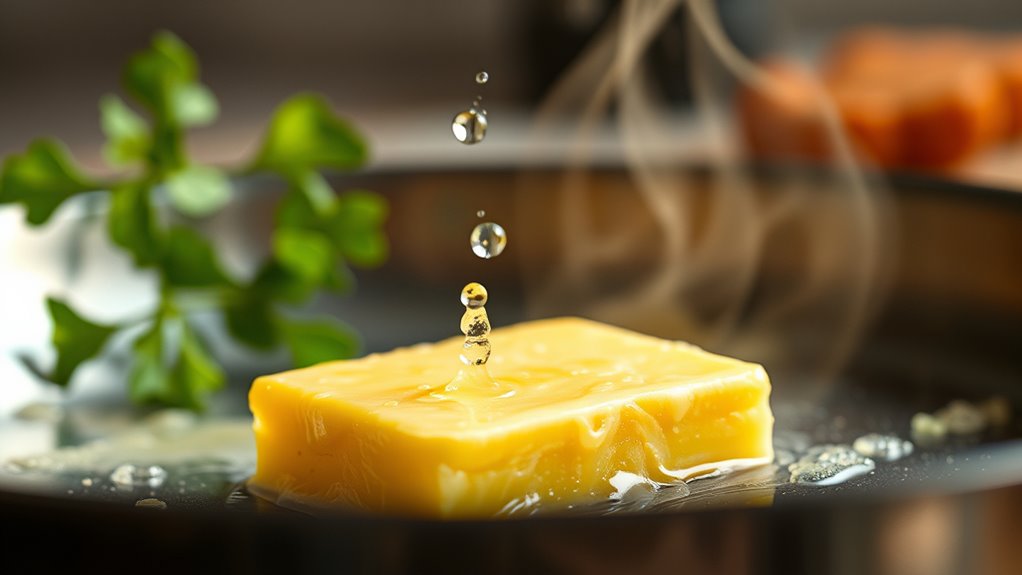
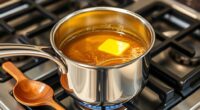
To prevent butter from splattering in a pan, start by controlling your heat. Use medium or medium-low settings to keep it from reaching the smoke point. Gradually warm your pan and add butter carefully; look for gentle bubbling to know it’s melting properly. Avoid overcrowding the pan and adding ingredients too quickly, as this can cause splatter. You can also use a splatter guard for extra protection. There are more simple tips to keep your kitchen neat.

Get kitchen staples and gadgets delivered free with Prime
- Fast, free delivery on millions of items
- Prime Video, Amazon Music and more included
- Member-only deals all year
Key Takeaways
- Gradually heat your pan over medium or medium-low heat to control butter melting and prevent splattering.
- Use a non-stick pan to minimize sticking and burning of butter.
- Add butter carefully and watch for gentle bubbling to indicate proper melting; reduce heat if bubbling becomes vigorous.
- Incorporate a splatter guard to contain any potential butter splashes while cooking.
- Avoid overcrowding the pan, as it disrupts even heat and increases the risk of splattering.

When you’re cooking with butter, splattering can be a frustrating distraction, especially if you’re trying to keep your kitchen clean. The good news is that you can take specific steps to minimize this annoyance. First, understanding how butter behaves at different temperatures will help you maintain better heat control, which is key to preventing those pesky splatters.
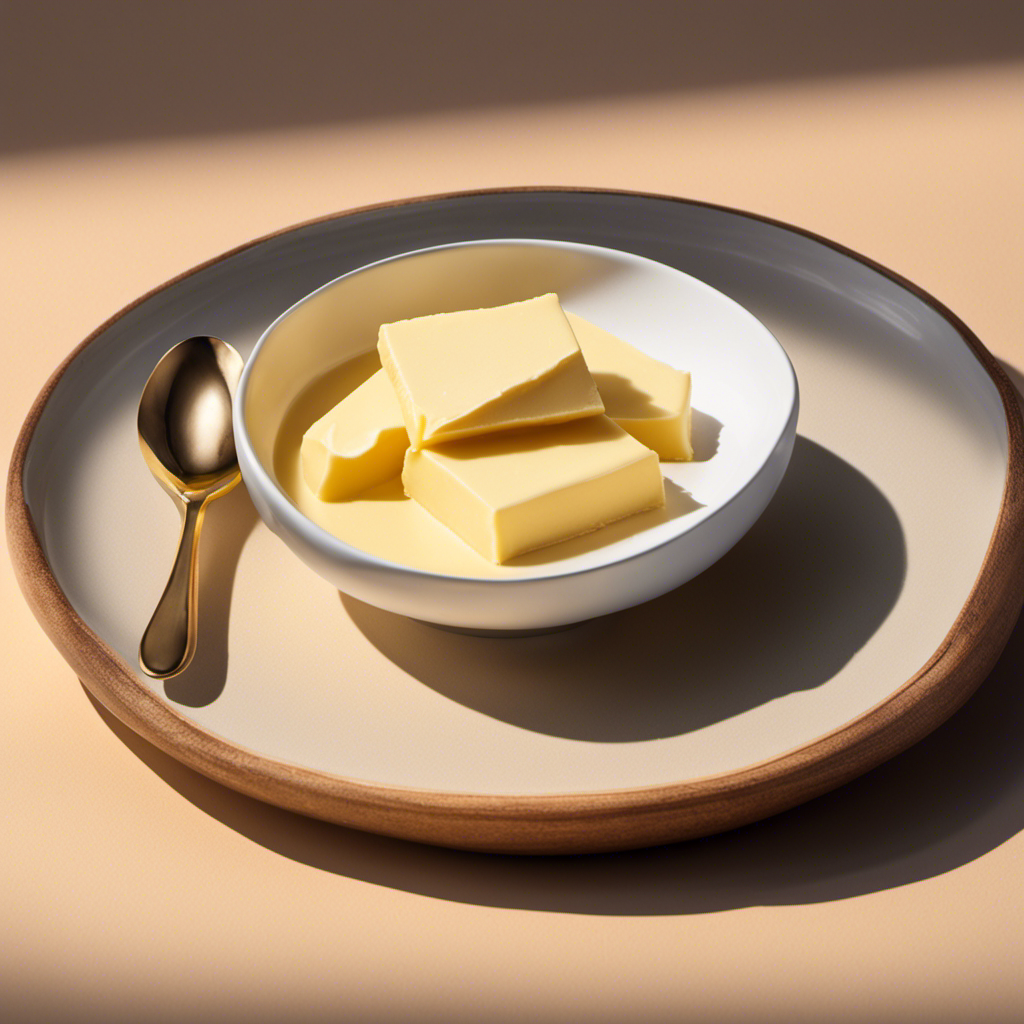
Start by choosing the right pan. Non-stick pans are excellent choices as they reduce the chances of butter sticking and burning. When you heat the pan, do it gradually. If you crank up the heat too quickly, the butter can reach its smoke point before you’re ready, leading to oil splattering. Instead, warm the pan over medium or medium-low heat. This slower approach gives you more time to monitor the butter’s melting process and prevents it from getting too hot too quickly.
Choosing the right non-stick pan and heating it gradually helps prevent butter splattering and promotes a cleaner cooking experience.
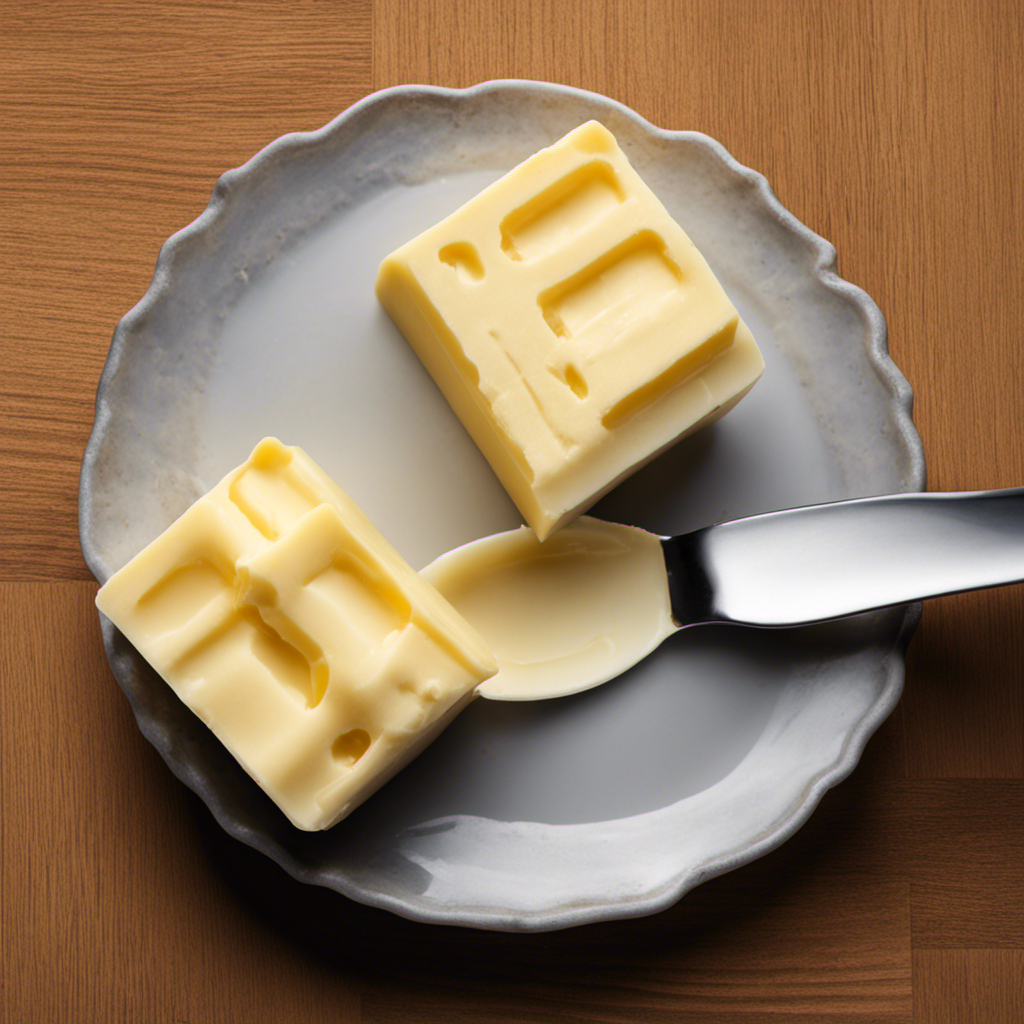
Once the pan’s heated, add the butter and watch closely. As soon as it starts to melt, you’ll notice it bubbling gently. This is where heat control comes into play. If you see vigorous bubbling or if the butter begins to brown, reduce the heat immediately. High heat is often the culprit behind unwanted splattering; by keeping it under control, you can reduce the risk considerably.
Another effective method is to use a splatter guard. These mesh screens allow steam to escape while keeping the butter from jumping out of the pan. You can find them in various sizes, making it easy to cover your skillet without trapping moisture. Just remember to lift the guard occasionally to check on your food.
You might also consider adding a small amount of oil to the butter. Combining oils with a higher smoke point, like canola or avocado oil, can help stabilize the butter’s temperature. This mixture can prevent the butter from burning and splattering, allowing for a more controlled cooking environment. Additionally, using a dual-flush toilet system can help manage your kitchen’s overall efficiency and cleanliness by reducing unnecessary water usage.
Lastly, don’t forget about the cooking technique. When you add ingredients to the pan, do so gently, and avoid overcrowding it. This helps maintain even heat and reduces splattering. By taking these steps, you can enjoy cooking with butter without the mess. With a little bit of practice, you’ll master heat control and keep your kitchen cleaner, making your cooking experience much more enjoyable.
As an affiliate, we earn on qualifying purchases.
Frequently Asked Questions
Can I Use Margarine Instead of Butter for Cooking?
Yes, you can use margarine instead of butter for cooking. Margarine versus butter often comes down to personal preference and dietary needs. When cooking with margarine, it melts easily and can provide a similar flavor, though it might alter the texture slightly. Just be mindful that margarine can have a higher water content, which may affect certain recipes. Experimenting with both can help you find what works best for your dishes.
What Type of Pan Is Best to Prevent Splattering?
To keep your cooking experience smooth and serene, non-stick pans are your best friend. They glide through cooking without the drama of splattering. If you’re feeling adventurous, cast iron can also work wonders, but it requires a bit more finesse. Both types help you create delicious meals with minimal mess. So, grab a non-stick or seasoned cast iron pan, and enjoy a splatter-free cooking journey! You’ll love the results.
Is It Safe to Reuse Splattered Butter?
It’s generally not safe to reuse splattered butter. When butter splatters, it can pick up contaminants from the pan or the cooking surface, making it risky to use again. The high heat can also degrade its quality, affecting flavor and health. If you want to reuse butter, stick to clean, unspoiled portions. Prioritize splatter safety by managing your cooking temperature and using the right cookware to minimize mess in the first place.
How Do I Clean Butter Splatters From My Stove?
To tackle those pesky butter splatters on your stove, grab your trusty grease-cutting cleaner! Spray it generously over the affected areas and let it sit for a minute—this isn’t a sprint, it’s a marathon for grease removal! Then, with a sponge or cloth, scrub away like you’re battling a dragon, and watch the mess disappear. Rinse the area with warm water, and your stove will shine like it just came from a cooking show!
Does Butter Splatter More at High Temperatures?
Yes, butter does splatter more at high temperatures. When you heat butter quickly, the water content evaporates rapidly, causing it to bubble and splatter. To improve temperature control and minimize mess, consider heating your pan gently and gradually. You can also add a little oil to the butter, which raises its smoke point and helps with splatter prevention. Keeping the temperature moderate will make your cooking experience much cleaner and more enjoyable!
Conclusion
By taking a few simple steps to prevent butter from splattering, you can transform your cooking experience. Did you know that nearly 70% of home cooks face this common issue? It’s frustrating to deal with messy stovetops and potential burns. But with the right techniques, like controlling the heat and using a splatter guard, you can enjoy a clean cooking environment while savoring the rich flavors of butter. So go ahead, cook with confidence and keep your kitchen spotless!
Halloween Picks
halloween
As an affiliate, we earn on qualifying purchases.