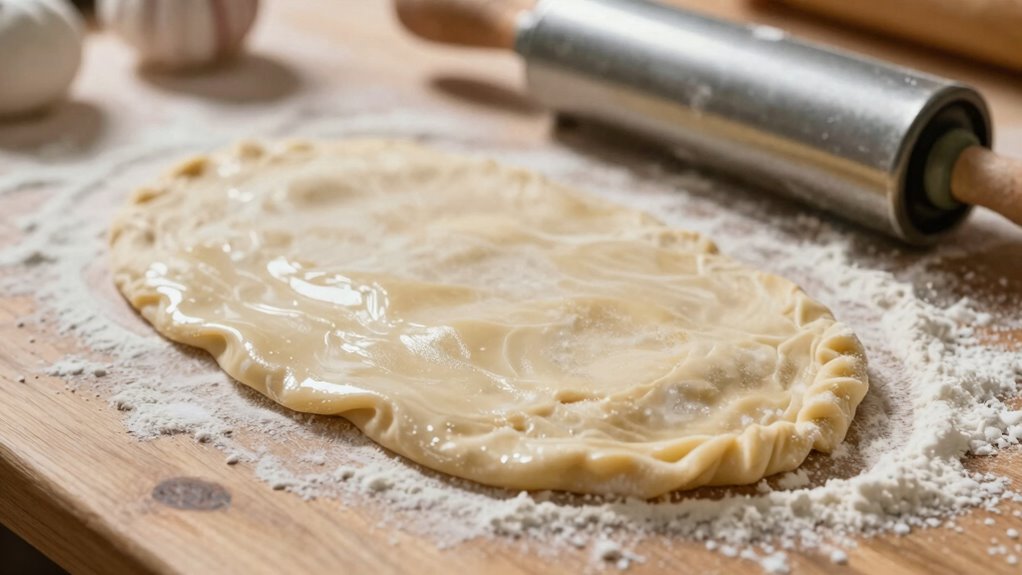

When you use a pasta roller, you often need to let your dough rest longer than beginners expect. Resting helps develop gluten, making the dough more elastic, manageable, and less prone to tearing or cracking. It also promotes even hydration, resulting in smoother, thinner sheets. Rushing this step can lead to tough, uneven dough that’s hard to work with. Keep in mind, a little extra patience now will make your pasta turn out way better—learn the details ahead.
Key Takeaways
- Resting allows gluten to fully develop, making dough more manageable and less prone to tearing when rolled.
- Underrested dough remains elastic and stiff, leading to tearing and uneven sheets during rolling.
- Proper resting relaxes gluten, resulting in smoother, thinner pasta sheets with less effort.
- Beginners often underestimate resting time, causing difficulty in achieving uniform, professional-quality pasta.
- Adequate resting improves dough elasticity, reducing the risk of holes or tears during rolling with pasta rollers.
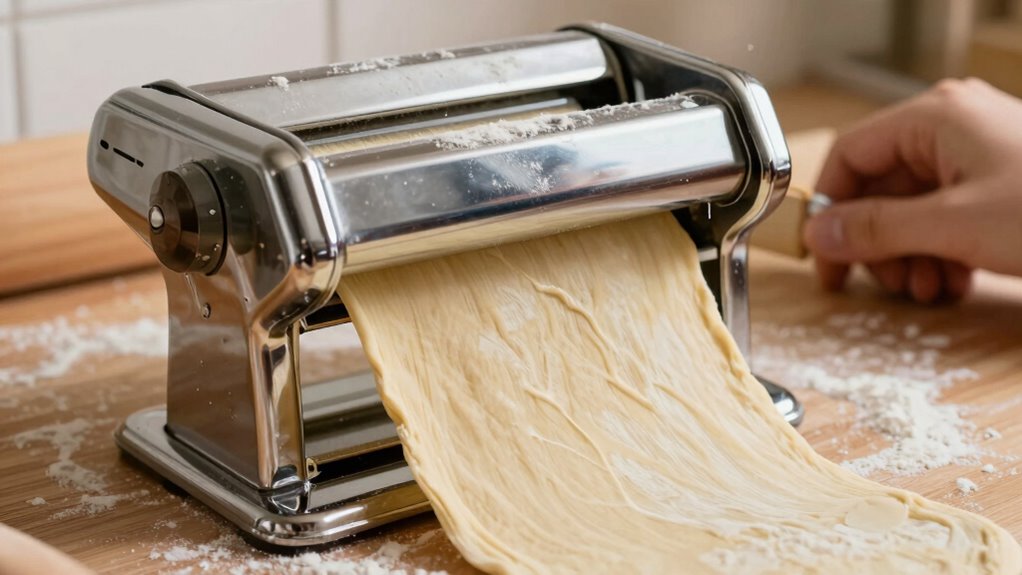
If you’re new to making pasta with a roller, you might be surprised to learn that resting your dough longer than you expect can dramatically improve your results. When you first start working with pasta dough, it can feel tempting to roll it out immediately after mixing. But rushing this step often leads to less-than-ideal outcomes. Resting allows the gluten in the dough to develop properly, which in turn enhances dough elasticity and makes it easier to roll out thin, even sheets. This process also helps the dough become more cohesive and manageable, reducing the risk of tearing or cracking. Without adequate rest, your dough may be tough, prone to tearing, or difficult to manage. Proper resting also encourages the full hydration of the flour, which improves texture and workability.
Resting pasta dough improves elasticity, making it easier to roll out thin, even sheets and preventing tearing.
The key lies in understanding gluten development. Gluten is what gives pasta dough its structure and resilience. When you knead the dough, you’re encouraging gluten strands to form and align. However, if you skip or shorten the resting period, these gluten strands remain underdeveloped, resulting in a dough that’s too elastic or too stiff. Resting gives the gluten time to relax and strengthen, which makes the dough more elastic and easier to roll out uniformly. Resting also allows the gluten network to fully develop, making the dough more elastic and resilient during rolling. This elasticity is crucial because it helps you avoid tearing or cracking as you pass the dough through your roller multiple times. Additionally, allowing the dough to rest can help prevent overworking the gluten, which can make the dough tough.
During resting, the flour absorbs moisture fully, and the gluten network stabilizes. This process creates a smoother, more cohesive dough that responds better to your rolling pin or pasta machine. When you give your dough enough time to rest—usually at least 30 minutes to an hour—it becomes significantly easier to handle. You’ll notice it feels more pliable and less sticky. Resting also promotes even gluten development, which is essential for achieving consistent thickness and texture. This improved flexibility means you can achieve thinner sheets without applying excessive force, reducing the risk of holes or tears in your pasta.
Additionally, resting enhances dough elasticity, which is vital for achieving professional-looking pasta. It allows the dough to relax after kneading, making it easier to stretch consistently. If you try to skip this step, you’ll likely find yourself fighting with the dough—stretching unevenly or forcing it through the roller, which can compromise the final texture. Proper resting time ensures that the gluten network is well-formed, leading to a more uniform dough that rolls out smoothly and maintains its shape during cooking.
As an affiliate, we earn on qualifying purchases.
Frequently Asked Questions
How Does Dough Humidity Affect Resting Time?
Dough humidity directly impacts resting time because higher dough hydration retains more moisture, which needs extra time to absorb and relax. If the humidity is high, you might need to extend resting periods to prevent stickiness and guarantee smooth rolling. Conversely, in low humidity, less resting is needed as the dough dries out faster. Proper humidity control helps you manage resting time, ensuring your dough is perfectly relaxed and ready for rolling.
What Are Signs of Over-Rested Pasta Dough?
If your dough starts feeling like rubber or becomes hopelessly sticky, it’s a sign you’ve over-rested it. Over-rested dough loses its elasticity, making it tough to roll out, and flavor development can become dull or off. You might notice cracks or tears as you work with it. To avoid this, keep an eye on texture and elasticity—freshly rested dough should be smooth, pliable, and flavorful, not dull or brittle.
Does Resting Time Vary With Different Types of Flour?
Yes, resting time varies with different types of flour because each flour has varying gluten development and absorption rates. For instance, whole wheat flour may need longer resting to improve gluten structure, while softer flours require less. Resting enhances gluten development and flavor, so adjusting time based on flour type guarantees ideal dough texture and taste. Always observe how your dough feels and adjust accordingly for best results.
Can Resting Dough Improve Pasta Texture?
Yes, resting dough can markedly improve pasta texture. When you let it rest, the dough becomes more elastic, making it easier to roll out thinly and evenly. Resting also allows flavors to develop fully, enhancing the overall taste. This process relaxes gluten strands, which reduces toughness and results in a smoother, more tender pasta. So, don’t rush—resting your dough leads to better elasticity and richer flavor in your final dish.
How Should I Store Dough During Resting?
Think of dough preparation like a superhero’s secret weapon—resting is key. You should store your dough in a covered container or wrap it tightly with plastic wrap to prevent it from drying out. Keep it in a cool, humid resting environment, away from drafts and direct sunlight. This helps the gluten relax, making it easier to roll, and guarantees your pasta turns out perfect. Rest well, and cook on!
Conclusion
Remember, even the most skilled artisans know that patience is key—like a master painter waiting for each layer to dry, your dough benefits from proper resting. Rushing it can lead to tough, difficult pasta that fights back. So, take a cue from the old masters: give your dough the time it needs. Resting isn’t just a step; it’s the secret ingredient that transforms your pasta from good to great.