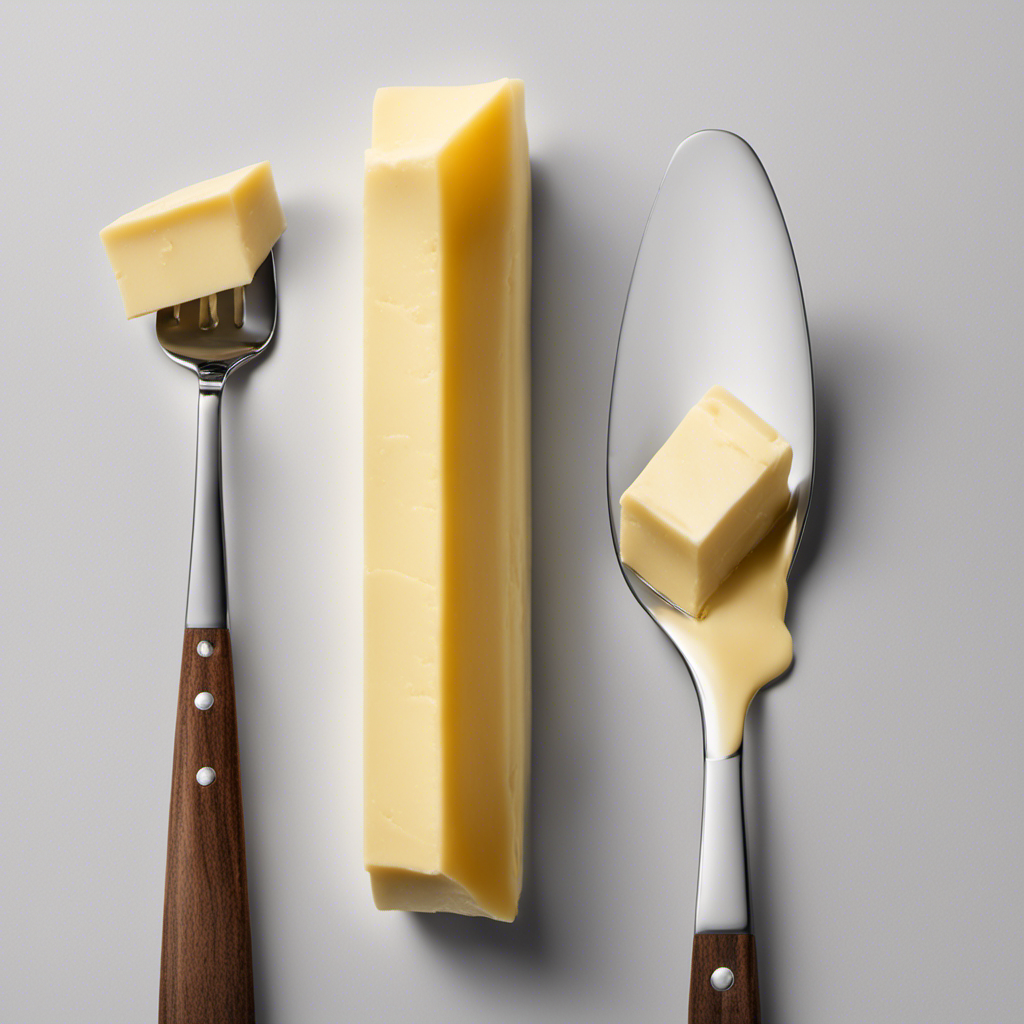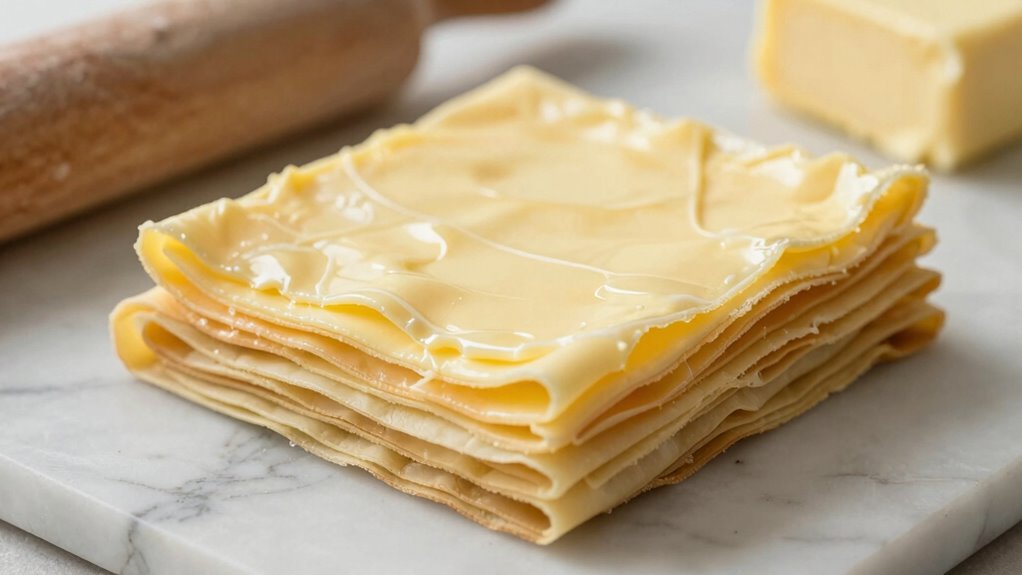

To layer butter for better laminated dough, start with cold but pliable butter and your dough kept cool. Roll the dough into a rectangle and evenly spread or place the butter over two-thirds of it, then fold like a letter—bottom over butter, top over that. Maintain consistent pressure, keep everything chilled, and avoid over-flouring. With proper technique, you’ll build flaky, even layers. Keep going to discover more tips for perfecting your pastry.

Get kitchen staples and gadgets delivered free with Prime
- Fast, free delivery on millions of items
- Prime Video, Amazon Music and more included
- Member-only deals all year
Key Takeaways
- Ensure butter is cold but pliable, not too soft or hard, for even spreading and layering.
- Roll dough into a neat rectangle before placing butter to facilitate even layers.
- Spread or place butter evenly over two-thirds of the dough, maintaining consistent thickness.
- Fold the dough like a letter, keeping edges aligned to create uniform layers.
- Keep dough and butter chilled throughout the process to prevent melting and maintain layer integrity.

Laminated dough relies heavily on the quality and layering of butter, which creates the signature flaky texture. To achieve this, you need to pay close attention to how you handle your butter and dough throughout the process. The butter temperature is vital; it should be cold but pliable enough to spread evenly. If the butter is too soft, it will blend into the dough instead of forming distinct layers, resulting in a dense pastry. Conversely, if it’s too cold and hard, it won’t spread smoothly, causing uneven layers and potential tears in the dough. You want the butter to be firm but still malleable, enabling you to create a thin, even layer without cracking or breaking.
Getting the dough consistency right is equally important. Your dough should be cool, elastic, and slightly tacky but not sticky. As you roll it out, aim for a smooth, even surface, avoiding overworking it, which can develop gluten and make the dough tough. A consistent dough texture ensures clean, sharp folds and helps trap the butter without it seeping out or creating uneven layers. When you layer the butter, start by rolling the dough into a rectangle, then evenly spread or place the butter layer over two-thirds of it. Fold the dough like a letter, bringing the uncovered third over the butter and then the bottom third over that. This initial fold sets the foundation for subsequent layers.
As you repeat the rolling and folding process, maintaining the right dough consistency and butter temperature becomes even more critical. If the dough begins to stick or resist rolling, lightly dust the surface with flour, but avoid over-flouring, which can dry out the dough and weaken the layers. When you fold, ensure that the edges align neatly to create uniform layers, and don’t rush through the process. Precise, even pressure during rolling and folding helps prevent thin spots that could tear or cause uneven butter distribution. Throughout, keep the dough and butter chilled to prevent melting or softening, which would compromise the layers. Additionally, understanding the importance of butter layering techniques will help you achieve a perfect laminated dough with optimal flakiness. Proper layering consistency is essential for ensuring each fold builds upon the last for ideal results. Maintaining consistent temperature control is also crucial for preventing the butter from melting during the process. Being mindful of butter placement ensures even distribution and prevents weak spots in the layers. Paying attention to dough elasticity can also make a significant difference in handling and folding the dough smoothly.
As an affiliate, we earn on qualifying purchases.
Frequently Asked Questions
What Type of Butter Works Best for Laminated Dough?
You should choose European-style butter for laminated dough because of its higher butterfat content and rich flavor, which come from butter origin and traditional churning methods. If you can’t find it, alternatives like cultured butter or high-fat American butters work well. Avoid low-fat or margarine, as they lack the necessary fat and flavor. Using the right butter guarantees flaky, tender layers and excellent lamination results.
How Does Butter Temperature Affect Lamination?
Butter temperature can make or break your lamination process—it’s like trying to dance on ice! When your butter is too warm, it becomes greasy and slips out of layers; too cold, and it cracks, ruining the dough’s structure. Perfect butter consistency depends on temperature control, keeping it firm but pliable. Maintaining ideal butter temperature guarantees smooth, even layers, resulting in flaky, tender laminated dough every time.
Can I Use Margarine Instead of Butter?
Yes, you can use margarine or vegan butter alternatives instead of butter for lamination. Margarine substitution is common, but keep in mind it often has a higher water content, which might affect dough texture and layering. Vegan butter options typically mimic butter’s properties more closely, making them a good choice. Just make certain your margarine or vegan butter is cold and firm to achieve the best lamination results, just like with butter.
How Do I Prevent Butter From Melting During Layering?
To prevent butter from melting during layering, keep your butter at the right consistency—firm but pliable. Chill it well before starting, and work quickly to maintain dough elasticity. Use a cold surface, like a marble slab, and refrigerate the dough frequently if needed. Avoid excessive handling, as warmth softens butter and hampers layering. These steps help guarantee even layers and flaky, well-laminated dough.
What Is the Ideal Butter-To-Flour Ratio?
You should aim for about 50% butter to flour, meaning one part butter to two parts flour by weight, for desired flavor enhancement and flaky layers. This ratio ensures the dough remains manageable and produces a rich taste. If you’re looking for butter alternatives, consider margarine or plant-based fats, but keep in mind they may alter flavor and texture. Adjust the ratio accordingly to maintain the dough’s quality while exploring different flavors.
Conclusion
Mastering the art of layering butter transforms your laminated dough from good to extraordinary. When you layer butter with care, you create flaky, tender layers that seem to defy the very limits of pastry perfection. Every fold and roll your dough undergoes is a step toward bakery-quality brilliance. So, take your time, be precise, and remember—your dedication can turn simple ingredients into a pastry masterpiece that’ll impress even the most discerning palates.
Halloween Picks
halloween
As an affiliate, we earn on qualifying purchases.