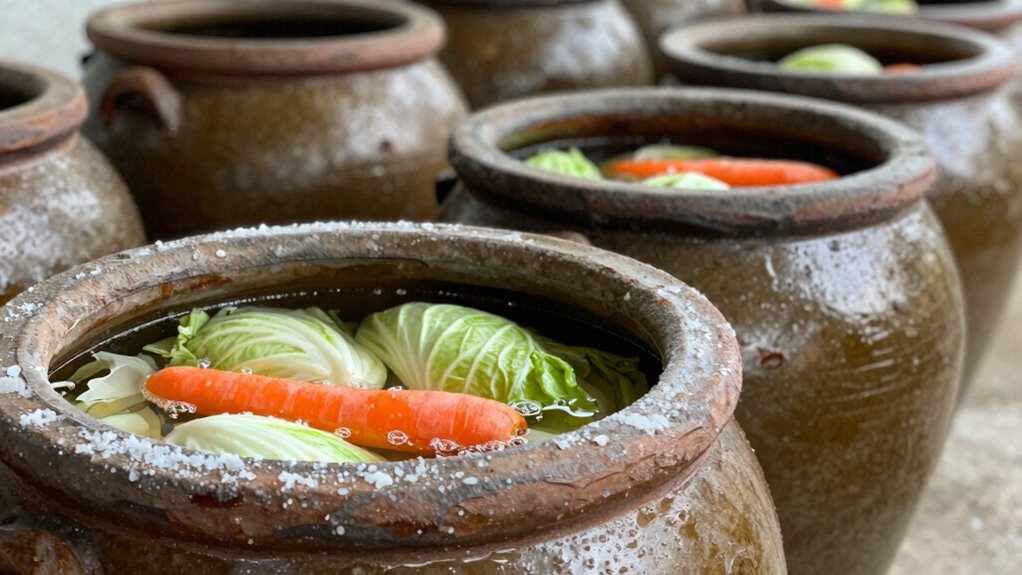

Using a fermentation crock helps only if you keep the salt ratios consistent because salt is vital for encouraging beneficial bacteria and preventing spoilage. Too little salt allows harmful microbes, while too much inhibits fermentation. It’s important to measure and maintain the right salt levels, like 2-3%, throughout the process. If you want to guarantee safe, tasty results, understanding how to manage salt ratios is essential—there’s more to discover that can make your ferments successful.

Get kitchen staples and gadgets delivered free with Prime
- Fast, free delivery on millions of items
- Prime Video, Amazon Music and more included
- Member-only deals all year
Key Takeaways
- Proper salt ratios promote beneficial bacteria growth and inhibit spoilage organisms within the fermentation vessel.
- Even with a fermentation crock, inconsistent salt levels can lead to unsafe or spoiled products.
- Maintaining correct salt concentrations ensures proper brine formation and consistent fermentation results.
- Salt balance influences the activity of probiotic bacteria, impacting flavor and fermentation success.
- Regular monitoring and adjusting salt levels are essential, regardless of the vessel used.
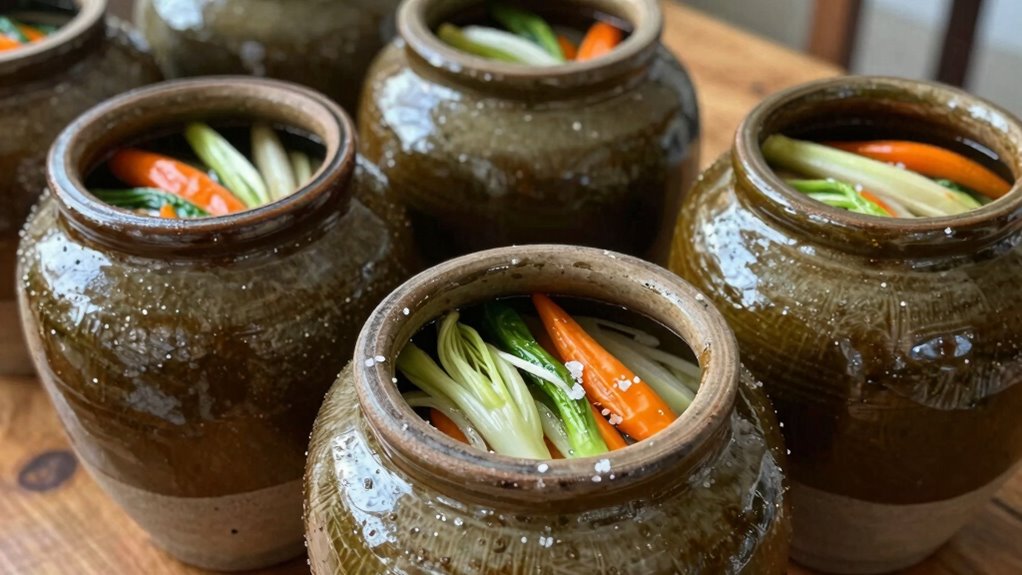
Fermentation crocking is a traditional method for preserving vegetables and making probiotic-rich foods, but achieving successful fermentation depends heavily on maintaining the right salt ratios. Your choice of fermentation vessel plays an essential role in this process. A good fermentation crock provides an airtight environment that keeps out unwanted bacteria and molds, making sure your vegetables ferment properly. However, even the best fermentation vessel won’t guarantee success if the salt concentration isn’t just right. The salt ratio directly influences the growth of beneficial bacteria and suppresses spoilage organisms. If the salt level is too low, harmful bacteria can take over, leading to spoilage and an unsafe product. Conversely, if the salt concentration is too high, it can inhibit the growth of good probiotics, resulting in a bland or overly salty outcome.
You need to be precise with your salt ratios throughout the fermentation process. It’s tempting to eyeball the salt, but for consistent results, measuring carefully is essential. Typically, a 2-3% salt concentration relative to the total weight of the vegetables is recommended. That means for every 100 grams of vegetables, you should add about 2 to 3 grams of salt. This balance encourages the growth of lactobacilli, the beneficial bacteria responsible for fermentation, while discouraging unwanted microbes. Maintaining this ratio consistently ensures that your vegetables ferment evenly and develop that signature tangy flavor you’re aiming for. Proper fermentation techniques help optimize the environment for beneficial bacteria to thrive.
Additionally, monitoring temperature during fermentation can influence the activity of these bacteria and improve the overall process. Your fermentation vessel should be filled with a proper salt-brine solution if the vegetables aren’t packed dry. As your vegetables ferment, the salt draws out moisture and creates a natural brine, which acts as a protective barrier. But if your initial salt concentration is off, the brine may be too weak or too salty, disrupting the fermentation process. Regularly checking the brine level and salt content can help you catch issues early. If the brine gets diluted over time, adding a measured amount of salt to maintain the correct concentration keeps fermentation on track. Additionally, understanding fermentation safety helps prevent contamination and spoilage, ensuring your foods remain healthy and delicious. Using a fermentation crock with proper air-tight seals further enhances safety by preventing exposure to unwanted airborne microbes. Consistently maintaining the correct salt levels also promotes fermentation stability, which is crucial for reproducible results and food safety. Paying close attention to these details can make the difference between a successful batch and a failed one.
In essence, your fermentation crock is only as effective as your attention to salt ratios. A well-chosen fermentation vessel creates the right environment, but consistency in salt concentration is what ensures safe, tasty, probiotic-rich foods. By measuring your salt carefully and monitoring your brine, you set the stage for successful fermentation every time. Remember, precision is key—your vegetables depend on it for the perfect tang, crunch, and health benefits.
As an affiliate, we earn on qualifying purchases.
Frequently Asked Questions
How Do Different Salt Types Affect Fermentation?
Different salt types influence fermentation because their mineral content varies, affecting the process and flavor. Using salt substitutes can disrupt fermentation, as they often lack the necessary minerals for proper microbial activity. You should stick to traditional salts like sea salt or kosher salt for consistent results. When you choose salts with high mineral content, you help guarantee a healthy fermentation, maintaining the right salt ratios and preventing spoilage.
Can I Use Less Salt Over Time?
Did you know that reducing salt in fermentation can alter flavor by up to 30%? Yes, you can use less salt over time, but it may impact the final taste and safety. Salt substitution can introduce flavor variation, yet it’s essential to maintain consistent ratios initially. Gradually decreasing salt might change fermentation dynamics, so monitor your batch closely to guarantee proper preservation and flavor development without risking spoilage.
What Are Signs of Incorrect Salt Ratios?
You’ll notice incorrect salt ratios through signs like uneven salt absorption, where some areas stay salty while others become too salty. Additionally, fermentation stability suffers, leading to off-smells, mold growth, or bubbling inconsistencies. If you see these issues, it’s a sign your salt ratios aren’t correct, disrupting the fermentation process. Maintaining consistent salt levels guarantees proper salt absorption and keeps fermentation stable, preventing spoilage or undesirable flavors.
Does Salt Concentration Influence Fermentation Speed?
Sure, salt concentration definitely influences fermentation speed, even if it’s ironic. Too much salt slows things down, preserving flavor but delaying the process, while too little speeds fermentation, risking inconsistency. You might think faster fermentation means better flavor, but it often compromises preservation. To keep your fermentation consistent and flavorful, maintain a balanced salt concentration. That way, you control both the pace and quality, avoiding unpredictable tangy surprises.
How Do I Adjust Salt Ratios for Large Batches?
When scaling up your fermentation batch, you need to adjust salt measurement proportionally. For larger batches, multiply the salt amount by the same factor as the increase in volume. For example, if you’re doubling your batch, double the salt amount to maintain proper salt ratios. This guarantees consistent fermentation speed and prevents spoilage. Accurate batch scaling helps you keep the salt ratios steady, resulting in a successful fermentation process.
Conclusion
To truly master fermentation, you must keep your salt ratios consistent—otherwise, your crock becomes a battle zone more chaotic than a tornado in a teacup. Think of your fermentation crock as a delicate dance partner; if you don’t follow the rhythm of proper salt levels, the entire process could fall apart faster than a house of cards in a hurricane. Stick to the right ratios, and you’ll turn simple ingredients into a fermentation masterpiece that’s truly legendary.
Halloween Picks
halloween
As an affiliate, we earn on qualifying purchases.