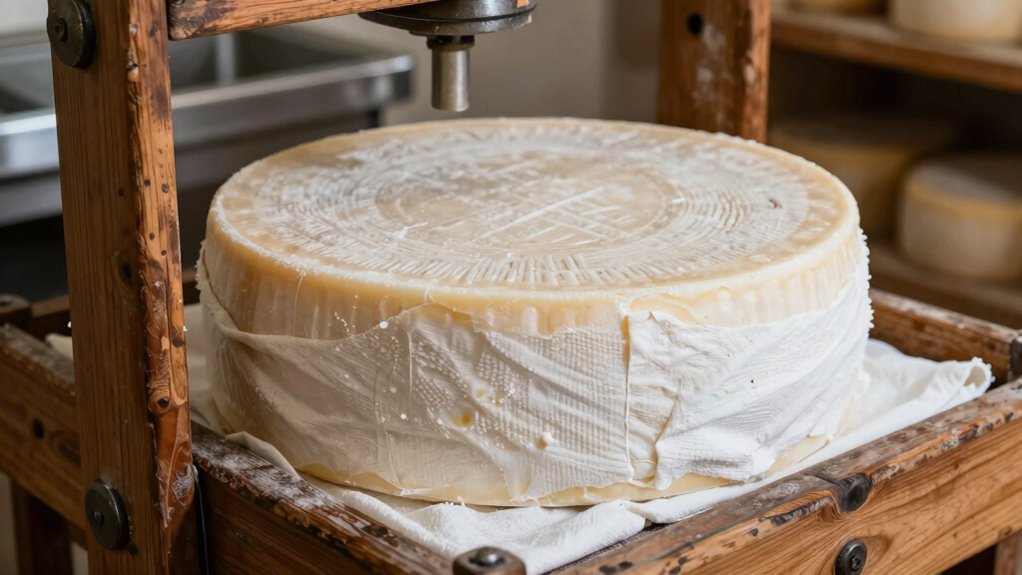

You should know that cheese presses are mainly important for shaping the curds and removing excess moisture, which directly affects the cheese’s texture, firmness, and consistency. They don’t add flavor but create a stable framework for aging where flavor develops through bacteria and enzymes. Proper pressing guarantees your cheese is uniform, easier to handle, and ages predictably. To understand how pressing influences the overall quality and flavor development, keep exploring this essential step in cheese making.
Key Takeaways
- Cheese presses shape curds and remove excess whey, directly impacting the cheese’s firmness and overall texture.
- Proper pressing creates a stable matrix that supports uniform aging and consistent texture development.
- Moisture content, controlled by pressing, is crucial for achieving desired texture and proper aging conditions.
- Pressing ensures even moisture distribution, preventing soft spots or crumbliness in the cheese.
- While pressing influences texture, flavor develops mainly during aging through bacteria and enzymes.
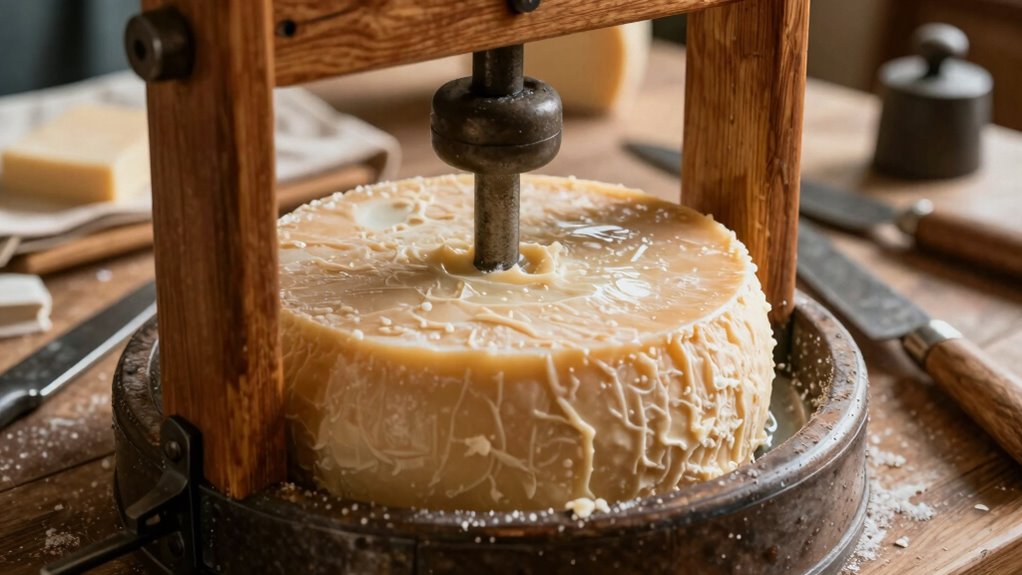
When it comes to making high-quality cheese, the importance of a good cheese press cannot be overstated. The primary role of the press is to shape the curds and remove excess whey, directly influencing the cheese’s texture. You might think that pressing impacts flavor development, but in reality, it’s mainly about achieving the right firmness and consistency. A well-pressured cheese will have a uniform texture, which is essential for proper aging and overall quality. Without adequate pressing, the cheese can end up crumbly or too soft, making it difficult to handle during cheese aging.
You might wonder how pressing relates to flavor development. While pressing does influence the cheese’s physical structure, the flavors develop primarily during aging, driven by factors like bacteria, enzymes, and the environment. The pressure you apply during pressing helps set the stage for this process by eliminating unwanted moisture and creating a stable matrix. This stability allows bacteria and mold to work more effectively during cheese aging, which ultimately shapes the flavor profile. However, pressing alone doesn’t impart flavor; it’s just one part of the broader cheese-making process. Proper moisture content is essential for optimal aging and flavor development, highlighting the importance of precise pressing techniques. Achieving the correct moisture level depends heavily on consistent pressure application throughout the pressing process. Additionally, pressure regulation ensures that the cheese is pressed evenly and accurately, which is crucial for consistent quality.
Choosing the right cheese press is crucial because it ensures you apply consistent pressure, which is key to achieving uniform texture. Inconsistent pressing can lead to uneven moisture content, resulting in pockets of softness or dryness. When you press correctly, you help the cheese develop a balanced texture that matures well over time. This uniformity not only makes handling during aging easier but also results in a more appealing final product. Proper pressing minimizes the risk of mold or unwanted bacteria growth caused by excess moisture, further supporting the aging process. Additionally, a high-quality press can help maintain pressure consistency, which is vital for predictable results.
Remember that the goal of pressing isn’t to influence flavor directly but to prepare the cheese for optimal aging conditions. Think of it as setting the foundation: a stable, well-pressed cheese ages more predictably and develops a more refined texture. The flavor nuances you enjoy in finished cheese come from the aging process, which relies on a firm, properly pressed curd. So, investing in a quality cheese press means you’re ensuring your cheese will have the right foundation for both texture and flavor to flourish over time. Ultimately, while pressing is about texture, it plays an indispensable role in making sure your cheese ages gracefully and reaches its full flavor potential. Proper pressing technique is vital for ensuring consistent results and the best possible cheese quality.
cheese press for home cheese making
As an affiliate, we earn on qualifying purchases.
As an affiliate, we earn on qualifying purchases.
Frequently Asked Questions
Do Different Cheese Types Require Specific Pressing Techniques?
Yes, different cheese types need specific pressing techniques to achieve the ideal texture. For example, softer cheeses like ricotta require gentle pressing, while harder cheeses like Parmesan need more pressure. You should consider cheese aging and milk quality, as they influence pressing needs. Proper pressing helps remove moisture, shaping the cheese’s final texture, ensuring it develops the desired consistency and flavor over time.
How Does Pressing Time Affect Cheese Moisture Content?
Sure, pressing time is the secret to perfect cheese moisture retention—longer pressing usually means drier cheese, while shorter presses keep more moisture. If you’re after a creamy, luscious texture, don’t let time fool you into overdoing it. Adjust the pressing duration carefully; too long and your cheese becomes a desert, too short and it’s an unruly, overly moist mess. Balance is key for just the right moisture content.
Can Improper Pressing Cause Cheese Spoilage?
Improper pressing can cause cheese spoilage by promoting unwanted microbial growth, which can lead to off-flavors and spoilage. If you don’t press the cheese correctly, moisture levels may stay too high, creating an environment for bacteria and mold. While pressing mainly influences texture, inadequate pressing impacts flavor enhancement by allowing harmful microbes to thrive, ultimately risking spoilage. Proper pressing helps control moisture, supporting safe, flavorful cheese.
What Materials Are Best for Cheese Presses?
You should choose a cheese mold made from food-grade materials like plastic or stainless steel for safety and durability. For pressing weight, use smooth, non-reactive materials such as stone or heavy-duty plastic to guarantee even pressure. These materials help maintain consistent texture without altering flavor. Make certain the pressing weight is appropriate to the cheese type and size, providing steady pressure for ideal moisture removal and proper cheese development.
Is Manual Pressing as Effective as Automated Presses?
Manual pressing can be quite effective for cheese aging, especially if you focus on maintaining pressing consistency. While automated presses offer uniform pressure and time control, manual methods require you to regularly monitor and adjust pressure, which can still produce excellent texture results. Your success depends on your attention to detail and patience. With careful oversight, manual pressing can yield cheese with the desired texture, making it a viable alternative to automation.
Conclusion
So, next time you marvel at a cheese’s perfect texture, remember it’s the press doing all the work—not the flavor choices or fancy ingredients. Ironically, the tool that shapes the cheese’s body often remains unnoticed, even though it’s the true hero behind that flawless bite. Maybe it’s a reminder that sometimes, the most important things in life—like good cheese—depend on unseen forces working quietly behind the scenes.