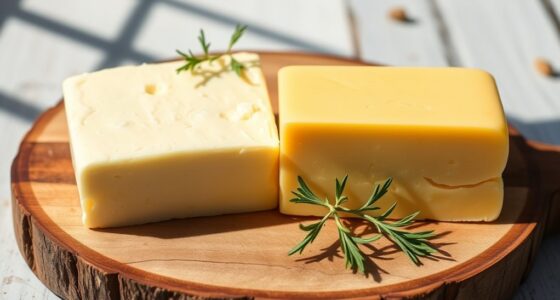
To turn cream into butter, you start with fresh liquid cream and churn it through mechanical agitation. This process causes fat globules to clump together, transforming the cream into butter. If you ferment the cream beforehand, you’ll enhance its flavor and texture. The churning is essential and relatively simple, allowing you to create a spreadable delight. There’s more to uncover about the various techniques and innovations that can elevate your butter-making experience.
Key Takeaways
- The churning process transforms fresh or fermented cream into butter through mechanical agitation, causing fat globules to clump together.
- Fermentation enhances the flavor and texture of butter by allowing beneficial bacteria to develop a tangy taste and creamier consistency.
- The mechanical agitation required for churning is simple yet crucial, directly affecting the formation of butter grains.
- Experimenting with fermentation techniques can elevate the flavor complexity and depth of the final butter product.
- Proper packaging innovations, like vacuum-sealed containers, help maintain butter’s freshness and prevent oxidation during storage.
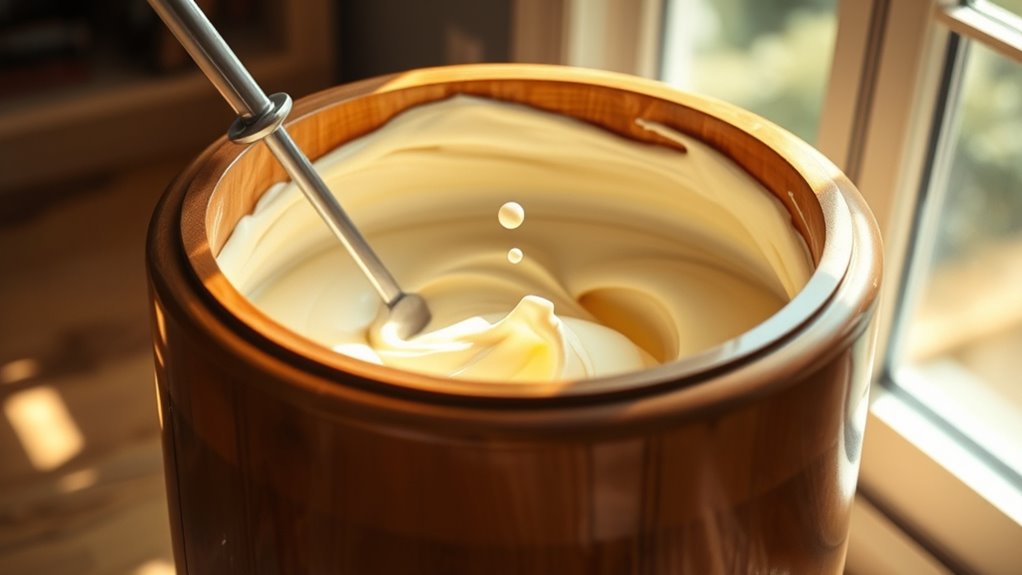
Have you ever wondered how the churning process transforms liquid cream into delicious butter? It’s a fascinating journey that starts with fresh cream, where the magic of churning takes center stage. As you engage in this process, you’ll be surprised at how simple ingredients can yield such a rich and creamy delight. The transformation begins when you take liquid cream and introduce it to mechanical agitation, which is fundamental to the churning process. This action breaks down the fat globules and allows them to clump together, ultimately forming butter.
During the churning, you might also come across various fermentation techniques that enhance the flavor and texture of the butter. When you let the cream sit for a while before churning, beneficial bacteria naturally ferment the cream, adding a tangy depth to the butter. This step not only improves taste but also contributes to a creamier consistency. You’ll notice that the end product can be quite different depending on whether you choose to use fresh cream or fermented cream. By experimenting with these techniques, you can create a butter that suits your palate perfectly.
Experimenting with fermentation techniques can elevate your butter’s flavor and texture, creating a unique culinary delight.
Once you’ve successfully churned your cream into butter, the next step is packaging. In recent years, packaging innovations have drastically changed how butter is stored and sold. You’ll find that modern packaging not only keeps the butter fresh but also preserves its flavor and texture for longer periods. Whether you prefer traditional paper wrappers or vacuum-sealed containers, each option offers unique benefits, such as preventing oxidation and moisture loss. You might even notice that some companies incorporate resealable designs, making it easier for you to use only what you need while keeping the rest fresh.
After you’ve packaged your butter, it’s time to enjoy the fruits of your labor. You can spread it on warm bread, use it in baking, or simply enjoy it melted over vegetables. The beauty of the churning process is that it’s not just about making butter; it’s about creativity and experimentation in the kitchen. With each batch you create, you’ll become more familiar with the nuances of flavor and texture, allowing you to refine your butter-making skills over time. So go ahead, immerse yourself in the delightful world of butter-making, and savor every moment of this delicious transformation.
Frequently Asked Questions
What Are the Nutritional Differences Between Cream and Butter?
When comparing cream and butter, you’ll notice that butter has a higher dairy fat content, typically around 80%, while cream usually contains about 36-40%. This means butter is more concentrated in calories, offering around 100 calories per tablespoon, compared to cream’s 50 calories. If you’re watching your calorie intake, you may want to think about how much you’re using in your recipes, as the differences can add up quickly.
Can I Make Butter From Any Type of Cream?
Absolutely, you can make butter from various cream variations! Think of it as a culinary adventure where each type of cream brings its own unique flavor to your butter production. Whether you use heavy whipping cream or light cream, the magic happens when you churn it. Keep in mind, though, that the fat content affects the richness and texture, so choose wisely to craft the butter that’ll elevate your dishes.
How Long Does Homemade Butter Last in the Fridge?
Homemade butter lasts about one to two weeks in the fridge if stored properly. To maximize its storage duration, keep it in an airtight container to prevent moisture and odors from causing spoilage. You can also wrap it in parchment paper before placing it in a container. If you want it to last longer, consider freezing it, which can extend its freshness for several months. Enjoy your homemade butter while it’s at its best!
Is It Possible to Churn Butter Without a Machine?
Yes, you can churn butter without a machine! Using manual churning and traditional methods, you can make delicious butter at home. Start by pouring heavy cream into a jar, filling it halfway. Shake the jar vigorously for about 10-15 minutes until you see the butter separating from the buttermilk. You can also use a whisk or a hand mixer if you prefer. Enjoy the satisfaction of making your own butter!
What Are Some Common Uses for Leftover Buttermilk?
You can use leftover buttermilk in several delicious ways! It makes a great cooking substitution for regular milk in savory dishes, adding a tangy flavor. When it comes to baking recipes, it’s perfect for pancakes, muffins, and cakes, giving them a moist texture. You can also use it in salad dressings or marinades. Don’t let that buttermilk go to waste—get creative and enhance your dishes with its unique taste!
Conclusion
Now that you know how cream transforms into butter through the churning process, it’s fascinating to realize that it takes about 20 minutes of churning to produce just one pound of butter from cream! So, the next time you spread that creamy goodness on your toast, remember the effort that went into it. You’re not just enjoying a delicious treat; you’re savoring a piece of culinary history. Get churning and enjoy the process!