Copper cookware is best for tasks that need precise temperature control and even heating, like making delicate sauces, caramel, or reducing liquids. Its quick responsiveness helps prevent scorching, and its beautiful look adds elegance to your kitchen. However, it’s not ideal for cooking highly acidic foods or high-heat searing. Knowing how to care for it guarantees durability. Stay with us to discover how to maximize copper’s benefits and avoid common pitfalls.

Get kitchen staples and gadgets delivered free with Prime
- Fast, free delivery on millions of items
- Prime Video, Amazon Music and more included
- Member-only deals all year
Key Takeaways
- Copper cookware is ideal for precise temperature control, perfect for delicate sauces, caramelizing sugars, and reducing liquids.
- It provides even heat distribution, reducing hot spots and ensuring consistent results in tasks like custards and delicate dishes.
- Copper’s aesthetic appeal and craftsmanship make it a decorative statement piece in addition to its functionality.
- Proper maintenance and lining (stainless steel or tin) enhance durability and prevent reactivity with foods.
- Avoid using copper for highly acidic foods, high-temperature searing, or long-term storage to prevent corrosion and discoloration.
copper saucepans for delicate sauces
As an affiliate, we earn on qualifying purchases.
As an affiliate, we earn on qualifying purchases.
Why Home Cooks Love Copper Cookware

Copper cookware is a favorite among home cooks because of its exceptional heat conductivity. Beyond its performance, it also adds a decorative appeal to your kitchen. The shiny, warm hue of copper draws the eye and complements various styles, from traditional to modern. Its historical significance adds to its allure, as copper cookware has been used for centuries by chefs and households alike. Owning copper pots connects you to a rich culinary legacy, bringing a sense of craftsmanship and timeless elegance to your space. Many appreciate not only how well it cooks but also how it elevates the look of their kitchen. Additionally, understanding the heat conductivity of copper helps explain why it performs so well in cooking applications. Its excellent thermal response allows for precise temperature control, which is essential for delicate recipes. The durability of copper cookware also contributes to its lasting appeal, making it a worthwhile investment for passionate cooks. Its reactivity can be a concern, but proper lining and maintenance help mitigate this issue. Furthermore, some enthusiasts value its aesthetic appeal, which can serve as a statement piece in any kitchen setup.
What Are the Best Uses for Copper Pans in Your Kitchen

Because of their superior heat responsiveness, copper pans are ideal for tasks that require precise temperature control, such as making delicate sauces or caramelizing sugars. Their excellent heat conduction ensures you can fine-tune your cooking without hot spots. Copper durability means your pans can last for years if properly maintained, making them a worthwhile investment. Plus, their striking copper aesthetics add a touch of elegance to your kitchen, elevating your cookware collection’s look. You’ll find these pans especially useful for baking, simmering, or reducing liquids where exact heat management matters. While copper is softer than other metals, with proper care, it maintains its beauty and functionality. Additionally, understanding field‑of‑view and imaging‑scale concepts can help you select the right size and type of pans for your culinary needs. Proper seasoning and cleaning techniques are essential to preserving the copper’s luster and performance, ensuring your investment lasts for many years. To optimize your cooking process, considering tool‑specific techniques can enhance your results. Recognizing the importance of temperature control can further improve your cooking precision, making copper pans a versatile tool in your culinary arsenal. Moreover, being aware of safety precautions when handling copper cookware can help prevent accidents and maintain its condition.
Cooking Tasks That Benefit Most From Copper’s Heat Conductivity
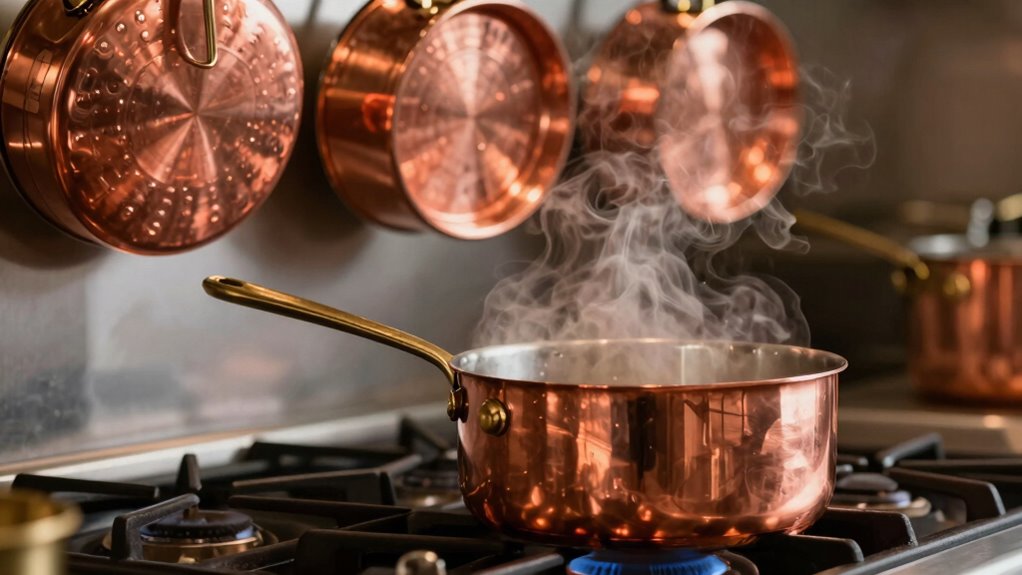
Copper’s excellent heat conductivity makes it ideal for tasks requiring precise temperature control and quick adjustments. You’ll notice how quickly your pans respond when you’re preparing delicate sauces or melting ingredients. These qualities help you achieve perfect results in cooking tasks that demand consistent, accurate heat. Additionally, copper is often used in Free Floating designs to create versatile and adaptable outdoor kitchen setups. Its wide color gamut also enhances the visual appeal of cookware, especially when polished to a high shine.
Precise Temperature Control
When precision matters in your cooking, maintaining the right temperature is essential, and copper cookware excels at providing that regulation. Its excellent heat conductivity allows you to fine-tune temperature levels, ensuring consistent heat distribution. This is especially important for delicate tasks like tempering chocolate or making sauces. Copper responds quickly to temperature changes, offering superior heat consistency. To illustrate, consider the following comparison:
| Feature | Copper Cookware | Other Materials | Benefits |
|---|---|---|---|
| Temperature control | Precise and rapid | Slower response | Better for delicate tasks |
| Heat responsiveness | Instant adjustment | Delayed response | Prevents burning or overcooking |
| Heat consistency | Uniform across surface | Varies with thickness | Ensures even cooking |
This control helps you avoid hot spots and achieve perfect results every time.
Quick Response Heating
Have you ever needed to adjust the heat instantly while cooking? Copper’s excellent thermal conductivity allows for rapid responses to temperature changes, making it ideal for tasks requiring quick heat adjustments. When you turn the heat up or down, copper’s low thermal expansion ensures minimal lag, so your pan reacts immediately. This quick response is especially useful for stove-top tasks like searing or sautéing. Additionally, copper’s safe installation practices help prevent accidents and ensure consistent performance. Moreover, understanding device vulnerabilities can help you take preventive measures to keep your cookware and appliances secure. However, keep in mind that copper’s high metal reactivity means it can react with acidic foods, potentially causing discoloration or metallic flavors if not lined properly. That’s why many copper cookware pieces are lined with stainless steel or tin—protecting your food and maintaining the cookware’s responsiveness. Copper’s swift heat transfer helps you stay in control, ensuring your cooking is precise and efficient.
Delicate Sauce Preparation
Because delicate sauces require precise temperature control, copper cookware is especially beneficial for this task. Copper heats evenly, preventing scorching or curdling, which is vital when working with delicate ingredients like butter, cream, or egg-based sauces. It’s ideal for controlling the gentle simmer needed for tempering acidic foods or reducing sauces without overcooking. Copper also excels in oven baking, where consistent heat helps develop smooth, well-emulsified sauces. Imagine this:
| Copper Cookware Benefits | Cooking Tasks |
|---|---|
| Excellent heat conduction | Preparing delicate sauces |
| Precise temperature control | Working with acidic foods |
| Even heat distribution | Oven baking for sauces and custards |
| Quick temperature adjustments | Preventing scorching |
| Responsive heating | Achieving perfect consistency |
This responsiveness guarantees your sauces stay silky and flavorful.
Common Myths About Copper Cookware: What’s Fact and What’s Fiction
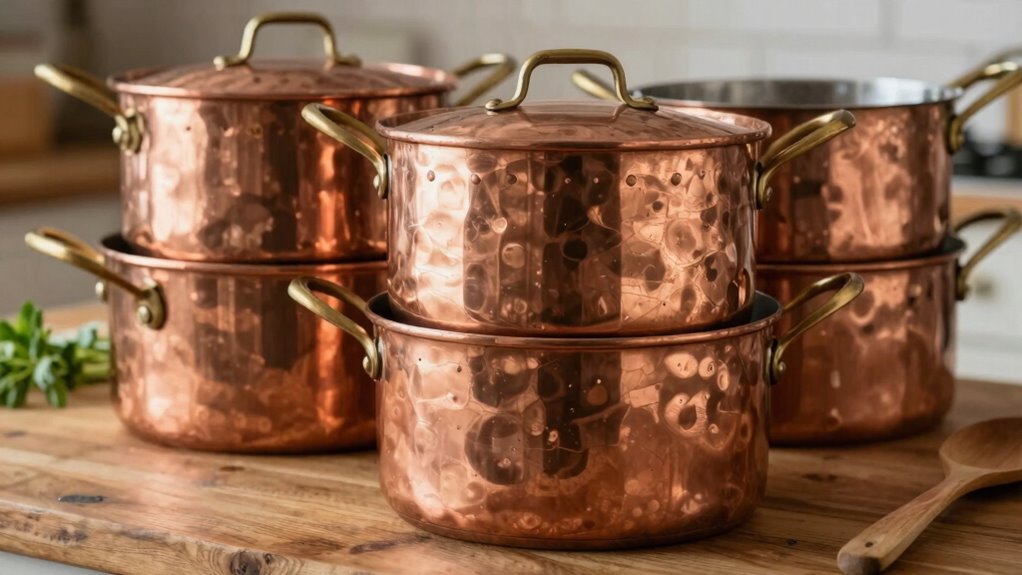
Many people believe copper cookware is fragile and requires constant maintenance, but that’s often a myth. Its excellent heat conductivity is real, yet some think it’s too delicate to last, which isn’t true with proper care. Let’s clarify these misconceptions so you can make informed decisions about using copper in your kitchen.
Copper’s Heat Conductivity
Copper is renowned for its exceptional ability to conduct heat, making it a top choice for serious cooks. Its superior heat conductivity ensures quick, even heating, so you can precisely control your cooking process. Beyond performance, copper also boasts artistic designs that add a touch of elegance to your kitchen, often showcasing its historical significance. Many vintage and handcrafted pieces highlight the craftsmanship involved, making each pan a unique work of art. This excellent heat transfer means you won’t have hot spots, reducing the risk of burning or uneven cooking. Whether you’re simmering sauces or searing meats, copper’s heat conductivity helps you achieve consistent results. Its blend of functionality and beauty makes it a coveted choice for both professional chefs and passionate home cooks.
Durability Misconceptions
While copper’s excellent heat conductivity makes it a favorite among cooks, some misconceptions about its durability persist. Many believe copper cookware is fragile or prone to damage, but that’s not entirely true. Copper alloy durability, especially when lined with stainless steel or tin, makes it quite resilient for everyday use. Additionally, proper care and maintenance can greatly extend its lifespan, ensuring it remains functional and beautiful over time. However, copper corrosion can occur if exposed to acidic foods or harsh cleaning agents, weakening the metal over time. This isn’t a sign of poor durability but a natural reaction that can be prevented with proper care. Copper cookware, when properly maintained and coated, withstands regular cooking tasks without warping or cracking. The myth that it’s inherently delicate is just that—a myth. With the right precautions, copper remains a durable, long-lasting option. Proper maintenance and careful handling are essential to maximize its lifespan and performance.
Maintenance Requirements
There are several myths about maintaining copper cookware that can lead to unnecessary worry or improper care. Many believe cleaning routines are complicated or that storage tips require special handling. In reality, caring for your copper cookware is straightforward with proper knowledge. To keep it in top shape, follow these tips:
- Use gentle, non-abrasive cleaners like lemon and salt or copper-specific polishes.
- Avoid storing copper pots directly in contact with other metals to prevent scratching.
- Dry thoroughly after washing to prevent tarnishing and corrosion.
- Regularly polish and buff your copper cookware to maintain its shine and prevent tarnish buildup. Additionally, understanding the oxidation process helps in choosing the right cleaning methods to keep your cookware looking its best.
When Should You Avoid Using Copper Pots and Pans

You should avoid using copper pots and pans when cooking acidic foods like tomatoes, citrus, or vinegar-based dishes. The acidity can cause copper to leach into your food, raising health concerns over potential copper toxicity. Additionally, cooking acidic foods in copper cookware can damage the pan’s surface, leading to costly repairs or replacements. Here’s a quick comparison:
| When to Avoid Copper Cookware | Why |
|---|---|
| Cooking acidic foods | Causes copper leaching, health concerns |
| High-temperature searing | Damages pan surface, reduces lifespan |
| Non-stick or delicate items | Copper isn’t suitable for gentle, non-stick cooking |
| Long-term storage | Copper reacts with moisture, risking corrosion |
Consider your health and budget before using copper cookware in these situations. To better understand copper leaching and its effects, it’s helpful to recognize how different cooking conditions influence this process. Proper maintenance practices can extend the lifespan of your copper cookware and prevent unnecessary reactions. Regular cleaning and avoiding exposure to moisture can also minimize corrosion risks, ensuring your cookware remains safe and functional over time. Additionally, understanding the horsepower of electric dirt bikes can help you choose the right model for your off-road adventures.
How to Properly Care for and Maintain Your Copper Cookware

To keep your copper cookware looking its best and functioning properly, regular cleaning and proper maintenance are essential. Proper cleaning techniques help prevent tarnish and maintain its shine, while smart storage tips avoid scratches and dents.
- Use a gentle copper cleaner or a mixture of lemon and salt to remove tarnish.
- Dry thoroughly after washing to prevent water spots and corrosion.
- Store your cookware in a dry, padded space or hang it to avoid scratches and dents.
Frequently Asked Questions
Is Copper Cookware Safe for All Types of Food?
Copper cookware is generally safe for most foods, but you should be cautious of copper allergen concerns if you’re sensitive. Avoid cooking highly acidic foods directly in unlined copper pots, as they can leach copper into your meals. Proper copper cookware maintenance, like regular polishing and lining, helps prevent copper leaching and keeps your cookware in good shape. Always monitor for any allergic reactions and choose lined copper options if needed.
How Does Copper Compare to Other Metals in Durability?
Copper is less durable than stainless steel or cast iron, but it’s still quite strong. It scores around 6 on the Mohs scale, compared to steel’s 5-6 and cast iron’s 4-5. While copper isn’t as corrosion-resistant, it’s valued for its excellent thermal conductivity. You’ll find copper’s metal strength ideal for precise cooking, but for longevity and corrosion resistance, other metals might be better suited.
Can Copper Pans Be Used on Induction Cooktops?
Copper pans generally can’t be used directly on induction cooktops because they lack magnetic compatibility. However, if your copper cookware has a magnetic bottom or a stainless steel base, you can use it for better induction efficiency. Always check for a magnetic test before using copper pans on induction. This way, you guarantee your cookware works effectively and heats evenly without damaging your cooktop.
What Are the Environmental Impacts of Copper Cookware Production?
Copper cookware production poses potential environmental impacts, primarily through manufacturing emissions and mining methods. If you choose sustainably sourced copper, you help reduce resource depletion and environmental damage. Mining can cause habitat harm, water pollution, and energy consumption. By supporting brands committed to sustainable sourcing and eco-friendly manufacturing, you can minimize your environmental footprint. Being mindful of where and how your copper cookware is made helps promote greener, cleaner cooking choices.
Are There Any Health Risks Associated With Copper Leaching?
You might worry about health risks from copper leaching, but with proper use, such as lining your cookware, leaching concerns are minimal. Copper toxicity is rare if you avoid cooking highly acidic foods directly in unlined copper pots. To stay safe, opt for cookware with a protective lining and don’t cook acidic ingredients for long periods, reducing potential copper leaching and ensuring your health stays protected.
Conclusion
Now that you know what copper cookware excels at and what to avoid, you can make smarter choices in your kitchen. Use copper for precise temperature control, for quick heating, and for beautiful presentation. Avoid it for highly acidic foods or heavy-duty tasks that can damage its surface. Keep it clean, maintain its shine, and enjoy the elegance and performance copper brings. With these tips, you’ll maximize its benefits and minimize its flaws, making your cooking experience truly shine.
Columbus Day / Indigenous Peoples' Day Picks
long weekend sales
As an affiliate, we earn on qualifying purchases.