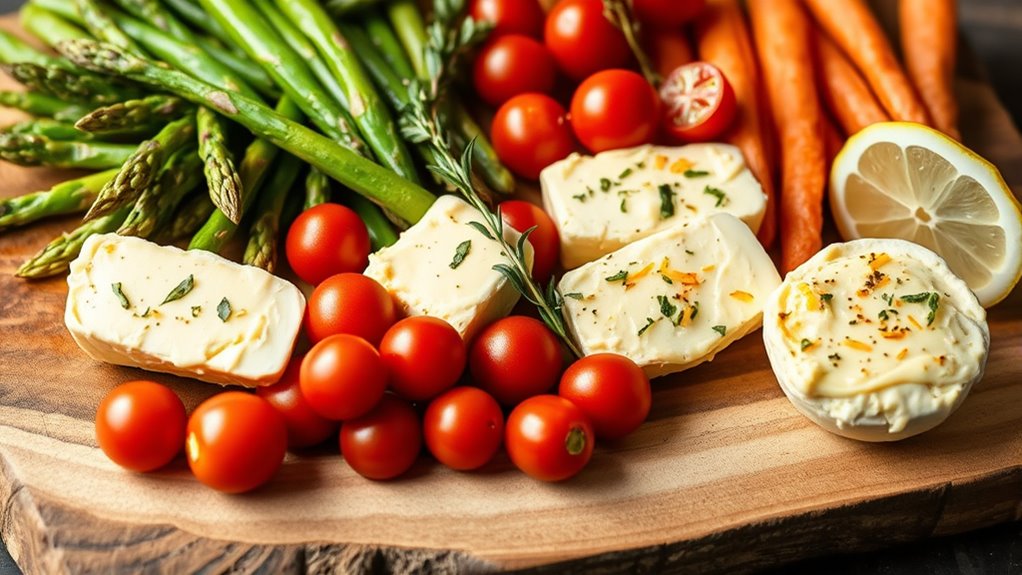
To elevate your vegetable dishes, use compound butter pairings like lemon-herb butter for asparagus and green beans, or garlic and chili butter for roasted Brussels sprouts. Mushroom and thyme butter enhances root vegetables like carrots, while smoked paprika adds a bold kick. These flavor combinations balance the natural sweetness or earthiness of your veggies, transforming them into gourmet creations. There’s so much more you can explore to create unique flavor profiles.
Key Takeaways
- Lemon-herb butter enhances the freshness of asparagus, green beans, and peas, brightening their natural flavors.
- Garlic and chili butter pairs beautifully with roasted Brussels sprouts and sautéed broccoli for a bold kick.
- Mushroom and thyme butter elevates root vegetables like carrots and potatoes, adding earthiness and depth.
- Smoked paprika complements spicy butter blends, perfect for adding a rich, smoky flavor to various vegetables.
- Experiment with different herb and spice combinations in compound butter for unique and versatile vegetable seasonings.
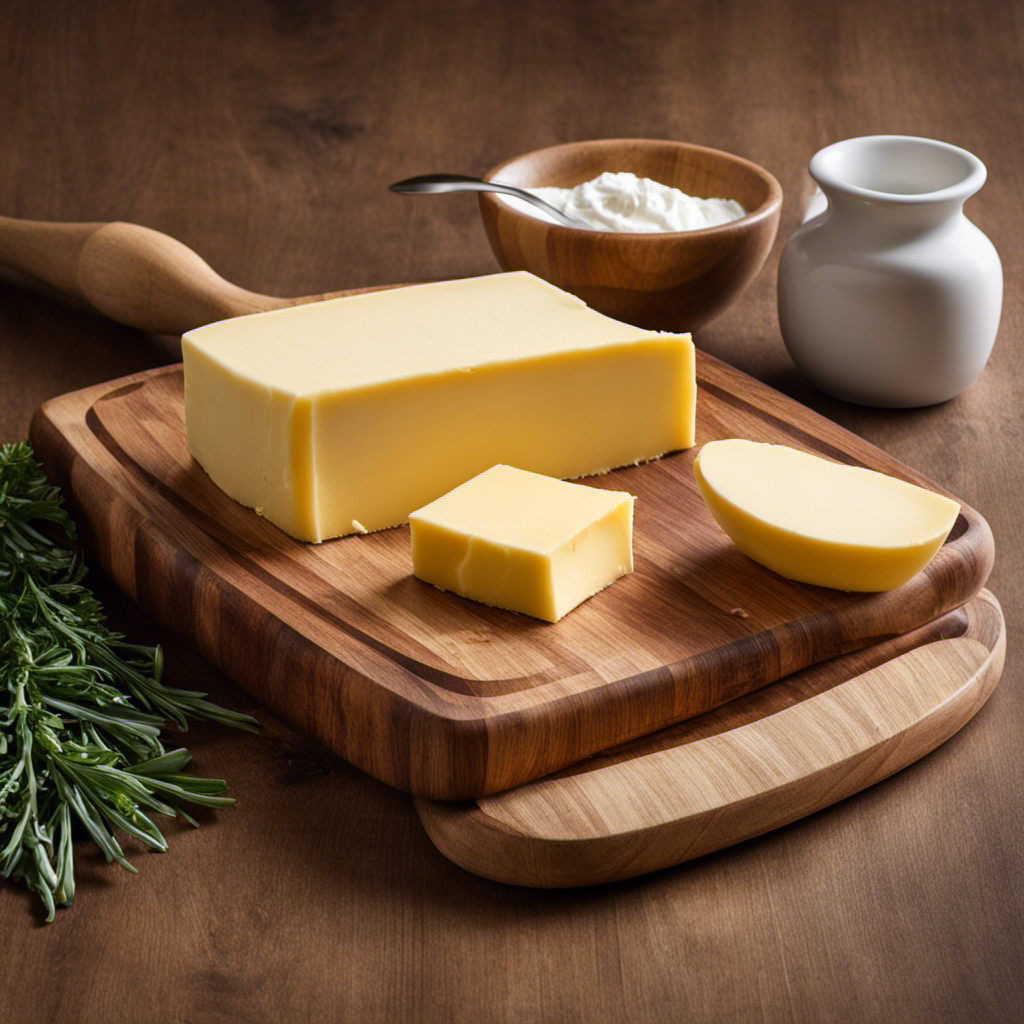
When you want to elevate your culinary creations, compound butter is a game changer. This simple yet versatile ingredient can transform ordinary vegetables into extraordinary dishes, making every bite a delight. By mixing butter with herbs, spices, and other flavor enhancers, you can create a range of compound butters that serve as seasoning enhancements, adding depth and richness to your meals.
Start by choosing the right vegetables. Think about seasonal options like asparagus, zucchini, or Brussels sprouts. These veggies are perfect canvases for your compound butter masterpieces. Once you’ve selected your vegetables, it’s time to think about flavor balancing. You want to assure that the flavors in your compound butter complement the natural sweetness or earthiness of the vegetables. For instance, if you’re working with asparagus, consider a lemon-herb compound butter. The acidity of the lemon will brighten the dish, while the herbs provide a fresh note.
Choosing seasonal vegetables like asparagus, zucchini, or Brussels sprouts sets the stage for delicious compound butter pairings that enhance their natural flavors.
To make your lemon-herb compound butter, simply mix softened butter with fresh lemon zest, chopped parsley, and a pinch of salt. This combination not only enhances the asparagus but also works well with other green vegetables like green beans or peas. Just a dollop of this butter melted over your veggies will create a restaurant-quality dish right in your kitchen.
If you’re looking for something a bit bolder, try a garlic and chili compound butter. Mix softened butter with minced garlic, crushed red pepper flakes, and a touch of smoked paprika. This spicy concoction pairs beautifully with roasted Brussels sprouts or sautéed broccoli. The heat from the chili flakes will elevate the dish, while the garlic provides a savory depth that’s hard to resist.
For a more earthy option, consider a mushroom and thyme compound butter. Finely chop sautéed mushrooms and mix them with butter and fresh thyme. This rich blend enhances root vegetables like carrots or potatoes, creating a comforting, savory dish that feels like a warm hug. Additionally, experimenting with wax-free candle techniques can inspire unique flavor pairings in your culinary creations.
Incorporating compound butter into your vegetable dishes not only adds flavor but also takes care of seasoning enhancements, ensuring that each bite is perfectly balanced. By experimenting with different combinations, you’ll discover countless ways to make your vegetables shine. So next time you’re in the kitchen, don’t forget to whip up some compound butter—it’ll elevate your veggie game like never before.
Top picks for "compound butter pairing"
Open Amazon search results for this keyword.
As an affiliate, we earn on qualifying purchases.
Frequently Asked Questions
Can Compound Butter Be Frozen for Later Use?
Yes, you can freeze compound butter for later use! Just portion it into logs or discs, wrap it tightly, and store it in an airtight container. When you’re ready to use it, simply thaw it in the fridge. If you’re using dairy alternatives, make sure to choose ones that freeze well. Experiment with different herb combinations to create unique flavors that will elevate your dishes once you bring your frozen butter back to life!
How Long Does Compound Butter Last in the Fridge?
Compound butter typically lasts about one to two weeks in the fridge. For ideal shelf life, store it in an airtight container or wrap it tightly in plastic wrap. Make sure to keep it away from strong-smelling foods to avoid flavor absorption. If you notice any discoloration or off smells, it’s best to discard it. Following these storage tips will help you enjoy your compound butter longer!
What Is the Best Way to Store Compound Butter?
You might think the best way to store compound butter is just tossing it in the fridge, but there’s more to it. To preserve those amazing flavor combinations, wrap it tightly in plastic wrap or parchment paper, shaping it into a log. For long-term storage, pop it in the freezer. Don’t forget to label it with storage tips, so you know what deliciousness awaits when you need that extra touch!
Can I Make Compound Butter Without Dairy?
Yes, you can definitely make compound butter without dairy! Instead of traditional butter, use vegan alternatives like coconut oil or nut butters. Mix in your favorite herbs and spices to create a flavorful blend. You can experiment with herb substitutions, like using basil instead of parsley or adding a hint of garlic for extra zest. Just blend everything together, and you’ll have a delicious, dairy-free compound butter ready to elevate your dishes!
How Do I Know Which Herbs to Combine for Compound Butter?
You can’t make an omelet without breaking a few eggs, and you can’t create great compound butter without mixing the right herbs. To know which herbs to combine, think about herb flavor combinations that complement each other, like basil with parsley or thyme with rosemary. Seasonal herb pairings also play a big role; use fresh basil in summer and sage in fall for the best results. Trust your palate, and enjoy experimenting!
Conclusion
So, as you explore the world of compound butter pairings for your vegetables, you’ll uncover flavors that dance on your palate. Imagine the subtle hints of garlic and herbs melting into your roasted carrots or the zesty kick enriching your grilled asparagus. But wait—what if you experiment with unexpected combinations? The possibilities are endless, and with each bite, a new revelation awaits. Are you ready to elevate your vegetable dishes to culinary heights you never thought possible?