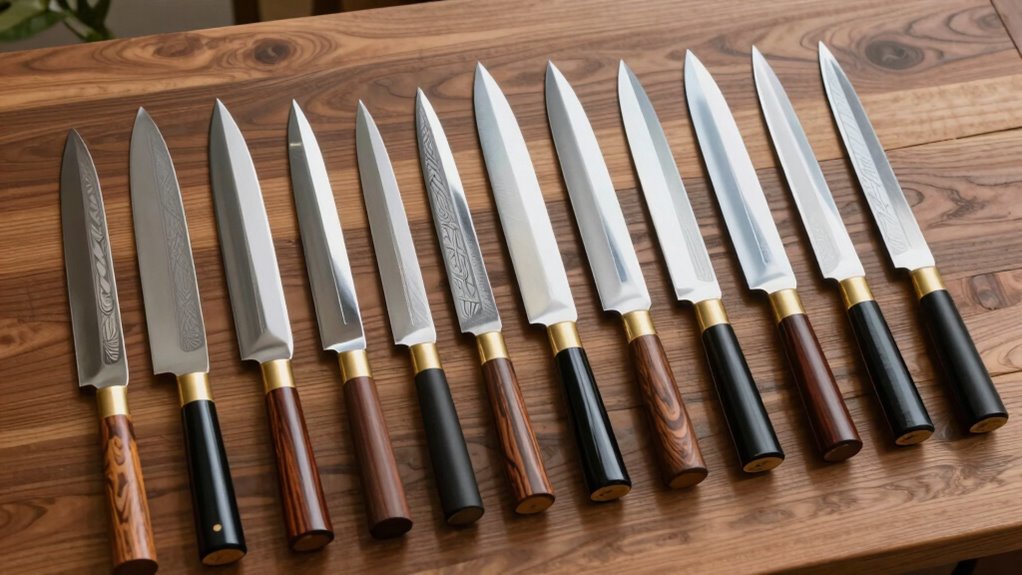

Traditional Japanese knives reward precision: thinner blades, harder steel, and sharper edges than most Western counterparts, but they demand more care in return. After comparing 14 of the most popular options, the Tojiro Professional VG10 Gyuto stands out as the best overall pick for its forged construction, proven steel, and balance of performance against price. Buyers who want a complete arsenal in one purchase should look at the MITSUMOTO SAKARI 4-Piece Set, while the Yoshihiro Kurouchi Blue Steel #2 Kiritsuke is the standout for anyone chasing authentic handcrafted performance. The main tradeoffs in this category come down to single knife versus set, authentic Japanese-made steel versus mass-produced Damascus-look blades, and how much maintenance you’re willing to accept. Keep reading for the full breakdown, including which sets are worth the money and which are best skipped.

Get kitchen staples and gadgets delivered free with Prime
- Fast, free delivery on millions of items
- Prime Video, Amazon Music and more included
- Member-only deals all year
Key Takeaways
- Knives actually made in Japan (Tojiro, TONMA, Yoshihiro) consistently outperformed the mass-produced Damascus-look imports in edge quality and heat treatment, even when the imports had flashier blades.
- Sets look like better value on paper, but the FIVE COWS 10-piece and TIVOLI 3-piece bundles revealed a pattern: budget sets dilute quality across blades you’ll rarely use, while 4-5 piece sets from MITSUMOTO SAKARI and imarku held up better.
- The Yoshihiro Blue Steel #2 Kiritsuke is the only true traditionalists’ knife in the lineup — carbon steel core, kurouchi finish, saya included — but it will rust if treated like a stainless blade.
- VG10 steel emerged as the sweet spot for most buyers: it appears in the Tojiro, Sunnecko, and TIVOLI picks and offers sharpness and maintenance in reasonable balance.
- Specialty shapes earned their spots only for specific jobs — the HexClad Nakiri for vegetable work and the imarku Santoku as a gateway blade — and should be bought as complements, not primary knives.
| MITSUMOTO SAKARI 4-Piece Japanese Chef Knife Set |  | Best Traditional Set for Gifting | Brand: MITSUMOTO SAKARI | Model: MS-2680 | Knife count: 4 (Gyuto, Santoku, Nakiri, paring) | VIEW ON AMAZON | See Our Full Breakdown |
| imarku 5-Piece Japanese Kitchen Knife Set with Pakkawood Handles |  | Best Value Set for Everyday Cooking | Brand: imarku | Pieces: 5 | Included knives: 8-inch chef, 7-inch santoku, 8-inch bread, 6.8-inch boning, 3.5-inch paring | VIEW ON AMAZON | See Our Full Breakdown |
| Tojiro Professional Chef Knife, 8.2 in (21 cm), VG10 |  | Best Single Traditional Gyuto | Brand: Tojiro | Blade length: 8.2 in (21 cm) | Steel: VG10 | VIEW ON AMAZON | See Our Full Breakdown |
| Japanese Kitchen Knife Set of 5 with Wooden Box Case by Takaaki Nakamura |  | Best Set for Traditional Japanese Techniques | Craftsman: Takaaki Nakamura | Pieces included: 5 | Knife types: Sushi/sashimi, Nakiri, Chef’s, Petty, Small deba | VIEW ON AMAZON | See Our Full Breakdown |
| Matsato Japanese Stainless Steel Chef Knife, 6.3-Inch Blade |  | Best Compact Starter Knife | Brand: Matsato | Blade material: Japanese stainless steel | Blade length: 6.3 in (16 cm) | VIEW ON AMAZON | See Our Full Breakdown |
| Mitsumoto Sakari 9-Inch Japanese Kiritsuke Knife |  | Best Statement Piece | Blade length: 9 inches | Blade material: Three-layer 9Cr18MoV high-carbon stainless steel | Hardness: HRC 60±2 | VIEW ON AMAZON | See Our Full Breakdown |
| TONMA TCK-1 Chef Knife, 8.2″ Japanese Gyuto, Made in Japan |  | Best Authentic Japanese Forging | Brand: TONMA JP | Model: TCK-1 | Blade length: 8.2 inches | VIEW ON AMAZON | See Our Full Breakdown |
| TIVOLI 3-Piece VG10 Damascus Kitchen Knife Set |  | Best Starter Damascus Trio | Pieces: 3 | Included knives: Chef knife, Kiritsuke knife, utility knife | Blade core: VG10 high-carbon steel | VIEW ON AMAZON | See Our Full Breakdown |
| FIVE COWS 10-Piece Japanese Kitchen Knife Set – Star Collection |  | Best Full-Kitchen Coverage | Pieces: 10 | Material: High-carbon 440A stainless steel | Rockwell hardness: 54+ | VIEW ON AMAZON | See Our Full Breakdown |
| Sunnecko 8 Inch Japanese Damascus Chef Knife – Ultra Sharp VG10 Steel |  | Sharpest Edge Pick | Brand: Sunnecko | Model number: Sonne-ABS-S-8IN | Blade length: 8 inches | VIEW ON AMAZON | See Our Full Breakdown |
| Yoshihiro Kurouchi High Carbon Blue Steel #2 Stainless Clad Kiritsuke Japanese Knife, 8.25″ (210mm) |  | Best Premium Artisan Pick | Blade Length: 8.25″ (210mm) | Core Steel: Blue Steel #2 (High Carbon) | Cladding: 2 layers Kurouchi stainless steel | VIEW ON AMAZON | See Our Full Breakdown |
| HOSHANHO 8-Inch Damascus Chef Knife with Olive Wood Handle |  | Best Gift-Worthy All-Rounder | Blade Length: 8 inches | Blade Steel: 10Cr15CoMoV core, 67-layer Damascus | Hardness: 62 HRC | VIEW ON AMAZON | See Our Full Breakdown |
| imarku 7-Inch Santoku Knife, Japanese High Carbon Stainless Steel |  | Best for Everyday Home Cooks | Blade Length: 7 inches | Blade Material: Japanese high carbon stainless steel | Blade Thickness: 2.5mm | VIEW ON AMAZON | See Our Full Breakdown |
| HexClad 6.5-Inch Japanese Damascus Stainless Steel Nakiri Knife |  | Best Compact Vegetable Specialist | Blade Material: Japanese Damascus stainless steel | Damascus Layers: 67 | Blade Length: 6.5 inches | VIEW ON AMAZON | See Our Full Breakdown |
| traditional japanese knife | Blade length |
|---|---|
| MITSUMOTO SAKARI 4-Piece Japan | — |
| imarku 5-Piece Japanese Kitche | — |
| Tojiro Professional Chef Knife | 8.2 in (21 cm) |
| Japanese Kitchen Knife Set of | — |
| Matsato Japanese Stainless Ste | 6.3 in (16 cm) |
| Mitsumoto Sakari 9-Inch Japane | 9 inches |
| TONMA TCK-1 Chef Knife | 8.2 inches |
| TIVOLI 3-Piece VG10 Damascus K | — |
| FIVE COWS 10-Piece Japanese Ki | — |
| Sunnecko 8 Inch Japanese Damas | 8 inches |
| Yoshihiro Kurouchi High Carbon | 8.25" (210mm) |
| HOSHANHO 8-Inch Damascus Chef | 8 inches |
| imarku 7-Inch Santoku Knife | 7 inches |
| HexClad 6.5-Inch Japanese Dama | 6.5 inches |
More Details on Our Top Picks
MITSUMOTO SAKARI 4-Piece Japanese Chef Knife Set
This option stands out for wrapping four traditionally styled knives — a Gyuto, Santoku, Nakiri, and paring — into a presentation-ready package with a sandalwood box and blade oil, which is exactly what sets it apart from the imarku 5-piece set’s gift box-only approach. The three-layer San-Mai construction in 9Cr18MoV steel gets closer to authentic Japanese blade architecture than most sets at this level, and the tsuchime hammered finish plus octagonal rosewood handles give it genuine traditional character. The tradeoff: blade dimensions aren’t specified per knife, so buyers can’t verify sizing before ordering, and HRC 58±2 sits below what single-forged options like the Tojiro VG10 deliver for edge retention. Compared with the Takaaki Nakamura five-piece box set, this one trades a dedicated sashimi knife for a more modern steel treatment.
Pros:- Four complementary knife styles cover slicing, chopping, vegetable prep, and detail work
- Three-layer San-Mai construction with deep-cryo treatment for durability
- Octagonal rosewood handles and hammered tsuchime finish for authentic traditional styling
- Sandalwood storage box and blade oil included for maintenance and gifting
Cons:- No individual blade dimensions are provided, making sizing a guessing game
- HRC 58±2 hardness trails premium VG10 blades in edge retention
Best for: Gift buyers and home cooks who want a complete traditional-style Japanese set with presentation-quality packaging
Not ideal for: Buyers who need verified blade lengths before purchasing, since no individual dimensions are listed
- Brand:MITSUMOTO SAKARI
- Model:MS-2680
- Knife count:4 (Gyuto, Santoku, Nakiri, paring)
- Blade steel:9Cr18MoV high-carbon stainless steel
- Construction:Three-layer San-Mai
- Hardness:HRC 58±2
- Blade finish:Tsuchime hammered finish
- Handle material:Rosewood, octagonal
- Included accessories:Sandalwood box, knife blade oil
Our verdict“Buyers who want a giftable, traditionally styled four-knife starter collection will find this the most complete presentation package in the lineup.”
imarku 5-Piece Japanese Kitchen Knife Set with Pakkawood Handles
This set makes the most sense for buyers who prioritize breadth of coverage over traditional authenticity. Five knives — including a bread knife and boning knife that most Japanese-focused sets skip — handle nearly every daily task, which is more practical range than the MITSUMOTO SAKARI 4-piece offers for Western-style cooking. The 15° per-side edge angle gives it that Japanese-style sharpness, though at 56±2 HRC the blades are noticeably softer than the Tojiro’s VG10 and will need more frequent honing. The absence of a knife block is the real gap here: compared with the Takaaki Nakamura set’s wooden box case, storage falls entirely on the buyer. Full-tang Pakkawood handles keep the balance respectable for a workhorse set.
Pros:- Five knives cover everyday tasks including bread and boning, which most Japanese sets omit
- 15° per-side edge delivers Japanese-style cutting sharpness
- Full-tang FSC-certified Pakkawood handles designed for balanced control
- Gift box included, suitable for presents
Cons:- No knife block or storage solution included
- 56±2 HRC hardness means more frequent sharpening than harder Japanese steels
Best for: Budget-conscious home cooks replacing a mismatched drawer of knives with one coherent Western-Japanese hybrid set
Not ideal for: Cooking enthusiasts seeking authentic Japanese steel hardness and construction — the softer blades won’t hold an edge like premium options
- Brand:imarku
- Pieces:5
- Included knives:8-inch chef, 7-inch santoku, 8-inch bread, 6.8-inch boning, 3.5-inch paring
- Blade material:High-carbon stainless steel; boning knife uses 1.4116 steel
- Handle material:FSC-certified Pakkawood, full tang
- Blade angle:15° per side
- Hardness:56±2 HRC
- Storage:No knife block included; gift box
- Care:Hand wash with warm water and dry after use
Our verdict“A practical, budget-friendly five-knife workhorse set for everyday cooks who value versatility over traditional steel pedigree.”
Tojiro Professional Chef Knife, 8.2 in (21 cm), VG10
For buyers who believe one great knife beats five mediocre ones, this is the pick. VG10 steel, made in Japan, handmade construction — this knife carries the credentials that the imarku set and Matsato chef knife approximate but don’t match, and it’s the steel class you’ll also find in higher-end Damascus options like the Sunnecko 8-inch chef knife. The 8.2-inch Gyuto length is the traditional all-purpose size, long enough for protein breakdown yet still nimble for produce. The honest tradeoff is focus: unlike the MITSUMOTO SAKARI 4-piece set, you get no nakiri for vegetables and no paring knife for detail work — this is one blade doing everything. Buyers coming from softer German-style steel should also expect a more brittle edge that rewards careful technique.
Pros:- Genuine made-in-Japan handmade construction
- VG10 steel offers strong edge retention and sharpness
- 8.2-inch Gyuto length is versatile across proteins and produce
- Backed by a lifetime warranty
Cons:- Single knife only — no set coverage for specialized tasks like bread or boning
- Harder VG10 steel is more prone to chipping with rough or twisting cuts
Best for: Cooks ready to invest in one genuinely traditional Japanese-made Gyuto as their primary knife
Not ideal for: Buyers who want a full knife arsenal out of the box — this is a single blade with no配套 accessories
- Brand:Tojiro
- Blade length:8.2 in (21 cm)
- Steel:VG10
- Origin:Japan
- Construction:Handmade
- Style:Samurai-inspired Gyuto
- Warranty:Lifetime
Our verdict“The most authentic single-blade investment in this lineup, ideal for cooks who’d rather own one great Gyuto than a set of compromises.”
Japanese Kitchen Knife Set of 5 with Wooden Box Case by Takaaki Nakamura
This is the only set in the lineup built around actually traditional Japanese knife shapes — a yanagiba-style sashimi knife, a small deba for fish butchery, a nakiri, a petty, and a chef’s knife. If your cooking involves raw fish preparation or whole-fish work, nothing else here covers it: the imarku 5-piece set substitutes Western bread and boning knives, which are different tools for different food traditions. The craftsman attribution to Takaaki Nakamura and wooden box case give it genuine gift appeal, comparable to the MITSUMOTO SAKARI set’s sandalwood box. The drawbacks are real, though — no stated blade hardness or steel grade means buyers can’t judge edge retention, and the stainless steel is likely softer than the Tojiro’s VG10 for serious enthusiasts.
Pros:- Only set here with traditional Japanese shapes including sashimi and small deba knives
- Named craftsman construction adds authenticity
- Stainless steel resists rust and cleans easily
- Wooden box case works for both storage and gifting
Cons:- No published blade hardness or steel grade to evaluate edge retention
- Likely requires hand washing to preserve edge quality despite stainless construction
Best for: Home cooks learning Japanese cuisine who need a sashimi knife, deba, and nakiri in one boxed set
Not ideal for: Steel enthusiasts who research hardness ratings — the lack of published steel specs makes comparison impossible
- Craftsman:Takaaki Nakamura
- Pieces included:5
- Knife types:Sushi/sashimi, Nakiri, Chef’s, Petty, Small deba
- Material:Stainless steel
- Storage:Wooden box case
- Gifting:Boxed presentation suitable for gifts
Our verdict“The clear choice for cooks practicing Japanese culinary techniques who need authentic knife shapes, not just Japanese-style aesthetics.”
Matsato Japanese Stainless Steel Chef Knife, 6.3-Inch Blade
At 6.3 inches, this is the shortest blade in the roundup, and that’s precisely its appeal — it’s approachable in a way the 8.2-inch Tojiro isn’t for cooks with smaller hands or limited counter space. The shorter length trades cutting clearance for control, making it well suited to herb work, vegetable chopping, and everyday meal prep rather than breaking down large cuts or slicing roasts. Compared with the imarku 7-inch santoku, it’s a simpler, lighter proposition: no premium steel claims, no full-tang marketing — just a balanced, easy-to-manage blade. The honest limitations are care and materials: it’s not dishwasher safe, and the unspecified stainless steel won’t match VG10 or 9Cr18MoV options for edge longevity. This is a confidence-builder knife, not a lifetime one.
Pros:- Compact 6.3-inch blade is easy to control for beginners and detail work
- Balanced weight supports comfortable everyday prep
- Versatile across meat, vegetables, and herbs
- Lower-commitment entry point into Japanese-style knives
Cons:- Not dishwasher safe and requires hand washing and drying
- Blade steel is unspecified, offering no assurance of edge retention
- Short length limits it for large proteins and long slicing strokes
Best for: Beginners, cooks with smaller hands, or anyone wanting a light, maneuverable first Japanese-style knife
Not ideal for: Cooking enthusiasts who want premium steel — the unspecified stainless won’t hold an edge like VG10 blades
- Brand:Matsato
- Blade material:Japanese stainless steel
- Blade length:6.3 in (16 cm)
- Handle:Solid handle
- Intended use:Cutting, slicing, chopping meat, vegetables, and herbs
- Care:Hand wash and dry; not dishwasher safe
Our verdict“A sensible low-commitment starter knife for casual cooks who value maneuverability over steel pedigree.”
Mitsumoto Sakari 9-Inch Japanese Kiritsuke Knife
For buyers who want a single knife that looks as traditional as it cuts, this hand-forged Kiritsuke makes a strong case. The tsuchime hammered texture and kurouchi black finish deliver the artisanal aesthetic that Western-style knives like the Sunnecko Damascus chef knife imitate with etched patterns — here it is the actual forging, not decoration. The flatter edge and angled tip suit push cuts and vegetable prep, and at HRC 60±2 the three-layer 9Cr18MoV blade holds an edge longer than the softer FIVE COWS 440A set. Compared with the TIVOLI three-piece set, you give up versatility for craft: this is one long, specialized blade. That length is the real tradeoff — a 9-inch Kiritsuke demands confident knife skills, and it must never meet bone.
Pros:- Authentic hand-forged tsuchime and kurouchi finish, not a laser-etched imitation
- Three-layer 9Cr18MoV steel at HRC 60±2 holds an edge well
- Angled tip and flatter edge excel at push cuts, slicing, and vegetable work
- Octagonal rosewood handle and sandalwood box add genuine traditional presentation
Cons:- 9-inch blade is unwieldy for users accustomed to smaller, lighter knives
- Strictly for boneless proteins — no cleaving or bone contact
- Kiritsuke profile demands more technique than a standard gyuto or santoku
Best for: Cooking enthusiasts who want a visually striking, hand-forged single knife for vegetable-forward prep and slicing boneless proteins
Not ideal for: Beginners or cooks with smaller hands — the 9-inch flatter blade is unforgiving of rocking-cut technique and hard to control
- Blade length:9 inches
- Blade material:Three-layer 9Cr18MoV high-carbon stainless steel
- Hardness:HRC 60±2
- Finish:Tsuchime hammered texture with kurouchi black forged finish
- Handle:Rosewood, octagonal
- Included storage:Sandalwood box
Our verdict“Buy it for the traditional craftsmanship and looks; skip it if you need one forgiving do-everything blade.”
TONMA TCK-1 Chef Knife, 8.2″ Japanese Gyuto, Made in Japan
Plenty of knives in this roundup borrow Japanese styling, but the TONMA TCK-1 is actually forged in Seki City, Japan’s blade-making capital, by smiths with decades of experience. That pedigree shows in the traditional Hamaguri clam-shaped grind, a convex profile rarely found on mass-market blades like the Sunnecko or HOSHANHO. The AUS-8 steel at HRC 59±1 is softer than the VG10 cores in the TIVOLI set, which means slightly faster dulling but far easier touch-ups on a whetstone — a genuine advantage for home sharpeners. Compared with the Mitsumoto Sakari Kiritsuke, the 8.2-inch gyuto shape is more versatile and friendlier to rocking cuts. The pakkawood handle is the compromise: comfortable and durable, but purists will notice it isn’t natural wood.
Pros:- Forged in Seki City, Japan by experienced smiths, not a Chinese-factory imitation
- Traditional Hamaguri clam-shell grind for smooth food release
- AUS-8 steel is rust-resistant and easy to re-sharpen at home
- Full-tang ergonomic handle with lifetime warranty
Cons:- Pakkawood handle lacks the natural-wood appeal of rosewood or ebony alternatives
- HRC 59±1 steel dulls faster than harder VG10 blades
- Plain aesthetic next to Damascus and kurouchi options in this lineup
Best for: Buyers who prioritize genuine Seki City craftsmanship and a versatile gyuto they can maintain themselves on a whetstone
Not ideal for: Collectors seeking premium natural-wood handles and Damascus aesthetics — this is a working knife, not a display piece
- Brand:TONMA JP
- Model:TCK-1
- Blade length:8.2 inches
- Steel:AUS-8 stainless steel
- Hardness:HRC 59±1
- Construction:One-piece integrated forging, full tang
- Handle:Black pakkawood, ergonomic
- Origin:Seki City, Gifu Prefecture, Japan
- Warranty:Lifetime
Our verdict“The most authentic Japanese-made knife in this batch — best for cooks who value provenance and easy maintenance over flashy looks.”
TIVOLI 3-Piece VG10 Damascus Kitchen Knife Set
This set hits a smart middle ground between the single-knife offerings and the sprawling FIVE COWS 10-piece collection: a chef knife, Kiritsuke, and utility knife covering most daily tasks without filler. The VG10 core wrapped in 67 layers of Damascus steel matches the Sunnecko chef knife’s construction, but here you get three blades at a similar commitment, each hand-sharpened to 15 degrees. The octagonal G10 carbon fiber handles are more durable and moisture-stable than the rosewood on the Mitsumoto Sakari — no cracking or swelling worries. The tradeoff is transparency: unlike the TONMA with its clear Seki City provenance, TIVOLI provides no blade dimensions, weights, or care instructions, so you’re trusting the steel spec on faith.
Pros:- Three complementary knives cover chopping, slicing, and detail work
- VG10 core with 67-layer Damascus construction at a set-level price
- Octagonal G10 handles resist moisture and won’t crack like natural wood
- Hand-sharpened 15-degree edges arrive ready to use, gift box included
Cons:- No care or maintenance instructions — risky for first-time Damascus owners
- No published blade dimensions or individual weights
- G10 handles feel modern rather than traditionally Japanese
Best for: Home cooks upgrading from a drawer of dull knives who want a sharp, coordinated three-knife core set in one purchase
Not ideal for: Detail-driven buyers who want documented blade lengths, weights, and care guidance before committing to Damascus steel
- Pieces:3
- Included knives:Chef knife, Kiritsuke knife, utility knife
- Blade core:VG10 high-carbon steel
- Construction:67 layers of Damascus steel
- Edge angle:15 degrees per side
- Handle:G10 carbon fiber, octagonal
Our verdict“The most practical entry into VG10 Damascus ownership, provided you’re comfortable researching care on your own.”
FIVE COWS 10-Piece Japanese Kitchen Knife Set – Star Collection
When one knife won’t cut it — literally — the FIVE COWS Star Collection blankets the entire kitchen with ten blades including a cleaver, bread knife, boning knife, and two santokus. No other product in this roundup matches its task coverage; the TIVOLI trio covers daily work, but this set handles bread, bones-adjacent boning work, and everything between. The catch is metallurgy: 440A steel at Rockwell 54+ is considerably softer than the VG10 in the TIVOLI or the 9Cr18MoV in the Mitsumoto Sakari, so those hand-sharpened 13-15° edges will need honing more often. The laser-etched Damascus pattern is cosmetic rather than layered construction — buyers wanting real Damascus should look to the Sunnecko instead. Add the absence of any storage block, and this is a quantity-first purchase.
Pros:- Ten knives cover virtually every kitchen cutting task including bread and boning
- Corrosion-resistant 440A high-carbon stainless steel tolerates neglect
- Razor-sharp 13-15° hand-sharpened edges out of the box
- Lifetime warranty backs the entire set
Cons:- Rockwell 54+ hardness dulls noticeably faster than VG10 or 9Cr18MoV alternatives
- Damascus pattern is laser-etched decoration, not layered steel
- No knife block or storage solution included
Best for: New households or gift-givers who need every knife type in one purchase and don’t mind regular sharpening upkeep
Not ideal for: Enthusiasts who prioritize edge retention and authentic forged Damascus — the soft 440A steel and etched pattern will disappoint
- Pieces:10
- Material:High-carbon 440A stainless steel
- Rockwell hardness:54+
- Edge angle:13-15° per side
- Handle:Rosewood
- Included knives:12.8″ Chef, 12.5″ Slicer, 8.8″ Utility, 13″ Bread, 12.7″ Cleaver, 12″ Santoku, 8.8″ Santoku, 12″ Cleaver, 10.8″ Boning, 7.3″ Paring
- Warranty:Lifetime
Our verdict“Choose it when coverage matters more than blade quality — a complete starter armory, not a connoisseur’s pick.”
Sunnecko 8 Inch Japanese Damascus Chef Knife – Ultra Sharp VG10 Steel
If slicing performance is the whole point, the Sunnecko pushes the geometry further than anything else here: a VG10 core honed to 10-12° per side, sharper than the TIVOLI set’s 15° edges and far keener than the FIVE COWS 440A blades. That aggression cuts both ways — such a thin edge glides through proteins and vegetables with minimal force, but it’s more fragile and demands disciplined hand care. The 67-layer Damascus cladding gives it genuine layered construction, not the etched pattern on the FIVE COWS set, and the full-tang build keeps it balanced. Against the TONMA gyuto, the Sunnecko wins on sharpness and looks but loses on authenticity — the ABS handle, while grippy when wet and hygienic, reads distinctly less premium than pakkawood or rosewood.
Pros:- 10-12° VG10 edge is the sharpest geometry in this lineup for effortless cuts
- True 67-layer Damascus construction with a real VG10 core
- Full tang with ergonomic ABS handle stays secure with wet hands and reduces wrist fatigue
- Seamless blade-to-handle junction is hygienic and easy to clean
Cons:- Requires careful hand care to protect the thin edge and Damascus finish
- ABS handle feels budget-grade next to wood-handled alternatives
- Ultra-thin edge is prone to chipping with hard or frozen ingredients
Best for: Precision-focused cooks who want the sharpest possible edge for effortless slicing and don’t mind careful hand-washing maintenance
Not ideal for: Dishwasher-habit households or cooks who chop hard through dense squash and bones — the 10-12° edge will chip under abuse
- Brand:Sunnecko
- Model number:Sonne-ABS-S-8IN
- Blade length:8 inches
- Blade material:67-layer Damascus steel with VG10 core
- Edge angle:10-12°
- Handle material:ABS with decorative rivet
- Construction:Full tang
Our verdict“The sharpest cutter of the batch — ideal for careful cooks, wrong for anyone rough on their blades.”
Yoshihiro Kurouchi High Carbon Blue Steel #2 Stainless Clad Kiritsuke Japanese Knife, 8.25″ (210mm)
This is the most traditionally authentic knife in this batch. Where the HOSHANHO Damascus Chef Knife uses modern layered steel and the imarku Santoku prioritizes low-maintenance convenience, the Yoshihiro Kiritsuke is a handcrafted Blue Steel #2 blade from Japanese master artisans — a pedigree you can feel in the HRC 62-63 edge. The Kurouchi stainless cladding is the clever part: it gives you some moisture forgiveness that fully exposed carbon steel lacks, without giving up the razor sharpness carbon cores are famous for. Compared with the Mitsumoto Sakari Kiritsuke elsewhere in this roundup, this one leans harder into craftsmanship and includes an ebony Wa handle and wooden Saya sheath. The tradeoff is real responsibility: hand wash, dry immediately, oil regularly, and never touch bones or frozen food.
Pros:- Blue Steel #2 core at HRC 62-63 delivers elite sharpness and edge retention
- Kurouchi stainless cladding adds moisture resistance rare in carbon steel knives
- Versatile kiritsuke profile replaces both a chef’s knife and a vegetable knife
- Includes premium ebony Wa handle and protective wooden Saya sheath
Cons:- Requires disciplined maintenance: hand wash, immediate drying, and regular oiling
- Carbon core can oxidize or chip if used on bones, nutshells, or frozen foods
Best for: Enthusiasts and collectors who want a genuine handcrafted Japanese knife and are willing to maintain carbon steel properly
Not ideal for: Busy home cooks who want a dishwasher-tolerant, zero-fuss knife — the carbon core demands ritual care
- Blade Length:8.25″ (210mm)
- Core Steel:Blue Steel #2 (High Carbon)
- Cladding:2 layers Kurouchi stainless steel
- Hardness:HRC 62-63
- Handle:Ebony Wa-style octagonal
- Sheath:Wooden Saya included
- Origin:Japan (handcrafted)
- Care:Hand wash and dry only; whetstone sharpening; oil regularly
Our verdict“This pick makes the most sense for buyers who value authentic Japanese craftsmanship over convenience and will commit to carbon steel care.”
HOSHANHO 8-Inch Damascus Chef Knife with Olive Wood Handle
This model stands out for balancing performance with presentation. The 67-layer Damascus blade wrapped around a 10Cr15CoMoV core hits 62 HRC — the same hardness class as the Yoshihiro Kiritsuke above, but with a fully stainless construction that skips the oiling ritual entirely. Its 15-degree hand-sharpened edge slices as cleanly as knives costing far more, and the olive wood handle gives it a warmth the imarku Santoku’s Pakkawood can’t match visually. That said, the priorities differ: the imarku is a dedicated vegetable specialist, while this 8-inch gyuto shape handles proteins and produce alike. Two honest tradeoffs: the olive wood handle needs more care than synthetic alternatives, and that hard steel core chips if you cut on glass or hack through bones.
Pros:- 67-layer Damascus steel with a 62 HRC core for sharpness and wear resistance
- Hand-sharpened 15-degree edge makes clean, low-effort cuts
- Ergonomic olive wood handle is comfortable through long prep sessions
- Ships in an attractive gift box, making it a strong present
Cons:- Wooden handle requires more maintenance than synthetic handles
- High-hardness core is prone to chipping on hard surfaces or bones
Best for: Gift buyers and home cooks who want one attractive, versatile Japanese-style chef knife without carbon steel upkeep
Not ideal for: Cooks who routinely cut on hard boards or expect to whack through joints and bones — the hard blade will chip
- Blade Length:8 inches
- Blade Steel:10Cr15CoMoV core, 67-layer Damascus
- Hardness:62 HRC
- Edge Angle:15 degrees per side
- Handle Material:Olive wood
- Included:8-inch chef knife, gift box
- Origin:Japan-style construction
Our verdict“This option suits buyers who want a beautiful, low-fuss Japanese chef knife that works straight out of the gift box.”
imarku 7-Inch Santoku Knife, Japanese High Carbon Stainless Steel
Compared with the showier knives here, the imarku Santoku wins on practicality. Its stainless steel construction means no oiling or rust anxiety — a clear step down in fuss from the Yoshihiro Kiritsuke’s carbon core — and the scalloped hollow grind stops potato slices and cheese from clinging to the blade, something neither the HOSHANHO nor the HexClad Nakiri offers. The 7-inch length is also more manageable than the HOSHANHO’s 8 inches for cooks with smaller hands or cramped cutting boards. It’s not trying to be an heirloom: it lacks Damascus cladding and artisan pedigree, and the 15-18 degree edge is slightly less aggressive than the HOSHANHO’s 15 degrees. But for daily vegetable work — the santoku’s whole purpose — it’s the easiest knife in this batch to live with, and the warranty coverage adds peace of mind.
Pros:- Fully stainless blade resists rust with far less care than carbon steel options
- Hollow-edge scallops keep thin slices from sticking to the blade
- Ergonomic Pakkawood handle is comfortable and sanitary
- Gift box packaging with refund and exchange warranty coverage
Cons:- Lacks the premium steel and craftsmanship of higher-end picks like the Yoshihiro
- Edge angle is slightly less acute than competing knives, needing more frequent touch-ups
Best for: Everyday home cooks, especially those prepping lots of vegetables, who want sharp performance with minimal maintenance
Not ideal for: Knife enthusiasts chasing premium steel or artisan construction — this is a workhorse, not a collector’s piece
- Blade Length:7 inches
- Blade Material:Japanese high carbon stainless steel
- Blade Thickness:2.5mm
- Edge Angle:15-18 degrees per side
- Edge Type:Scalloped hollow ground
- Handle Material:Pakkawood
- Warranty:3-month refund, 1-year exchange
Our verdict“This pick makes the most sense for home cooks who want a dependable, rust-resistant santoku for daily prep rather than a statement piece.”
HexClad 6.5-Inch Japanese Damascus Stainless Steel Nakiri Knife
The HexClad Nakiri is the most focused tool in this batch: a straight-edged, double-beveled vegetable knife built for clean up-and-down chopping. Compared with the imarku Santoku, which overlaps in purpose, this model pushes further toward produce prep — the 12-degree edge is more acute than the imarku’s 15-18 degrees, so it glides through delicate vegetables without bruising, though that thinness also demands gentler treatment. The 67-layer Damascus blade matches the HOSHANHO’s construction, but the smaller footprint makes it far better suited to apartment kitchens, quick herb work, and cooks who find 8-inch blades unwieldy. What you give up is versatility: this shape is poor for rocking cuts and awkward for large proteins. The lifetime warranty is a plus, but read the fine print — improper use voids it, and hand washing is mandatory.
Pros:- 12-degree double-beveled edge slices produce cleanly without bruising
- 67-layer Damascus stainless blade at a compact, maneuverable size
- Ergonomic Pakkawood handle comfortable for repetitive chopping
- Lifetime warranty against manufacturer’s defects
Cons:- Single-purpose shape — poorly suited for meats or rocking cuts
- Hand wash only, and frequent honing is needed to maintain the acute edge
Best for: Vegetable-forward cooks and those with limited counter space who want a precise, compact chopper
Not ideal for: Cooks who want one do-everything knife — the nakiri shape handles proteins and rocking cuts poorly
- Blade Material:Japanese Damascus stainless steel
- Damascus Layers:67
- Blade Length:6.5 inches
- Total Length:12.3 inches
- Cutting Edge:12 degrees, double beveled
- Handle Material:Pakkawood
- Care:Hand wash only; frequent honing recommended
- Warranty:Lifetime against manufacturer’s defects
Our verdict“This model is better suited to buyers who already own a general chef knife and want a dedicated, compact vegetable blade alongside it.”

How We Picked
My ranking logic starts with steel and construction, because that’s what separates traditional Japanese knives from decorative lookalikes. I prioritized knives with a hardened core steel (VG10, Blue Steel #2, or a well-treated high-carbon stainless), full-tang or forged construction, and verifiable Japanese manufacturing where available. Damascus patterning counted only when it wrapped a quality core — a pretty etched surface over soft steel did not move a knife up the list.
From there, I weighed handle comfort and geometry, edge retention versus maintenance burden, versatility of the blade shape, and honest value — whether a set earns its price or pads it with filler blades. Sets were judged on the quality of their weakest knife, not their flagship, since a weak bread knife in a 10-piece bundle tells you more than the showpiece chef’s knife. Finally, I considered who each knife is actually for: a beginner-friendly low-maintenance blade and an authentic carbon-steel workpiece serve different buyers, and the ranking reflects that split rather than pretending one knife wins for everyone.
Factors to Consider When Choosing Traditional Japanese Knives
Choosing a traditional Japanese knife is less about finding the “best” blade and more about matching steel, shape, and maintenance to how you actually cook. These are the factors that separated the top picks from the rest — and the mistakes that catch out most first-time buyers.Steel Type: The Decision That Drives Everything Else
Steel choice determines sharpness, edge retention, and how much babysitting the blade needs. VG10 stainless is the most common mid-tier option in this lineup because it takes a very sharp edge, holds it reasonably well, and resists rust — a sensible default for most home cooks. Carbon steels like Blue Steel #2, found on the Yoshihiro, sharpen to a keener edge and hold it longer, but they discolor and rust unless wiped dry immediately and oiled occasionally. The catch is the mass-market segment: many “Damascus” knives use a soft 440A or unspecified stainless core that looks the part but dulls quickly. A simpler blade with named, quality steel beats a patterned blade with vague steel every time. If a listing won’t name the steel, treat that as the answer.
Single Knife or Set: The Value Trap
Sets sell convenience, but they’re where most buyers overspend. A 10-piece bundle usually means thinner, softer blades padded with knives you’ll reach for once a year — the FIVE COWS Star Collection illustrates this clearly despite its handsome rosewood block. Quality concentrates in smaller sets: a 4-5 piece collection built around a gyuto, santoku, and petty knife covers 95% of home cooking tasks. My advice for most buyers is to buy the best single chef’s knife your budget allows, then add specialty blades later as real needs emerge. A great gyuto plus a cheap paring knife outperforms a mediocre set of ten. Reserve sets for gifting situations or equipping a first kitchen from scratch.
Blade Shape: Match the Knife to What You Actually Cook
Traditional Japanese shapes are specialized, and choosing the wrong one wastes money. The gyuto is the general-purpose workhorse and the safest starting point for anyone owning one Japanese knife. The santoku trades a little length for a friendlier rocking motion and lighter feel — ideal for smaller hands and vegetable-heavy cooking. The nakiri is a flat-profiled vegetable specialist that excels at clean cuts but is poor for protein breaking. The kiritsuke is traditionally a master’s blade combining gyuto and yanagi functions; it looks striking but its flatter profile punishes technique, so beginners should think twice before making it their only knife.
Handle Material and Balance
The handle shapes how a knife feels after an hour of prep, and it’s where budget sets cut corners. Pakkawood, used on the imarku and MITSUMOTO SAKARI sets, is stabilized wood composite — durable, water-resistant, and low maintenance, which is why it dominates the mid-market. Natural woods like ebony and olive, found on the Yoshihiro and HOSHANHO, feel better in hand and age beautifully but need more care around moisture. Traditional Japanese octagonal wa-handles sit differently than Western bolted handles: lighter, blade-forward, and better for pinch-grip cutting, but unfamiliar if you learned on German-style knives. Weight distribution matters as much as material — a blade-heavy knife tires the wrist, while an overly handle-heavy one reduces cutting control.
Maintenance Commitment: Be Honest With Yourself
The biggest regret I see from buyers is mismatched maintenance expectations. Hard Japanese steel (60+ HRC) holds a finer edge but is also more brittle: twisting through squash bones, cutting on glass or stone boards, or dishwashing a traditional blade will chip it. Carbon steel cores demand drying after every use and occasional camellia oil, which some cooks find meditative and others find tedious. If you know you’ll run a knife through the dishwasher, choose a forgiving stainless option and accept slightly softer performance. Also budget for sharpening — these blades deserve a whetstone, not a pull-through sharpener, which will wreck a thin Japanese edge over time. Buying a traditional knife without willingness to maintain it is buying a future disappointment.
Country of Manufacture and What “Traditional” Actually Means
“Japanese knife” on a listing can mean anything from forged in Seki City to designed in one country and mass-produced in another. Neither is automatically bad — but made-in-Japan knives like the Tojiro and TONMA typically show better heat treatment and quality control, which shows up as edge retention rather than marketing copy. True traditional construction (hand-forged, carbon core, kurouchi finish) lives at the premium end, exemplified by the Yoshihiro, and the price reflects real artisan labor. Mid-priced Damascus-look imports sit in a gray zone: they can be solid daily drivers, but don’t pay a premium expecting hand-forged pedigree. Check for named smiths, city of origin, and steel specifications — transparency correlates tightly with quality in this category.
Frequently Asked Questions
Are traditional Japanese knives really better than German knives like Wüsthof or Zwilling?
Better is the wrong frame — they’re optimized for different jobs. Japanese knives typically run harder, thinner steel, which means a keener edge and cleaner cuts through delicate foods like fish and vegetables, but less tolerance for twisting, frozen food, or heavy chopping. German knives use softer, thicker steel that survives abuse and dishwashers while sacrificing some finesse. If you cook with precise push-cuts and maintain your tools, Japanese steel rewards you. If you want one forgiving knife you never think about, a German blade may genuinely serve you better. Many serious cooks own both and reach for each by task.
Is a Damascus blade worth paying extra for?
Only when the Damascus is cladding a quality core steel. The visible pattern is created by layering steels during forging, and it contributes little to cutting performance on its own — its traditional role was structural, and today it’s largely aesthetic. A VG10 core with Damascus cladding, as on the Tojiro or Sunnecko, is a legitimate value because you’re paying for the core steel plus looks. But budget knives that advertise Damascus without naming the core steel are often selling pattern over performance. Judge the steel first, the pattern second, and never pay a premium for looks alone.
What’s the best first traditional Japanese knife for a beginner?
Start with a stainless gyuto or santoku in the 7-8 inch range, which covers nearly every cutting task while you develop technique. The imarku Santoku and Tojiro Gyuto both fit this brief — stainless steel means rust isn’t a daily worry, and the standard profiles forgive imperfect knife skills. Avoid starting with a kiritsuke or single-bevel blade, no matter how beautiful: their flat or asymmetric grinds punish sloppy technique and can build bad habits. Skip sets too, since your second and third knives should be chosen after you know what you actually cook. Spend your full budget on one good blade rather than spreading it across five mediocre ones.
How do I maintain a high-carbon steel knife like the Yoshihiro without ruining it?
The routine is simple but non-negotiable: wipe the blade dry immediately after each use, wash by hand with mild soap only when needed, and never soak it or put it in the dishwasher. Apply a thin coat of food-safe camellia or mineral oil before storing if the knife sits idle for more than a few days. Expect the blade to develop a patina — bluish-gray staining from contact with acidic foods — which is normal and actually protective, unlike orange rust that needs removing with a mild abrasive. Sharpen on whetstones only; pull-through sharpeners will chip or over-grind a hard carbon edge. Done properly, a carbon blade will outlast stainless counterparts by decades and sharpen to a level they can’t match.
Are the budget knife sets under $100 in this roundup actually good, or should I save up for one premium knife?
For a first kitchen or a gift, the better budget sets — the MITSUMOTO SAKARI 4-piece and imarku 5-piece — are genuinely serviceable and far better than what the same money bought a few years ago. The honest tradeoff is that their steel is softer and their edges will need more frequent sharpening, and the included block or sheaths often outclass the blades. If you already cook regularly, one $100-150 single knife like the Tojiro beats any budget set for daily satisfaction, because you’ll feel the difference in every cut. The sets in this lineup that pad out to eight or ten pieces are where quality drops off noticeably, so read the piece count as a warning sign, not a bonus. Buy a set to equip a kitchen; buy a knife to upgrade your cooking.
Conclusion
My recommendation depends entirely on what kind of buyer you are. For best overall, the Tojiro Professional VG10 Gyuto is the pick I’d point most people toward — authentic Japanese construction, excellent steel, and no wasted spending on blades you don’t need. The MITSUMOTO SAKARI 4-Piece Set takes best value for anyone equipping a kitchen from scratch, beating larger sets by concentrating quality where it counts. For best premium, the Yoshihiro Kurouchi Blue Steel #2 Kiritsuke is the only true traditional handcrafted blade here, and it rewards experienced cooks who will maintain it properly. Beginners should start with the imarku 7-Inch Santoku — forgiving, affordable, and a gentle introduction to Japanese geometry. For specific needs: the HexClad Nakiri for vegetable-focused cooks, the Matsato 6.3-inch for small-knife tasks and compact storage, and the TONMA Gyuto if you want made-in-Japan quality at a mid-range price. Whatever you choose, match the maintenance to your habits — that single decision separates owners who love these knives from owners who chip them.
NFL season / tailgating Picks
team gear
As an affiliate, we earn on qualifying purchases.