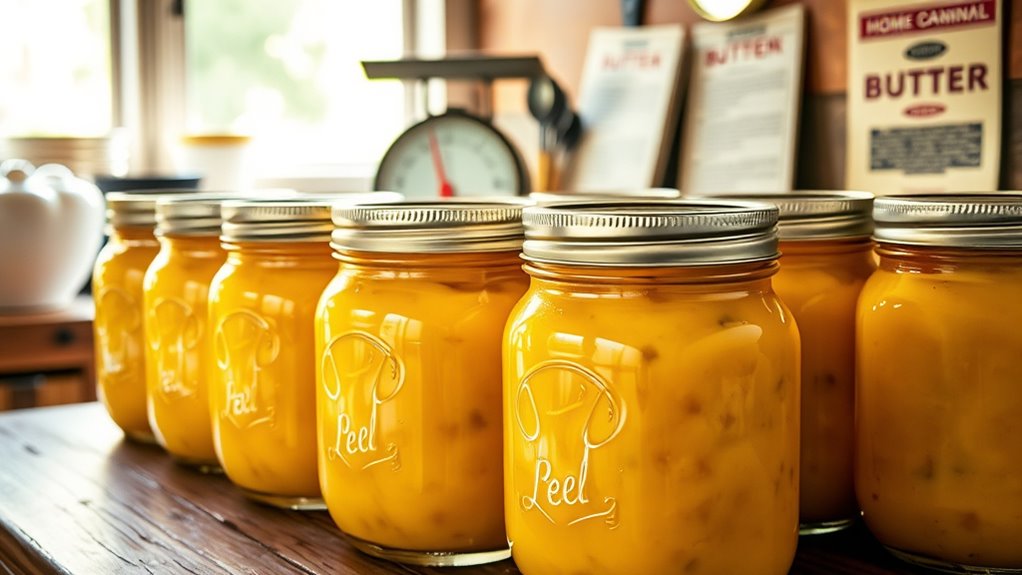

Canning butter isn’t safe or recommended due to serious food safety concerns. Butter, being a dairy product, spoils quickly if not stored properly. The temperatures used in canning don’t eliminate harmful bacteria, which increases the risk of foodborne illnesses. Instead, stick to safe alternatives like refrigeration or freezing to extend butter’s shelf life. Ghee is another great option for long-lasting storage. Discover more about safe preservation methods and how to keep your butter fresh.
Key Takeaways
- Canning butter is not recommended due to significant safety concerns and risks of foodborne illnesses.
- The USDA and food safety organizations advise against canning dairy products like butter.
- Canning does not achieve temperatures necessary to eliminate harmful bacteria in butter.
- Safe alternatives include refrigeration, freezing, or using ghee for longer shelf life.
- Proper storage practices are essential to prevent spoilage and ensure food safety.
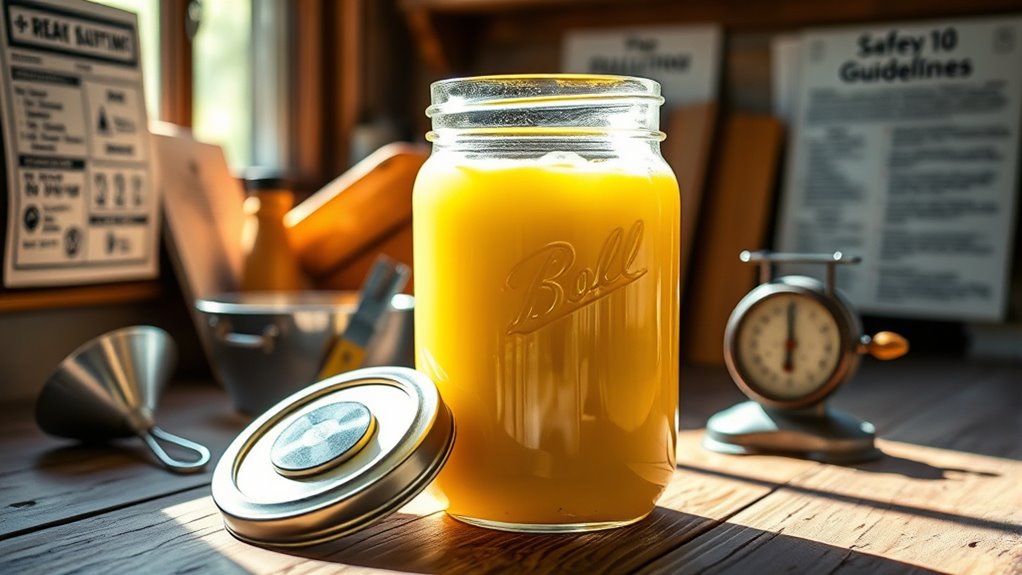
Have you ever wondered if you can safely can butter? It’s a question that pops up among food preservation enthusiasts, and the answer isn’t as straightforward as you might think. While butter is a beloved kitchen staple, canning it isn’t recommended due to safety concerns. The process of canning requires specific conditions, and it’s essential to understand the risks involved with storing butter this way.
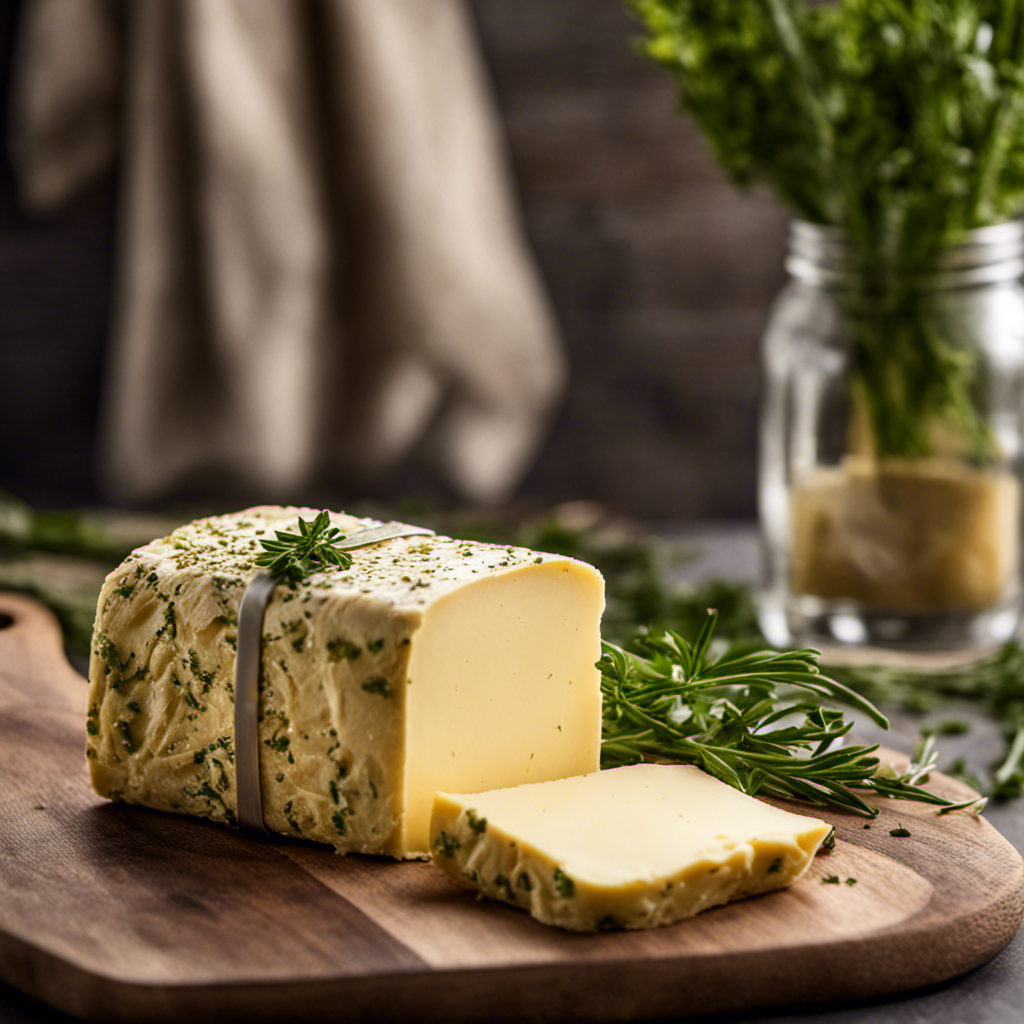
Butter, being a dairy product, can spoil quickly if not handled properly. The USDA and other food safety organizations advise against canning butter because it doesn’t reach the necessary temperatures to kill harmful bacteria during the process. Instead of canning, there are safer storage methods you can use to extend your butter’s shelf life. For example, you can keep butter in the refrigerator for several months, or even freeze it for longer storage. Freezing butter is one of the most effective preservation techniques, as it can last up to a year without losing its quality. Just make sure to wrap it tightly to prevent freezer burn.
Butter is a dairy product that can spoil quickly; refrigerate or freeze it to safely extend its shelf life.
If you’re thinking of storing butter at room temperature, consider using a butter bell or a crock. These containers allow you to keep butter soft and spreadable while protecting it from contaminants. When stored this way, butter can last a couple of weeks, but it’s vital to use clean utensils to avoid introducing bacteria.
Another option is to make ghee, which is clarified butter that has a longer shelf life and can be stored at room temperature. Ghee removes the milk solids, making it less prone to spoilage. This is a great alternative if you want to enjoy the flavor of butter without the risks associated with traditional methods.
While canning butter might seem appealing, it’s imperative to prioritize safety in food preservation. Instead of risking your health, stick to proven storage methods that keep your butter fresh and delicious. Whether you choose to refrigerate, freeze, or try ghee, you have plenty of options to enjoy butter without the worry of spoilage. Always remember that when it comes to food safety, it’s better to err on the side of caution. By understanding the best preservation techniques, you can enjoy your butter without compromising your health. Additionally, proper temperature control is crucial in preventing spoilage and ensuring the longevity of your butter.

Pisol Butter Dish with Lid for Countertop and Refrigerator Door Shelf, Airtight Butter Keeper Container, Butter Holder for East/West Coast Butter, BPA-free, Microwave/Dishwasher Safe
The Home of American 1/4 LB Butter: 8.03''/20.39cm(L) × 3.31''/8.4cm(W) × 2.64''/6.7cm(H), specially designed for 1 stick butter…
As an affiliate, we earn on qualifying purchases.
As an affiliate, we earn on qualifying purchases.
Frequently Asked Questions
What Types of Butter Are Best for Canning?
When you’re considering canning butter, clarified butter is your best option. It has a higher smoke point and longer shelf life, making it safer for storage. Ghee is another excellent choice since it’s already processed to remove moisture. Regular butter can spoil quickly, so it’s not ideal for canning. Always prioritize canning safety by ensuring you’re using proper techniques and containers to avoid spoilage or contamination during butter storage.
How Long Does Canned Butter Last Once Opened?
Once you open canned butter, you might think it lasts forever, but it’s actually best used within 3 to 6 months for ideal quality preservation. Storing it in a cool, dark place helps maintain its flavor and texture. Ironically, while canning seems like a foolproof way to keep butter fresh, exposure to air can lead to spoilage. So, keep an eye on that expiration date if you want to enjoy it at its best!
Can I Add Flavorings to Canned Butter?
Yes, you can add flavorings to canned butter! Flavor infusion enhances the taste, making it more versatile for your cooking. Just remember to choose high-quality, concentrated extracts or natural herbs. When you add flavorings, try to balance them to avoid overpowering the butter’s rich taste. Be cautious, though—too much can impact the butter’s preserving quality. Always store the flavored butter properly to maintain its freshness and prevent spoilage. Enjoy experimenting!
Is It Safe to Can Homemade Butter?
It’s not safe to can homemade butter. Did you know that nearly 48 million people get sick from foodborne illnesses each year? When it comes to butter preservation, canning can create an environment where harmful bacteria thrive. The high-fat content and low acidity of butter don’t lend themselves to safe canning practices. Instead, you’re better off freezing or refrigerating homemade butter to maintain its quality and guarantee your safety.
What Equipment Do I Need for Canning Butter?
For canning butter, you’ll need a few essential pieces of equipment. Start with sterilized canning jars, lids, and bands. A pressure canner is vital for proper butter storage, as it guarantees safety. You’ll also want a large pot for melting the butter and a ladle for filling the jars. Finally, have a jar lifter handy for safely removing hot jars. Master these canning techniques, and you’ll be set to preserve your butter!

Priority Chef Butter Crock with Lid with Water Line, Ceramic French Butter Dish to Leave On Counter, White
No More Waiting For Butter To Soften – Get fresh, spreadable butter on demand – our French butter…
As an affiliate, we earn on qualifying purchases.
As an affiliate, we earn on qualifying purchases.
Conclusion
In summary, while canning butter might seem like a convenient choice, it’s essential to prioritize safety. Without proper precautions, you could face foodborne risks. Instead of diving into DIY canning, consider alternative methods like refrigeration or freezing to keep your butter fresh and flavorful. Remember, when it comes to canning, it’s better to be safe than sorry. So, stick to safe storage solutions, savor your spreads, and steer clear of potential pitfalls in preserving.

The Ghee Co. – 32 Fl Oz ,Glass Jar,Crafted homestyle with Real Butter, Grass Fed, Certified Non-GMOs, Certified, Kosher & Halal , Paleo & Keto-friendly , Lactose & Casein Free, Naturally long shelf life of 36 months
Pure Ghee made with USDA Grade AA butter
As an affiliate, we earn on qualifying purchases.
As an affiliate, we earn on qualifying purchases.

CHOULULUED 100PCS Chocolate Bar Wrappers,6.2" X 7.5"Gold Foil Candy Wrappers, Butter Wrappers Homemade Individual Aluminum Packaging Wrapping Sheets for Baby Shower Birthday Gifts
【Generous Size & Quantity】100pcs 6.2" X 7.5"ideal for wrapping larger chocolates and candies. With a total of 100…
As an affiliate, we earn on qualifying purchases.
As an affiliate, we earn on qualifying purchases.