
Understanding butter terms like salted, unsalted, cultured, and clarified helps you choose the right type for your cooking or baking. Salted butter adds flavor and acts as a preservative, while unsalted gives you more control over seasoning. Cultured butter has a tangy taste, and clarified butter or ghee is great for high-heat cooking. Mastering these options guarantees better results in your kitchen—if you keep exploring, you’ll discover even more useful tips.

Get kitchen staples and gadgets delivered free with Prime
- Fast, free delivery on millions of items
- Prime Video, Amazon Music and more included
- Member-only deals all year
Key Takeaways
- Understand the differences between salted, unsalted, cultured, and clarified butter for specific culinary uses.
- Recognize butter’s ideal textures and temperatures for optimal baking and cooking results.
- Know proper storage practices to maintain butter’s quality and shelf life.
- Be familiar with processing methods like culturing and clarifying that influence flavor and heat stability.
- Use accurate measurements and temperature checks to ensure consistent, successful recipes.

Butter is a kitchen staple that can elevate your cooking and baking, but understanding its terminology can make a big difference in your results. One of the first things to know is the distinction between salted and unsalted butter. Salted butter has added salt, which enhances flavor and acts as a preservative, making it ideal for spreading on bread or for cooking where you want a touch of saltiness. Unsalted butter, on the other hand, contains no added salt, giving you more control over the seasoning in your dishes. Many bakers prefer unsalted butter because it allows for precise control over the salt content in baked goods, guaranteeing consistent results. When a recipe calls for butter, and it’s not specified, it’s usually best to use unsalted, so you don’t unintentionally alter the flavor.
Using unsalted butter ensures precise control over seasoning in your baking and cooking.
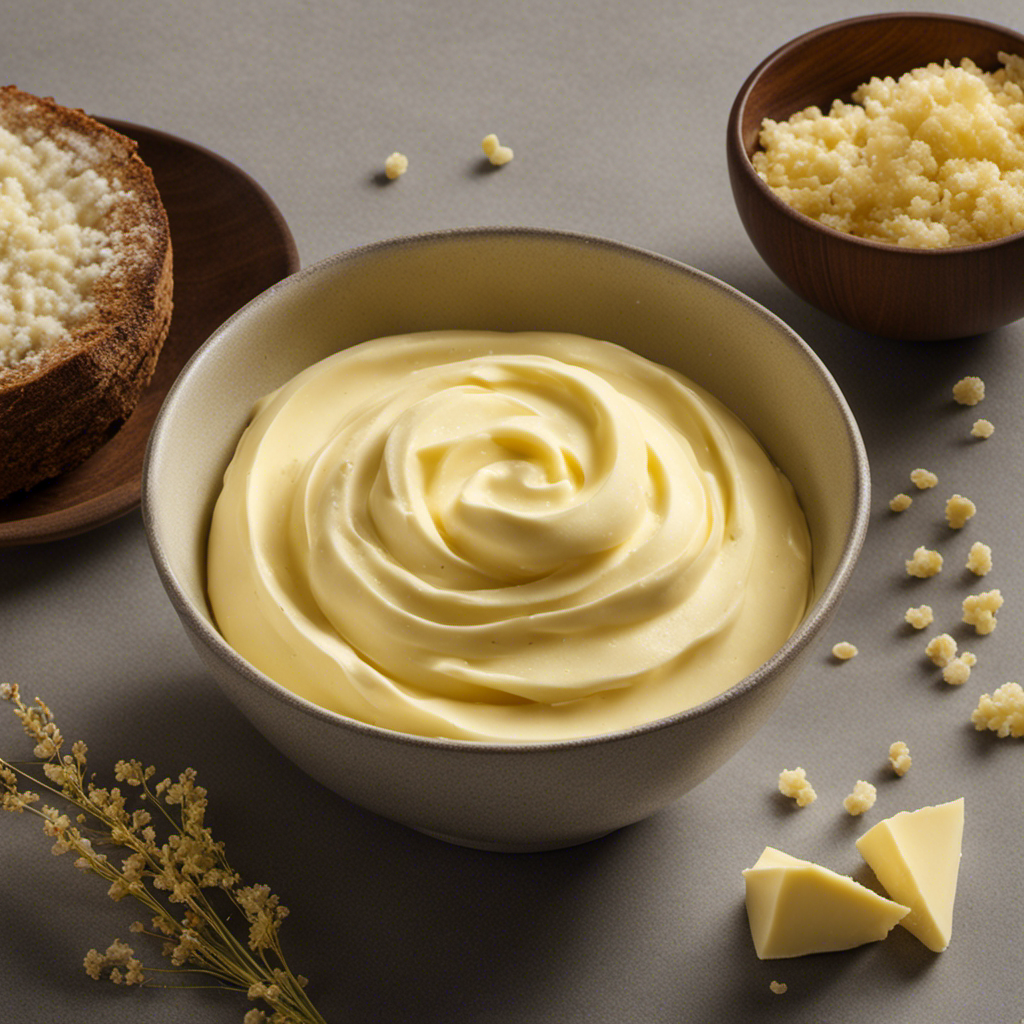
Another key term you should know is the creamy texture of butter, which refers to its smooth, soft consistency at room temperature. This texture is essential for certain recipes, especially in baking, where butter’s ability to blend seamlessly influences the final product. When butter is too cold, it’s difficult to work with, and when it’s too warm, it melts easily, impacting the consistency of your batter or dough. Achieving the right creamy texture involves letting butter sit out long enough to soften without becoming too warm or greasy. Properly softened butter helps incorporate air when creamed with sugar, creating light and fluffy baked goods. Understanding the temperature of butter is crucial for achieving the desired texture in your recipes. Additionally, knowing how to measure butter accurately ensures consistent results, whether by weight or volume, depending on the recipe. Using a kitchen thermometer can help you check the butter’s temperature precisely. Proper butter storage can also help maintain its quality and texture over time, especially when kept in a cool, dark place or refrigerated.
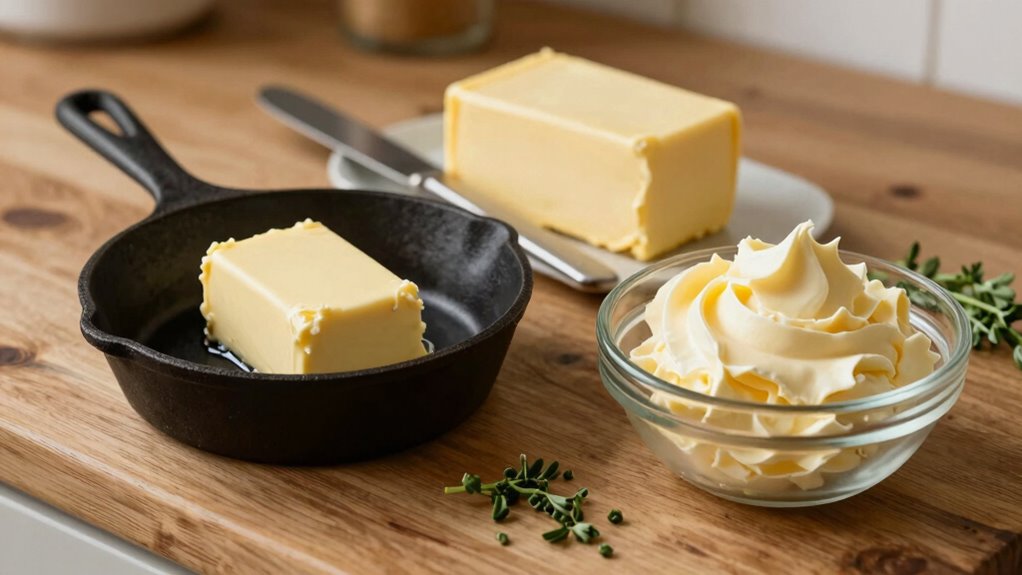
You’ll also come across terms like “cultured butter,” which has added bacteria that give it a tangy flavor and a slightly different texture. Cultured butter often has a creamier, more complex taste compared to regular butter. Additionally, “clarified butter” or “ghee” refers to butter that’s been melted and had its milk solids removed, resulting in a pure fat with a high smoke point. Clarified butter is excellent for sautéing and frying because it doesn’t burn as easily as regular butter. Being aware of the processing methods used in different types of butter can help you choose the best option for your cooking needs.
Understanding these terms helps you choose the right butter for each recipe and attain better results in the kitchen. Whether you’re spreading salted butter on toast, creaming unsalted butter into cake batter, or using ghee for high-heat cooking, knowing the differences guarantees you’re making informed decisions. So, next time you reach for butter, consider what your dish needs most—flavor, texture, or heat stability—and select accordingly. Mastering these basic butter terms puts you a step closer to becoming a more confident, precise home cook.
As an affiliate, we earn on qualifying purchases.
Frequently Asked Questions
What Is the Difference Between European and American Butter?
European butter usually has a higher fat content, around 82-85%, and often uses grass-fed cream, giving it a richer, creamier flavor. American butter typically has about 80% fat and may include added ingredients like salt or coloring. You’ll notice European butter is creamier and more flavorful, making it ideal for baking and spreading. American butter is more common and versatile, suitable for everyday cooking and baking.
How Long Can Homemade Clarified Butter Be Stored?
Homemade clarified butter can last up to a year if stored properly, like a treasure hidden away. To keep its flavor preservation intact, store it in airtight storage containers in a cool, dark place. Avoid exposure to light and moisture, which can spoil it faster. Always use clean utensils when handling to prevent contamination. With proper storage, your clarified butter stays fresh and flavorful for months, ready to elevate your dishes.
Can Butter Be Substituted With Margarine in Recipes?
Yes, you can substitute butter with margarine in recipes. Margarine works well as a vegan alternative and offers dairy-free options, making it suitable for those with allergies or dietary restrictions. Keep in mind, though, that margarine may alter the flavor and texture slightly. Choose a high-quality, unsalted margarine if possible, and adjust the quantities as needed to match the richness of butter in your recipe.
What Are the Health Benefits of Grass-Fed Butter?
You’ll be amazed at how grass-fed butter can transform your health! It’s packed with nutrients like omega-3 fatty acids, vitamin K2, and conjugated linoleic acid, thanks to the rich nutrient content from dairy farming practices. These benefits support heart health and reduce inflammation. By choosing grass-fed, you get a product that’s not only tastier but also more nourishing, making every spoonful a small step toward better wellness.
Does Butter Expire, and How Can I Tell?
Yes, butter expires. You can tell when it’s gone bad by checking for a sour smell, discoloration, or mold. Proper butter storage in an airtight container in the fridge extends its freshness, usually for about 1-3 months past the expiration date. Always trust your senses—if it smells or looks off, it’s best to discard it. Keep an eye on the expiration date to avoid using spoiled butter.
Conclusion
Now that you’re familiar with key butter terms, you can confidently choose the right type for any recipe. Imagine baking a delicate croissant and selecting European-style butter for its richness—that’s the difference a good understanding makes. With this knowledge, you’ll elevate your cooking, ensuring every dish has that perfect buttery touch. So go ahead, experiment, and enjoy the delicious results that come from knowing your butter inside and out!
NFL season / tailgating Picks
team gear
As an affiliate, we earn on qualifying purchases.