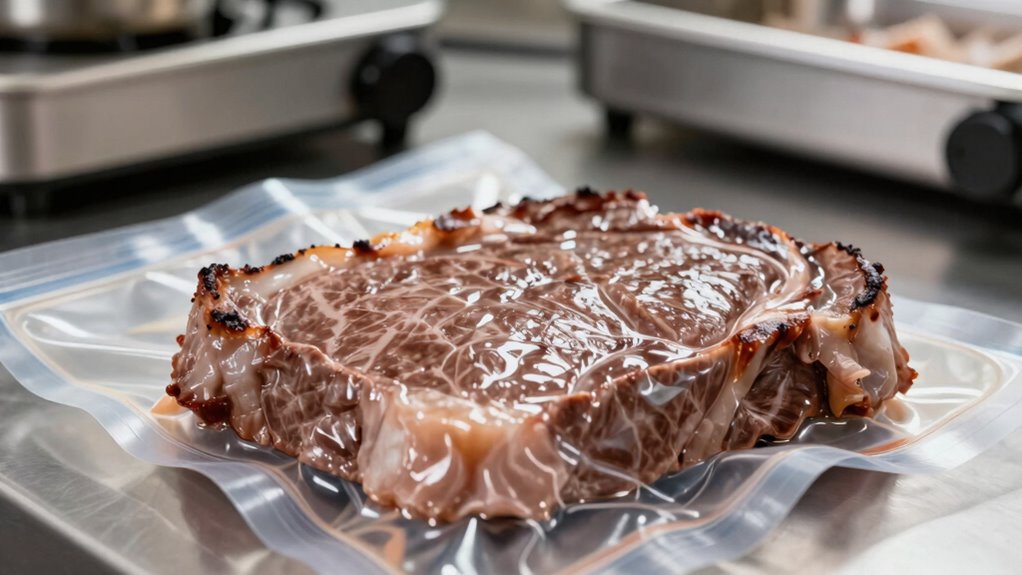

Mushy sous vide steak usually happens due to incorrect temperature, overcooking, or poor technique. If you set the temperature too high or cook for too long, muscle fibers and connective tissues break down excessively, making the steak soft or slimy. Using low-quality bags or over-salting can also compromise texture. To fix this, you should adjust your cooking time, ensure precise temperature control, and choose the right cut. Keep these tips in mind to avoid mushy results. If you keep reading, you’ll discover exactly how to prevent this common issue.
Key Takeaways
- Overcooking or prolonged sous vide time breaks down muscle fibers, causing mushy texture.
- Using incorrect water bath temperature can weaken muscle structure, leading to softness.
- Poor-quality or leaky vacuum bags may cause uneven heat transfer and mushiness.
- Excessive salt or improper seasoning can draw out moisture and soften meat excessively.
- Insufficient searing or improper technique fails to develop a crust, making the steak seem softer.

Sous Vide Bags Reusable 27Pcs, BPA Free Vacuum Sealer Bag, Vacuum Food Storage Bag for Sous Vide Cooking/Microwave Heating – 20Pcs Vacuum Zipper Bags & 2 Seal Clips & 5 Air Valves (11 * 10in) 2.9L
- Reusable and Food Grade Material: Made of PE/PA, reusable up to 10 times
- Versatile Food Storage: Keeps meat, seafood, vegetables, fruits fresh
- Transparent with Note Area: Clear design with writable note for food info
As an affiliate, we earn on qualifying purchases.
As an affiliate, we earn on qualifying purchases.
Why Does Mushy Texture Happen in Sous Vide Steak?
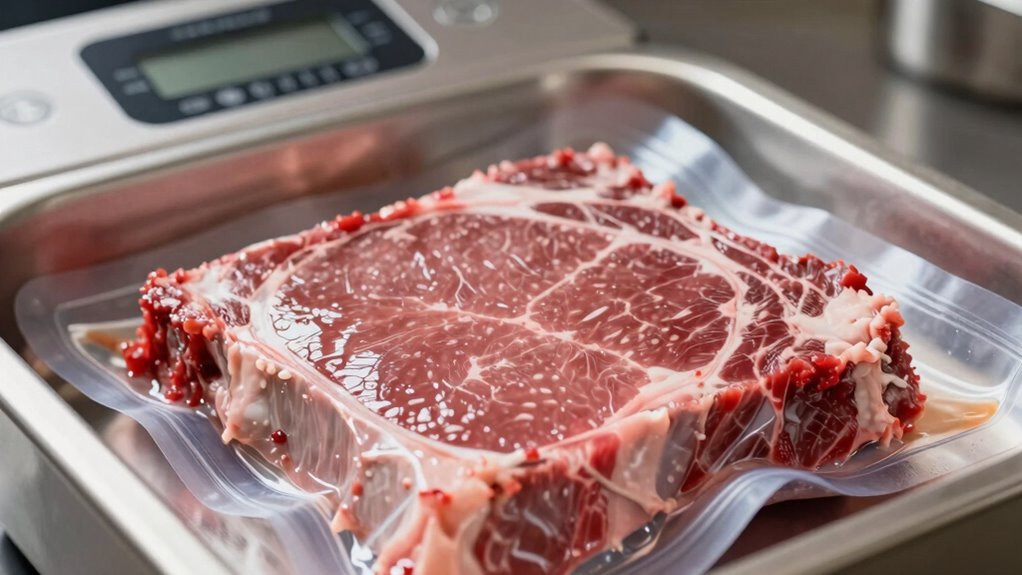
Mushy texture in sous vide steak often occurs when the cooking temperature is too high or the cooking time is too long. This affects your cooking techniques by breaking down connective tissues excessively, which can lead to overly soft meat. While sous vide is excellent for achieving tender meat, improper temperature control can diminish meat tenderness instead of enhancing it. When the temperature exceeds the ideal range for your cut, the muscle fibers start to break down too much, resulting in a mushy consistency. Similarly, leaving the steak in the water bath for too long allows moisture to escape and softens the meat beyond desired tenderness. Additionally, a lack of proper temperature regulation can cause inconsistent results. Mastering proper cooking techniques ensures you maintain the perfect balance, delivering tender, juicy steak without the undesirable mushiness. Understanding proper timing and how it interacts with temperature helps you avoid these issues and achieve ideal texture. Paying attention to meat cut specifics can also help tailor the process for better results. Good technique and careful attention to detail are essential for consistent results in sous vide cooking. For beginners, learning how to monitor temperature accurately can significantly improve your outcomes and prevent mushiness.
Can Incorrect Temperature Make Your Steak Mushy?
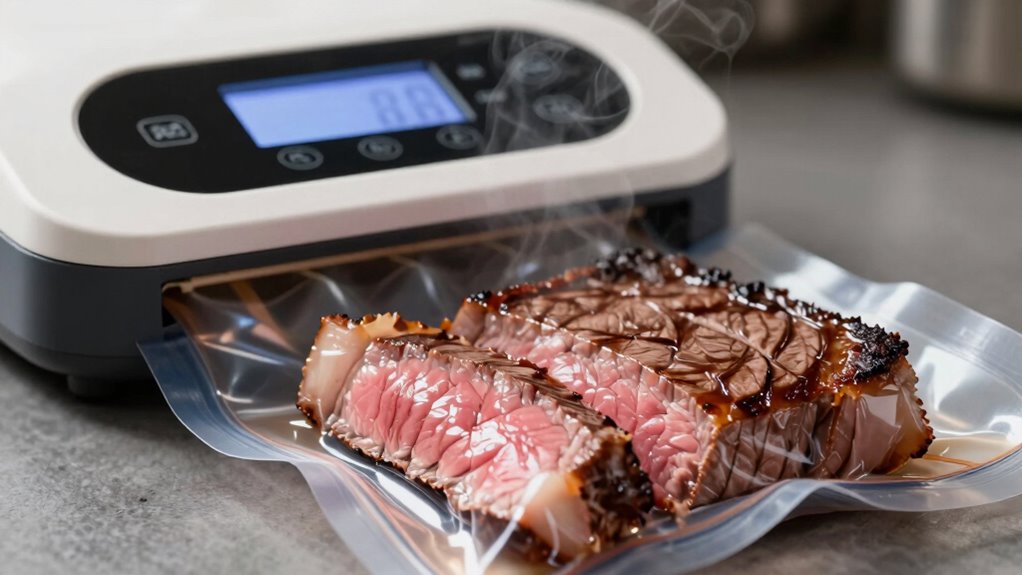
Incorrect temperature settings during sous vide cooking can directly cause your steak to become mushy. When the temperature is too high or too low, it affects the texture by breaking down muscle fibers excessively or not enough. Precise temperature control is essential; small deviations can lead to undesirable results. If your temperature is set improperly, your steak may lose its firm, juicy quality and develop an unappetizing, mushy texture. Additionally, seasoning accuracy matters—over-seasoning combined with incorrect temperatures can intensify the mushy feel. Always double-check your sous vide device’s settings and aim for the recommended temperature for your desired doneness. Maintaining accurate temperature control ensures your steak stays tender without becoming overly soft or mushy. Furthermore, using a high-quality, reliable heat pump can help ensure consistent temperature regulation during cooking. Temperature stability is crucial for achieving the perfect texture, especially in delicate cuts, and investing in a precise thermostat can make a significant difference. Ensuring your water circulation system functions properly also helps maintain uniform temperature throughout the cooking process. A monitoring system can provide real-time feedback, allowing you to make adjustments if needed.
How Does Cooking Time Affect Steak Firmness in Sous Vide?
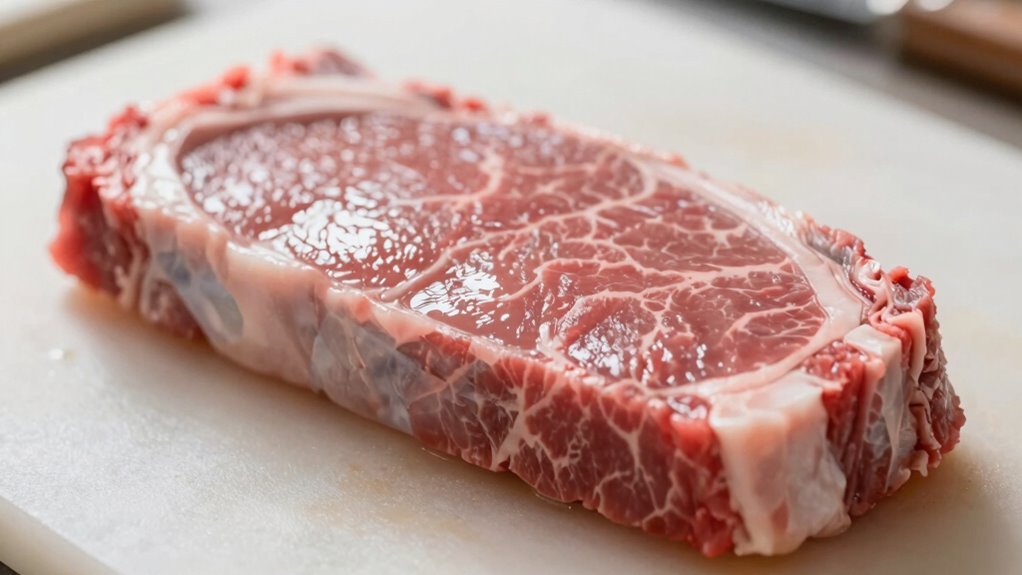
The length of cooking time in sous vide directly influences the firmness of your steak. Longer cooking times allow more collagen breakdown, resulting in a softer, more tender texture, which can sometimes lead to mushiness if overdone. Shorter cooking times preserve the steak’s natural firmness, giving you better firmness control. If you want a firmer steak, stick to shorter durations within the recommended range for your cut. Extending the cooking time too long can cause the muscle fibers to lose their structure, making the steak feel mushy. Conversely, undercooking might leave it too firm or chewy. Adjusting your cooking time carefully helps you achieve the desired firmness, ensuring your steak isn’t overly soft or too tough. Proper timing is key for ideal firmness control. Additionally, understanding the cooking appliance you use can help in fine-tuning your results for optimal texture, especially since different devices may have varying temperature stability and heating accuracy. Using an accurate thermometer can further assist in maintaining consistent results. Knowing how cooking duration impacts texture can help you avoid unintended mushiness and perfectly cooked steak every time.
Does Excess Salt Make Your Steak Mushy?

Adding too much salt can break down the proteins in your steak, affecting its texture. High salt concentration can make the meat feel mushy or slimy instead of firm. This process is similar to how necessary cookies support essential functions during cooking, ensuring your steak remains properly structured. Understanding how salt impacts the meat helps you avoid unwanted mushiness. Additionally, controlling the brine concentration during marination can prevent over-softening of the meat’s texture. Proper salinity levels are crucial to maintain the desired firmness and juiciness of your steak, and applying meat curing techniques carefully can further help preserve optimal texture.
Salt Concentration Effects
Excessive salt can cause your steak to become mushy during sous vide cooking because it draws out moisture and breaks down muscle fibers more than intended. It also affects the protein structure, leading to undesirable texture changes. The salt levels and brine concentration you use are essential; too high a brine concentration intensifies this effect, leading to overly soft meat. When your salt levels are excessive, the muscle proteins denature prematurely, resulting in a loss of structure. A well-balanced brine allows salt to penetrate evenly, enhancing flavor without compromising texture. Understanding meat science can further guide you in controlling these factors effectively. Additionally, controlling salt diffusion during the process can help maintain the desired firmness and prevent mushiness.
Impact on Texture
When you use too much salt in your brine, it can directly impact your steak’s texture by making it mushy rather than firm. Excess salt can weaken the marbling effects, breaking down fat and muscle fibers too much, leading to a loss of structure. This disrupts the juiciness balance, causing the steak to feel overly soft or slimy. Instead of a tender, firm bite, you end up with a mushy consistency that lacks the desirable chew. Proper salt levels help maintain the integrity of the meat’s fibers, preserving that ideal texture. Too much salt accelerates protein breakdown, which compromises the steak’s firm, satisfying mouthfeel. Additionally, understanding how protein breakdown affects meat can help you better control the texture when cooking with sous vide. Being aware of muscle fiber integrity can further guide you in achieving the perfect balance of tenderness and firmness.
Can Using Poor-Quality Bags Cause Mushy Steak?
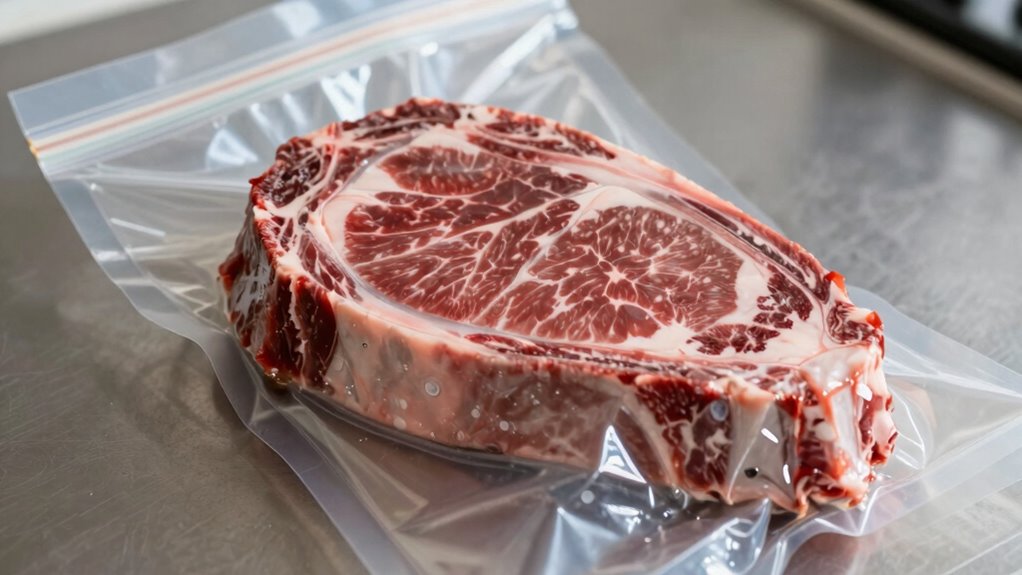
Using low-quality bags can lead to mushy steak, as they may not withstand the heat or pressure of the sous vide process. Poor bag material might leak or break, causing water to seep in and affect the texture. Make sure you choose bags with strong seal integrity to avoid these issues.
Bag Material Quality
Poor-quality bags can markedly impact the texture of your steak, leading to a mushy result. When choosing a bag material, avoid thin, flimsy plastics that may not withstand long cooking times or high temperatures. Poor-quality bags often have inconsistent thickness or weak seals, which can cause leaks and improper heat transfer. This affects how the steak cooks, potentially making it too soft or mushy. Proper sealing techniques are vital; even the best bag material won’t perform well if not sealed correctly. Make sure the bag is airtight and secure to prevent water from seeping in or juices from escaping. Investing in high-quality, food-grade sous vide bags ensures even cooking, better texture, and a perfectly firm steak.
Seal Integrity Concerns
If the seal on your sous vide bag isn’t airtight, it can lead to a mushy steak despite your best efforts. Poor bag integrity allows water to seep in or air to escape, which compromises the vacuum seal. When the vacuum seal isn’t secure, the bag may not hold the proper pressure, leading to uneven heat transfer and potential water intrusion. Using high-quality, food-grade bags designed for sous vide ensures a reliable vacuum seal and maintains bag integrity throughout the cooking process. Always double-check the seal before submerging the bag in water. If you notice any leaks or weak spots, reseal or switch to a better-quality bag. Proper vacuum sealing prevents excess moisture from affecting your steak’s texture, keeping it firm and perfectly cooked.
How Should You Sear Your Steak to Keep It Firm and Juicy?
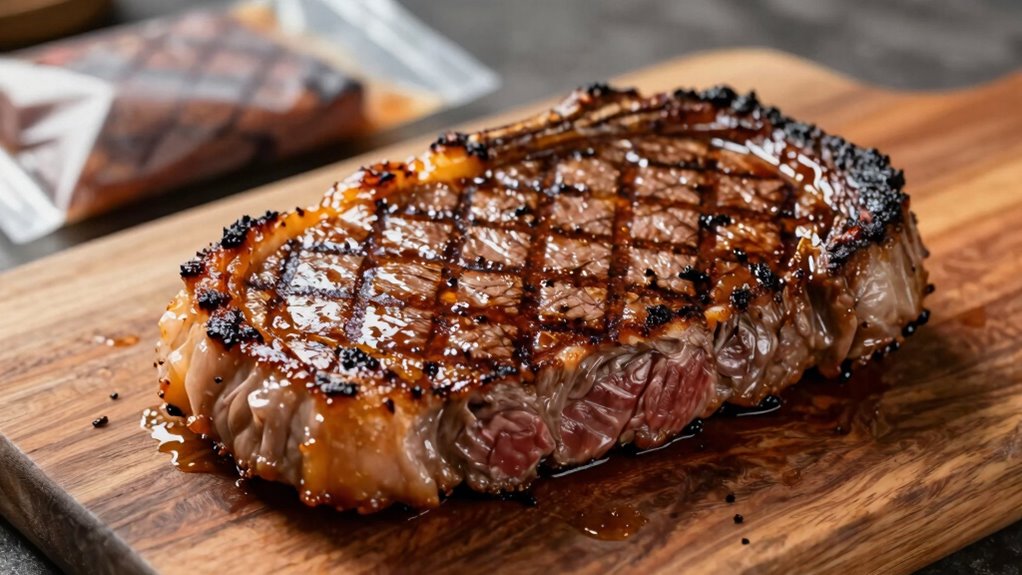
To keep your steak firm and juicy, searing it properly is essential. Use high heat to create a quick, even crust that locks in moisture and enhances flavor. Before searing, apply seasoning techniques like a light salt crust or a spice rub to develop flavor without overpowering the meat. Make sure your storage methods are correct—pat the steak dry to promote a good sear and prevent steaming. Avoid overcrowding the pan, which can lower the temperature and cause uneven browning. Sear each side for a short, precise duration—about 1-2 minutes—until you see a rich, caramelized crust. This approach guarantees your steak stays tender on the inside and has a firm, flavorful exterior.
What Common Prep Mistakes Lead to Mushy Steak?
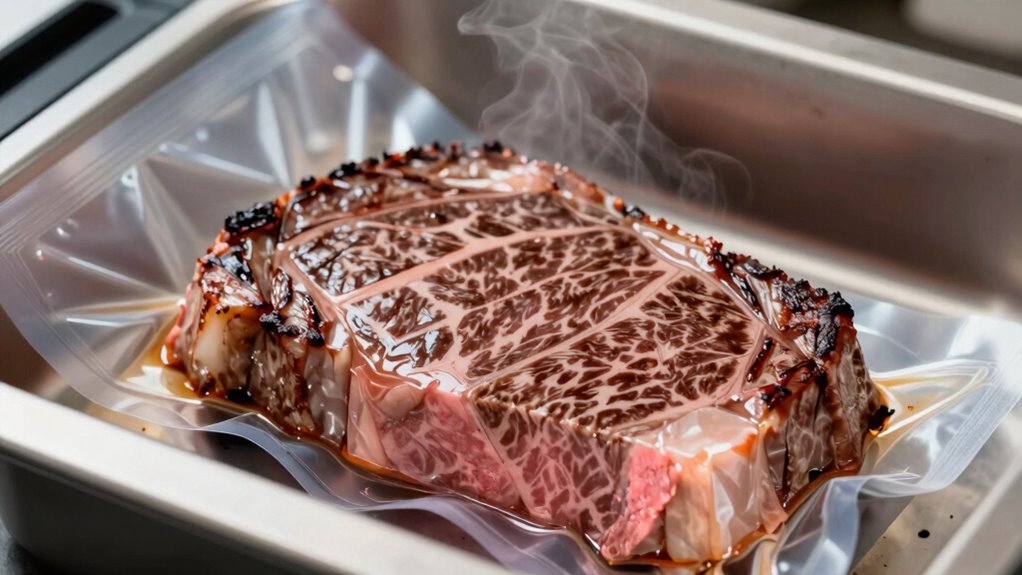
One common mistake is overcooking the steak in its bag, which can cause it to become mushy. Additionally, not searing properly or insufficiently can leave the meat texture bland and soft. Paying attention to these prep steps helps make certain your steak stays firm and flavorful.
Overcooking in Bag
Overcooking your steak in the bag is a common mistake that can lead to a mushy texture. When you leave it in the water bath too long, the proteins break down excessively, making the meat soft and unappetizing. To avoid this, focus on these key points:
- Follow recommended cooking times for your cut and thickness to prevent over-softening.
- Control temperature carefully to ensure steak reaches desired doneness without excessive cooking.
- Limit the time in the bag after marination to maintain proper flavor infusion without compromising texture.
Insufficient Searing Tips
Even if your steak is perfectly cooked inside, skipping a proper sear can result in a mushy texture and lack of flavor. An insufficient sear fails to develop the crust that adds crunch and enhances taste. Proper seasoning techniques are essential here: a dry, high-heat surface helps create a caramelized exterior, while marinades can prevent a good sear by adding moisture.
| Searing Tip | Effect |
|---|---|
| Use high heat | Promotes Maillard reaction for crust |
| Pat steak dry | Removes moisture to prevent steaming |
| Limit marinade liquids | Excess moisture hampers browning |
| Sear briefly | Avoids overcooking or mushiness |
Mastering these steps guarantees your steak gets that perfect, flavorful crust without sacrificing texture.
How Can You Troubleshoot and Fix Mushy Sous Vide Steak?
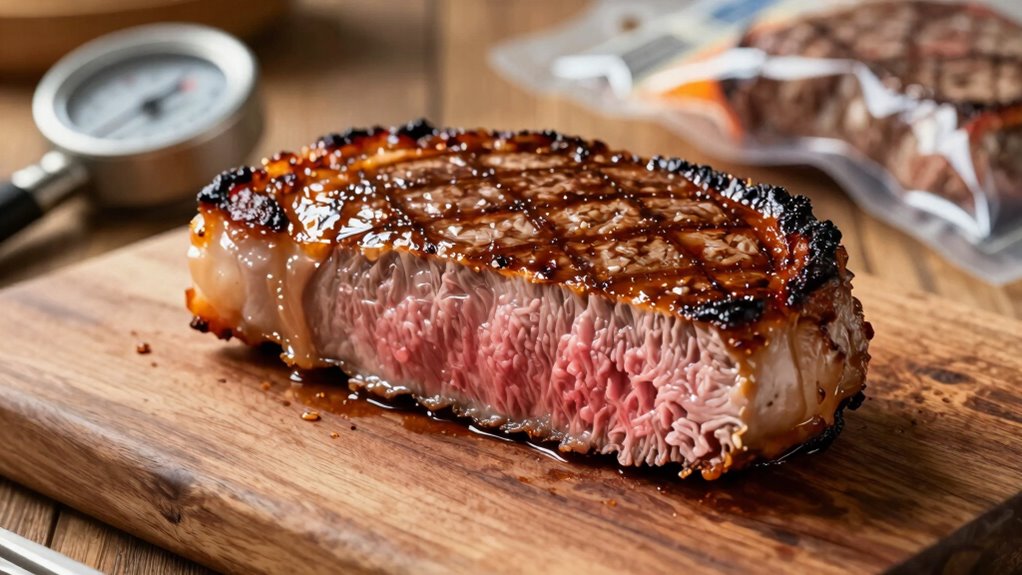
If your sous vide steak turns out mushy, the issue often stems from cooking at too low a temperature or for too long. To troubleshoot, start by adjusting your cooking time and temperature. Here are some tips:
- Reduce cooking time and temperature to prevent over-softening; aim for the recommended range for your cut.
- Enhance flavor infusion by experimenting with marinating techniques before sealing the steak, which can boost taste without relying solely on long cook times.
- Monitor and control your water bath precisely with a reliable thermometer to maintain consistent temperature and avoid accidental overcooking.
What Are the Best Cuts of Steak for Sous Vide to Avoid Mushiness?
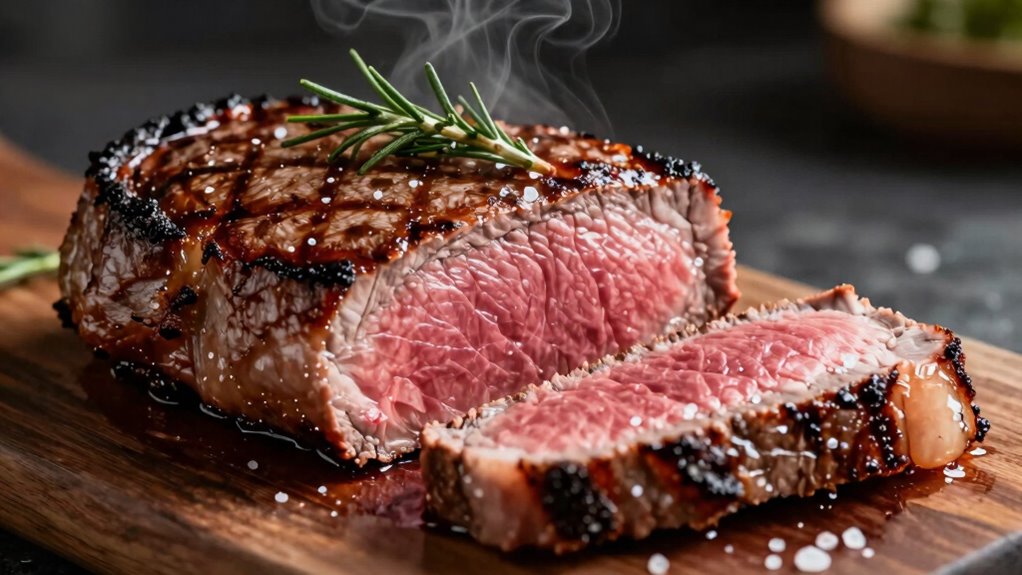
Choosing the right steak cuts is essential for achieving tender, non-mushy results with sous vide. Opt for cuts like ribeye, sirloin, or tenderloin, which have balanced marbling and muscle structure. These cuts respond well to gentle cooking without becoming overly soft or mushy. When selecting steaks, consider cutting techniques—thicker cuts help maintain texture during long cook times. Avoid overly lean or tough cuts like round or flank, as they can turn dry or chewy. Marinade effects also matter; marinating can enhance flavor but won’t compensate for cuts that are prone to mushiness. Stick to high-quality, well-marbled steaks, and pay attention to thickness and cut type to ensure your sous vide steak stays tender without losing its structure.
How Can You Prevent Mushy Texture in Future Sous Vide Steaks?
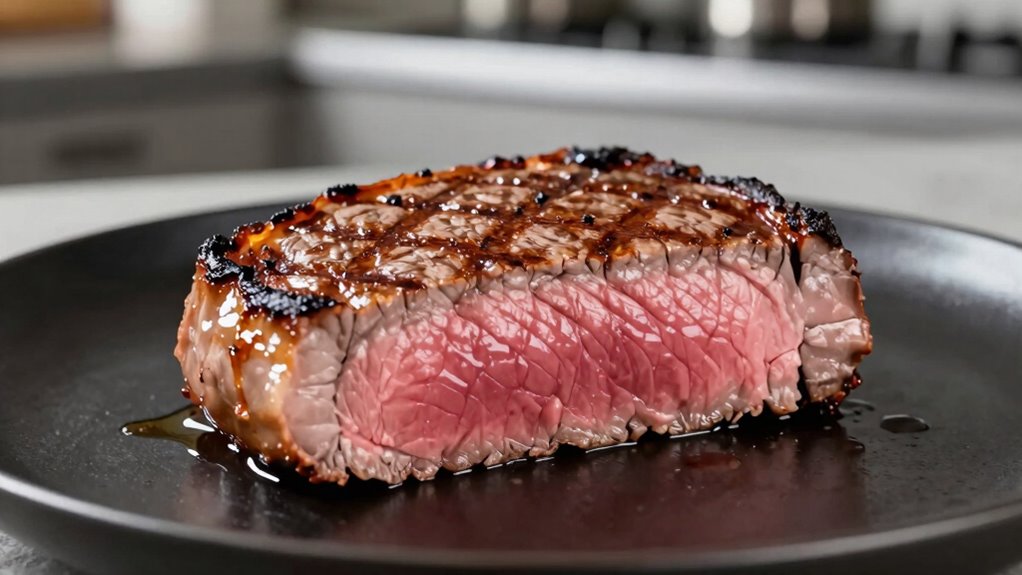
To prevent a mushy texture in your future sous vide steaks, focus on selecting the right cuts and controlling cooking parameters. First, choose sturdy, well-marbled steaks like ribeye or sirloin, avoiding leaner cuts. Second, refine your marinating techniques and seasoning strategies; use light marinades that don’t break down tissue and season just before cooking. Third, set precise temperature and time controls—avoid overcooking beyond the ideal doneness. Confirm you cook at the correct temperature for the desired doneness and limit cooking time to prevent excessive breakdown of proteins. By selecting the right cuts, fine-tuning your marinating techniques, and sticking to suitable cooking parameters, you’ll achieve a better texture and avoid that mushy result in future sous vide steaks.
Frequently Asked Questions
Can Marinating Affect the Steak’s Texture in Sous Vide?
Marinating can definitely affect the steak’s texture in sous vide, leading to texture alteration. The marinating effects depend on ingredients and duration; acidic marinades tend to tenderize but can make the meat mushy if left too long. To avoid this, keep marinating times moderate, especially with acidic components, and consider removing excess marinade before sealing. This way, you preserve the desired tenderness without compromising the steak’s texture.
Is It Better to Vacuum-Seal or Use Zip-Lock Bags for Sous Vide Steak?
You should vacuum-seal your steak for sous vide, as it offers superior benefits like better heat transfer and preventing water from entering the bag. However, if you lack a vacuum sealer, zip-lock bags with the water displacement method work as a good alternative. Just make certain you remove as much air as possible to avoid uneven cooking or bag floating, which can compromise your steak’s texture and quality.
How Does Thickness Influence the Mushiness of Sous Vide Steak?
Your steak’s thickness impacts its mushiness by influencing how evenly it cooks. Thinner cuts heat through faster, risking overcooking and a mushy texture. Thicker steaks need more time, which can cause texture variation if not monitored carefully. To avoid mushiness, adjust cooking time based on thickness, ensuring even heat distribution. Properly managing thickness helps you achieve the perfect, tender texture without turning your steak bland or mushy.
Should I Rest My Steak After Sous Vide Cooking to Prevent Mushiness?
Yes, resting your steak after sous vide helps prevent mushiness. Resting benefits include allowing juices to redistribute, which improves moisture retention and enhances texture. If you cut into the steak right after cooking, it can lose moisture and feel mushy or watery. Giving it a few minutes to rest ensures the meat firms up, maintaining a juicy, tender texture without becoming overly soft or mushy.
Can Enzymes in Certain Marinades Cause Steak to Become Mushy?
Yes, enzymes in certain marinades can cause your steak to become mushy. These enzymes break down proteins, softening the meat excessively if left too long. Marinade acidity also plays a role, as too much acid can further weaken the texture. To avoid mushiness, use marinades with enzymes sparingly and keep marinating times short—around 30 minutes to an hour—and balance acidity levels carefully.
Conclusion
To prevent your sous vide steaks from turning mushy, pay attention to temperature, timing, and quality. Think of it as fine-tuning an instrument—each detail matters to produce a perfect melody. When you master these elements, you’ll enjoy steaks with a firm, juicy bite instead of a soggy disappointment. Remember, patience and precision are your best tools; with practice, you’ll turn every cookout into a culinary symphony.