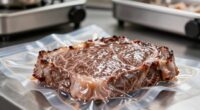
In sous vide cooking, precise time and temperature are key for safety and quality. If you don’t set the right combination, harmful bacteria can survive, leading to foodborne illness. Remember, longer times are needed for tougher cuts, and accurate temperature control is essential to eliminate pathogens. Small deviations can compromise safety, so monitoring closely matters. Stay aware of these guidelines—you’ll discover how to keep your dishes both safe and delicious.

Get kitchen staples and gadgets delivered free with Prime
- Fast, free delivery on millions of items
- Prime Video, Amazon Music and more included
- Member-only deals all year
Key Takeaways
- Precise adherence to recommended time and temperature ensures pathogens are effectively destroyed, preventing foodborne illnesses.
- Small deviations in time or temperature can leave bacteria alive, emphasizing the importance of accurate equipment calibration.
- Using safety charts for specific foods helps determine minimum safe internal temperatures and proper cooking durations.
- Consistent water temperature control and avoiding unnecessary water bath interruptions are critical for safety.
- Proper handling, sanitation, and discarding suspicious food prioritize safety over consumption when safety thresholds are not met.
digital sous vide precision cooker
As an affiliate, we earn on qualifying purchases.
As an affiliate, we earn on qualifying purchases.
Why Proper Time and Temperature Are Critical for Safe Sous Vide Cooking

Proper time and temperature are essential in sous vide cooking because they determine whether harmful bacteria are effectively destroyed. Precise temperature control allows you to heat your food to a level that kills bacteria without overcooking. Bacterial growth can occur rapidly if the temperature is too low or if the food isn’t cooked long enough. Maintaining the correct temperature ensures pathogens are eliminated, reducing the risk of foodborne illnesses. To do this, you need to monitor your water bath carefully, adjusting as needed to stay within safe temperature ranges. Consistent temperature control not only guarantees food safety but also helps you achieve the perfect texture and flavor. Remember, even a slight deviation can leave bacteria alive, so precision is your best defense. Understanding water chemistry and how it affects your sous vide setup can further improve safety and results. Being aware of temperature stability can help prevent fluctuations that compromise food safety, especially since essential oils for food preservation can influence microbial activity and shelf life. Ensuring proper water quality can also contribute to consistent cooking and safety outcomes.
What Are the Bacterial Risks of Undercooked Sous Vide Food?

Undercooking sous vide food can leave harmful bacteria alive, posing serious health risks. Bacteria like Salmonella, Listeria, and Clostridium perfringens thrive at certain temperatures, risking foodborne illness if not properly cooked. Proper time and temperature kill these pathogens, ensuring safety. For example, inadequate cooking times may allow bacteria to survive, making your meal unsafe. To enhance flavor, consider botanical pairing, which can complement properly cooked dishes but won’t eliminate bacteria if undercooked. Here’s a quick reference:
| Temperature | Bacterial Risk | Flavor Tip | Botanical Pairing | Time Recommendation |
|---|---|---|---|---|
| 130°F | Survives | Mild | Thyme | 1-2 hours |
| 140°F | Reduced | Citrusy | Lemon Verbena | 1-3 hours |
| 150°F | Killed | Earthy | Rosemary | 1-4 hours |
| 160°F | Fully killed | Spicy | Oregano | 1-2 hours |
| 170°F | Safe | Robust | Sage | 1 hour |
Always verify your time and temperature for safety. Understanding bacterial growth is essential for safe sous vide cooking. Incorporating knowledge about food safety guidelines can further reduce risks associated with undercooked food. Additionally, paying attention to proper handling practices ensures that contamination does not occur before cooking begins.
The Essential Time-and-Temp Rule for Food Safety
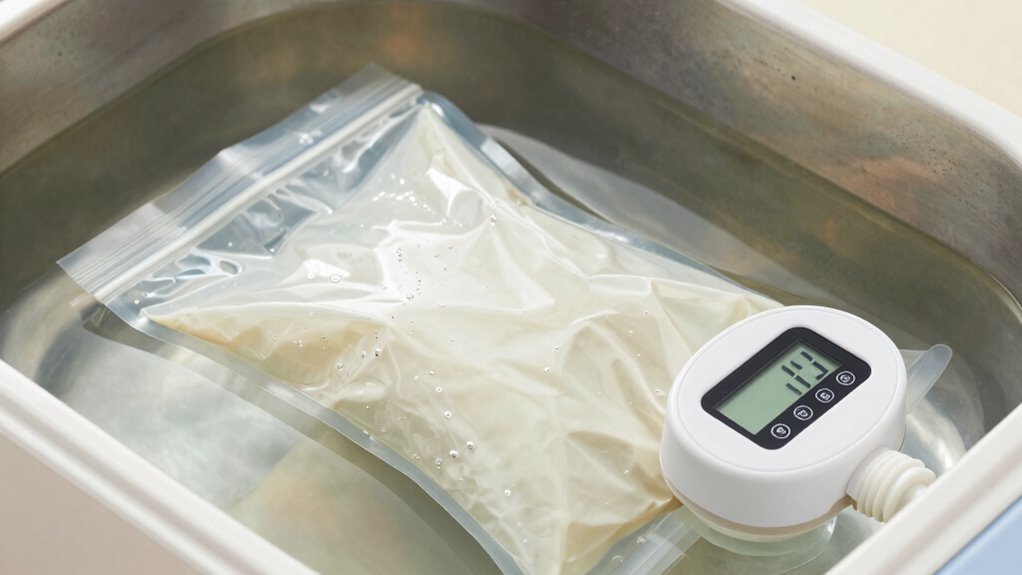
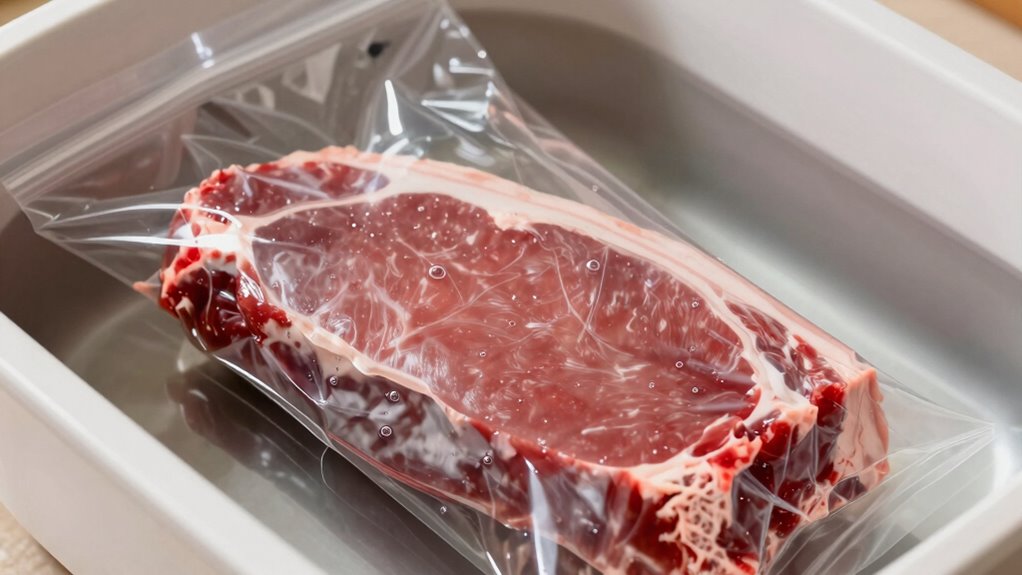
Achieving safe sous vide results hinges on following the essential time-and-temperature rule: cooking food at the right temperature for the correct amount of time kills harmful bacteria and prevents foodborne illnesses. Temperature control is critical; maintaining precise heat ensures your food reaches safe levels. Vacuum sealing plays an important role, as it removes oxygen and prevents contamination while cooking. Proper vacuum sealing also locks in juices and flavors, enhancing quality. To stay safe, always use a reliable sous vide device that accurately monitors temperature, and adhere to recommended time guidelines for each food type. Ensuring proper equipment calibration is essential for consistent and safe results. Knowing the safe temperature and proper timing for different foods helps you prevent undercooking or overprocessing. Additionally, understanding food safety guidelines can further reduce risks during the cooking process. Proper temperature maintenance throughout the process is vital to prevent bacterial growth. Regularly verifying the accuracy of your device can help maintain consistent and safe cooking conditions. This combination of accurate temperature control and vacuum sealing ensures your food is both safe to eat and delicious. Follow this rule to enjoy the benefits of sous vide without risking health.
How to Choose the Right Time and Temperature for Different Foods
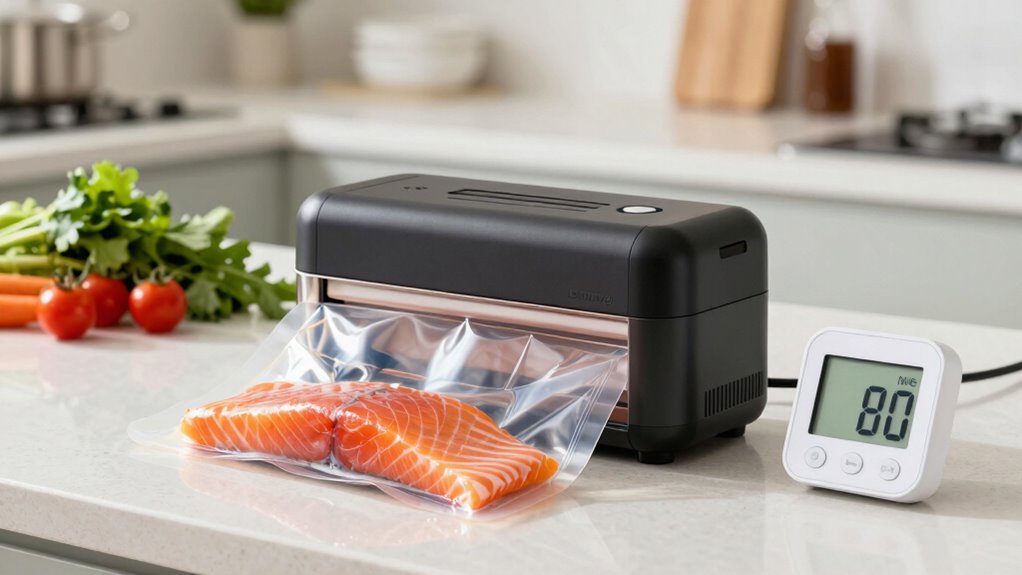
Choosing the right temperature is vital for cooking seafood safely and perfectly. You need to set the correct time and temp to guarantee the fish is tender without overcooking. Adjusting cooking times accordingly helps you achieve the best results for different types of seafood. Consulting modern kitchen technology can help you precisely control these variables for optimal results. Using accurate sous vide devices ensures consistent and safe cooking outcomes, especially when preparing delicate ingredients.
Optimal Temperatures for Seafood
To guarantee seafood is both safe and delicious, selecting the proper temperature and cooking time is essential. Freshness plays a significant role; high-quality seafood cooks at lower temperatures without sacrificing texture. For shellfish, proper handling before cooking reduces bacteria risks and ensures safety. For fish like salmon or cod, aim for 125°F (52°C) to achieve a tender, flaky texture, while for shellfish such as mussels or oysters, 134°F (56.5°C) ensures safety without overcooking. Remember, cooking seafood at the right temperature preserves its delicate flavor and moisture. Avoid temperatures that are too high, which can toughen the flesh or compromise safety. Always source seafood from reputable suppliers, and handle shellfish carefully to maximize both safety and flavor.
Adjusting Cooking Times Accordingly
Since different foods vary in density and texture, adjusting cooking times is essential to guarantee safety and ideal results. When using sous vide, you need to take into account food safety adjustments by tailoring the time based on the specific ingredient. For tougher cuts of meat, longer cooking times ensure pathogens are eliminated and the texture becomes tender. Conversely, delicate items like fish require shorter times to prevent overcooking. Always follow recommended guidelines for your particular food, but be prepared to adjust times if you’re working with thicker or thinner pieces. Properly adjusting cooking times helps you achieve safe, perfectly cooked dishes while preserving quality. Remember, small changes in time can greatly impact safety and texture, so monitor closely and adapt accordingly. Understanding safe cooking practices is crucial for ensuring your sous vide meals are both delicious and safe to eat. Additionally, being aware of temperature control and how it influences bacterial kill steps can further enhance food safety. Moreover, knowing precise timing is vital to prevent undercooking or overcooking, which can compromise safety or quality. Paying attention to food density and texture helps optimize cooking times for different ingredients. To further improve safety, consider implementing proper safety checks such as temperature verification after cooking.
Common Mistakes That Can Compromise Sous Vide Food Safety
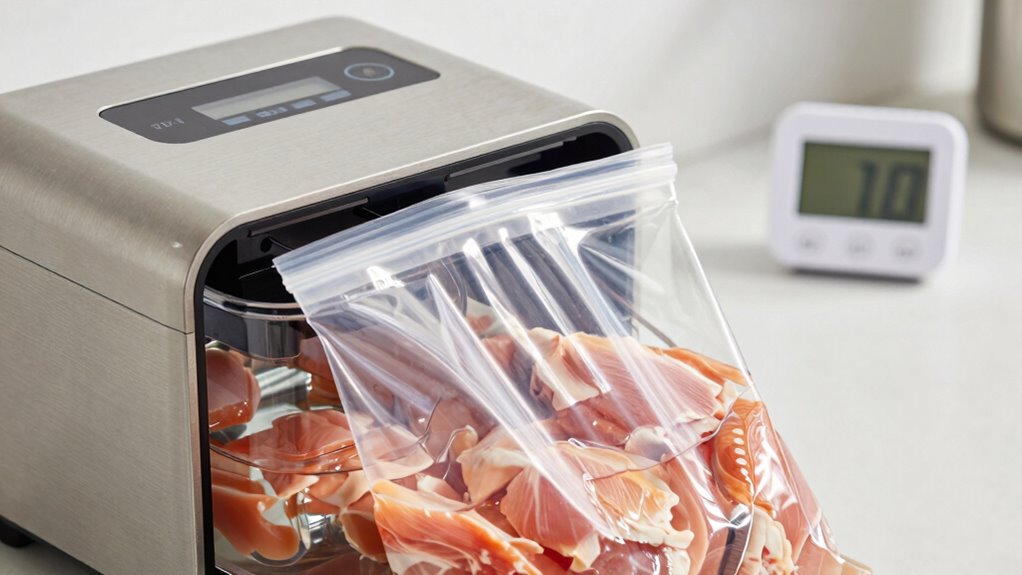
One of the most common mistakes that can compromise sous vide food safety is neglecting proper temperature control. If you don’t carefully monitor the temperature, you risk allowing sous vide bacteria to survive or multiply, which can cause foodborne illness. Relying solely on cooking time without precise temperature monitoring is dangerous because different bacteria have specific temperature thresholds. Skipping or inaccurately reading your thermometer can mean your food isn’t cooked to a safe level. Always double-check your device’s calibration and keep an eye on the actual water temperature throughout the process. This ensures you maintain the correct temperature to eliminate harmful bacteria and keep your food safe to eat. Proper temperature control is essential for safe, effective sous vide cooking. Additionally, understanding food safety guidelines can help you better manage risks associated with improper temperature management.
How to Recognize If Your Sous Vide Process Isn’t Safe

Recognizing that your sous vide process isn’t safe often involves paying close attention to signs of temperature issues or contamination. If your water bath isn’t maintaining a consistent temperature, it can lead to unsafe bacterial growth, putting your food at risk. Fluctuations outside the target range may mean your process isn’t effectively controlling temperature, which is vital for safety. Additionally, if you notice an unusual odor, sliminess, or discoloration after cooking, these are signs of potential contamination or bacterial proliferation. Proper temperature control ensures harmful bacteria can’t thrive, so any inconsistency should raise a red flag. Regularly monitor your equipment and stay alert to these cues to confirm your sous vide process remains safe and effective. Staying aware of temperature fluctuations is essential for preventing foodborne illness. Being familiar with food safety guidelines can help you identify and respond to potential hazards more effectively.
Using a Food Safety Chart to Ensure Proper Cooking Temperatures
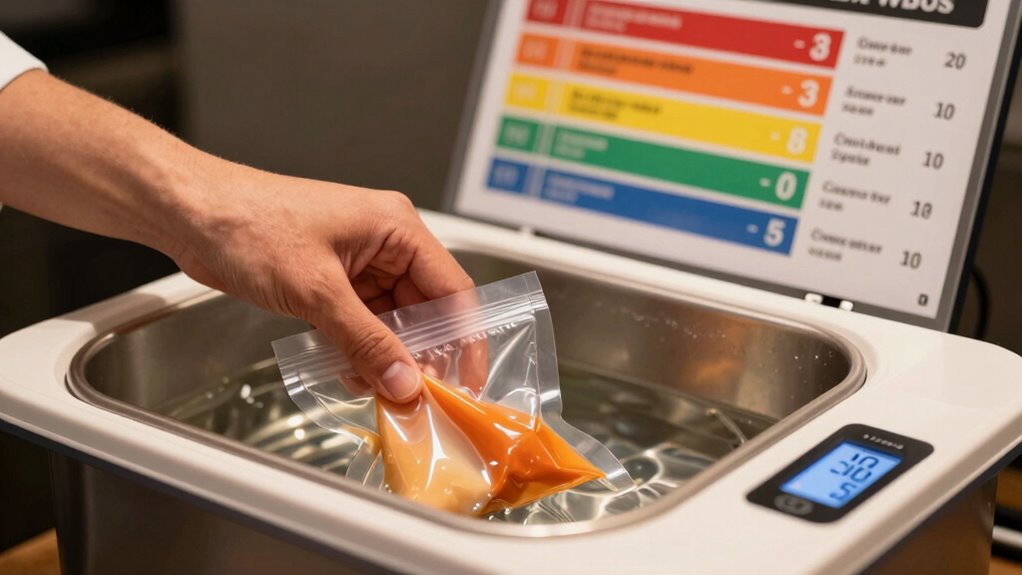
Regularly consulting a food safety chart is essential to guarantee you’re cooking foods to the right temperatures. These charts provide clear guidelines on the minimum safe internal temperatures for various meats, seafood, and other foods, helping you maintain proper temperature control. By referencing food safety charts, you can quickly verify that your sous vide process reaches the necessary heat levels to eliminate harmful bacteria. Keep these charts handy in your kitchen or digital device for easy access. They simplify the process of ensuring safe cooking, especially when adjusting times or temperatures. Using food safety charts consistently helps prevent undercooking or overcooking, safeguarding your health and ensuring delicious results every time. Remember, proper temperature control is key to safe and effective sous vide cooking.
Tips for Monitoring and Maintaining Accurate Temps During Sous Vide
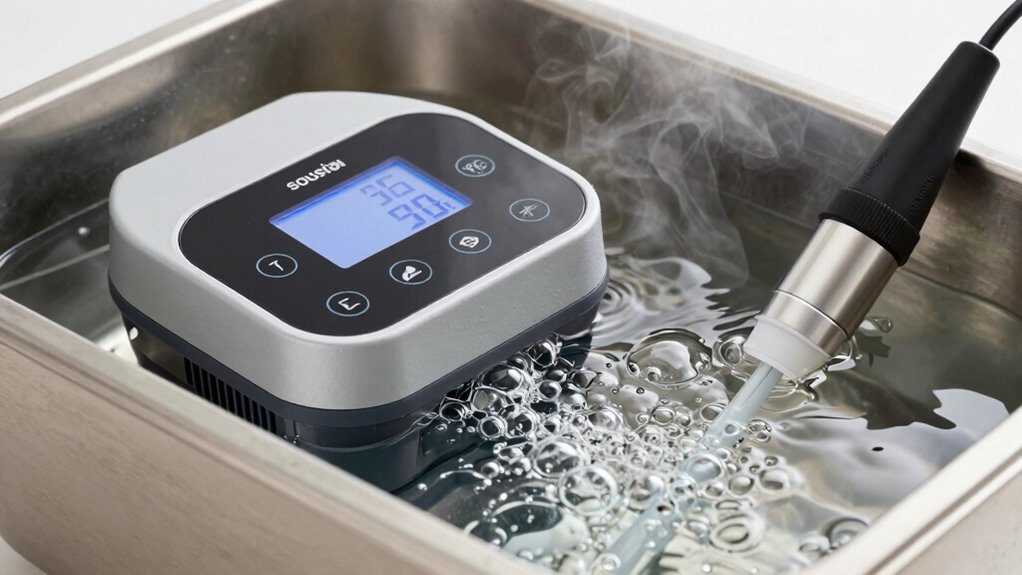
Maintaining accurate temperatures during sous vide requires diligent monitoring and precise adjustments. Start by regularly calibrating your sous vide equipment to ensure it heats accurately; this prevents temperature deviations that could compromise safety. Keep a reliable thermometer handy to verify water temperature throughout the process. Adhering to kitchen hygiene protocols is essential—sanitize all equipment, containers, and utensils before and after use to prevent contamination. Use a water-resistant, digital thermometer with a probe for continuous monitoring, and set alarms if available. Avoid opening the sous vide bath unnecessarily, as this can cause temperature fluctuations. Consistently check for calibration drift and recalibrate if needed. By following these tips, you’ll maintain safe, consistent temperatures and ensure your food is cooked properly.
What to Do If You Suspect Undercooked or Unsafe Food?
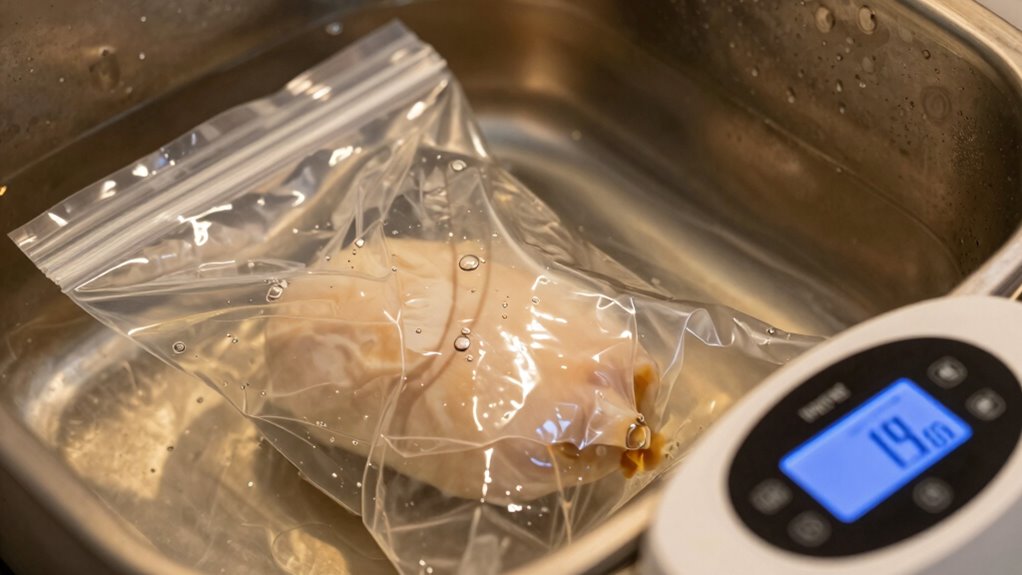
If you suspect your sous vide food is undercooked or unsafe, take immediate action to prevent potential health risks. First, discard the food to avoid food poisoning from bacteria that may not have been killed during cooking. Do not taste or serve the questionable dish. Be aware of cross contamination; keep raw or undercooked items separate from ready-to-eat foods to prevent spreading harmful bacteria. If you notice an unusual smell, texture, or color, don’t ignore it. Clean and sanitize all surfaces, utensils, and containers that came into contact with the suspect food. When in doubt, it’s safer to discard the meal rather than risk illness. Your prompt response minimizes health risks and ensures safer food handling practices.
Best Practices for Storing and Serving Sous Vide Dishes Safely
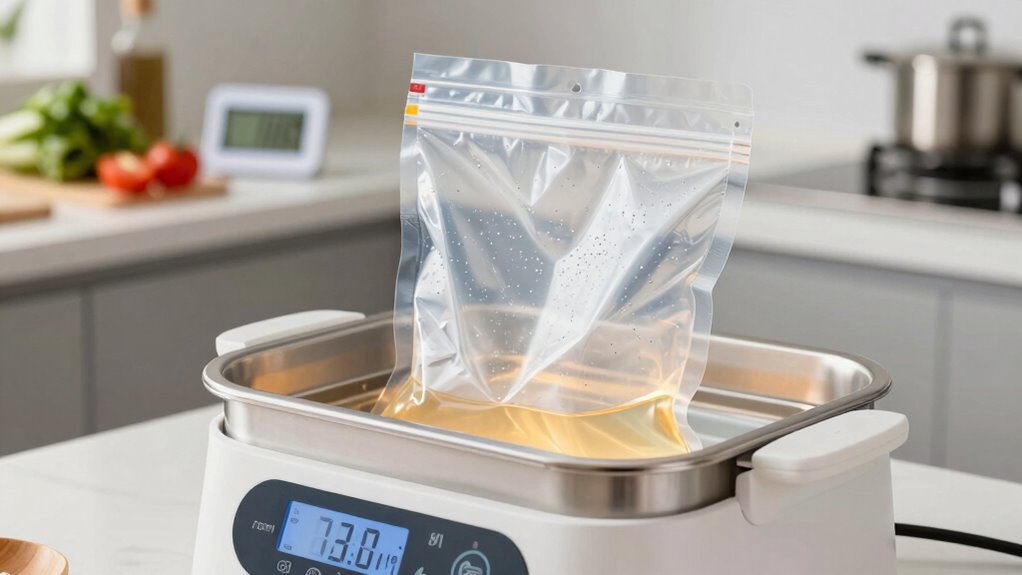
Proper storage and serving practices are essential to keep your sous vide dishes safe from contamination and spoilage. Always refrigerate cooked dishes promptly, ideally within two hours, to prevent bacterial growth. Use airtight containers or vacuum-sealed bags to minimize exposure to air and reduce the risk of cross contamination. When handling raw ingredients, wash your hands and utensils thoroughly to avoid transferring bacteria to cooked foods. When serving, keep dishes at safe temperatures—hot foods above 140°F and cold foods below 40°F—and avoid leaving them out too long. If you plan to reheat, do so evenly to maintain safety. Proper food storage and careful handling during serving help ensure your sous vide meals remain safe and delicious.
Frequently Asked Questions
Can Sous Vide Cooking Eliminate All Foodborne Pathogens?
Sous vide cooking can substantially reduce foodborne pathogens if you maintain precise temperature control and cook for the correct amount of time. However, it doesn’t automatically eliminate all pathogens, especially if food is contaminated after cooking or if temperature guidelines aren’t followed. To guarantee safety, always adhere to recommended time-and-temp rules, and handle your food properly before and after sous vide cooking.
How Does Altitude Affect Sous Vide Temperature and Time Settings?
Altitude affects your sous vide because boiling point variations lower at higher elevations, typically by about 1°F for every 500 feet. This means you need altitude adjustments in your temperature and time settings to ensure proper food safety and doneness. For example, at 5,000 feet, you might need to increase your cooking temperature slightly to compensate for the reduced boiling point, guaranteeing your food reaches safe internal temperatures.
Is It Safe to Use Homemade or DIY Sous Vide Equipment?
Using homemade or DIY sous vide equipment can be safe if you follow proper DIY safety protocols and make certain your device maintains precise, stable temperatures. You need to verify your homemade setup can accurately control water temperature and has reliable safety features like proper insulation and overheating protection. Always test thoroughly before cooking food to avoid risks, and consider consulting reliable guides or experts to ensure your DIY equipment meets safety standards.
How Long Can I Store Sous Vide Cooked Food Safely in the Refrigerator?
You can safely store sous vide cooked food in your refrigerator for up to 1 to 2 days. For refrigerator safety, ensure the food is cooled quickly and stored in airtight containers. After this period, bacteria can grow, risking foodborne illnesses. To maximize freshness and safety, consume or reheat the food within this timeframe. Always check for signs of spoilage before eating leftovers.
Are There Specific Foods That Are Unsafe to Cook Sous Vide?
Certain foods can pose significant safety and equipment risks, so you should avoid sous vide cooking them. Foods like shellfish, poultry, and eggs require precise handling because they can harbor pathogens or cause cross-contamination. You might also encounter issues with delicate produce or foods prone to spoilage. To keep food safe, always follow proper guidelines, and be aware that some ingredients aren’t suitable due to the risks they pose to your equipment and health.
Conclusion
Remember, following the right time-and-temp guidelines reduces your risk of foodborne illness—did you know that improper cooking can leave bacteria like Salmonella and Listeria thriving? In fact, studies show that undercooked food accounts for over 50% of food safety issues in home kitchens. By paying close attention to temperatures and times, you can enjoy perfectly cooked sous vide meals safely. Stay vigilant, monitor your temps, and always prioritize food safety for peace of mind every time.
Halloween Picks
halloween
As an affiliate, we earn on qualifying purchases.