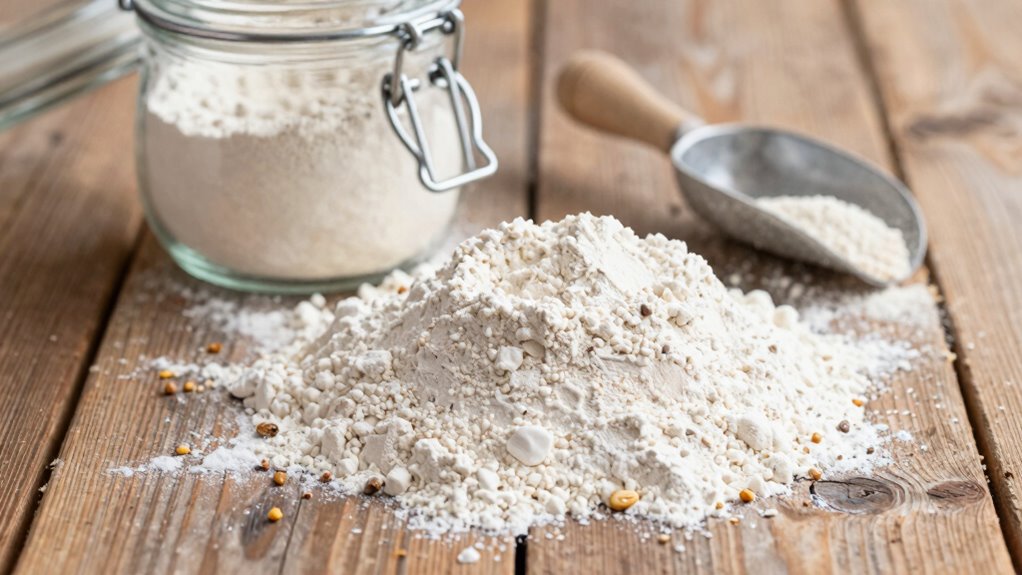

Fresh-milled flour spoils quickly because it contains natural oils and enzymes that can go rancid or grow mold if not stored properly. To keep it fresh, use airtight containers made of glass or plastic and store them in a cool, dark, dry place away from heat and sunlight. Regularly check for off smells or discoloration, and discard if signs of spoilage appear. For more tips on how to preserve your flour longer, continue exploring these storage techniques.

Get kitchen staples and gadgets delivered free — and shop member deals
- Fast, free delivery on millions of items
- Access to Prime Big Deal Days deals on October 6–7
- Prime Video, Amazon Music and more included
Key Takeaways
- Store fresh-milled flour in airtight, dark containers to prevent air, moisture, and light exposure.
- Keep flour in a cool, dry place away from heat sources like ovens or sunlight.
- Regularly check for off odors, discoloration, or mold, and discard if spoilage signs appear.
- Avoid storing in humid environments to prevent mold growth and clumping.
- Use the flour within a few weeks or months for optimal freshness and safety.
airtight glass flour storage container
As an affiliate, we earn on qualifying purchases.
As an affiliate, we earn on qualifying purchases.
Why Does Fresh-Milled Flour Spoil Faster Than Store-Bought?
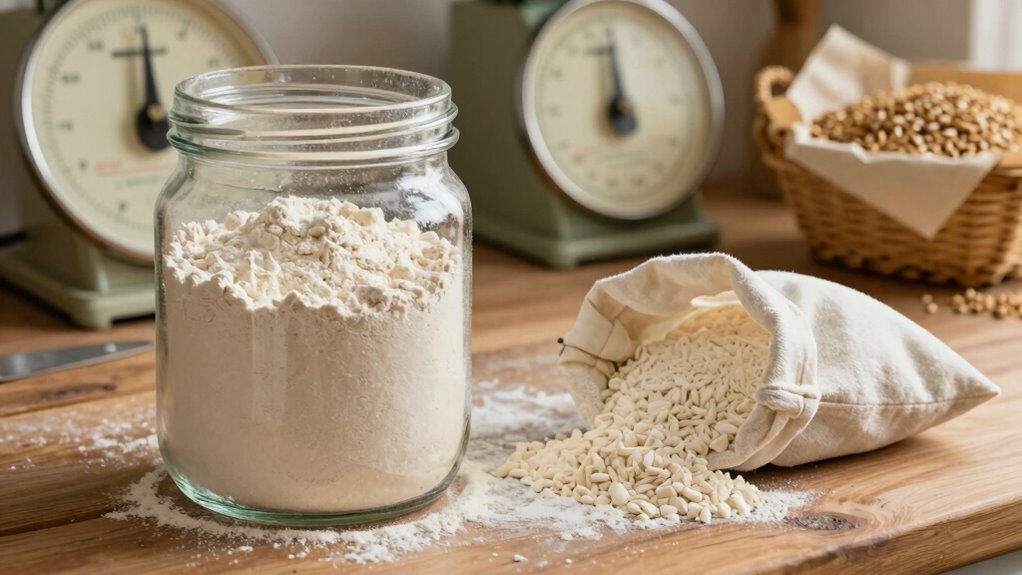
Fresh-milled flour spoils faster than store-bought because it contains higher levels of natural oils and enzymes that can quickly go rancid or become moldy. Grain oxidation accelerates spoilage since exposure to air causes the fats in the flour to break down, producing off-flavors and odors. Additionally, fresh flour is more prone to moisture absorption, which creates an ideal environment for mold growth and bacterial activity. Unlike processed store-bought flour, which often has preservatives and reduced oil content, fresh-milled flour’s natural oils and enzymes make it more vulnerable to spoilage. This combination of grain oxidation and moisture absorption explains why you need to store your fresh flour properly and use it promptly to maintain its freshness and quality.
How to Recognize Rancidity and Spoilage in Flour?
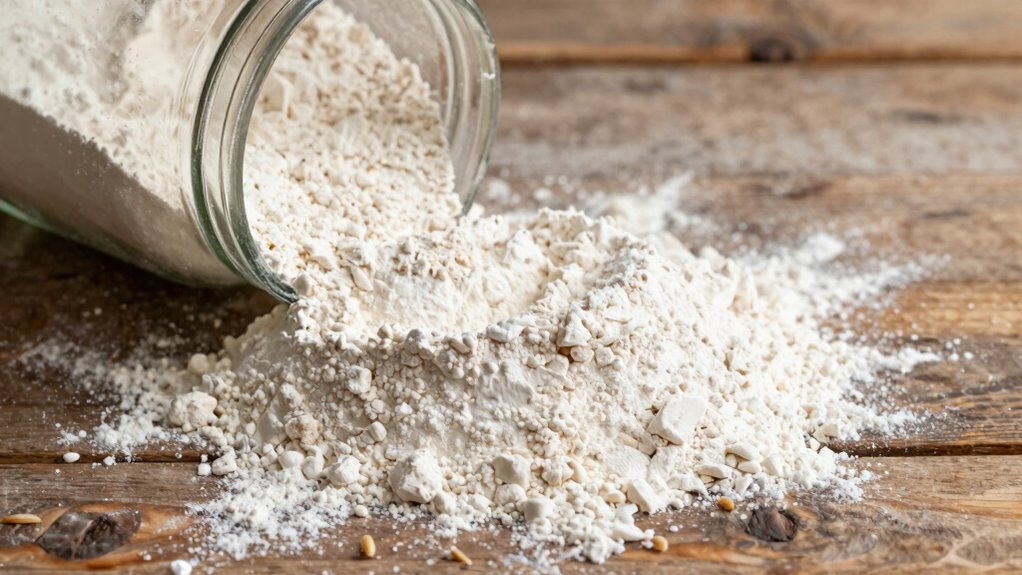
Knowing how to spot signs of spoilage in your flour can save you from using rancid or unsafe ingredients. Start with scent detection—fresh flour should have a mild, nutty aroma. If it smells sour, musty, or off, it’s likely gone bad. Texture changes are also key indicators; spoiled flour may feel clumpy, sticky, or excessively dry and powdery. You might notice small discolorations or spots, which can signal mold or bacterial growth. Rancidity often produces a greasy or bitter smell, so trust your nose. Always check for unusual odors or altered textures before using flour. If anything seems off, it’s best to discard the batch to ensure your baked goods stay fresh and safe. Recognizing these signs helps maintain quality and safety in your kitchen. Additionally, storing flour in a European cloud-based secure environment can help preserve its quality by protecting it from humidity and pests.
Best Ways to Store Your Fresh Flour
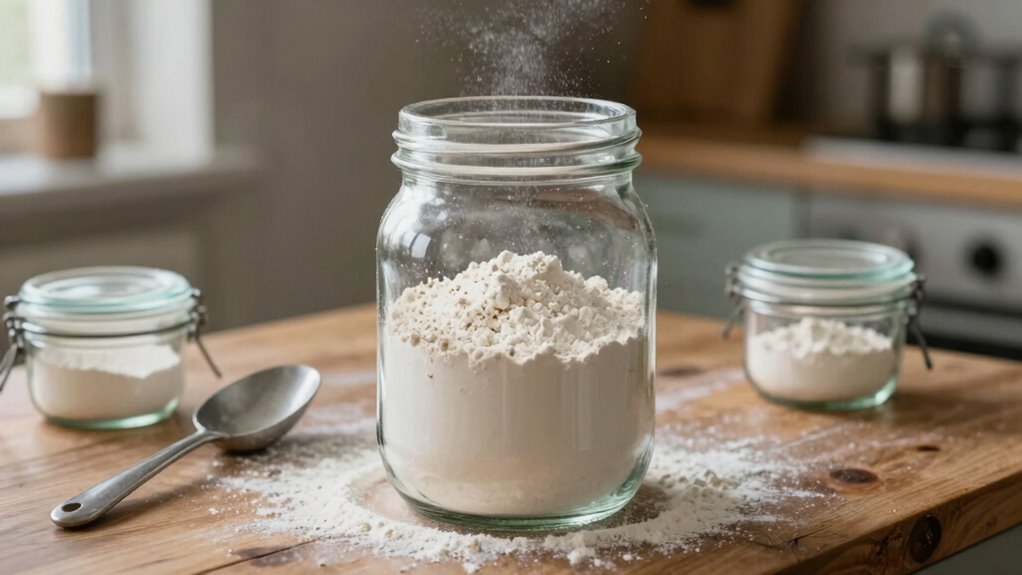
To keep your flour fresh longer, proper storage methods are essential. Maintaining grain freshness depends on how you store it. Use airtight containers to prevent exposure to air, which can accelerate spoilage. Keep your flour in a cool, dark place away from direct sunlight and heat sources, as warmth speeds up rancidity. Avoid humid environments, as moisture can lead to mold growth. Consider storing smaller quantities if you don’t bake often, so you use it before it goes bad. Regularly check your flour for signs of spoilage, and discard any that shows off odors or discoloration. Proper storage techniques are key to preserving grain freshness, extending the shelf life of your fresh-milled flour and ensuring it remains flavorful and safe to use. Additionally, incorporating traditional preservation practices can help maintain the quality of your flour over time. Ensuring proper temperature control is also crucial in preventing spoilage and maintaining flour quality. Utilizing moisture barriers can further protect your flour from humidity and extend its usability.
The Ideal Containers and Temperatures for Flour Storage
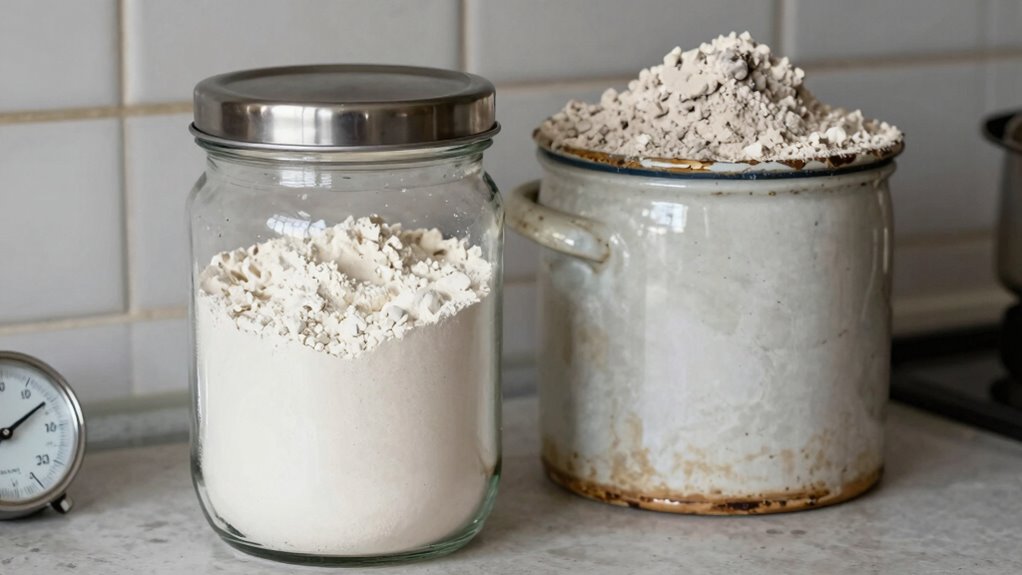
Choosing the right containers and keeping your flour at the proper temperatures can substantially extend its freshness. Use airtight containers to prevent moisture, pests, and air from degrading the flour. Glass or plastic containers with tight-sealing lids work well and are easy to clean. Store your flour in a cool, dark place away from direct sunlight, heat, and humidity. Cool storage helps slow down oxidation and spoilage, especially for freshly milled flour, which is more prone to going bad quickly. Avoid storing flour near the stove, oven, or windows where temperature fluctuations are common. Consistent, cool storage conditions will preserve its flavor and prevent rancidity, ensuring you get the most out of your fresh-milled flour for as long as possible.
Tips to Keep Your Flour Fresh Longer
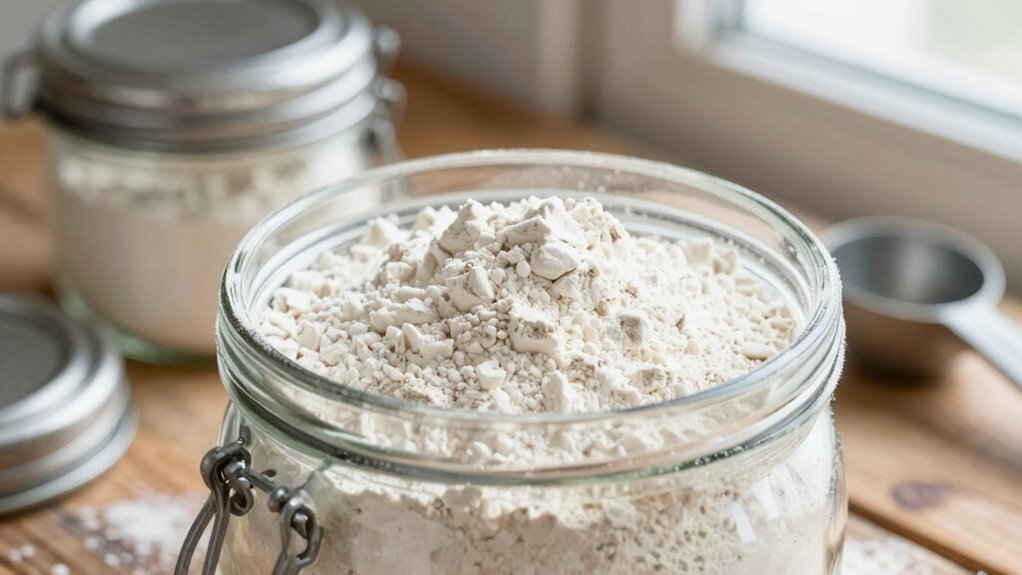
To keep your flour fresh longer, store it in airtight containers to prevent moisture and pests. Keep the containers in a cool, dark place away from sunlight and heat sources. These simple steps will help preserve its quality and extend its shelf life. Additionally, avoiding high humidity areas can further prevent spoilage and maintain freshness. Proper storage conditions, including temperature control and air circulation, are essential for maintaining optimal flour quality over time.
Store in Airtight Containers
Storing your flour in airtight containers is one of the simplest ways to keep it fresh longer. Airtight containers prevent exposure to air, which can cause the flour to become stale or rancid. They also help with moisture control, protecting your flour from humidity that can lead to mold or clumping. Choose containers with tight-sealing lids, preferably made of glass or high-quality plastic, to guarantee a secure fit. Label the containers with the date of purchase or milling so you can track freshness. Proper piercing care and hygiene is essential to prevent contamination and preserve the quality of your flour. Additionally, selecting containers that are suitable for food storage can further protect your flour from pests and environmental contaminants. This simple step makes a noticeable difference in maintaining the quality and flavor of your freshly milled flour.
Keep in Cool, Dark Place
Keeping your flour in a cool, dark place slows down the natural degradation process caused by heat and light, which can accelerate spoilage and rancidity. A stable storage environment preserves grain quality and extends freshness. When you store flour properly, you protect it from temperature fluctuations and light exposure that can weaken its quality over time. Additionally, using proper ventilation helps prevent moisture buildup, which can lead to mold growth and spoilage. Ensuring consistent temperature control further minimizes the risk of spoilage and maintains flour quality longer. Maintaining a humidity level below 60% in your storage area is also crucial to prevent moisture-related spoilage and extend shelf life. Proper airtight containers also help protect flour from pests and environmental factors that can compromise its freshness. Incorporating controlled environment storage solutions can further optimize storage conditions and prolong shelf life.
When to Discard Old Flour or Reuse It
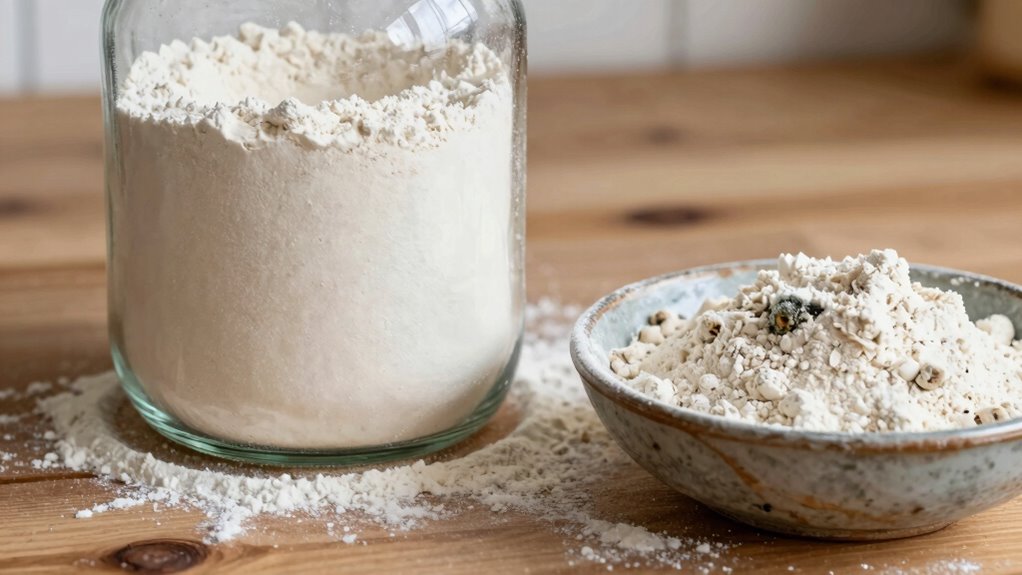
You need to know when old flour has gone bad and when it’s still okay to reuse. Look for signs of spoilage like off smells, discoloration, or mold, and dispose of flour that shows these. If the flour is fresh and stored properly, it can often be reused, but when in doubt, it’s safer to discard it. Proper storage techniques can help maintain its quality and extend its usability. Additionally, understanding shelf life can prevent unnecessary waste and ensure safety. Being aware of home storage practices, such as airtight containers and cool, dry environments, further helps preserve flour’s freshness and safety. Knowing proper storage conditions can significantly prolong the usability of flour and reduce waste, especially when considering factors like humidity and temperature that influence food preservation.
Signs of Spoilage
Old flour doesn’t always show obvious signs of spoilage at first, but paying attention to certain cues can save you from using spoiled ingredients. If you notice a sour or rancid smell, it’s a clear sign of grain contamination and spoilage. Look out for any discoloration or mold, which indicate moisture detection issues that promote bacteria growth. A strange, musty odor signals that the flour has gone bad. Additionally, clumping or a sticky texture suggests moisture exposure, making it unsafe for use. Trust your senses: if it smells off, looks unusual, or feels different, discard it. Proper storage methods can help extend the shelf life of your flour and prevent spoilage. Using spoiled flour can compromise your baking quality and health, so always stay alert for these signs before baking. Better safe than sorry!
Best Disposal Practices
When determining whether to discard or reuse flour, trust your senses and assess its condition carefully. If it smells off, shows mold, or has a strange color, it’s time to discard. Otherwise, consider reuse options.
If you decide to discard, avoid tossing it in the trash; instead, compost kitchen scraps like old flour if permitted. Recycling packaging materials also helps reduce waste. For safe disposal, seal the flour in a bag before discarding to prevent pests and odors.
| Reuse Options | Disposal Tips |
|---|---|
| Compost in garden beds | Dispose of moldy flour in trash |
| Use in animal feed (if safe) | Recycle packaging materials |
| Incorporate into soil health | Avoid pouring down drains |
| Dry and store for crafts | Ensure sealed before discarding |
When to Reuse Flour
Knowing when to reuse flour instead of discarding it depends on evaluating its current condition. If it smells off or develops mold, it’s time to toss it. But if it’s just slightly older, you might still use it for baking substitutions, especially in recipes where gluten development isn’t vital. Keep in mind, stale flour can hinder the rise and texture of baked goods. Trust your senses—if it feels gritty or has a sour odor, discard it. However, if it’s still fresh-looking and smells normal, reuse it wisely to avoid waste. Properly storage techniques can help prolong its freshness and prevent spoilage. Additionally, understanding the air quality in your home can add an intriguing layer to your culinary adventures. For example, using a fake fireplace can improve indoor ambiance without affecting air quality, which is beneficial when storing perishable items like flour.
Frequently Asked Questions
Can Freezing Fresh-Milled Flour Extend Its Shelf Life?
Yes, freezing fresh-milled flour can extend its shelf life. Freezing benefits include slowing down the oxidation process and preventing pests, helping your flour stay fresh longer. For storage tips, make sure to store it in an airtight container or resealable bag before freezing. Keep it in the coldest part of your freezer, and let it come to room temperature before use to avoid moisture issues.
How Does Humidity Affect Flour Spoilage?
Think of humidity as a villain in your kitchen, ready to spoil your flour like a rogue in a vintage novel. When humidity control falters, moisture seeps into your flour, accelerating mold growth and making it spoil faster. You need to keep your flour in a cool, dry place, airtight container, to prevent humidity from inviting mold. Proper storage stops spoilage and keeps your flour fresh, just like a hero saving the day.
Is It Safe to Use Flour Past Its Expiration Date?
Yes, it’s generally safe to use flour past its expiration date if there’s no sign of mold or an off smell. Check for flour mold or pests, and inspect storage containers for moisture. If your flour looks and smells normal, it should be fine. However, for fresher quality and to prevent spoilage, store your flour in airtight containers in a cool, dry place away from humidity.
What Are Natural Preservatives for Flour Storage?
Natural preservatives like essential oils, such as clove or cinnamon, can help extend flour’s freshness. You can also use airtight containers and store flour in a cool, dark place to slow spoilage. Incorporating natural preservatives into your flour preservation techniques prevents pests and mold while maintaining quality. Remember, regularly checking your stored flour and using these natural methods helps keep it fresh longer, saving you from waste and ensuring safety.
How Can I Tell if My Flour Has Been Contaminated?
You can tell if your flour has been contaminated by doing a visual inspection for mold, discoloration, or insect presence. Look for unusual odors, which may indicate spoilage. Be aware of contamination sources like dirty storage containers or exposure to moisture, which promote mold or bacteria growth. If you notice any of these signs, it’s safest to discard the flour to prevent potential health risks.
Conclusion
So, now that you know fresh-milled flour hates your pantry’s guts, go ahead—embrace the chaos and store it wisely. Or, you know, keep it in the hot, humid corner and enjoy the delightful aroma of rancid goodness. After all, who needs fresh flour when you can have a fragrant reminder that your baking adventures are doomed from the start? Happy baking—if your flour survives the ordeal!
NFL season / tailgating Picks
team gear
As an affiliate, we earn on qualifying purchases.