
When you’re shopping for butter, know the grades: AA, A, and B. Grade AA is the best choice, boasting rich flavor and a smooth texture, ideal for spreading and standout recipes. Grade A still offers good flavor for baked goods but may be less vibrant. Grade B is mainly for commercial use and isn’t great for home cooking. Want to choose the perfect butter for your recipes? There’s more helpful info ahead!
Listen free for 30 days with Audible
Thousands of audiobooks and originals — cancel anytime.
As an affiliate, we earn on qualifying purchases.
Key Takeaways
- Grade AA butter is the highest quality, offering a smooth texture and rich flavor, ideal for spreading and prominent recipes.
- Grade A butter provides good quality and flavor but is slightly less rich than AA, making it suitable for most baked goods.
- Grade B butter is primarily for commercial use, with a less vibrant flavor and grainy texture, not recommended for home cooking.
- AA butter has a longer shelf life compared to grades A and B, ensuring freshness for an extended period.
- Flavor and texture differences between grades are significant, particularly in delicate recipes where butter plays a key role.
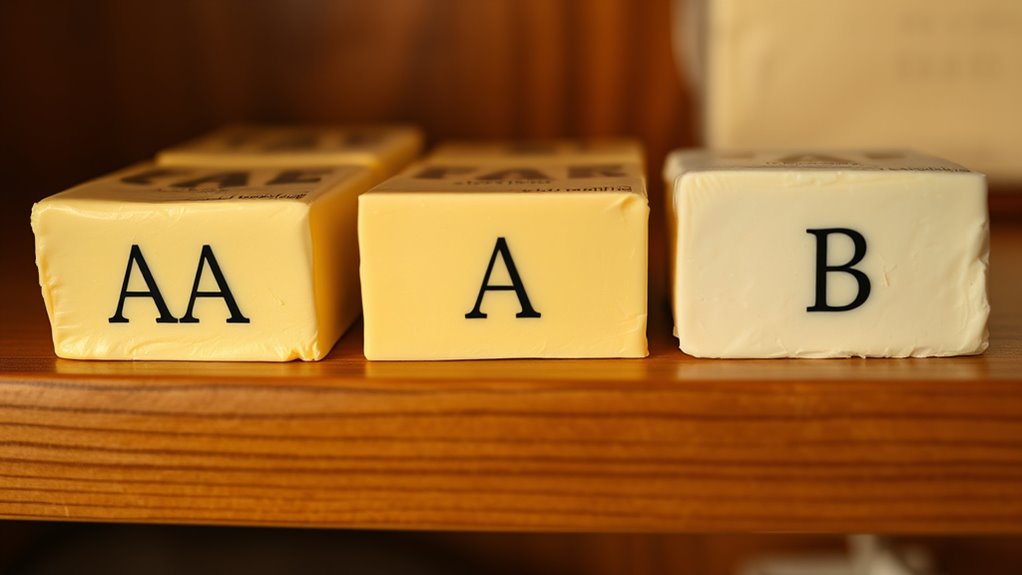
When you’re standing in the dairy aisle, how do you choose the right butter? With so many options available, it can feel overwhelming, especially when you start considering the grades: AA, A, and B. Understanding these grades is essential, as they reflect the quality and flavor differences that can impact your cooking and baking.
First, let’s plunge into the grades. Butter graded AA is the highest quality you’ll find. It has a smooth texture and a rich flavor, making it perfect for spreading on toast or using in recipes where butter is the star. When you pick AA butter, you’re not just getting a product with excellent flavor; you’re also choosing one that’s fresh and has a longer shelf life compared to lower grades. The butter flavor differences here are noticeable; AA butter tends to have a clean, creamy taste that’s hard to beat.
Butter graded AA offers unmatched smoothness and rich flavor, ideal for both spreading and baking. Choose freshness and superior taste.
Next up is grade A, which is still a good choice but not quite as high as AA. While it’s still flavorful and has a decent texture, you might notice some subtle differences when you use it in more delicate recipes. It’s great for cookies or cakes where butter plays a supporting role, but if you’re after that rich, buttery flavor, you might want to stick with grade AA. When it comes to shelf life comparisons, grade A butter typically lasts a little less time than AA, so keep that in mind if you stock up.
Finally, there’s grade B butter. This grade is used less frequently in home kitchens and is often found in bulk for commercial use. The flavor isn’t as vibrant, and the texture can be grainy. If you’re baking something where butter isn’t the main ingredient—like in a casserole—grade B might do the trick, but for everyday use, it’s best to avoid it.
As an affiliate, we earn on qualifying purchases.
Frequently Asked Questions
How Do Butter Grades Affect Flavor and Texture?
Butter grades affect flavor and texture by reflecting the quality of the butter production process. Higher grades indicate a creamier texture and richer flavor, thanks to strict grading standards that assess color, taste, and aroma. When you choose a higher grade, you’re likely enjoying a more delightful culinary experience. Lower grades may have off-flavors or a grainier texture, which can impact your recipes. So, always check the grading for the best results!
Can I Substitute One Butter Grade for Another in Recipes?
Yes, you can substitute one butter grade for another in recipes, but keep in mind the butter consistency may vary. Higher grades like AA usually have a smoother texture and richer flavor, making them ideal for baking. While the pricing differences might tempt you to use a lower grade, it could affect your dish’s final taste and texture. Always consider your recipe’s needs and adjust accordingly for the best results.
Are There Health Differences Between Butter Grades?
There aren’t considerable health differences between butter grades, but you’ll find variations in taste and texture. For instance, butter nutrition can vary slightly, with higher grades often having more creaminess and flavor. When you store butter properly in the fridge, it can last several months, ensuring you maintain its quality. Just remember, while the grade might not affect health much, the quality can enhance your cooking and baking experience markedly.
What Are the Best Uses for Each Butter Grade?
For cooking and baking, you’ll want to use AA grade butter for its rich flavor and high quality. Grade A works great for everyday use, like spreading on toast or mixing into sauces. Grade B’s perfect for cooking where you won’t notice the taste, like in bulk recipes. Remember to check the butter packaging for storage tips; keeping it wrapped tightly in the fridge extends its freshness and flavor.
How Is Butter Graded and Who Determines the Grades?
Butter’s like a dance, moving gracefully through a system of butter grading standards. You’ll find that a grading authority certification, often overseen by the USDA, determines the quality of butter based on factors like flavor, texture, and appearance. Inspectors evaluate each batch, ensuring it meets specific criteria. So, when you grab butter from the shelf, you’re picking a product that’s been carefully assessed, ready to elevate your culinary creations!
Conclusion
When you’re shopping for butter, knowing the grades can help you pick the right one for your needs. Grade AA offers the highest quality, perfect for those special recipes, while Grade A is great for everyday use. If you’re on a budget, Grade B can still do the trick in cooking. So, whether you’re looking to impress at dinner or just spread on toast, you’ll be in good shape with any of these options!
Flea & tick season Picks
flea and tick prevention
As an affiliate, we earn on qualifying purchases.