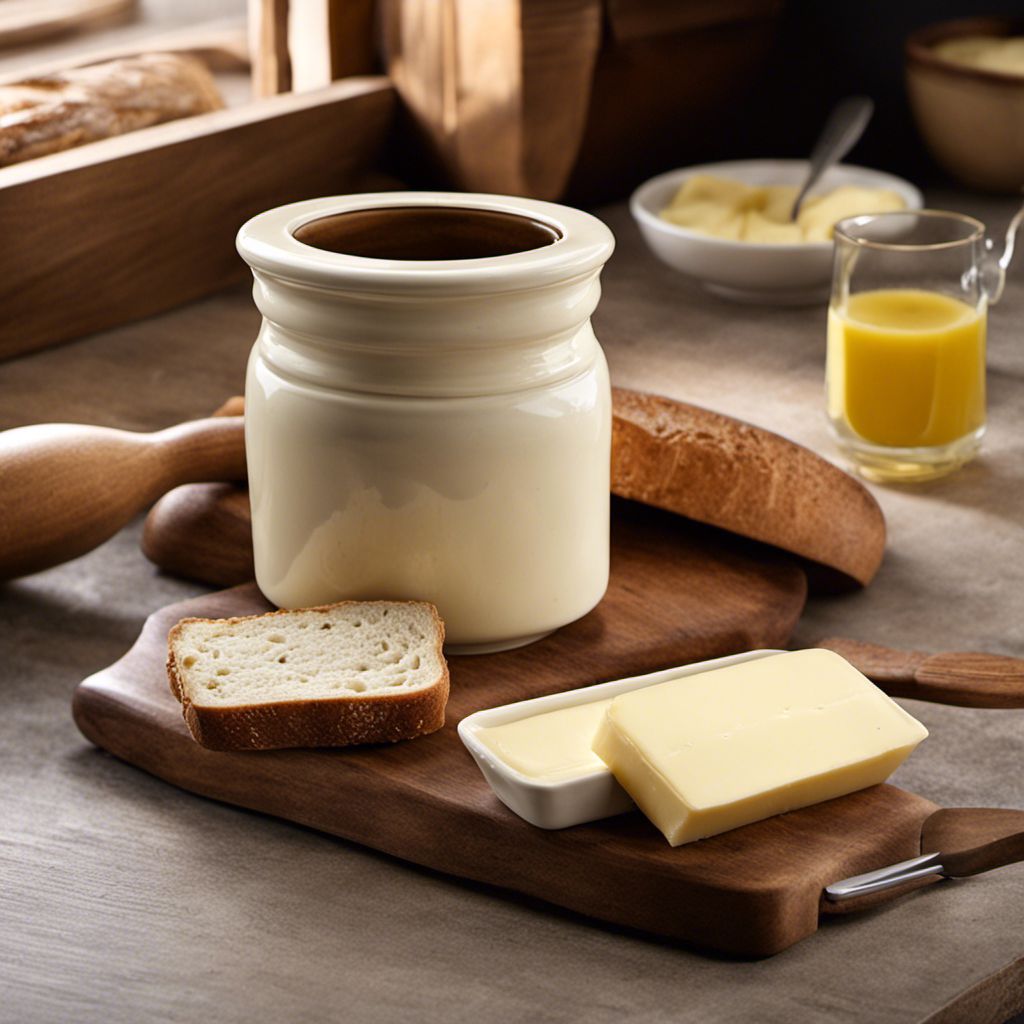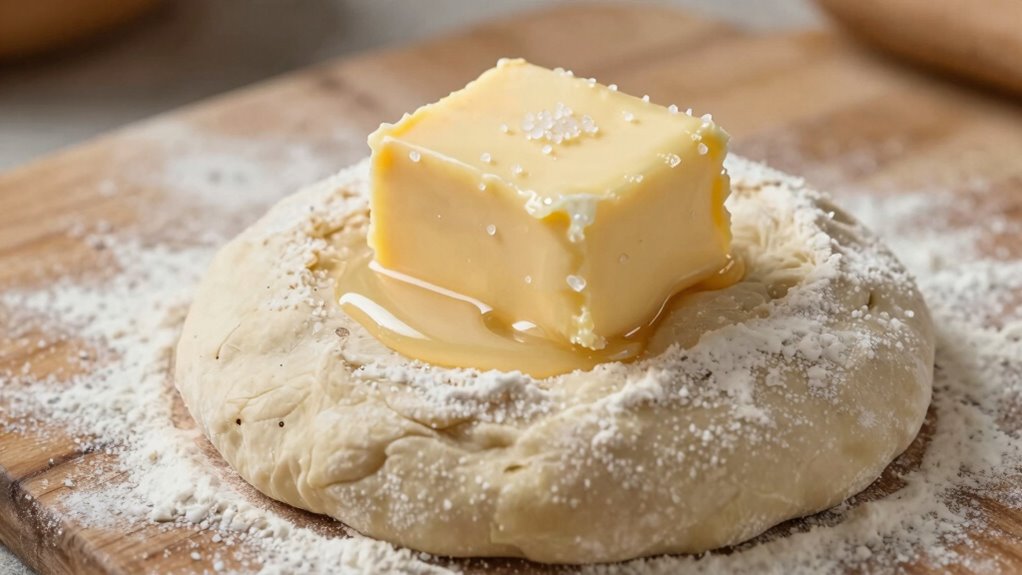

Salted butter behaves differently in dough because its salt content impacts flavor, texture, and how the dough develops. The salt enhances savory notes and balances sweetness, while the fat coats flour particles, making the crumb tender and flaky. It also influences gluten formation and moisture retention, helping you control rise and structure. Understanding these effects can help you perfect your baked goods, and if you keep exploring, you’ll uncover how to use salted butter for the best results.

Get kitchen staples and gadgets delivered free — and shop member deals
- Fast, free delivery on millions of items
- Access to Prime Big Deal Days deals on October 6–7
- Prime Video, Amazon Music and more included
Key Takeaways
- Salt in salted butter enhances flavor and balances sweetness, subtly influencing dough’s overall taste profile.
- Salted butter’s sodium content can slow yeast activity, affecting dough rise and fermentation.
- The salt’s presence alters gluten development, resulting in a softer, more tender crumb.
- Salted butter helps retain moisture during baking, leading to moist, flaky, or tender textures.
- The combined effects of salt and fat impact dough elasticity, handling, and final baked product structure.

Have you ever wondered how adding salted butter to dough transforms your baked goods? The answer lies in how the salt and butter interact during mixing and baking, influencing both flavor and texture. Salted butter isn’t just about seasoning; it actively modifies the dough’s structure and taste, giving your baked treats a distinctive edge. When you incorporate salted butter, you introduce salt directly into the dough, which enhances the overall flavor. Instead of relying solely on added salt, the presence of salt within the butter amplifies the savory notes and balances sweetness, making every bite more satisfying. This flavor enhancement is subtle yet impactful, giving your baked goods a richer, more complex profile without overwhelming the palate.
Salted butter enhances flavor, balances sweetness, and adds depth to baked goods through its active role in dough structure.
Beyond flavor, salted butter plays a significant role in texture modification. The fat content in butter coats the flour particles, which affects gluten development. When you mix salted butter into your dough, the fat interferes with gluten formation, resulting in a tender, softer crumb. This is especially noticeable in pastries, cookies, and bread where a delicate, melt-in-your-mouth texture is desired. The salt within the butter also influences moisture retention during baking, helping to keep baked goods moist and preventing them from becoming dry or crumbly. As the dough bakes, the fat melts, creating layers and pockets that contribute to a flaky or tender interior, depending on the recipe. Additionally, the presence of salt can influence the dough’s rising behavior, which is crucial for achieving the desired volume and lightness in baked goods. The interplay of salt and fat can also affect the dough’s elasticity, helping bakers achieve better control over shaping and handling. Moreover, understanding how the composition of salted butter interacts with other ingredients allows for more precise adjustments and consistent results.
The salt in salted butter also impacts the dough’s consistency. It can slow down yeast activity in bread dough or tighten the dough structure, giving you more control over the final product. Because of this, recipes that call for salted butter often have a different rise or texture compared to those with unsalted butter. You may notice that baked goods made with salted butter have a slightly different mouthfeel — they tend to be more cohesive and less crumbly, thanks to the fat and salt working together. Understanding the interplay of salt and fat in baking can help you better predict and manipulate your results for optimal texture and flavor.
In essence, salted butter does more than just add flavor; it actively influences how your dough behaves during mixing and baking. It enhances flavor subtly but effectively, making your baked goods more flavorful and complex. At the same time, it modifies the dough’s texture, leading to tender, moist, and flaky results. That’s why understanding how salted butter behaves in dough allows you to better control the outcome of your baked creations, ensuring they’re as delicious and perfectly textured as you envision.
As an affiliate, we earn on qualifying purchases.
Frequently Asked Questions
How Does Salt in Butter Affect Yeast Activity?
Salt in butter slows yeast activity because it causes flavor enhancement and fat interference. The salt binds with yeast enzymes, hindering their ability to produce carbon dioxide, which is essential for dough rising. While a pinch can improve taste, too much salt inhibits fermentation. You should balance salt levels carefully to enjoy the flavor benefits without substantially delaying yeast activity, ensuring your dough rises properly and tastes great.
Why Does Salted Butter Cause Dough to Brown Faster?
Salted butter causes dough to brown faster because it enhances flavor and retains moisture better during baking. The salt intensifies the Maillard reaction, leading to a richer, deeper browning on the crust. Additionally, moisture retention from the salt keeps the surface moist longer, promoting even browning. This combination results in a more flavorful crust that develops color quicker, giving your baked goods a appealing, golden finish.
Can Salted Butter Change the Dough’s Texture?
Salted butter can subtly change your dough’s texture, adding a softer, richer consistency. Its flavor enhancement makes baked goods more flavorful, while the preservation properties help maintain freshness longer. The salt can also strengthen gluten, creating a slightly firmer bite. So, when you use salted butter, you’re not just boosting flavor—you’re balancing texture, prolonging freshness, and perfecting your pastry’s overall plushness and pliability.
Does Salted Butter Impact Gluten Development?
Yes, salted butter impacts gluten development. The salt in salted butter can strengthen gluten strands, enhancing flavor and helping with moisture retention. This process results in a dough that’s more resilient and flavorful. The salt slows down gluten formation slightly, giving you more control over dough texture. So, using salted butter can elevate your baked goods by boosting flavor while maintaining moisture, but it may require slight adjustments in your recipe.
How Does Salt Content Influence Dough Fermentation?
Salt content influences dough fermentation by acting as a flavor enhancer and moisture retainer. When you add salt, it slows down yeast activity, giving you better control over fermentation time. This results in improved flavor and texture. Salt’s moisture retention helps keep the dough moist, preventing it from drying out too quickly. Overall, the right salt amount balances fermentation speed, flavor enhancement, and moisture retention, leading to a better final product.
Conclusion
Next time you mix your dough, remember that salted butter is like a seasoned traveler—its salt whispering secrets into the batter’s ear. It weaves a flavor tapestry, dancing on your taste buds while subtly influencing texture and rise. Think of it as adding a pinch of personality to your creation, turning a simple recipe into a culinary story. Embrace the salty storyteller, and watch your dough transform into a masterpiece that sings with flavor.
Fall Picks
fall essentials
As an affiliate, we earn on qualifying purchases.