TL;DR

Get kitchen staples and gadgets delivered free with Prime
- Fast, free delivery on millions of items
- Prime Video, Amazon Music and more included
- Member-only deals all year
A Food Dive sponsored article outlines how Edlong uses aroma, mouthfeel and receptor-informed research to address bitterness and off-notes in food formulations. The report presents the company’s approach and examples, but does not provide independent testing, product-specific results or comparative performance data.
A sponsored Food Dive report describes how ingredient supplier Edlong uses aroma and mouthfeel effects, alongside receptor-informed research, to address bitterness and off-notes in food formulations. The approach targets challenges for consumer packaged goods (CPG) developers using ingredients such as proteins and natural colors, but the report does not provide independent product tests or comparative data showing how well the methods perform.
The report identifies several formulation problems that can affect taste. Whey protein may bring pungent notes, while plant proteins can taste grassy, beany or earthy, according to the article. Hydrolyzed proteins, which are processed to improve digestibility, can produce bitter peptides. The source says these qualities may undermine consumer acceptance if they are not addressed, but it gives no consumer study or measured effect size.
Natural colors can create a separate challenge. The report says ingredients such as paprika, annatto, beet and turmeric may need to be used at higher levels than artificial colors to achieve a comparable visual effect. At those concentrations, their characteristic tastes and bitterness can become more noticeable. It also points to differences between suppliers’ ingredients as a complication for companies trying to maintain consistent flavor and product performance.
Edlong describes its method as a two-step taste architecture. The first part uses cross-modal sensory interactions: aroma and mouthfeel can influence how a person perceives taste. The report gives vanilla aroma as an example that may increase perceived sweetness, and cream flavor as an example that may reduce perceived bitterness or create a creamier impression. The second part uses receptor-informed inhibition, in which the company says it studies bitter compounds and tests combinations with sensory panels to identify reductions in perceived bitterness.
Taste Pressures on Reformulated Foods
For CPG companies, the practical issue is that changing a recipe can affect more than its nutritional profile or ingredient list. A product that adds protein or replaces artificial colors may gain attributes some consumers seek, but it can also acquire off-notes, bitterness or sensory variation. Managing those effects may matter to whether a reformulated product delivers a taste experience customers will accept.
The report frames masking as a way to address these competing formulation goals, rather than as a substitute for the ingredient itself. If a flavor system can reduce an unwanted note or alter perceived sweetness and mouthfeel, developers may have another tool when reformulating products. The potential value is especially relevant when supply changes introduce small differences between ingredient lots or suppliers. However, the article is promotional material from Edlong and does not establish that its method works equally well across products, consumers or formulations.
Products Worth Considering
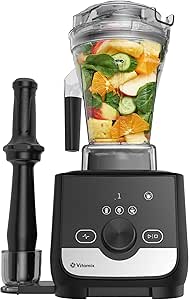
Vitamix Ascent X3 Professional-Grade Blender, 3 Programs, Shadow Black

KitchenAid Artisan 5-Quart Tilt-Head Stand Mixer, KSM150PS, Almond Cream

Vitamix Propel Series 510 Professional-Grade Blender, 3 Programs, Black
As an affiliate, we earn on qualifying purchases.
Ingredients Behind the Taste Challenge
The source links the discussion to demand for foods positioned as better-for-you, clean-label or functional, with protein among the ingredients appearing in an expanding range of products. It also says changing regulatory policies have brought natural colors into greater focus for developers. The supplied report does not name specific regulations, jurisdictions or deadlines, so those policy references cannot be independently assessed from the material provided.
Ingredient availability is another part of the account. The report says strong demand can put pressure on suppliers and that broadening a supply base may bring variation in ingredient performance and taste. It does not identify particular shortages, suppliers or market data. Its examples describe possible development challenges, not evidence that every protein or natural-color formulation has the same sensory problem.
““Bitterness, in particular, is a challenge across many better-for-you products.””
— Edlong, in the sponsored Food Dive report
Evidence and Performance Data Missing
The source is a sponsored report promoting Edlong’s technology, not an independent evaluation. It provides no quantitative sensory-panel results, named finished-product case studies, sample sizes, consumer acceptance data, or comparisons with other masking methods. It also does not identify the compounds used in its solutions or specify how performance varies by formulation.
As a result, the report supports a description of Edlong’s stated approach, but not a conclusion about its effectiveness across the market. It is also unclear which specific regulatory changes the article references, how widespread the supplier-variation problems are, or whether the described results have been published in peer-reviewed research. Those questions would require additional documentation from the company or independent sources.
What Developers Should Verify
The report does not announce a product launch, regulatory decision or upcoming milestone. For companies considering taste-masking systems, the next practical step would be to test them in the intended formulation and compare sensory results with an appropriate control. Developers would also need to check flavor, texture, stability, labeling and performance across ingredient suppliers and production batches.
Further evidence would clarify the claims: product-specific test protocols, panel size and composition, measured changes in bitterness or sweetness, and results from consumer testing. Until such information is available, Edlong’s account should be read as a description of the company’s proposed technology and its intended uses, rather than proof of a particular commercial outcome.
Key Questions
What does taste masking mean in this report?
It refers to techniques intended to reduce unwanted tastes, such as bitterness or protein off-notes, or to change perceived sweetness and mouthfeel. Edlong describes using aroma, cream-like flavor effects and receptor-informed research.
Which ingredients does the report focus on?
The main examples are whey and plant proteins, hydrolyzed proteins that may produce bitter peptides, and natural colors including paprika, annatto, beet and turmeric.
How does Edlong say its two-part approach works?
The first part uses cross-modal interactions, such as aroma or mouthfeel influencing perceived taste. The second uses sensory-panel testing and research on bitterness receptors to develop masking solutions, according to the company.
Does the source prove the technology works?
No independent proof is included in the supplied report. It offers Edlong’s description and examples but no numerical test results, consumer studies or comparisons with competing approaches.
Why can natural colors affect flavor?
The report says some natural colors may need higher use levels to achieve similar visual impact to artificial colors. At higher concentrations, their inherent flavors and bitterness may become more noticeable.
Source: fooddive.com