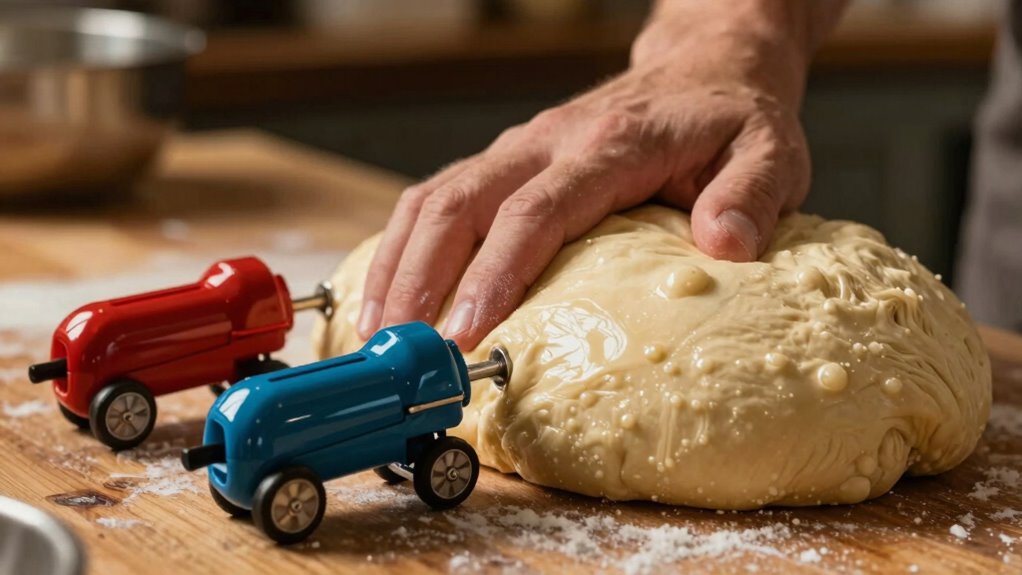
Bread dough is dense, sticky, and rich in gluten, which makes it tough to mix. Small mixers often lack the power, torque, and capacity needed to handle these heavy mixtures. They heat up quickly and can strain or burn out if used too long. These limitations mean your mixer struggles to develop the gluten properly, risking damage. If you want to know how to avoid these issues and improve your dough, keep exploring the details below.
Key Takeaways
- Dense, high-gluten bread dough requires sustained torque that small mixers cannot reliably provide.
- High hydration levels and tough flours increase dough resistance, overloading the mixer motor.
- Small mixers lack sufficient bowl capacity for large batches, leading to extended kneading times.
- Limited motor power causes overheating and potential damage when processing stiff, sticky doughs.
- Planetary action is less effective for heavy doughs, demanding more robust mixing mechanisms.
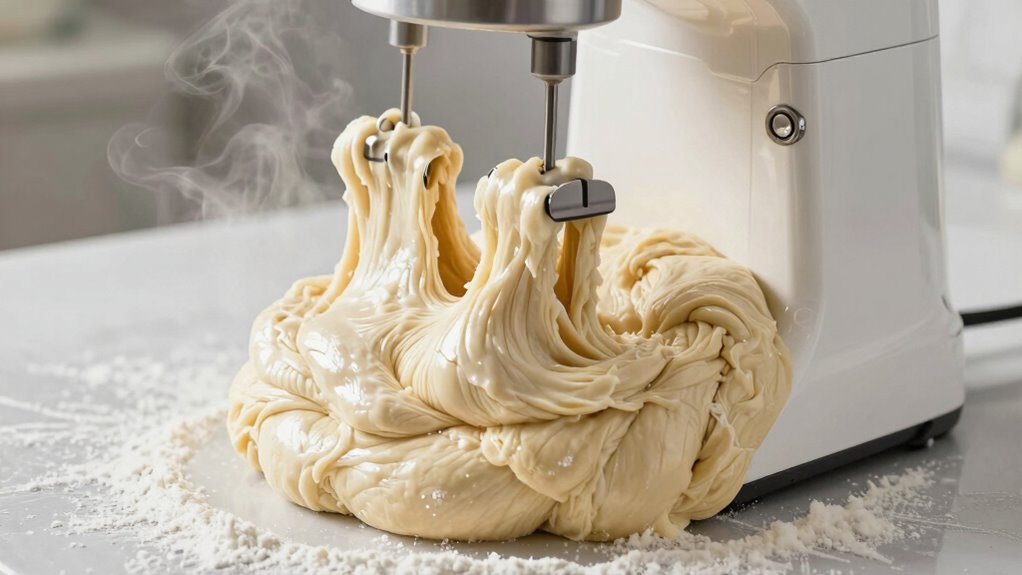
If you’ve ever tried to knead a batch of bread dough in a small mixer, you’ve probably noticed it struggles to keep up. Small mixers are designed for lighter tasks, but bread dough, especially when made with artisan techniques, demands more power and stability. These dense, sticky mixtures require sustained torque, which small mixers often can’t provide without risking damage. The reason is simple: bread dough is thick, sticky, and requires a lot of kneading force, which can overwhelm the motor of a compact machine. As you work the dough, the mixer’s motor has to generate considerable torque, especially when incorporating a variety of flour varieties, each with different gluten structures and hydration needs. These factors influence how tough the dough becomes, making it more challenging for small mixers to handle the workload.
When you use traditional artisan techniques, like slow fermentation and stretch-and-fold methods, you often create doughs with higher hydration levels and complex gluten networks. These techniques increase the dough’s elasticity and strength, demanding more from your mixer. Flour varieties also play an essential role; for example, bread flour, with its higher protein content, develops more gluten and creates a denser dough that’s harder to knead mechanically. Whole wheat or rye flours tend to absorb more water and become stiffer, requiring more force to mix thoroughly. The combination of high-protein flours and artisan techniques results in a tougher and more resistant to mixing, pushing small mixers beyond their capacity. Understanding the properties of gluten development can help you better anticipate the demands placed on your equipment.
Additionally, small mixers often have limited bowl sizes and less powerful motors, which means they can’t sustain long mixing times or handle the resistance created by these dense doughs. As you push the mixer to knead a thick, sticky dough, the motor heats up quickly, risking damage or burnout. The planetary mixing action, while effective for lighter tasks, becomes less efficient with dense doughs because it can’t generate the necessary force to knead thoroughly without risking overheating. Proper mixing techniques can help mitigate some of these challenges, but understanding the equipment’s limits remains crucial. Using a professional-grade mixer designed for heavy-duty tasks can make a significant difference in handling such challenging doughs.
Furthermore, thermal overload caused by extended kneading can lead to motor failure, especially in small mixers that lack advanced cooling features. Ultimately, your small mixer’s design limits its ability to handle the demands of artisan bread doughs, especially those made with high-gluten flours or complex techniques. To achieve the best results, you might need to switch to a heavier-duty machine or knead by hand, where you control the force more precisely. Recognizing these limitations helps you avoid overworking your equipment and guarantees your bread develops the proper structure and texture. Proper mixing techniques and ingredient selection are crucial in working with tough doughs, whether done by hand or with more capable equipment. After all, making artisan bread is as much about technique and ingredient choice as it is about having the right tools—tools that can stand up to the tough, sticky nature of well-crafted dough.
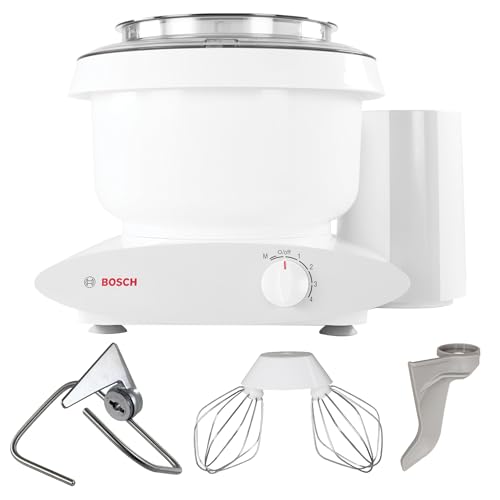
Bosch Universal Plus Stand Mixer 500 Watt, 6.5 Quarts with Wire Whips, Dough Hook & NutriMill Dough Hook Extender Bundle
Lightweight 6.5-quart plastic BPA-free bowl with easy-grip handle and removable drive shaft for easy cleaning; bowl is dishwasher…
As an affiliate, we earn on qualifying purchases.
As an affiliate, we earn on qualifying purchases.
Frequently Asked Questions
Can Small Mixers Handle Gluten Development Effectively?
Small mixers can handle gluten development effectively, but you need to be cautious. They often struggle with dough elasticity, especially with large batches, which can hinder gluten formation. To guarantee proper kneading, work in smaller portions or use a dough hook designed for heavy mixing. Keep an eye on the mixer’s capacity to avoid overload, and give the dough enough time to develop the desired gluten structure for perfect bread.
What Are the Signs of a Small Mixer Struggling?
You’ll notice your small mixer struggling when it slows down or stalls during heavy dough mixing, indicating it’s overwhelmed by its limited motor power. Signs include excessive heat, unusual noises, or uneven mixing results. If your mixer’s capacity exceeds its limits, it can strain the motor, causing these issues. To avoid damage, make certain you’re not overloading it beyond its recommended capacity, especially when working with dense bread dough.
How Long Can a Small Mixer Operate Continuously?
Like a marathon runner, your small mixer’s motor can only handle a certain stretch before fatigue sets in. Typically, you should limit continuous operation to about 15-20 minutes, depending on dough capacity. Overworking it risks overheating and damage. Always monitor the mixer’s motor temperature and listen for unusual noises. Giving it regular breaks guarantees your small mixer stays reliable, ready for the next batch without breaking down under pressure.
Are There Specific Bread Recipes Better for Small Mixers?
Yes, certain bread recipes suit small mixers better, especially those with moderate dough hydration and balanced flavors. Opt for recipes like sandwich bread or simple baguettes, which don’t require extremely sticky dough. These recipes keep the mixer stress-free and preserve bread flavor. High-hydration doughs, like ciabatta or focaccia, can overload small mixers, risking motor burnout. Choose recipes that align with your mixer’s capacity for consistent results.
What Maintenance Tips Improve Small Mixer Durability?
You should regularly check your mixer motor for overheating, especially after heavy use, to prevent damage. Keep your dough hook well-maintained by cleaning and lubricating it, ensuring smooth operation. Think of your mixer as a workout partner—just like muscles need rest and care, your machine benefits from proper maintenance. These small efforts extend its lifespan, helping your small mixer handle tough bread dough without breaking a sweat.

Stand Mixer Body with Stainless Steel Cladding Pro-Grade Powerful Kitchen Mixer for Baking Bread Dough Cake 10+p Speed Tilt-Head Electric Food Mixer With 6.5QT Bowl Dough Hook Wire Whisk Flat Beater
Built to Last with Professional-Grade Durability: The stainless steel cladding provides professional-grade durability. This robust armor shields the…
As an affiliate, we earn on qualifying purchases.
As an affiliate, we earn on qualifying purchases.
Conclusion
So, next time you’re kneading bread dough in your small mixer, remember that it’s often the surprise of a sticky, expanding mass that pushes your machine to its limit. Just like the moment you realize the dough has doubled in size, your mixer hits its edge, revealing how even the smallest appliances can handle big dreams — with a little patience and a lot of flour. Sometimes, it’s those little coincidences that make baking truly memorable.

5.3QT Dough Kneader Machine with Timer & Fermentation, Electric Dough Mixer for Bread, Pizza, Pasta & Sourdough, Up to 1.4kg Dough Maker for Home Baking Hands-Free Kneading Machine, 304 Bowl
【Designed Specifically for Dough, Not Just Mixing】 Unlike traditional mixers, this machine is built for kneading dough efficiently,…
As an affiliate, we earn on qualifying purchases.
As an affiliate, we earn on qualifying purchases.

Dough Maker with Ferment Function 7.4Qt Large Capacity Dough Mixer,Commercial&Household Bread Mixer for Pizza, Noodles, Bread,Sourdough Kneading Machine with Stainless Steel Bowl, Face-up Touch Panel
Versatile Food Preparation: Equipped with a powerful 250W motor, this electric dough maker provides reliable, consistent mixing performance,…
As an affiliate, we earn on qualifying purchases.
As an affiliate, we earn on qualifying purchases.