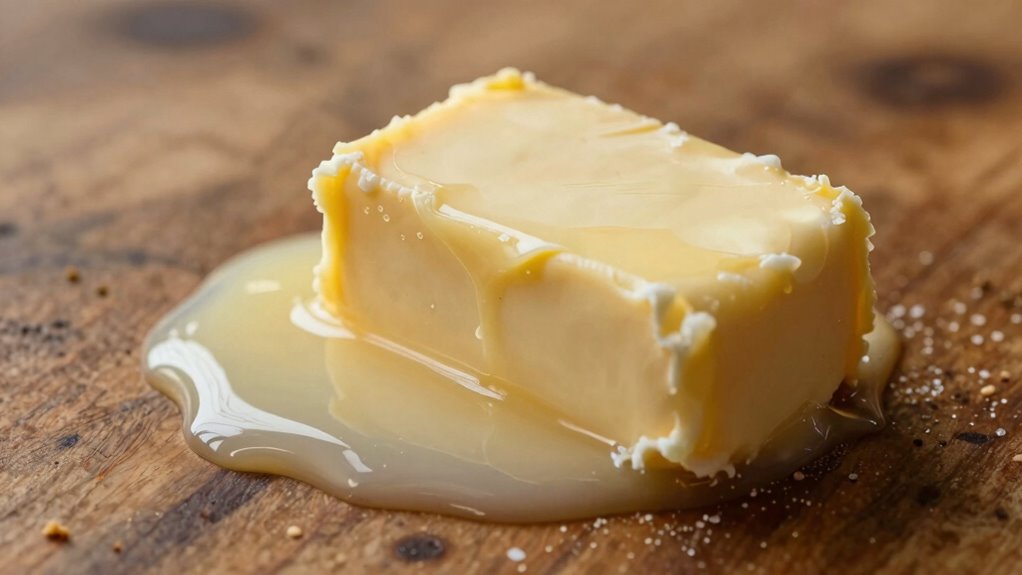

If you leave butter out too long, it begins to spoil, affecting both its texture and flavor. It can develop a greasy or sticky feel, while chemical reactions cause off-putting odors and sour tastes. Warm temperatures accelerate bacteria growth and mold formation, increasing health risks. Over time, it may become slimy or rancid, making it unsafe to consume. To protect yourself, understanding proper storage is key—keep exploring for more tips on keeping butter fresh.
Key Takeaways
- Butter develops undesirable texture and flavor due to chemical reactions and microbial activity.
- It becomes greasy, sticky, or slimy, indicating spoilage.
- Warm temperatures accelerate spoilage processes and bacterial growth.
- Left out too long, butter can mold or become rancid, making it unsafe to consume.
- Proper storage in the refrigerator extends freshness and prevents spoilage.
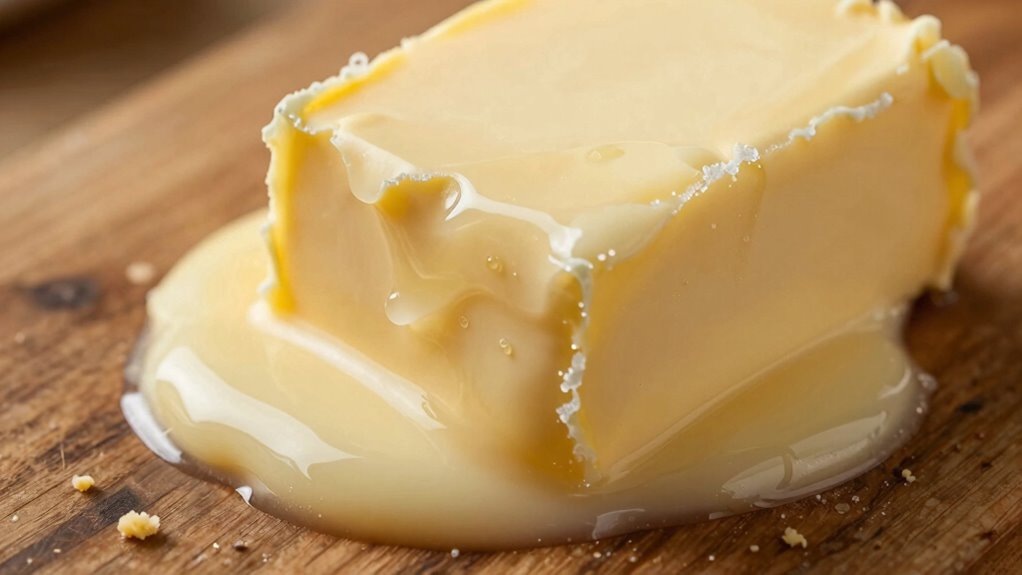
When butter is left out at room temperature for too long, it can start to spoil and develop undesirable changes in texture and flavor. This is because butter, although more stable than many other perishable foods, still requires careful butter storage to maintain its freshness. When you leave butter out on the counter, it becomes more vulnerable to bacterial growth, which can lead to rancidity or mold over time. The warmth accelerates chemical reactions within the fat, causing the butter’s flavor to become off-putting and its texture to turn greasy or sticky. These changes are signs that your butter has begun to spoil, and consuming it could pose health risks. Proper storage methods are essential for maintaining the quality of butter over time and preventing bacterial contamination.
Understanding the importance of refrigeration is key to keeping butter safe and fresh for longer periods. While butter can be stored at room temperature for short durations—typically up to a couple of days—long-term storage demands a cooler environment. Refrigeration plays a crucial role in slowing down microbial activity and preventing spoilage. When butter is kept in the fridge, its fats and moisture are stabilized, preserving the texture and flavor for weeks or even months. Proper butter storage in an airtight container or wrapped tightly helps prevent it from absorbing other refrigerator odors, which can alter its taste. Additionally, maintaining a consistent temperature helps prevent spoilage caused by temperature fluctuations. Temperature control is fundamental for food safety and maintaining quality.
Leaving butter out too long also changes its physical state. It softens quickly when exposed to warmth, making it easier to spread initially, but this softness can turn into a greasy mess if left out for days. As butter softens and warms, it becomes more prone to bacterial contamination. The surface can develop a slimy or moldy appearance, indicating it’s no longer safe to consume. If you notice a sour smell or a change in color, discard the butter immediately. These are clear signs that it has gone bad and should be replaced to avoid health issues. Regularly monitoring storage conditions can help prevent such spoilage. Proper temperature regulation is also vital to extend the shelf life and ensure safety.

KITCHENDAO One-handed Airtight Butter Dish with Lid for Countertop and Refrigerator Door Shelf, Butter Holder with One Press to Open/Close Secure Latching Buckle for West/East Coast Butter (White)
- Suitable for Eastern and Western Butter: Capacity for various butter types
- One-Handed Open/Close: Secure latching buckle for easy operation
- Keeps Butter Fresh: Sealing ring maintains freshness and airtight seal
As an affiliate, we earn on qualifying purchases.
As an affiliate, we earn on qualifying purchases.
Frequently Asked Questions
Can Butter Left Out Overnight Be Safely Eaten the Next Day?
If you leave butter out overnight, it’s generally safe to eat the next day, but be aware of flavor degradation and texture change. The butter may develop a sour or off taste, and its texture could become greasy or hard. If it smells or looks unusual, it’s best to discard it. For peak freshness and safety, store butter in the refrigerator, but a short time at room temperature shouldn’t cause major issues.
How Does Leaving Butter Out Affect Its Nutritional Value?
Leaving butter out for too long can slightly impact its nutritional preservation, especially if it’s exposed to heat, light, or air. While the core nutrients like fats and vitamins generally remain stable, prolonged exposure may cause some loss of delicate vitamins, such as B vitamins. Proper butter storage in a cool, airtight container helps maintain its nutritional value longer, ensuring you get the most health benefits in every use.
What Are the Signs of Spoiled Butter?
Spoiled butter screams its betrayal through a rancid smell that hits you like a punch. You’ll notice mold growth, a slimy texture, or an off-color, which signals butter storage failure. If it develops a sour or bitter taste, it’s definitely spoiled butter. Don’t ignore these signs, as consuming spoiled butter can ruin your dish and upset your stomach. Trust your senses—when butter shows these signs, it’s time to toss it out!
Does Leaving Butter Out Attract Pests?
Leaving butter out can attract pests like ants, flies, or rodents, especially if it starts to spoil. Pest attraction increases as bacteria grow on the butter’s surface, emitting odors that draw insects and animals. To avoid this, keep butter refrigerated or covered tightly if left out. Not only does this prevent pest problems, but it also slows bacterial growth, keeping your butter fresh and safe to use.
How Long Can Butter Sit Out Before It Becomes Unsafe?
Think of butter as a delicate flower that wilts with warmth. You can leave it out at room temperature for about 1 to 2 days, but no longer. Proper butter storage is essential for room temperature safety; after this time, bacteria can multiply, risking spoilage. To keep it fresh and safe, store butter in a cool, airtight place, and refrigerate it if you won’t use it soon.
Conclusion
So, remember, leaving butter out too long can lead to spoilage and potential health risks. While it might seem harmless at first, toxins can develop, and the flavor will suffer. It’s a good idea to follow the old saying, “A stitch in time saves nine,” by storing butter properly. Keep it refrigerated, and you’ll enjoy fresh, tasty butter whenever you need it, avoiding unnecessary waste and worries.