Using silicone baking mats makes cleanup simple because they prevent sticking and reduce mess. They also promote even baking, which helps eliminate the need to turn trays or adjust frequently. However, they may cause slight changes in browning and crispiness, as their heat reflection differs from traditional pans. You’ll notice your baked goods are a little lighter in color. To find out how to get the best results with these mats, keep exploring.

Get kitchen staples and gadgets delivered free with Prime
- Fast, free delivery on millions of items
- Prime Video, Amazon Music and more included
- Member-only deals all year
Key Takeaways
- Silicone mats make cleanup easier by preventing baked goods from sticking, reducing the need for scrubbing or soaking.
- They reflect heat differently than traditional sheets, which may result in slightly lighter or less crisp browning.
- Using silicone mats can promote even baking, decreasing the need to rotate trays and ensuring consistent results.
- Adjusting oven temperature downward slightly can help compensate for reduced browning when using mats.
- Overall, silicone mats improve cleanup efficiency while offering a more eco-friendly, cost-effective baking surface.
Are you tired of wasting parchment paper or scrambling to clean baking sheets? Silicone baking mats are a game-changer that can make your baking routine cleaner and more efficient. Not only do they eliminate the need for disposable liners, but they also provide a reusable surface that’s easy to clean and store. When you use silicone baking mats, you’ll notice how they create a consistent cooking environment, thanks to their excellent heat distribution. This feature helps your baked goods cook evenly, reducing the risk of burnt bottoms or undercooked centers.
Silicone baking mats make baking cleaner, easier, and ensure even cooking with their excellent heat distribution.
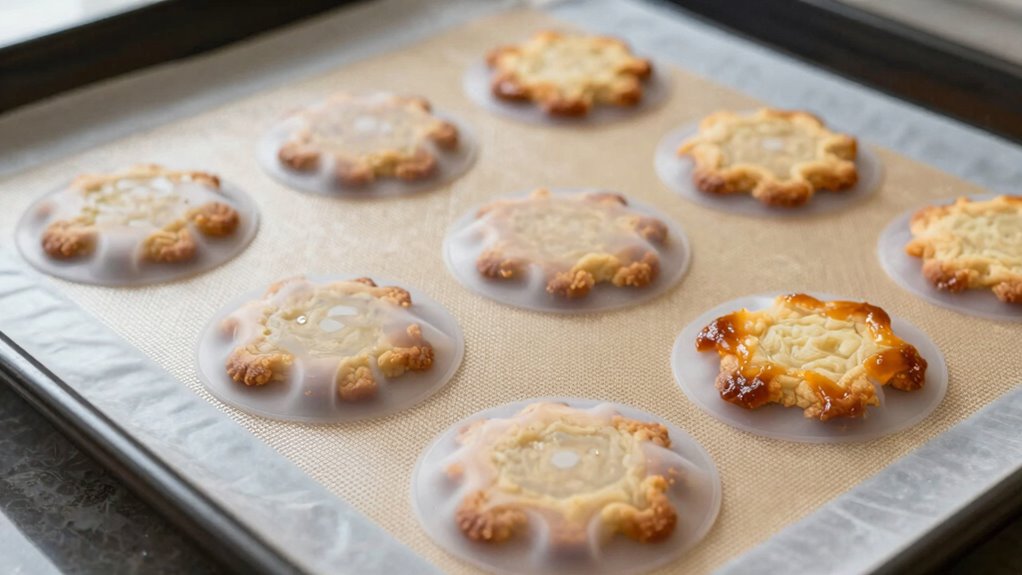
However, it’s important to understand how these mats might slightly change your baking results. Silicone baking mats tend to reflect heat differently than traditional baking sheets, which can influence browning. You might see a little less crispness or a slightly lighter color on your cookies or pastries. This isn’t necessarily a flaw; it’s simply a different effect caused by how the mats distribute heat. If you’re used to a certain level of browning, you may need to adjust your baking time or temperature slightly when switching to silicone mats. For example, lowering the oven temperature by a few degrees can help you achieve the same level of caramelization and browning you’re accustomed to. Additionally, understanding the heat reflection properties of silicone mats can help you better predict and control your baking outcomes. Recognizing the thermal properties of silicone is crucial for achieving consistent results across different recipes.
Despite this minor change in browning, many bakers appreciate how silicone mats promote even baking. The heat distribution they offer means you don’t have to turn your trays mid-bake or worry about hot spots. This evenness results in more consistent cookies, pastries, and roasted vegetables. Plus, because the mats prevent sticking, you don’t need extra oils or sprays, which can also influence browning and crispness. This natural non-stick property makes cleanup straightforward—you just peel off the baked goods and rinse the mat, leaving your baking sheets spotless. Furthermore, the heat reflection qualities of silicone mats and their impact on baking performance can help bakers optimize their recipes and achieve better outcomes.
Using silicone baking mats also saves you money in the long run. You won’t need to keep buying parchment paper, and you’ll reduce waste significantly. Their durability means you can use them hundreds of times without losing their non-stick quality. Keep in mind, though, that because they reflect heat differently, some recipes might require minor adjustments. Once you get used to their heat distribution and how they affect browning, you’ll find them a valuable addition to your kitchen tools.
In the end, silicone baking mats offer a cleaner, more economical, and more consistent baking experience. Just be prepared for a slight change in how your baked goods brown, and you’ll be able to enjoy the many benefits these mats bring to your baking process.
silicone baking mats for cookies
As an affiliate, we earn on qualifying purchases.
As an affiliate, we earn on qualifying purchases.
Frequently Asked Questions
Are Silicone Baking Mats Safe for High-Temperature Baking?
Yes, silicone baking mats are safe for high-temperature baking because they have excellent heat resistance, usually up to 480°F (250°C). You should confirm they meet safety standards, especially regarding chemical safety, to avoid any harmful chemicals leaching into your food. As long as you use mats designed for oven use and follow manufacturer instructions, they’re a reliable, non-stick, heat-resistant option for baking at high temperatures.
Can Silicone Mats Be Used on Outdoor Grills?
Sure, silicone mats can serve on outdoor grills, but proceed with caution. When considering grill safety, guarantee your silicone mat is heat-resistant and designed for high temperatures. While they make outdoor cooking cleaner and more convenient, they might not withstand the intense heat of a grill. Use them carefully to prevent melting or mishaps, and always follow manufacturer instructions. This way, you enjoy outdoor cooking safely and smoothly.
How Long Do Silicone Baking Mats Typically Last?
You can expect your silicone baking mats to last about 2 to 5 years, depending on how often you use them and how well you care for them. Their durability lifespan hinges on material longevity, so avoid cutting on them or exposing them to sharp objects. Regular cleaning and proper storage help extend their lifespan, ensuring you get the most out of your investment in these versatile mats.
Are Silicone Mats Environmentally Friendly and Recyclable?
Like a modern-day Pandora’s box, silicone mats offer convenience but raise questions about their environmental impact. They’re not widely recyclable through standard processes, making them less eco-friendly than natural alternatives. While durable, their recycling process is complex and often inaccessible. If you’re eco-conscious, consider their longevity versus disposal. Ultimately, silicone mats are reusable, but their environmental footprint depends on proper disposal and alternative options you choose.
Do Silicone Mats Require Special Storage to Prevent Damage?
You don’t need special storage for silicone mats, but you should handle them with care to maintain their durability. Storing them flat or rolled in a cool, dry place offers the most storage flexibility and prevents warping or damage. Avoid sharp objects or high heat exposure, as these can compromise their integrity. Proper storage guarantees your silicone mats stay in good shape, ready for many uses without sacrificing their performance.
Conclusion
Using silicone baking mats makes cleanup a breeze and helps you avoid the nightmare of stubborn, stuck-on messes. While they might cause a slight shift in browning—like turning your perfectly golden cookies into a subtle, less-crispy masterpiece—they’re still a game-changer in the kitchen. Embrace these mats, and you’ll save hours of scrubbing, turning your baking routine into a swift, effortless dance. Trust me, your future self will thank you for this small upgrade!
Halloween Picks
halloween
As an affiliate, we earn on qualifying purchases.