
To achieve a better pan sauce finish with butter, add it off the heat or at low heat for smooth emulsification. Gently melt the butter into the pan drippings, stirring carefully to prevent separation and create a glossy, velvety texture. Incorporate butter after deglazing or removing proteins, and keep the heat low during this step. This technique enhances flavor and gives your sauce a polished, professional look—continue below for even more tips and tricks.

Get kitchen staples and gadgets delivered free with Prime
- Fast, free delivery on millions of items
- Prime Video, Amazon Music and more included
- Member-only deals all year
Key Takeaways
- Add butter off the heat or on low heat for smooth emulsification and a glossy finish.
- Incorporate butter after deglazing or removing protein to prevent separation.
- Gently whisk or swirl butter into the sauce to emulsify and create a velvety texture.
- Use small amounts of butter to enhance flavor without overpowering the sauce.
- Finish the sauce with a pat of butter for richness, shine, and improved flavor.
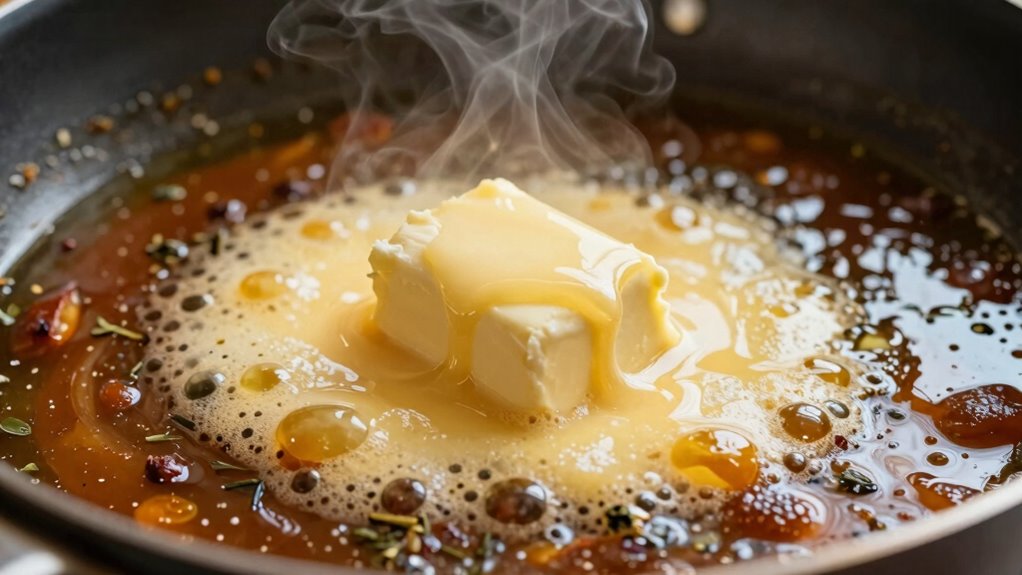
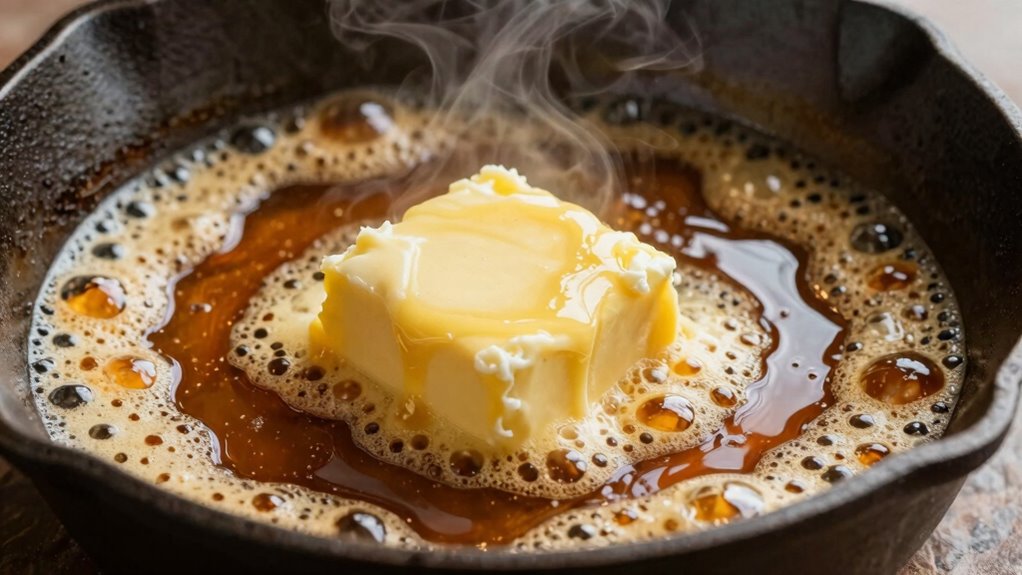
Adding butter at the right moment can transform a simple pan sauce into something truly luxurious. When you finish cooking your protein—be it chicken, steak, or fish—melting butter into the pan is a classic way to elevate the flavor and texture of your sauce. As you do this, you’ll notice how butter creates a rich, velvety consistency that clings beautifully to the meat and enhances every bite. To get the best results, add the butter off the heat or at low heat, allowing it to melt gently and emulsify with the pan drippings, creating a glossy, cohesive sauce. Understanding emulsification is key to achieving that perfect glossy finish. Proper technique ensures the butter blends smoothly without separating, resulting in a more refined sauce. Emulsification is a fundamental concept in sauce making, which helps achieve that desirable silky texture and appearance.
Add butter off the heat to create rich, glossy pan sauces that cling beautifully and elevate every bite.
Vegetable pairings play a big role in how you use butter. If you’re adding vegetables to your dish, consider tossing them in the pan after your protein is cooked, allowing them to soak up the flavorful fat. For instance, sautéed shallots, garlic, or mushrooms benefit from a final pat of butter, which rounds out their flavors and adds a silky finish. The butter also helps bind the flavors of the vegetables with the pan juices, resulting in a more cohesive sauce. Keep in mind that butter works well with a variety of vegetables, from greens like spinach and kale to root vegetables like carrots and parsnips. Adding a small knob of butter at the end of cooking can give these vegetables a shiny, appetizing appearance and a richer taste. This step is especially effective when you want to maximize flavor and create a more polished presentation.
As an affiliate, we earn on qualifying purchases.
Frequently Asked Questions
Can I Substitute Margarine for Butter in Pan Sauces?
Yes, you can substitute margarine for butter in pan sauces. Keep in mind, margarine’s flavor is usually less rich and can be slightly artificial, which may affect your sauce’s taste. Also, margarine has a softer butter consistency, so it melts quickly and might alter the texture slightly. Use unsalted margarine if possible, and adjust seasonings to balance any flavor differences for a better finish.
How Does Butter Affect the Flavor of the Sauce?
Butter whispers flavor enhancement, adding a rich, velvety layer that transforms your sauce from simple to sublime. It melds ingredients, smoothing textures and creating a luscious finish. As it melts, butter releases nutty, caramel notes, elevating every bite. Your sauce gains depth and warmth, making each dish feel more indulgent. In short, butter’s influence is like a gentle hug, bringing out the best in your sauce’s flavor and texture.
Is It Better to Add Butter at the End or During Cooking?
It’s best to add butter at the end of cooking for ideal flavor enhancement. This cooking technique allows the butter to melt gently, enriching the sauce without losing its delicate flavors. Adding it during cooking can cause it to break down or burn, diminishing its effect. By finishing with butter, you preserve its creamy texture and subtle richness, creating a glossy, flavorful pan sauce that elevates your dish.
What Type of Butter Is Best for Finishing Sauces?
For finishing sauces, you want to use unsalted butter with a high butter melting point and good stability. European-style butters, like those from France, often have higher fat content and better stability, which melts smoothly without breaking down. This guarantees a silky, rich finish. Keep the heat moderate to prevent the butter from overheating and separating, preserving its flavor and creating that perfect, glossy sauce.
Can I Reuse Leftover Butter From Previous Sauces?
Think of leftover butter as a treasure chest, but one you must open carefully. You can reuse it, especially if you’ve preserved its spread and flavor enhancement qualities. Just melt it gently and check for any off smells or discoloration. Reusing butter adds depth to your sauces, but be mindful — overused or spoiled butter can turn your culinary gold into a tarnished relic. Use your judgment to keep flavor shining.
Conclusion
Remember, a little butter goes a long way in elevating your pan sauces. As the saying goes, “A spoonful of sugar helps the medicine go down,” but in cooking, a pat of butter can make your dish truly shine. Keep experimenting with it—trust me, your taste buds will thank you. With patience and practice, you’ll master that perfect, glossy finish every time. Happy cooking!
NFL season / tailgating Picks
team gear
As an affiliate, we earn on qualifying purchases.