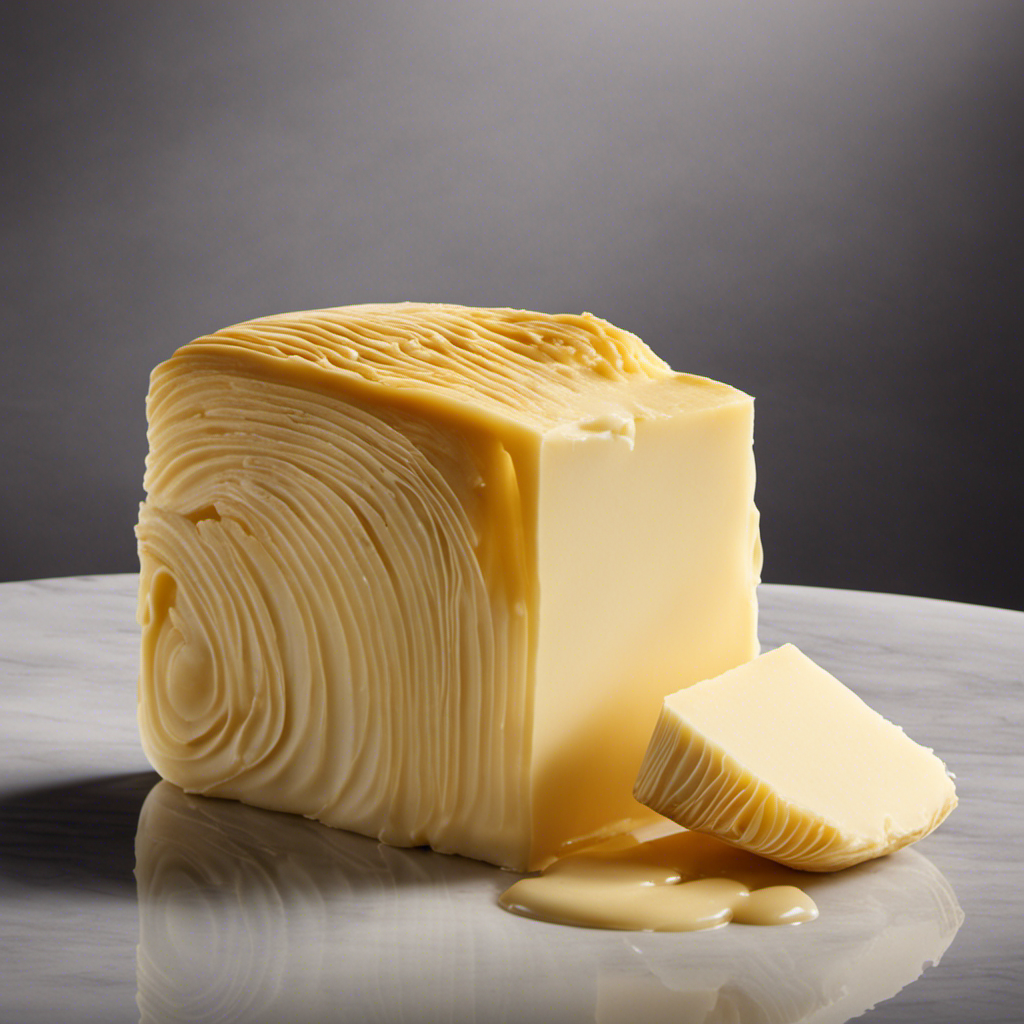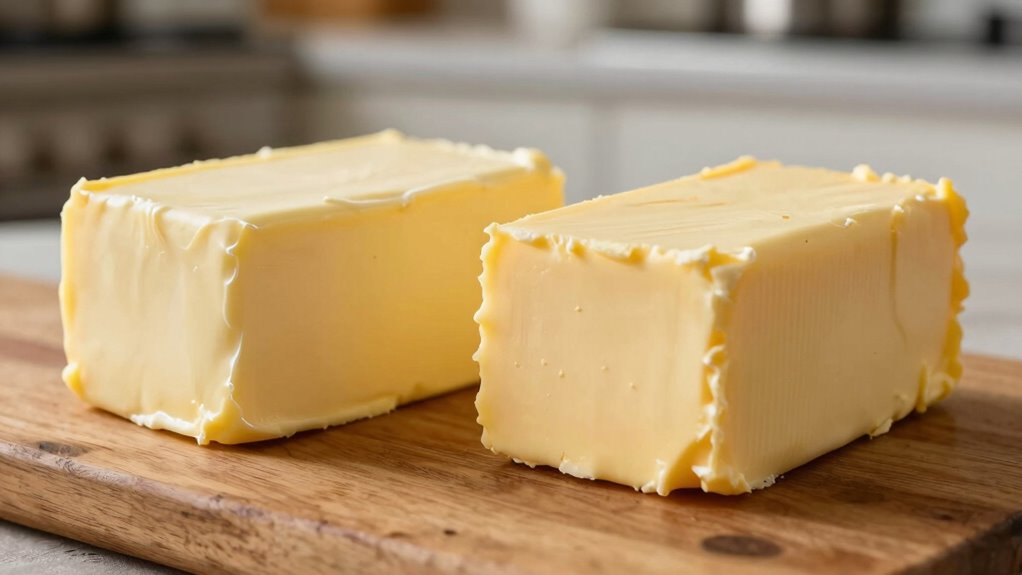
You’ll notice that table butter and baking butter differ mainly in fat and moisture content. Table butter is versatile for spreading and cooking, thanks to its higher moisture, while baking butter has a richer fat profile for creating tender, flaky baked goods. These differences influence texture and flavor in your recipes. If you want to understand how these variations impact your dishes, keep exploring to uncover more about their uses and benefits.

Get kitchen staples and gadgets delivered free with Prime
- Fast, free delivery on millions of items
- Prime Video, Amazon Music and more included
- Member-only deals all year
Key Takeaways
- Baking butter has a higher fat content, enhancing flaky and tender textures in baked goods.
- Table butter contains more moisture, making it ideal for spreading and general cooking.
- Both types should be stored airtight, but baking butter may be better suited for long-term freezing.
- Healthy alternatives like plant-based butters differ in composition and storage needs.
- Choosing the right butter type impacts the texture and quality of baked versus everyday dishes.

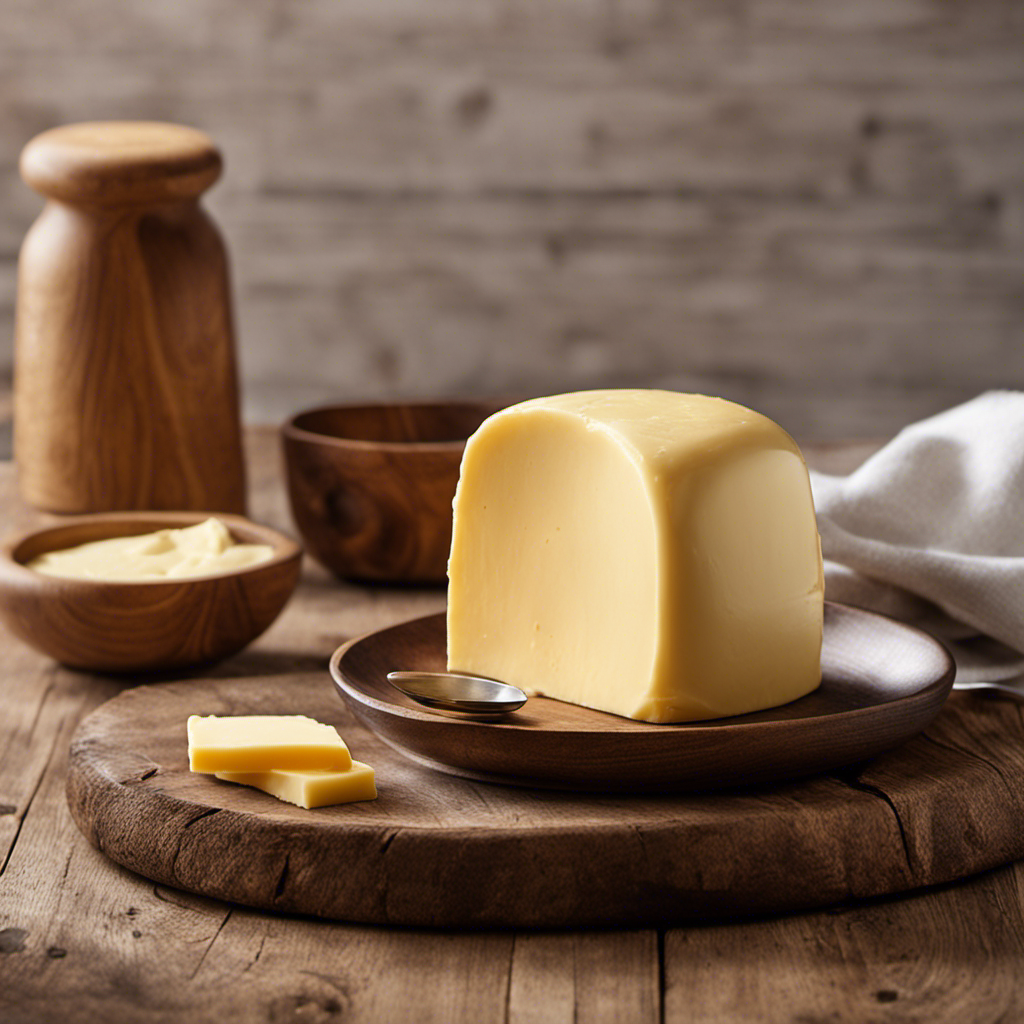
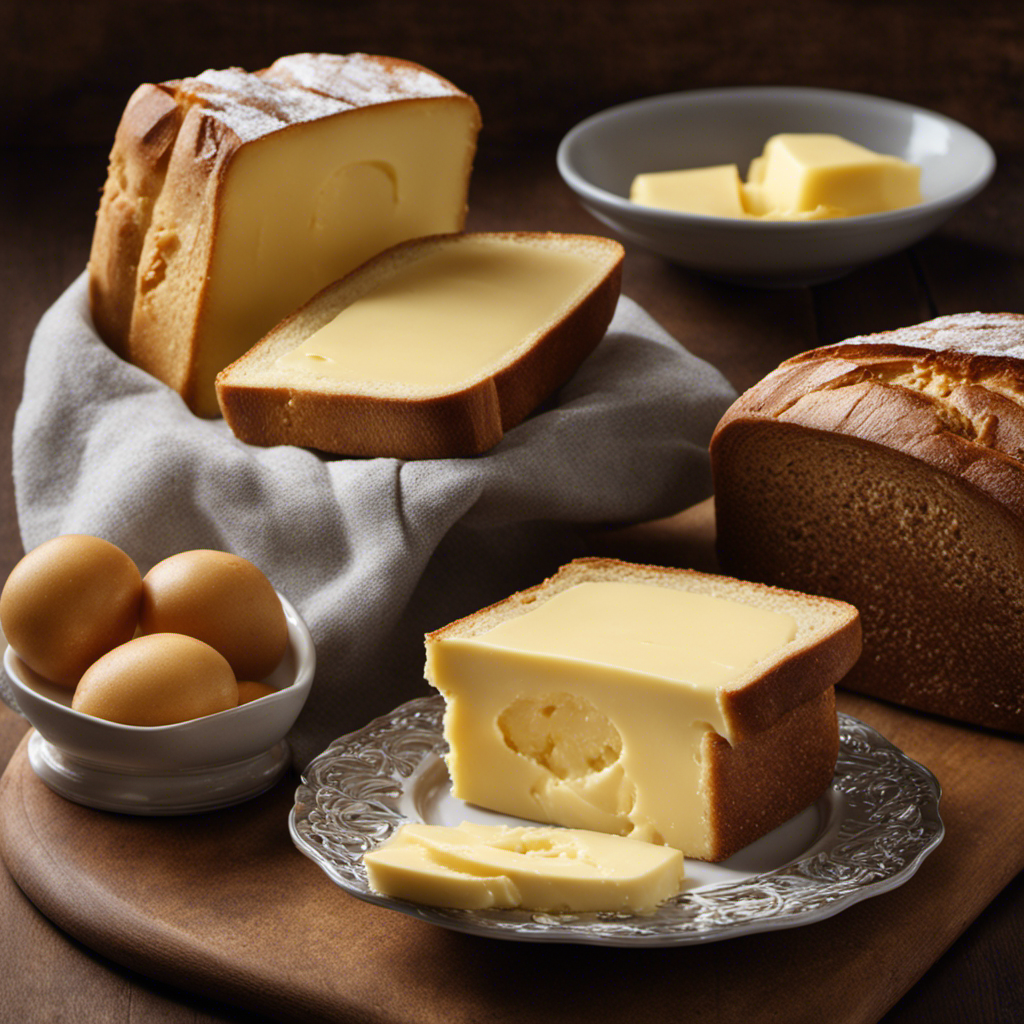
When it comes to baking and cooking, choosing the right type of butter can make a significant difference in your results. You might wonder whether you should stick with table butter or opt for baking butter. Both serve similar purposes but are crafted differently to suit specific needs. Table butter, commonly sold in sticks or blocks, is designed for general use—spreading on bread, cooking, or finishing dishes. Baking butter, on the other hand, is often formulated with a higher fat content and fewer water content, making it ideal for pastries, cookies, and other baked goods where precise texture matters.
One key difference is the fat composition. Baking butter tends to have a richer fat profile, which can lend a tender, flaky quality to baked goods. This is particularly noticeable in pastries like croissants or pie crusts, where the fat’s quality influences the final texture. Table butter, with its slightly higher moisture content, works well for spreading and general cooking but might not deliver the same flaky or tender results in delicate baked items. If you’re concerned about health, you might explore healthy alternatives like plant-based butters or spreads made from avocado or olive oil. These can sometimes offer similar flavor profiles with added nutritional benefits, making them a smart choice for those watching their fat intake.
Baking butter’s richer fat creates tender, flaky pastries, unlike table butter’s moisture-focused texture ideal for spreading.
Storage techniques are an essential aspect when choosing and maintaining your butter. Both table and baking butter should be kept in airtight containers or wrapped tightly to prevent oxidation and absorption of other fridge odors. Proper storage not only preserves flavor but also maintains freshness, especially if you buy in bulk. For longer-term storage, you can freeze butter—just ensure it’s well wrapped to avoid freezer burn. When considering healthy alternatives, pay attention to their storage needs as well, since some plant-based butters may have different shelf lives. Additionally, understanding biodiversity and sustainable practices can influence your choices of ingredients and packaging, supporting environmentally friendly options.
The differences between table butter and baking butter aren’t just technical; they influence your cooking results and health considerations. If your goal is to achieve specific textures in baked goods, investing in baking butter might be worthwhile. However, for everyday use and spreading, table butter is perfectly fine. No matter which you choose, proper storage techniques will keep your butter fresh and tasty. If you’re looking to cut calories or add nutrients, exploring healthy alternatives can be an excellent option, but always ensure they’re stored correctly to maximize shelf life. Ultimately, understanding the distinctions helps you select the right butter for each culinary purpose, elevating your cooking and baking outcomes.
As an affiliate, we earn on qualifying purchases.
Frequently Asked Questions
Can Baking Butter Be Used as a Spread?
Yes, you can use baking butter as a spread, but keep in mind the flavor variations and packaging differences. Baking butter often has a higher fat content and may lack added salt or flavorings found in table butter, which can affect taste. It’s usually sold in larger, bulk packaging designed for baking, so if you want a milder, salted option for spreading, choose a product labeled as table butter.
How Does Salt Content Differ Between Table and Baking Butter?
You’ll find that salt content differs between table butter and baking butter, affecting their flavor profiles. Table butter usually contains added salt, enhancing taste and preservation, while baking butter often has little to no salt, giving you a neutral flavor. This difference allows you to control seasoning better in recipes. So, if you prefer a less salty flavor or need precise seasoning, choose unsalted baking butter for baking, and salted for spreading.
Is Baking Butter More Cost-Effective Than Table Butter?
They say “you get what you pay for,” but baking butter can be more cost-effective if you’re baking in bulk or need a higher melting point. While its flavor profile might be milder, it’s designed for stability at high temperatures, making it ideal for baking. If you don’t mind a different taste, baking butter can save you money, especially when used in large quantities.
What Is the Shelf Life of Baking Butter?
Baking butter typically lasts about 6 months when stored properly, but its shelf life depends on storage techniques. To maximize freshness, keep it in an airtight container in the refrigerator, away from direct light and heat. Proper storage not only preserves its flavor enhancement qualities but also prevents spoilage. If you notice any sour smell or discoloration, it’s best to discard it. Regularly check your butter to guarantee ideal baking results.
Are There Health Differences Between the Two Butters?
You’ll find that the health differences between table butter and baking butter are minimal, but their nutritional comparisons matter. Both contain saturated fats and calories, impacting your heart health if consumed excessively. Baking butter, often processed for higher heat stability, might have added preservatives or lower moisture, but it generally offers the same nutritional profile. Consider your dietary needs and health implications to choose the best option for your cooking and wellness goals.
Conclusion
So, next time you reach for butter, think about what you’re baking. You might be surprised how a simple switch between table and baking butter can subtly change your results. It’s almost like fate nudging you to experiment—maybe that perfect cake needs just a bit of baking butter, or a spread for your toast calls for table butter. Sometimes, the smallest choice makes all the difference—you just have to notice it.
Halloween Picks
halloween
As an affiliate, we earn on qualifying purchases.