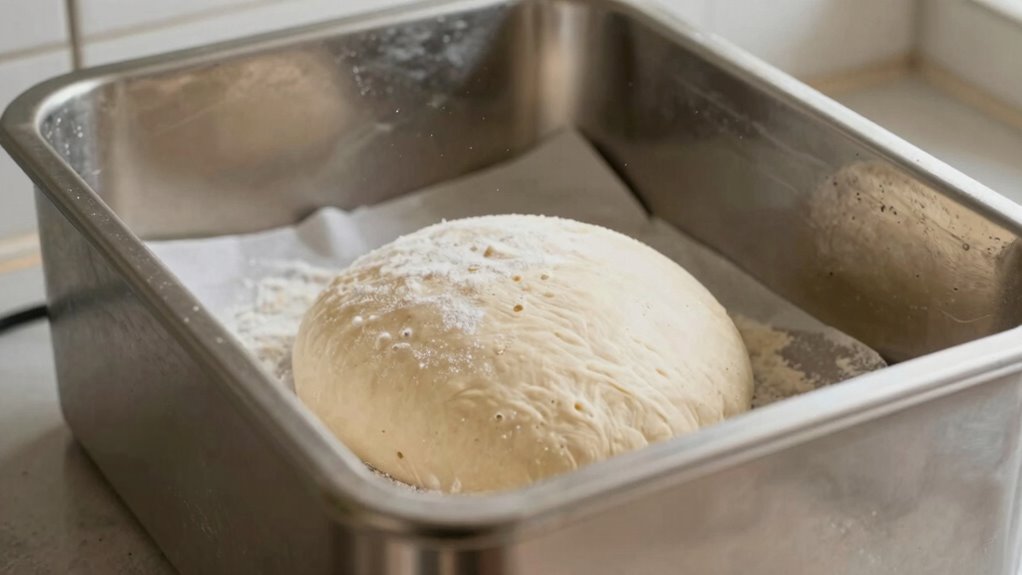
Using a proofing box helps you maintain a consistent fermentation environment, which improves dough rise and flavor. However, if you ignore timing, your bread can over- or under-proof, leading to poor structure or dense texture. Temperature controls speed up fermentation, but without proper timing, even the best environment can’t save your loaf. Paying attention to both environment and timing is key to perfect bread—stay with us to learn how to master both.
Key Takeaways
- Proofing boxes ensure consistent temperature but require careful timing adjustments to prevent over- or under-proofing.
- Ignoring timing can lead to poor bread structure despite optimal environmental conditions in the proofing box.
- Properly monitoring dough rise and developing a feel for the process is crucial alongside using a proofing box.
- Environmental factors like humidity and airflow influence fermentation speed, impacting timing needs.
- Balancing temperature control with attentive timing management is essential for achieving high-quality, reliable bread results.
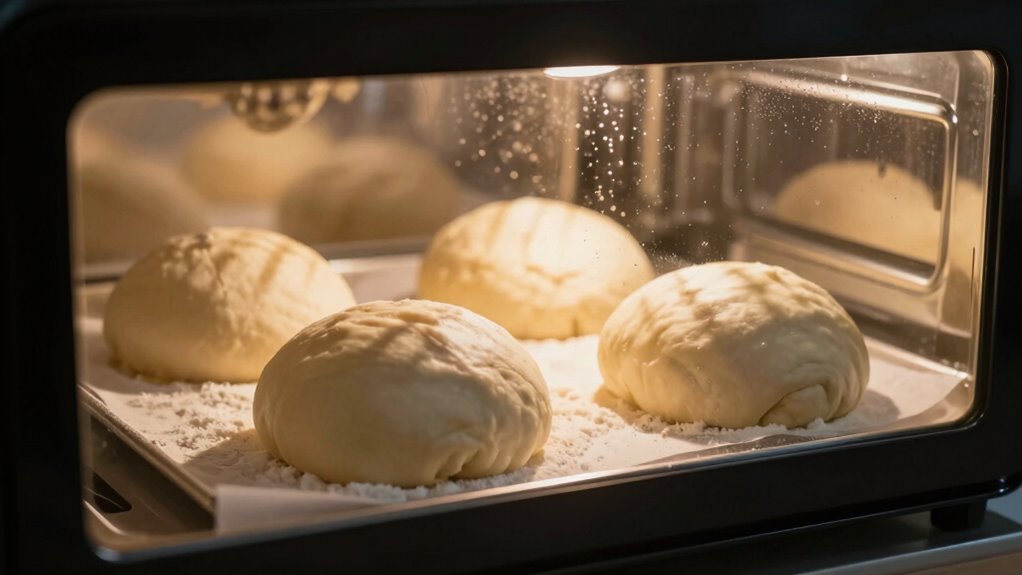
If you’re serious about baking perfect bread, using a proofing box can make all the difference. It helps you maintain ideal fermentation conditions, giving your dough the right environment to rise evenly and develop flavor. The key benefit of a proofing box is its ability to control fermentation, which directly influences the dough temperature—a vital factor for good bread. When you keep the dough at a steady, perfect temperature, typically around 75 to 85°F, fermentation progresses predictably, and you get consistent results. Without a proofing box, you’re left to guess or rely on ambient room temperature, which can vary wildly and lead to uneven rising or underdeveloped gluten structure.
However, while a proofing box offers excellent fermentation control, ignoring timing can cause problems. If you don’t monitor the dough closely, you might leave it in the box too long. Even with perfect dough temperature, over-proofing can occur if you’re not attentive. Over-proofed dough becomes overly airy and fragile, causing it to collapse during baking. Conversely, under-proofed dough won’t rise enough, resulting in dense bread with insufficient volume. The timing of proofing is just as critical as maintaining the right temperature, and neglecting this balance can sabotage your efforts, no matter how good your proofing environment is.
Using a proofing box effectively means understanding when to stop the fermentation process. Many bakers rely on visual cues—dough that has roughly doubled in size and shows a slight spring-back when gently pressed—but this isn’t foolproof. Temperature accelerates fermentation, so at higher dough temperatures, proofing times are shorter. If you ignore this and stick to a standard timing, you risk over- or under-proofing. That’s why it’s essential to develop a feel for your dough, monitor its rise, and adjust timing accordingly. This way, you can create the perfect balance between fermentation control and timing, avoiding the common pitfalls of neglecting either aspect. Additionally, understanding fermentation speed and how it varies with temperature can help you fine-tune your process for consistent results. Recognizing proofing environment variables such as humidity and airflow can also influence how your dough ferments and should be factored into your timing decisions.
In particular, being aware of ambient conditions and how they interact with your proofing environment can help you make better adjustments and avoid surprises. It’s also helpful to keep notes on your process, so you can refine your timing based on past experiences and environmental variations. In the end, a proofing box is a valuable tool, but it’s not a magic fix. It gives you the environment to manage dough temperature and fermentation, but you still need to pay attention to timing to get your bread just right. Ignoring this can lead to inconsistent results, regardless of how well you control fermentation. The key lies in understanding how fermentation speed changes with temperature and being attentive to your dough’s progress. When you master both, your bread will rise beautifully, with a perfect crumb and flavor that makes all the effort worthwhile.
bread proofing box with temperature control
As an affiliate, we earn on qualifying purchases.
As an affiliate, we earn on qualifying purchases.
Frequently Asked Questions
How Do I Choose the Right Size Proofing Box?
To select the right size proofing box, consider your dough fermentation needs and the amount of yeast activity involved. A smaller box works well for individual loaves, while larger ones accommodate multiple or bigger loaves. Make certain there’s enough space for dough to rise without touching sides, allowing proper yeast activity. You want a box that balances snugness and room for expansion, optimizing yeast activity and ensuring perfect proofing every time.
Can I Use a Proofing Box for Other Baked Goods?
Yes, you can use a proofing box for other baked goods like cookies or croissants. Think of it as a mini fermentation chamber that helps dough fermentation stay consistent. Just adjust the temperature and humidity settings based on what you’re baking. This versatile tool supports various recipes, ensuring your dough rises perfectly every time, whether for bread, pastries, or other treats.
What Is the Ideal Temperature for Proofing Bread?
You should keep the proofing box at around 75°F (24°C) for ideal fermentation speed and yeast activity. This temperature balances rapid rising without over-proofing, helping your bread develop flavor and texture. If it’s too warm, yeast ferments too quickly, risking over-proofing. Too cold, and fermentation slows down. Maintaining this suitable temperature ensures your dough proofs evenly, resulting in perfect rise and better bread quality.
How Often Should I Clean My Proofing Box?
Think of your proofing box as a garden; it needs regular tending. Clean it weekly to prevent mold and bacteria. Keep it well-ventilated and adjust humidity control to avoid excess moisture. Place it on a stable shelf where air circulates freely, preventing buildup. Regular cleaning maintains a healthy environment for your bread to rise perfectly, just like a well-maintained garden yields the best blooms.
Does a Proofing Box Affect Bread Crust Quality?
Yes, a proofing box can affect your bread crust quality. It helps control humidity and temperature, which influences crust texture—making it crisper or softer depending on settings. If you use it correctly, your crust will develop evenly and improve overall bread quality. However, if you ignore timing or humidity levels, it might lead to a crust that’s too thick or too soft, impacting the final bread appearance and taste.
Conclusion
Using a bread proofing box can transform your baking, creating a warm, humid sanctuary where dough thrives and rises perfectly. But ignore the timing, and it’s like rushing a delicate flower—your bread may fall flat or overproof, losing that beautiful oven spring. Think of it as tending to a fire; patience fuels the perfect loaf. Master the timing, and your bread will blossom into golden, airy perfection—proof that patience truly bakes success.