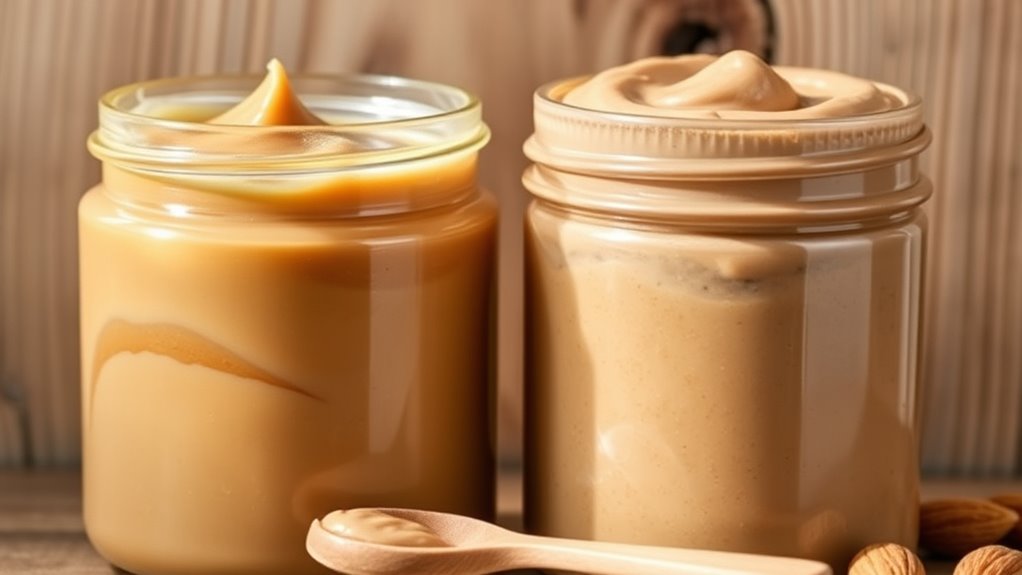

When storing peanut butter, you can keep it at room temperature for months without much worry about oil separation. In contrast, almond butter benefits from refrigeration to prevent oil from separating and to maintain its flavor and texture. Use airtight containers to minimize air exposure for both types. Regularly check for spoilage signs like changes in texture and aroma. Want to discover more tips on maximizing your nut butter experience? Stay tuned for more insights!
Key Takeaways
- Peanut butter is stable at room temperature for months, while almond butter benefits from refrigeration to prevent oil separation.
- Almond butter tends to have more oil separation compared to peanut butter, requiring occasional stirring to maintain consistency.
- Well-sealed peanut butter can last up to a year, while refrigerated almond butter is good for about six months.
- Both nut butters should be stored in airtight containers to minimize air exposure and prolong freshness.
- Regularly inspect both for spoilage signs like off-flavors or changes in texture and aroma.
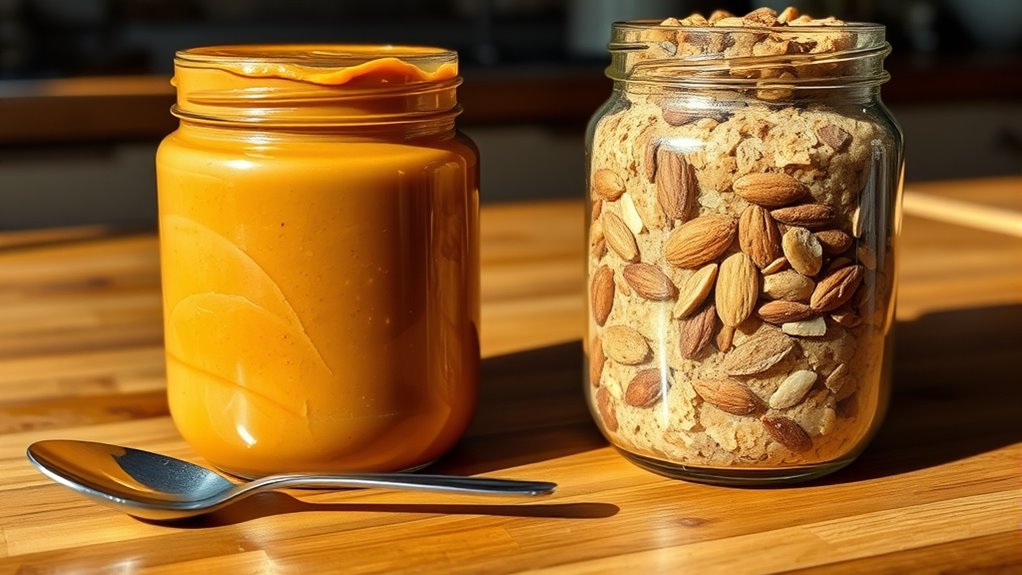
When you’re deciding how to store your nut butters, it’s essential to know that peanut butter and almond butter have different needs. Both types of nut butter can bring delicious flavor and nutrition to your meals, but they don’t necessarily store the same way. Understanding how to properly manage their storage can help maintain their freshness and prevent issues like nut oil separation, which can be frustrating.
Peanut butter generally has a thicker consistency and tends to be more stable at room temperature. This means you can safely keep it in a pantry for several months, as long as it’s sealed tightly. Just make sure you choose a storage container that minimizes air exposure. A glass jar with a tight lid or a BPA-free plastic container will work well. If you notice oil pooling on top, simply stir it back in, and you’re good to go.
On the other hand, almond butter is a bit more finicky. Its natural oils separate more easily, meaning you might see that nut oil separation more frequently. To keep almond butter fresh for longer, consider storing it in the refrigerator. While it may become a little firmer, this will help maintain its flavor and texture. Again, opt for a good-quality storage container, preferably glass, to prevent any off-flavors from permeating the nut butter.
When choosing between storage container options, think about how often you use each type of nut butter. If you’re a frequent almond butter user, you might want to keep a smaller container at room temperature and the bulk in the fridge. This way, you can easily access it without compromising the larger batch’s quality.
Remember that both nut butters can last quite a while if stored correctly. A well-sealed jar of peanut butter can last up to a year, while almond butter can be good for about six months, especially if kept in the fridge. Additionally, ensure that you regularly inspect the nut butters for any signs of spoilage or regular inspection of storage to maintain their quality.
Whether you choose to store them in the pantry or refrigerator, make sure you keep an eye on the texture and aroma. If something seems off, it might be time to toss it. By understanding their unique storage requirements, you can enjoy your peanut butter and almond butter at their best, enhancing your meals with rich flavors and essential nutrients.
Frequently Asked Questions
Can I Freeze Peanut Butter or Almond Butter?
Yes, you can freeze both peanut butter and almond butter! Freezing nut butters is a great way to extend their shelf life. Just scoop the nut butter into an airtight container, leaving some space for expansion, and pop it in the freezer. When you’re ready to use it, let it thaw in the fridge for a few hours. You’ll enjoy the same creamy texture and flavor after freezing nut butter as before.
What Are the Health Benefits of Almond Butter Over Peanut Butter?
Almond butter offers several health benefits over peanut butter, primarily due to its nutrient differences. It’s higher in vitamin E, magnesium, and calcium, which support heart health and bone strength. If you’re allergic to peanuts, almond butter‘s a great alternative. Additionally, it contains healthy fats that can help manage cholesterol levels. So, if you’re looking for a nutritious spread, almond butter might just be the better choice for your dietary needs.
How Long Does Homemade Nut Butter Last?
Homemade nut butter typically lasts about one to two weeks in the fridge, but you can extend its shelf life with proper nut butter preservation techniques. Store it in an airtight container to keep it fresh. If you want it to last longer, consider freezing it; frozen nut butter can last up to six months. Just remember, always check for any off smells or flavors before using it!
Is Almond Butter More Expensive Than Peanut Butter?
Yes, almond butter is generally more expensive than peanut butter. This price difference often comes down to ingredient cost; almonds tend to be pricier to grow and harvest compared to peanuts. While you might find a budget-friendly peanut butter option in stores, almond butter frequently carries a premium price tag. When you consider the price comparison, it’s clear that your choice reflects not just taste, but also your budget.
Can Nut Butter Be Used in Baking Recipes?
Absolutely, you can use nut butter in baking recipes! Nut butters like peanut or almond can add richness and flavor to cookies, brownies, and even pancakes. If you’re looking for nut butter substitutes, options like sunflower seed butter work well too. When baking with nuts, just remember that the consistency might change slightly, so adjust your liquids accordingly. Enjoy experimenting with different nut butters to create delicious treats!
Conclusion
In the end, whether you choose to store peanut butter or almond butter, it’s all about keeping your nutty treasure fresh and delicious. Think of it like saving your favorite childhood toy; you wouldn’t leave it out in the rain. Just as you’d tuck that toy safely away, protect your butters from heat and moisture to preserve their goodness. So, find a cool, dark spot in your pantry, and let your nutty delights thrive!