Choosing between stone and steel grain mills comes down to your flour preferences and baking needs. Stone mills produce coarser, rustic flour with richer flavor and better nutrient preservation, thanks to gentler grinding and less heat. Steel mills offer faster, finer, and more consistent flour, but may generate more heat, affecting nutrients and flavor. To get a clearer picture of these differences and find the best fit, keep exploring the details below.
Key Takeaways
- Stone mills produce coarser, rustic flour with richer flavor, while steel mills generate finer, smoother flour for delicate baked goods.
- Stone mills generate less heat, preserving nutrients and enzymes, unlike steel mills which can cause nutrient degradation due to higher heat.
- Steel mills are faster, more durable, and require less maintenance, whereas stone mills are quieter but need regular dressing or replacement of grinding surfaces.
- The design and construction of a mill influence flour evenness and texture, affecting overall flour quality regardless of material.
- For flavor preservation and nutrient retention, stone mills are preferable; steel mills excel in efficiency and minimal upkeep.
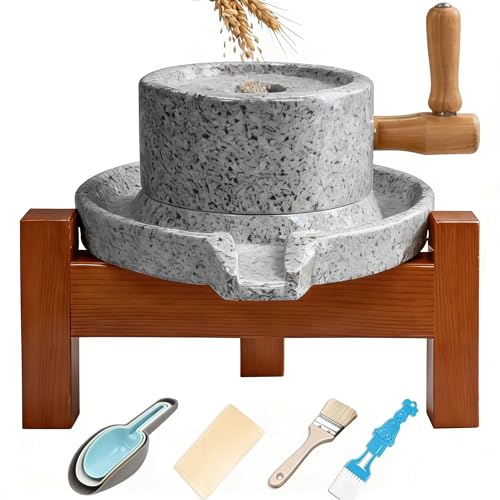
Handmade Stone Grain Mill – Manual Flour Mill & Grinder with Red Oak Frame for Home, Grinds Wheat, Nuts, Spices (Complete Kit)
HOUSEHOLD STONE MILL – Experience true slow grinding with our handmade stone mill. The polished red oak frame…
As an affiliate, we earn on qualifying purchases.
As an affiliate, we earn on qualifying purchases.
Stone vs. Steel Grain Mills: What’s the Difference?
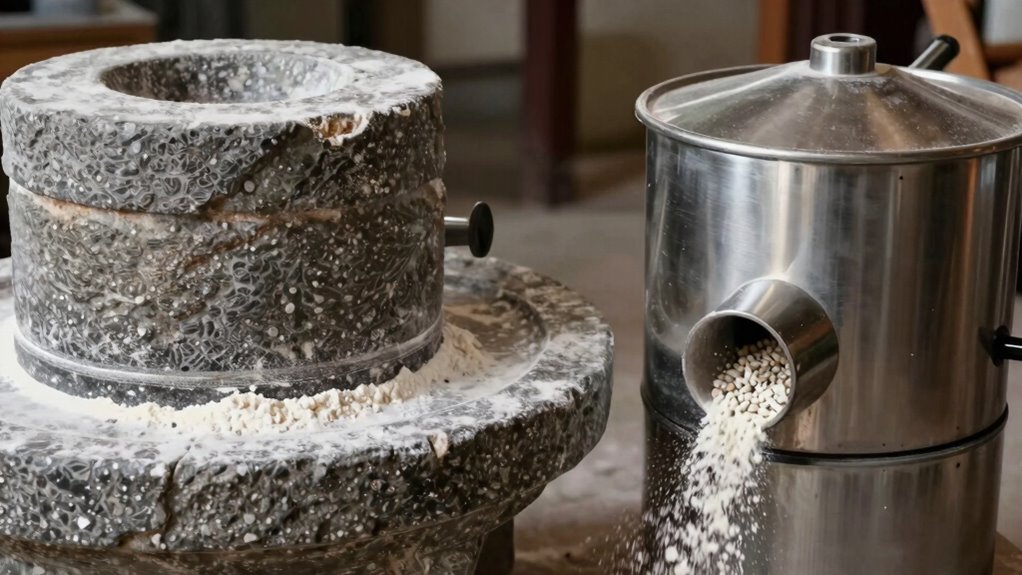
When choosing between stone and steel grain mills, understanding their key differences can help you make an informed decision. Stone mills typically produce a richer grain flavor because the grinding process generates heat slowly, preserving the grain’s natural oils and taste. They also tend to be quieter during operation, creating a more peaceful milling experience. Steel mills, on the other hand, are faster and more efficient, but they often produce a slightly different grain flavor, sometimes less nuanced due to the higher speed and heat generated. Additionally, steel mills tend to be noisier, which might be a consideration if you prefer a quieter kitchen environment. Knowing how these factors influence your milling experience can guide you toward the right choice for your baking needs. Furthermore, understanding milling techniques can help you optimize your flour quality and achieve better baking results. Incorporating proper maintenance practices can also extend the lifespan of your chosen mill and ensure consistent performance. Being aware of grain preservation methods can further enhance the flavor and nutritional value of your freshly milled flour, especially when combined with storage techniques that prevent spoilage and preserve freshness. Additionally, considering the long-term cost of each mill type can help you choose an option that fits your budget and usage frequency.

Kitchen Crop Grain Mill Wheat Flour Grinder, Stainless Steel Metal Burrs (Deluxe Grain Mill)
MULTI-GRAIN CAPABILITY: Equipped with durable stainless steel grinding burrs, it easily grinds wheat, rice, oats, barley, rye, peppercorns,…
As an affiliate, we earn on qualifying purchases.
As an affiliate, we earn on qualifying purchases.
How Do Design and Construction Affect Performance?
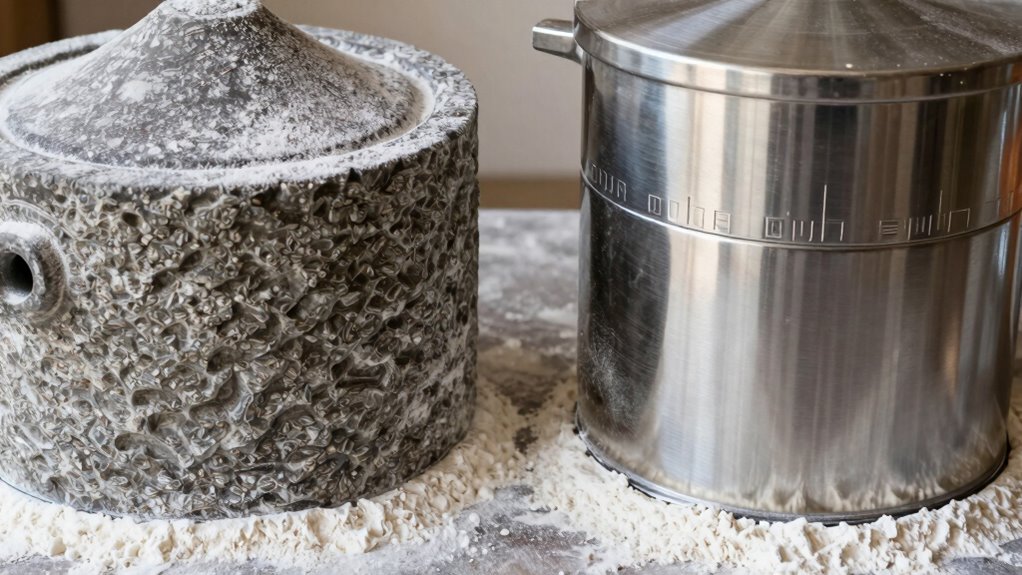
The design and construction of a grain mill directly impact its efficiency, durability, and consistency. A well-built mill ensures smooth milling speed, reducing processing time and effort. Consider these factors:
- The shape and size of grinding surfaces, which influence how evenly your flour is ground.
- The motor and gear setup, affecting milling speed and noise levels during operation.
- The materials used in construction, determining durability and how well the mill withstands regular use.
- Proper maintenance and cleaning practices are essential to keep the mill functioning optimally and prolong its lifespan.
- The construction quality plays a crucial role in minimizing vibrations and noise, making your milling quieter and more efficient. The right design helps maintain consistent flour texture, whether stone or steel, by controlling how the grains are crushed. Material selection also impacts the overall performance and longevity of your mill. Quality construction also impacts the performance stability, ensuring your mill operates reliably over time. Additionally, engineering precision contributes to the mill’s ability to produce uniform flour and reduces the likelihood of breakdowns. Ultimately, quality construction enhances performance, giving you reliable, high-quality flour every time.
Handmade Stone Grain Mill – Manual Flour Mill & Grinder with Red Oak Frame for Home, Grinds Wheat, Nuts, Spices (Complete Kit)
HOUSEHOLD STONE MILL – Experience true slow grinding with our handmade stone mill. The polished red oak frame…
As an affiliate, we earn on qualifying purchases.
As an affiliate, we earn on qualifying purchases.
How Do Materials Influence Flour Texture and Quality?
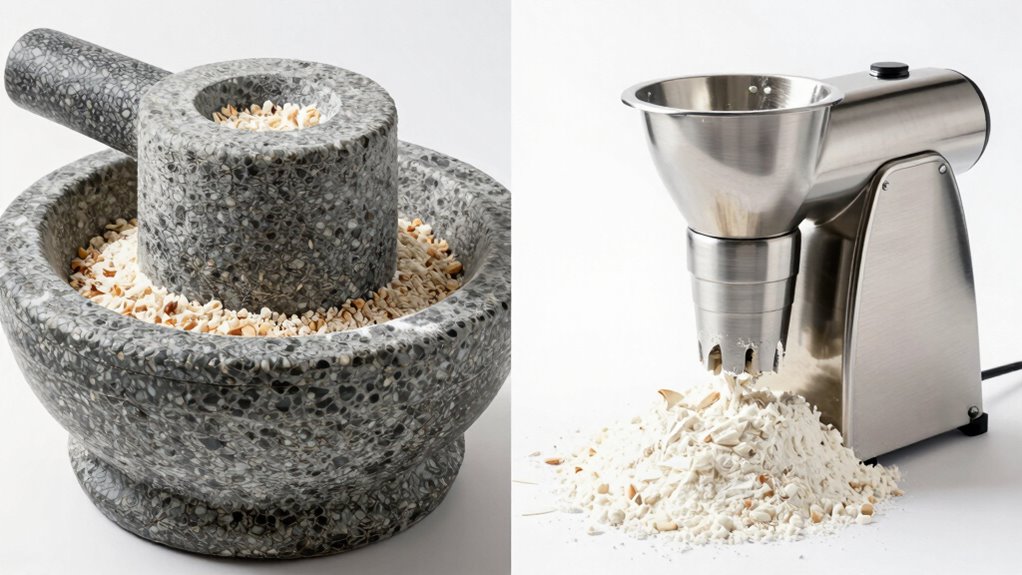
The materials of your mill directly affect the size of the grain particles and how evenly they’re ground, shaping the flour’s texture. They also influence heat generation during milling, which can impact nutrient preservation and flavor. Understanding these factors helps you choose the right mill to produce high-quality, nutritious flour.
Grain Particle Size
Grain particle size plays a crucial role in determining flour texture and overall quality, as smaller particles create a finer, more consistent flour, while larger particles result in a coarser product. When your mill produces uniform grain size, the flour feels smooth and behaves predictably in recipes. Imagine:
- Fine flour resembling powder, perfect for delicate baked goods.
- Slightly coarser flour with tiny granules, offering more bite and texture.
- Uneven particles causing inconsistent baking results and rough textures.
Material choice impacts this because stone mills tend to produce more particle uniformity with a consistent grind, while steel mills can vary, affecting the final grain size. Your goal is to achieve a uniform particle size for ideal flour quality and texture. Additionally, the type of mill material influences the grain particle size consistency, with stone mills often providing a more uniform grind compared to steel mills. The grain size distribution is also affected by the milling process, which impacts baking performance and sensory qualities. A grain refinement process further enhances the uniformity and quality of the flour produced. Moreover, the mechanical properties of the milling materials can influence the durability and efficiency of the grinding process, ultimately affecting flour texture. The consistency of the grind can also be influenced by the maintenance and calibration of the mill, ensuring optimal performance over time.
Heat Generation Impact
Materials in grain mills influence how much heat is generated during grinding, which can directly affect flour quality. Thermal effects from friction vary depending on whether you’re using stone or steel. Stone mills tend to generate less heat, preserving the flour’s natural qualities, while steel mills may produce more heat due to higher energy efficiency. Excess heat can cause starch damage and alter the flour’s texture, making it less ideal for certain baked goods. By choosing a mill material that minimizes heat, you guarantee better preservation of flavor, nutrients, and overall flour integrity. Additionally, understanding the thermal properties of different materials helps you select the right mill for your needs, especially if you prioritize maintaining ideal flour quality during grinding. Recognizing how material composition affects heat production can further optimize the milling process and outcomes. Considering the heat dissipation capabilities of various materials can also influence the longevity and performance of the mill components. Moreover, the heat generation characteristics are crucial for maintaining the desired flour texture and avoiding nutrient loss during milling.
Nutrient Preservation Effects
Choosing the right mill material directly impacts how well nutrients and natural flavors are preserved in your flour. Stone mills tend to retain more nutrients because they generate less heat, helping preserve the grain germination qualities and natural oils. Steel mills, on the other hand, can produce more heat, which may degrade delicate nutrients. Consider these factors:
- Grain germination: Stone mills preserve germination enzymes, boosting nutrient retention.
- Moisture effects: Moisture levels influence nutrient stability; stone mills handle moisture better, preventing nutrient loss.
- Material interaction: Stone’s natural composition minimizes nutrient extraction, unlike steel, which may cause nutrient leaching.
- Heat generation: The amount of heat produced during milling influences nutrient preservation, with stone mills typically generating less heat and thus better maintaining nutritional content. Additionally, understanding heat impact on nutrients helps in selecting the appropriate milling equipment.
- Processing speed: Steel mills often operate faster, which can impact the flour quality and nutrient retention. Additionally, the milling process itself can influence how nutrients are preserved or lost during grinding, emphasizing the importance of selecting the appropriate material for your specific needs.
Ultimately, your choice affects flour’s nutritional profile and flavor, with stone mills favoring nutrient preservation and steel mills offering faster, more consistent grinding.
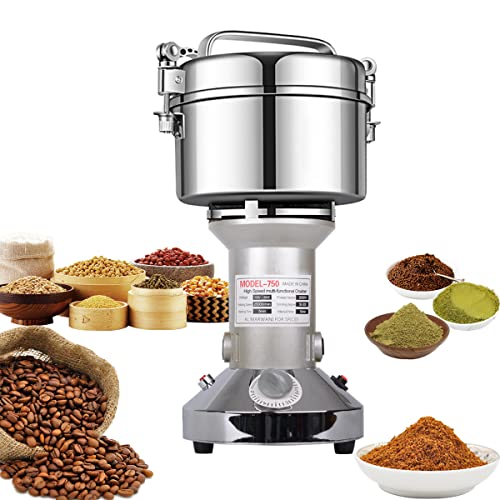
Grain Mill Grinder 750g High Speed Electric Stainless Steel Grinder Cereals Corn Flour Pulverizer Powder Machine for Dry Spice Herbs Grains Coffee Rice Pepper
✅ MIXER GRINDER : Power:2000W ; Capacity:750g; Interval Time:5-10 min;Rotating Speed: 25000R/Min,Triples blade: grinding blade, rotary blade, and…
As an affiliate, we earn on qualifying purchases.
As an affiliate, we earn on qualifying purchases.
Which Mill Produces Finer or Coarser Flour?
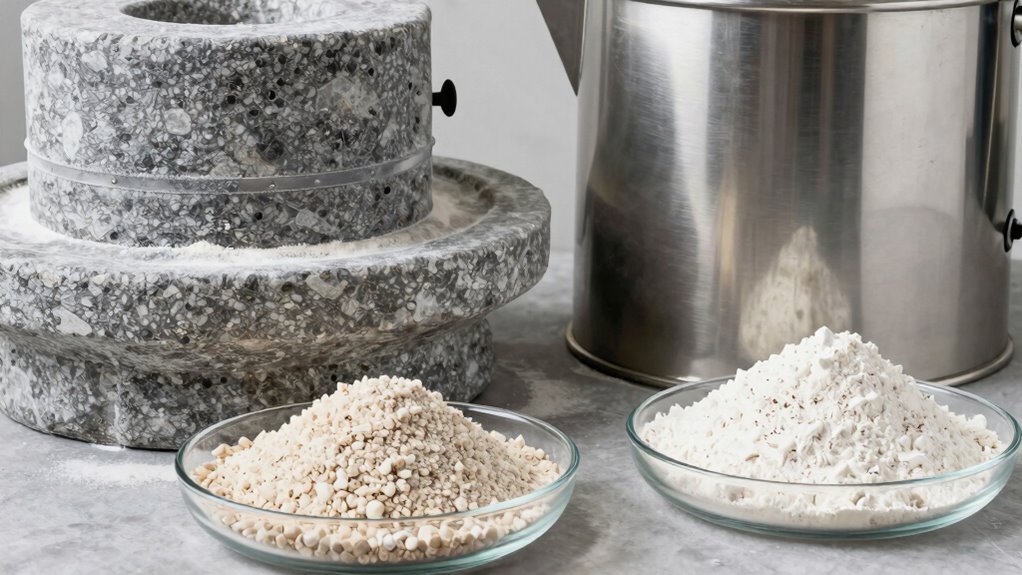
Have you ever wondered which mill produces the finest or coarsest flour? The answer largely depends on the milling process and equipment. Stone mills tend to produce flour with a coarser grain fineness, giving you a more textured, hearty result. They crush grains slowly, preserving larger particles, which results in a more rustic flour. Steel mills, on the other hand, can produce a much finer flour because they operate at higher speeds and use sharp blades or rollers. This results in flour with less flour coarseness, creating a smoother, more refined texture. If you prefer a flour with a coarser feel for rustic baking, a stone mill might be your choice. For ultra-fine flour suited for delicate baked goods, steel mills generally deliver better. Additionally, grain particle size can influence the final texture and baking qualities of your flour, especially when considering the milling method used.
How Do Milling Materials Impact Nutritional Preservation?
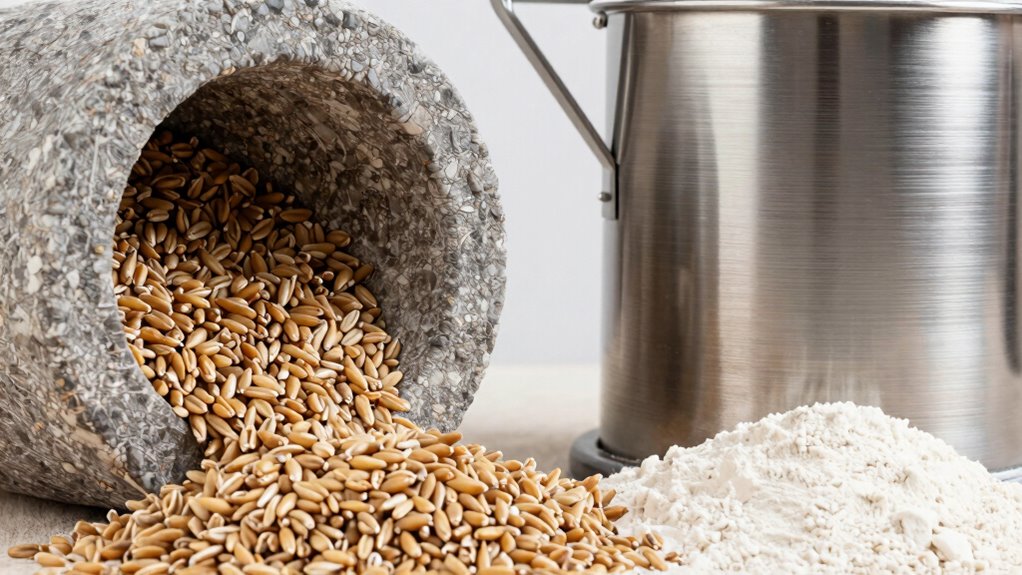
The materials used in your mill can considerably affect how well nutrients stay intact during grinding. Oxidation and exposure to air can cause freshness loss and nutrient degradation over time. Understanding these factors helps you choose a mill that preserves the nutritional quality of your grains.
Nutrient Retention Factors
Milling materials substantially influence how well nutrients are preserved in the final product. The type of mill affects factors like flour flavor and milling speed, which in turn impact nutrient retention. For example, with stone mills, the slower milling process generates less heat, helping preserve delicate nutrients and enzymes. Conversely, steel mills often operate at higher speeds, generating more heat that can degrade vitamins and minerals. To visualize this:
- Stone mills gently grind grains, maintaining more nutrients and richer flour flavor.
- Steel mills rapidly process grains, risking nutrient loss due to heat exposure.
- Milling speed directly impacts nutrient preservation, with slower speeds favoring healthier, nutrient-rich flour.
Understanding these factors helps you choose a mill that maximizes nutritional value while delivering preferable flavor.
Oxidation and Freshness
Oxidation can greatly affect the freshness and nutritional quality of flour, and the materials used in milling play a crucial role in this process. Different milling materials impact the oxidation impact on the flour; for example, stone mills tend to produce less heat and oxygen exposure, helping preserve nutrients and freshness. Steel mills, on the other hand, generate more heat, which can accelerate oxidation and reduce freshness preservation. This oxidation process breaks down sensitive nutrients like vitamins, diminishing overall nutritional value. By choosing the right milling material, you can better protect the flour’s freshness and nutritional integrity. Understanding how oxidation impacts your flour helps you make informed decisions, ensuring your baked goods stay nutritious and flavorful longer.
What Are the Pros and Cons of Stone and Steel Mills?

Deciding between stone and steel mills involves weighing their respective strengths and weaknesses. Stone mills excel in producing flour with a traditional feel and rustic kitchen aesthetics, enhancing your baking techniques with a natural, artisanal touch. They tend to generate less heat, preserving nutrients and flavor. Steel mills, on the other hand, offer faster grinding, consistency, and easier maintenance, fitting modern kitchen demands. Visualize:
- A stone mill with a rough, vintage charm sitting on your countertop.
- Steel mills with sleek, shiny surfaces that blend into contemporary kitchens.
- Flour flowing smoothly from a steel mill, perfect for quick baking sessions.
While stone mills are quieter and better for preserving flour quality, they require more effort and are less uniform. Steel mills provide speed and simplicity but may heat the flour slightly, affecting delicate baking techniques.
How Durable and Easy to Maintain Are These Mills?
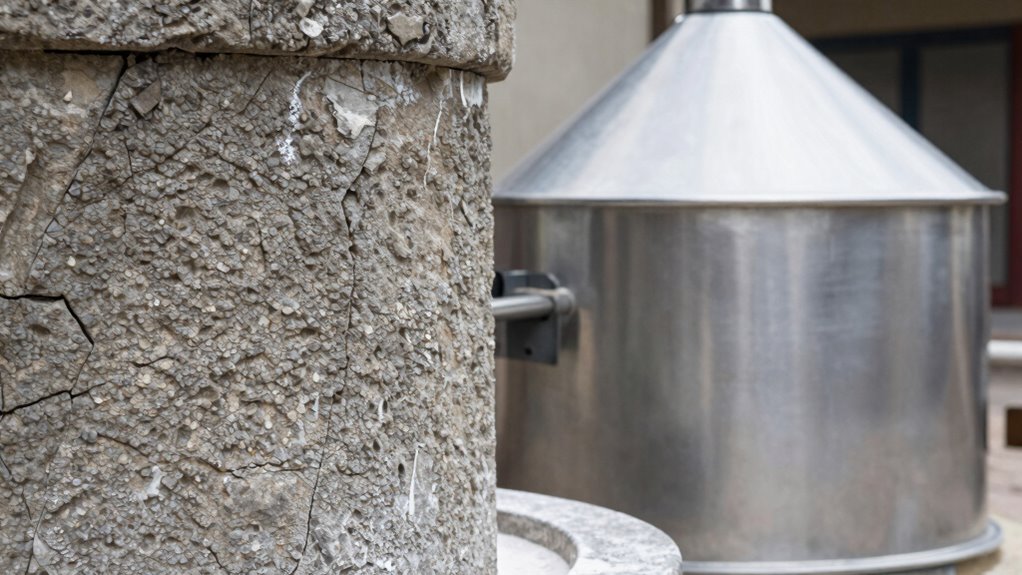
While both stone and steel mills are built to last, their durability factors and maintenance ease differ considerably. Stone mills are sturdy but require more upkeep because the grinding surfaces can wear down over time, demanding regular dressing or replacement. Steel mills, on the other hand, are more resilient overall and resistant to wear, making maintenance easier. Steel components typically need less frequent cleaning and are less prone to cracking or chipping. However, you should still regularly inspect both types for buildup or damage to ensure ideal performance. Stone mills, with their natural wear, may need occasional reconditioning, whereas steel mills generally offer a longer lifespan with less effort. Your choice depends on whether you prioritize durability or ease of ongoing maintenance.
Which Mill Is Best for Your Baking Needs?
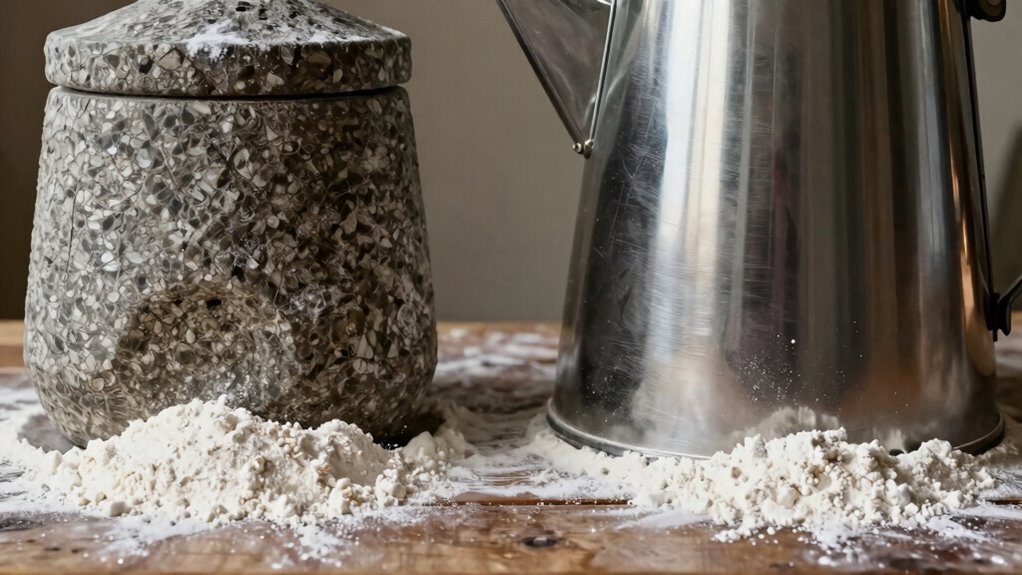
Choosing the right mill depends on your specific baking needs and preferences. Think about what’s more important to you: grain preservation, milling speed, or flour texture. For example:
- A stone mill gently crushes grains, preserving nutrients and flavor, perfect for nutrient-rich baking.
- A steel mill offers faster milling, helping you produce larger quantities quickly.
- If you want a coarser grind for rustic breads, a mill with adjustable settings is ideal.
If you prioritize maintaining the grain’s natural oils and nutrients, a stone mill is your best bet. For quicker turnaround times and higher output, steel mills excel. Consider your baking style and how much flour you need to produce to determine the perfect fit.
Choosing the Right Grain Mill for Your Kitchen and Goals
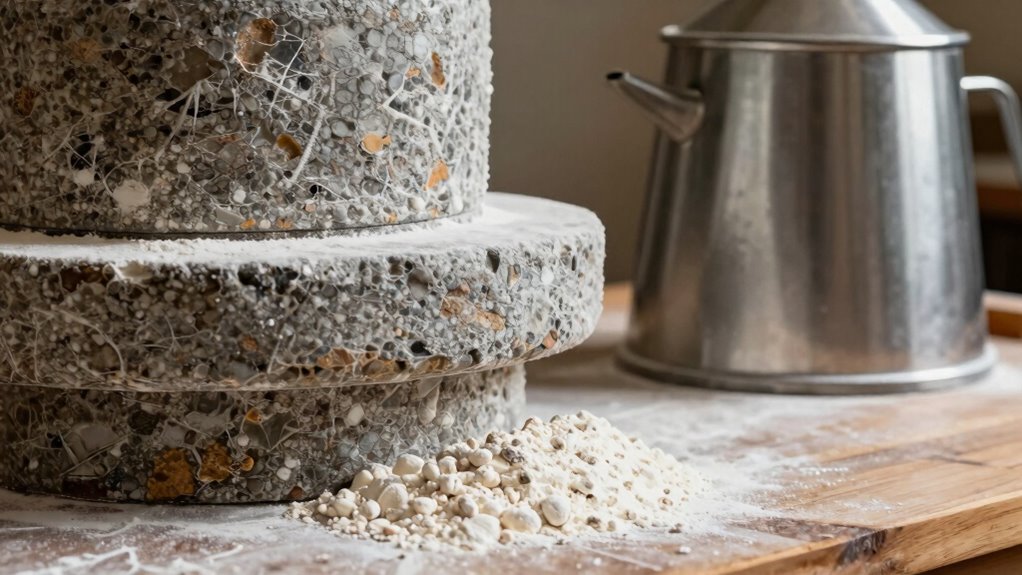
Selecting the right grain mill depends on understanding your kitchen space, baking goals, and how much time you want to dedicate to milling. If preserving nutrients and grain quality is your priority, choose a mill designed for *ideal* grain preservation, such as stone mills that gently crush grains. Consider noise levels too; steel mills tend to be louder, which might be disruptive if you bake early mornings or late nights. Evaluate your available space—compact mills fit small kitchens, while larger units offer higher capacity. Think about your baking frequency and desired flour texture. Balancing these factors ensures you select a mill that aligns with your goals, whether you prioritize freshness, quiet operation, or efficiency in grain processing.
Frequently Asked Questions
Which Mill Type Is More Energy-Efficient During Operation?
Steel grain mills are more energy-efficient during operation because they typically have lower energy consumption and better operational efficiency compared to stone mills. You’ll notice that steel mills require less power to grind grains, which helps save energy over time. Plus, their design allows for quicker processing, making them a more practical choice if you’re aiming to reduce energy costs and improve overall operational efficiency.
How Does Noise Level Vary Between Stone and Steel Mills?
You might be surprised by the noise levels when comparing stone and steel mills. Steel mills generally produce louder sounds, with higher noise levels that can be disruptive, especially in quiet environments. Stone mills tend to operate more quietly, offering a smoother sound comparison. If you’re sensitive to noise, you’ll find the sound levels of stone mills more tolerable. Prepare for a noticeable difference in your flour grinding experience.
Can These Mills Handle Different Grain Varieties Effectively?
You’ll find that both stone and steel mills handle different grain varieties well, offering excellent grain versatility. Steel mills usually have higher milling capacity, making them suitable for large batches of various grains like wheat, corn, or rye. Stone mills excel with softer grains and small batches, providing a traditional, textured flour. Your choice depends on whether you prioritize capacity or traditional processing for different grain types.
Are There Specific Storage Requirements for Each Mill Type?
You should store stone and steel grain mills in a dry, cool, and clean environment to guarantee grain preservation and maintain storage hygiene. Keep them away from moisture, dust, and direct sunlight, which can cause rust or contamination. Regularly clean both mills after use, and use airtight containers for grain storage to prevent spoilage. Proper storage practices help extend their lifespan and keep your flour fresh and safe.
How Do Cleaning and Sanitation Differ Between Stone and Steel Mills?
You need to prioritize dust management and sanitary maintenance differently for stone and steel mills. Steel mills are easier to clean with smooth surfaces, allowing you to wipe down and sanitize quickly. Stone mills require more careful cleaning to remove flour dust from porous surfaces, which can trap debris. Regularly inspect and clean all parts, using appropriate tools to prevent contamination and guarantee peak sanitation.
Conclusion
Ultimately, choosing between a stone or steel grain mill depends on your baking goals and preferences. Think of it as selecting your trusty chisel or an industrial forge—each has its charm and purpose. If you want a finer, traditional flour, a stone mill might be your best bet. For durability and speed, steel mills excel. Whichever you choose, make sure it suits your culinary ambitions and keeps your kitchen the heart of all your baking adventures.