
The one attachment that often breaks mixers if not used properly is the whisk attachment. Using it on incompatible models or at high speeds with heavy ingredients can overstrain your motor, cause damage, or even break the appliance. For safety and longevity, always confirm your mixer supports the whisk and follow proper attachment procedures. Stay tuned to find out how to protect your mixer and avoid costly repairs.
Key Takeaways
- Using the whisk attachment on incompatible mixer models can strain internal components and cause damage.
- Forcing the whisk at high speeds may overload the motor, leading to overheating and failure.
- Not verifying attachment compatibility before use increases the risk of mechanical breakage.
- Using the whisk with heavy or dense ingredients at high speeds can cause stress and damage.
- Improperly fitted or damaged whisk attachments can wobble or disconnect, risking internal damage.
Why the Whisk Attachment Can Damage Your Mixer
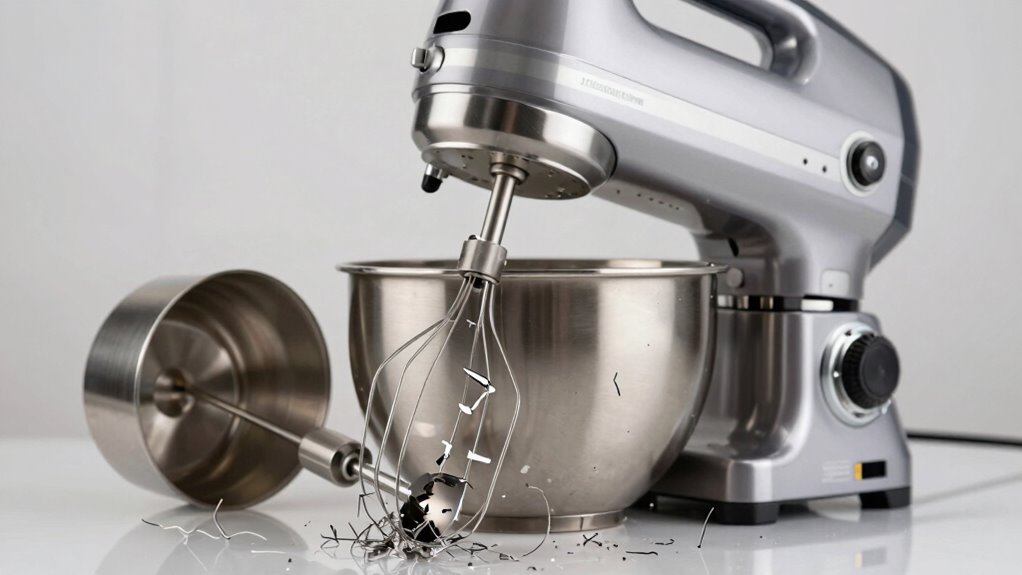
Although the whisk attachment is great for whipping cream or beating egg whites, using it improperly can cause damage to your mixer. One common issue is attachment compatibility; not all mixers support the whisk, and forcing it can strain internal components. Additionally, mixing speed plays an essential role—using too high a speed can overload the motor, especially if the attachment isn’t suited for heavy-duty tasks. When attaching the whisk, make sure it’s designed for your specific model, and always start at a lower speed to prevent sudden stress. Ignoring these factors increases the risk of overheating or damaging the motor. Proper attachment compatibility and controlled mixing speed help preserve your mixer’s longevity and ensure safe, efficient operation.
Common Mistakes That Break Your Mixer When Using the Whisk
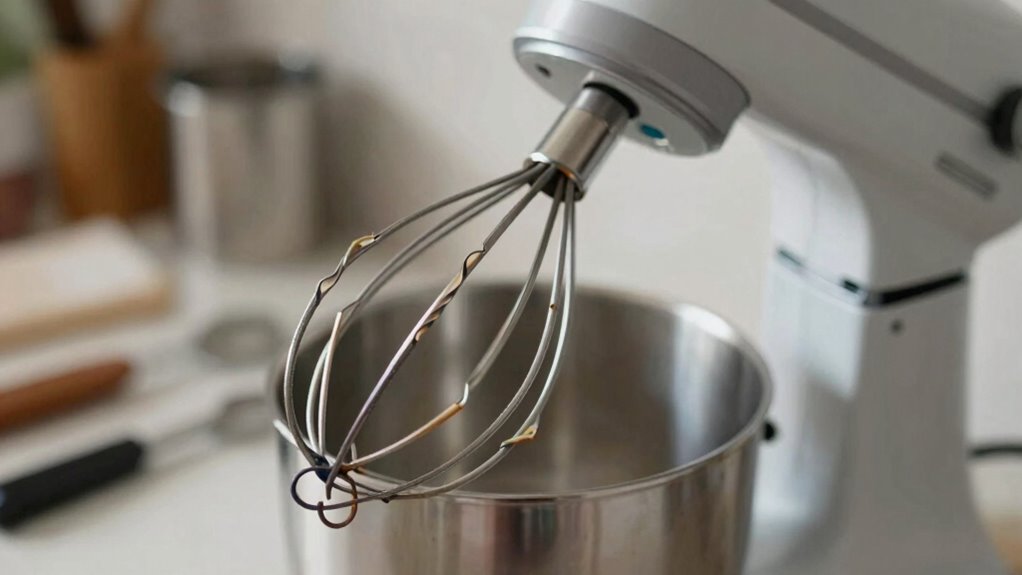
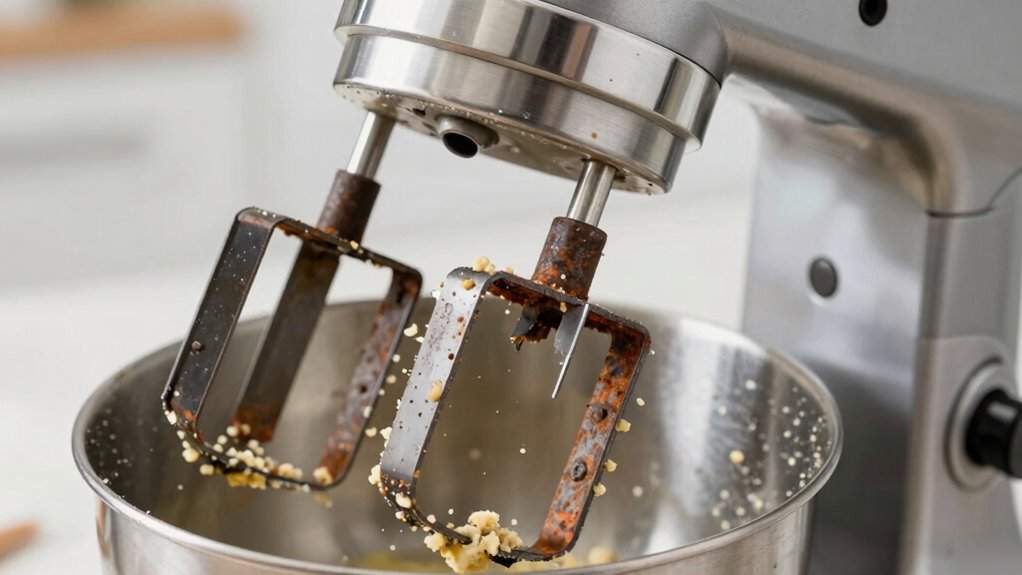
One of the most common mistakes that can break your mixer when using the whisk is overloading it by combining heavy or dense ingredients at high speeds. This puts unnecessary strain on the attachment and can cause damage. Always check attachment compatibility before use; not all whisks suit every mixer model. Using incompatible attachments increases the risk of breakage. Additionally, improper cleaning can lead to buildup that affects performance and longevity. Residue left on the whisk or inside the mixer can cause parts to seize or malfunction over time. To avoid these issues, clean your attachments thoroughly after each use, following manufacturer instructions. Proper cleaning and verifying attachment compatibility help you ensure your mixer stays in good shape and prevents costly repairs. Understanding safe power handling is essential to prevent overloads that could damage your equipment, and being aware of attachment durability can help you select the right tools for your needs. Also, staying informed about equipment maintenance practices can prolong the lifespan of your appliance and prevent unexpected failures.
How to Tell If Your Mixer Is Damaged by the Whisk Attachment
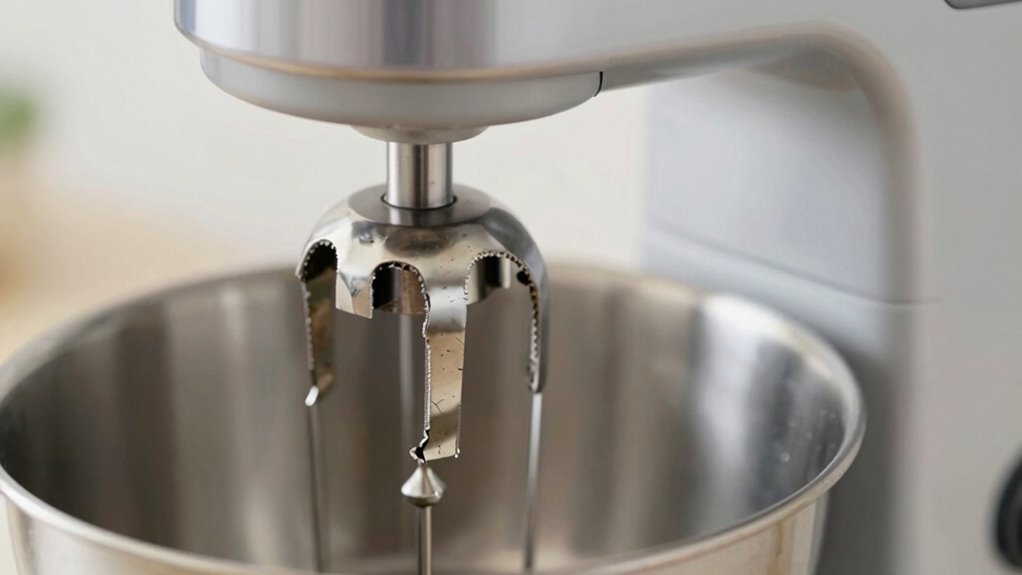
If you notice your mixer isn’t functioning as smoothly as it used to, it could be a sign that the whisk attachment has caused damage. One vital indicator is if the attachment doesn’t fit properly, which suggests a compatibility issue that could strain the motor. Also, listen for unusual noises or if the mixer struggles to spin the whisk, indicating a possible motor overload. Overloading the motor can happen if the attachment is too powerful or incompatible, leading to overheating or burnt-out components. Check for wobbling or loose attachments, which might mean the connection isn’t secure. Proper attachment fit is essential to prevent unnecessary stress on the mixer’s motor and ensure safe operation. If any of these signs appear, it’s essential to address the issue quickly to prevent further damage to your mixer. Additionally, smart kitchen tools can help monitor your appliance’s performance and alert you to potential issues early, leveraging AI-powered diagnostics to maintain optimal operation. Regularly inspecting attachments and understanding mixer compatibility can also help prevent damage before it occurs. Using correct attachment types recommended by the manufacturer can further reduce the risk of damage and prolong your mixer’s lifespan.
Safer Attachments and Tips to Protect Your Mixer
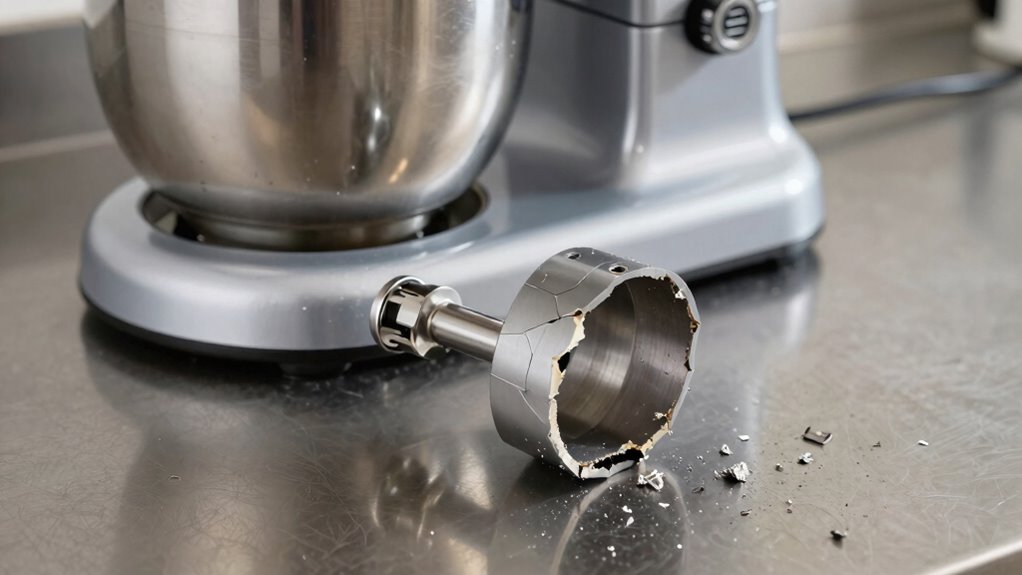
Using the right attachments and following proper tips can greatly extend the life of your mixer and ensure safe operation. Prioritize attachment safety by always ensuring attachments are correctly secured before use. Regular maintenance tips, such as cleaning attachments after each use and inspecting for wear, help prevent damage and maintain performance. Avoid forcing attachments or using incompatible ones, as this can strain the motor and cause malfunctions. Use manufacturer-recommended attachments, and follow their guidelines for attachment and removal. Keep the mixer’s cord and controls clean and dry to prevent electrical issues. Proper storage of attachments prevents damage and prolongs their usability. Additionally, understanding kitchen science & materials can help you select the best attachments for your mixer and avoid damage caused by incompatible or poorly made parts. Being aware of material compatibility and the properties of different materials can further prevent damage and ensure longevity of your attachments. Familiarizing yourself with mixer mechanics can also help identify early signs of wear and prevent potential failures. Learning about attachment design can guide you in choosing durable and safe options. Conducting proper testing and evaluation of attachments before regular use can further reduce the risk of malfunction. By practicing these safety and maintenance tips, you protect your mixer from unnecessary wear and reduce the risk of breakage.
What to Do If Your Mixer Is Damaged or Malfunctioning
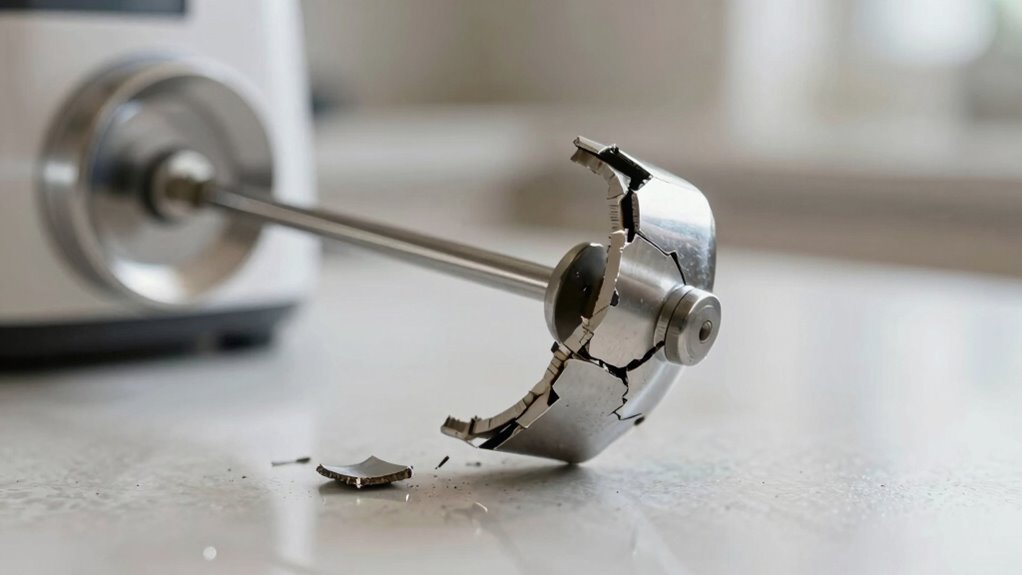
When your mixer starts making unusual noises, smells burnt, or stops working altogether, it’s important to act quickly to prevent further damage. First, unplug the mixer to avoid electrical hazards. Check the attachment for any signs of damage or improper attachment; poor attachment maintenance can cause malfunctions. If the attachment seems loose or misaligned, remove it carefully and inspect for debris or wear. For troubleshooting mixer issues, consult the user manual for troubleshooting tips specific to your model. Avoid forcing attachments if they don’t fit properly, as this can damage the motor. If problems persist, contact a professional for repairs or consider replacing the mixer. Regularly maintaining attachments and addressing issues early can prolong your mixer’s lifespan and prevent costly repairs. Additionally, consider the importance of energy-efficient appliances in reducing overall operational costs and environmental impact. Proper attachment maintenance is crucial for ensuring your mixer performs reliably over time and helps prevent damage caused by improper use. Keeping attachments clean and well-maintained also contributes to safety and efficiency during your kitchen tasks. Paying attention to routine inspections can help detect potential issues before they cause significant damage.
Frequently Asked Questions
Can I Use the Whisk Attachment on All Mixer Models Safely?
You can’t assume the whisk attachment is compatible with all mixer models safely. Always check the attachment compatibility for your specific mixer to avoid damage or repair safety issues. Using incompatible attachments can cause motor strain or break your mixer, so verify manufacturer guidelines before switching attachments. When in doubt, consult your mixer’s manual or contact the manufacturer to guarantee safe use and proper fit.
What Specific Signs Indicate Imminent Damage From Whisk Attachment Use?
Did you know that 60% of mixer failures are caused by attachment failure? You’ll notice signs like the motor overheating or unusual noises, which indicate imminent damage from whisk attachment use. If the attachment feels loose or makes grinding sounds, stop immediately. These signs warn of potential motor overheating or attachment failure, risking damage to your mixer. Pay attention to these indicators to prevent costly repairs.
Are There Alternative Attachments That Are Less Likely to Cause Damage?
Yes, you can use alternative attachments like silicone spatulas or dough hooks designed for gentle mixing. These options help prevent damage by reducing stress on your mixer’s motor and gears. To prevent damage, always choose attachments compatible with your mixer’s specifications, avoid overloading, and use the appropriate speed setting. Switching to these alternatives and following proper usage tips extends your mixer’s lifespan and keeps it functioning smoothly.
How Often Should I Inspect My Mixer for Wear and Tear?
You should inspect your mixer for wear and tear at least once a month to guarantee attachment maintenance. Regular inspection frequency helps identify loose or damaged parts early, preventing costly repairs or breakdowns. Pay close attention to attachments, especially if you notice unusual noises or reduced performance. By staying proactive with inspections, you keep your mixer running smoothly and extend its lifespan, avoiding unnecessary damage from overlooked wear.
Is It Safe to Repair a Damaged Mixer Myself or Should I Seek Professional Help?
Sure, go ahead and try DIY repairs if you’re feeling brave, but remember, a damaged mixer isn’t a DIY magic trick. While you might enjoy some epic handyman moments, professional servicing guarantees safety and proper fixing. Without proper knowledge, you risk more damage or injury. So, unless you’re ready for a potential kitchen disaster, it’s smarter to leave repairs to the pros and avoid turning your mixer into a paperweight.
Conclusion
So, now you know the attachment that can break your mixer—and the mistakes to avoid. But what if it’s already happened? Will you face costly repairs or a replacement? The choice is yours. Stay vigilant, follow the tips, and protect your investment. Because one wrong move could mean more than just a broken attachment—it could mean the end of your trusty mixer. Are you ready to keep it safe? The decision’s in your hands.