
To spot rancidity before you buy oils or nuts, trust your senses. Take a deep sniff; pleasant nutty smells indicate freshness, while sharp odors signal spoilage. Check the color too—fresh oils should be clear and light, while nuts need vibrant shades. Look closely at packaging for damage, leaks, or residue, as these can hint at compromised products. Keeping an eye out for these signs can save you from unpleasant culinary surprises in the kitchen. Want to learn more tips?
Key Takeaways
- Conduct a smell test; fresh oils and nuts should have a pleasant aroma, while rancid products emit sharp or unpleasant odors.
- Inspect color; fresh oils are clear and light, while nuts should display vibrant colors without dullness or uneven tones.
- Examine packaging for damage, leakage, or bulging, as compromised packaging may indicate spoilage inside.
- Look for residue on packaging, which can signal that the product may be spoiled or compromised.
- Be aware of store inspection policies; always check products for visible discoloration or damage before purchasing.
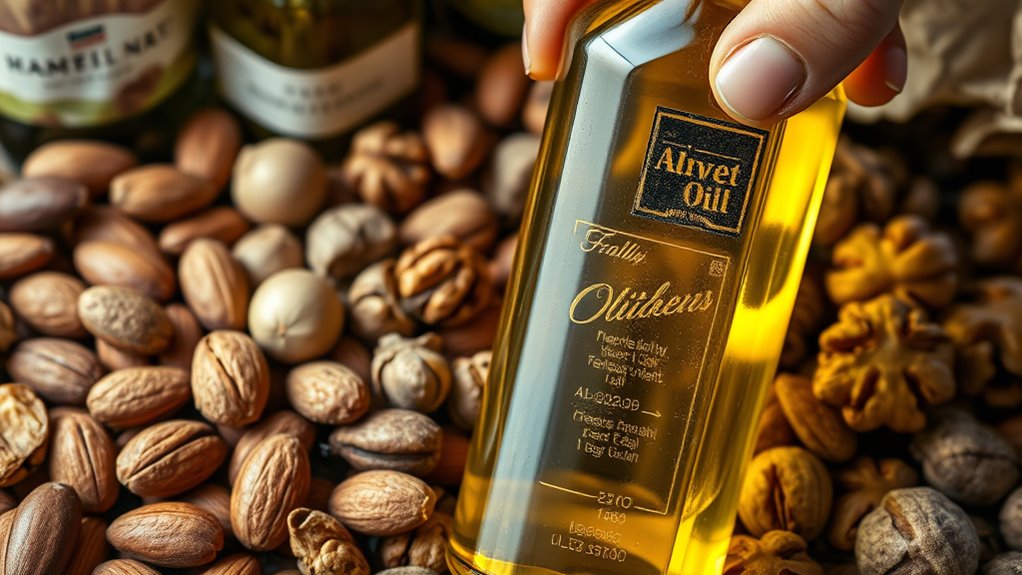
Have you ever wondered how to tell if your cooking oil or nuts have gone bad? It’s a common concern, especially since rancidity can sneak up on you when you least expect it. Fortunately, there are a few straightforward methods to help you identify whether those pantry staples are still good to use. By keeping an eye on the smell and color, you can avoid the unpleasant surprise of cooking with spoiled ingredients.
First, let’s talk about the smell test. When you open a bottle of cooking oil or a bag of nuts, take a moment to inhale deeply. If you catch a whiff of something off, that’s a solid sign of rancidity. Fresh oils and nuts should have a pleasant, nutty aroma. If the smell is sharp, bitter, or simply unpleasant, it’s best to toss it. Trust your nose; it’s one of the most reliable indicators of freshness.
A quick smell test can reveal rancidity; fresh oils and nuts should have a delightful, nutty aroma.
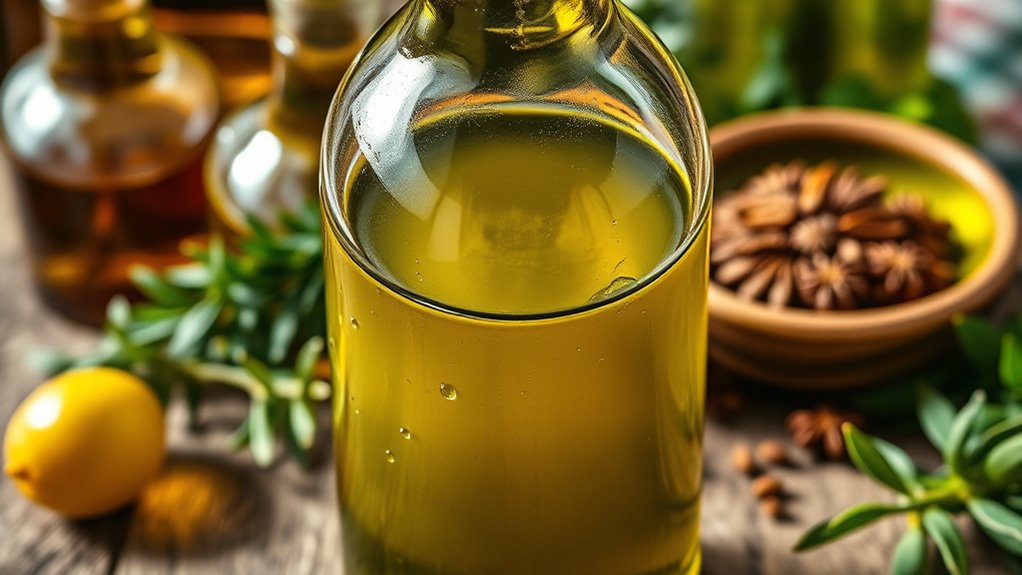
Next, pay attention to any color change. Fresh oils typically have a clear, light hue, while nuts often have a vibrant, appealing shade. If you notice your cooking oil has turned darker or cloudy, or if your nuts appear dull or have developed an uneven color, it’s time to reconsider their quality. Color changes often indicate that the food has been exposed to air, light, or heat, leading to oxidation and, ultimately, rancidity.
When buying these products in the store, always check the packaging. Look for any signs of damage or leakage. If the container is bulging or you notice any residue, it might mean the oil or nuts have been compromised. If you can, inspect the product closely before purchasing. Don’t hesitate to give it a smell test right in the store—most store policies allow you to check the freshness of your food. Additionally, data privacy challenges can arise when purchasing products online, as you may want to ensure that your personal information is protected while selecting your pantry staples.
Frequently Asked Questions
What Types of Foods Are Most Prone to Rancidity?
Foods high in fats, like nuts, seeds, avocados, and oils, are most prone to rancidity. When you store them improperly, oil oxidation occurs, leading to fat spoilage. Keep an eye on items like nut butters, mayonnaise, and dressings, which can also go bad quickly. Always check for off smells or flavors, as these are signs that the fats have started to spoil. Proper storage can help maintain their freshness longer.
Can Rancidity Affect the Nutritional Value of Food?
Rancid realities ruin your food’s freshness! Yes, rancidity can markedly impact the nutritional value of food. When oils and fats break down, they undergo nutritional degradation, losing essential vitamins and healthy fats. Proper food preservation techniques can help maintain quality, but once rancidity sets in, you’re often left with diminished nutrients. To keep your meals nutritious and delicious, always check for signs of spoilage before indulging in your favorite treats.
How Should I Store Food to Prevent Rancidity?
To prevent rancidity, you should store food in a cool, dark place. Use airtight containers to keep out moisture and air, which can accelerate spoilage. Refrigerating oils and nuts can also extend their shelf life. Avoid storing food near heat sources or sunlight, as these can promote rancidity. Following these food storage tips will help you maintain freshness and ensure you enjoy your groceries longer without losing their nutritional value.
Is Rancidity Harmful to My Health?
Yes, rancidity can be harmful to your health. While you might think it’s just bad-tasting food spoilage, consuming rancid oils or fats can lead to health risks like inflammation and even long-term diseases. It’s not just unpleasant; rancid food can produce harmful compounds that affect your body. So, always check your pantry and store your food properly to prevent rancidity and protect your health. You deserve fresh, safe food!
What Is the Shelf Life of Commonly Rancid Foods?
The shelf life of commonly rancid foods varies, but generally, oils can last 6 to 12 months, nuts around 3 to 6 months, and seeds about 1 year. Always check food packaging for specific expiration dates. Proper storage temperature plays a vital role; keep these items in a cool, dark place to extend their freshness. If you notice any off smells or flavors, it’s best to discard them.
Conclusion
When you’re out shopping, don’t overlook the signs of rancidity. Trust your senses—smell, taste, and even your eyes can guide you. If you think it’s too much effort to check for freshness, remember that avoiding rancid products saves you from health issues and wasted money. Your well-being and taste buds deserve better! So, next time you shop, take a moment to verify what you’re buying is fresh and safe. It’s worth the extra effort!