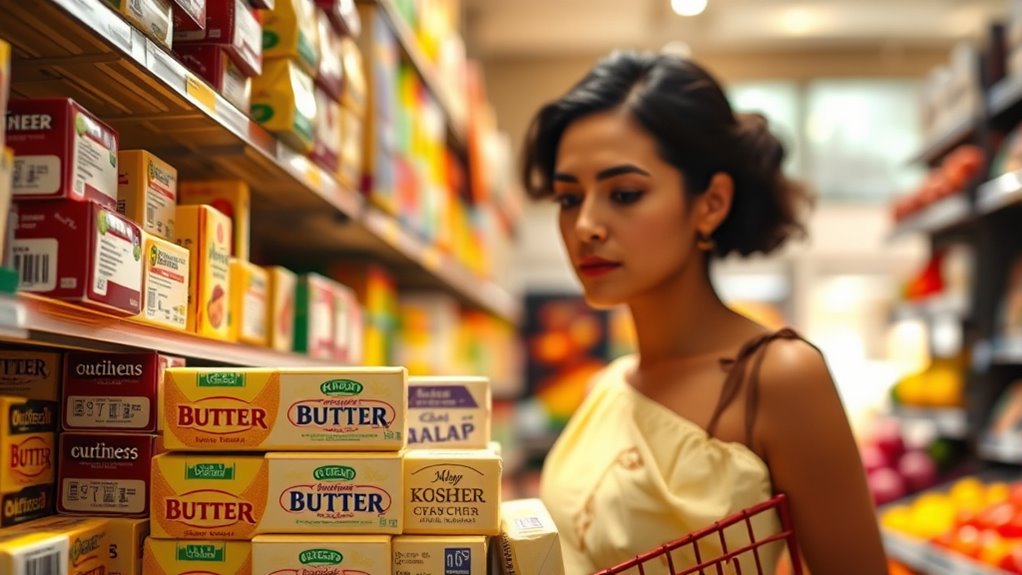
When buying butter for special diets like kosher or halal, make certain it’s certified by a reliable authority. Look for clear symbols on the packaging that indicate the product meets dietary standards. Check ingredient labels for any additives that may conflict with your dietary restrictions. If you’re open to alternatives, consider plant-based options as well. Want to explore more about selecting the right spreads and how to ensure they fit your needs?

Get kitchen staples and gadgets delivered free with Prime
- Fast, free delivery on millions of items
- Prime Video, Amazon Music and more included
- Member-only deals all year
Key Takeaways
- Look for certified kosher or halal symbols on butter packaging to ensure dietary compliance.
- Verify ingredient labels for any additives that may not align with kosher or halal standards.
- Consider dairy alternatives like plant-based butters, ensuring they also meet certification requirements.
- Contact manufacturers or store staff to confirm the sourcing and certification of butter products.
- Prioritize products with clear certification marks to guarantee authenticity and quality for your diet.
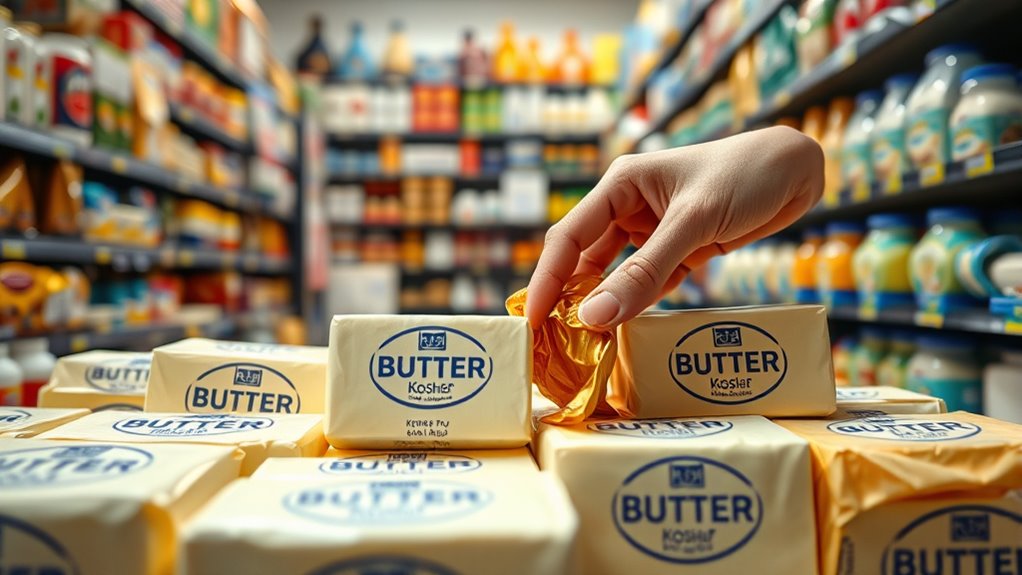
When it comes to buying butter for special diets, how do you choose the right one? You need to consider a few important factors, especially if you’re following kosher or halal guidelines. First, make sure the butter is certified by a reliable authority. Look for symbols on the packaging that indicate kosher or halal approval. This certification ensures that the product has been prepared according to the dietary laws that you or your family follow.
When selecting butter for special diets, prioritize certified kosher or halal options to ensure compliance with dietary laws.
If you’re exploring dairy alternatives, you’ve got a variety of options. From plant-based butters made from oils like coconut or avocado to nut butters, the selection is vast. These alternatives can offer the creaminess you crave without the dairy, making them suitable for lactose intolerance or vegan diets. Check ingredient labels carefully, though, as some dairy alternatives may include additives or preservatives that don’t align with your dietary preferences.
While shopping, you might also come across spreads that mimic butter but are not exactly the same. These can be made with margarine or other fats, so it’s vital to assess the ingredient labels. Look for products that feature whole food ingredients rather than artificial compounds. You’ll want to avoid anything with trans fats, as these can compromise your health.
If you’re looking for something that fits specific dietary restrictions, you should also consider the texture and flavor. Some dairy alternatives can be quite different from traditional butter, impacting your favorite recipes. Experiment with different brands to find the one that best suits your taste buds. You might be surprised at how well certain substitutes work in baking or cooking.
Lastly, don’t hesitate to ask questions. If you’re unsure about a product, reach out to the store staff or contact the manufacturer directly. They can provide you with information regarding sourcing, processing, and whether the product meets kosher or halal standards. Additionally, understanding Leave No Trace principles can help you make environmentally conscious choices when purchasing food products.
As an affiliate, we earn on qualifying purchases.
Frequently Asked Questions
Can I Use Vegan Butter for Kosher or Halal Diets?
Yes, you can use vegan butter for kosher or halal diets, as long as it’s certified. Vegan butter and plant-based spreads are usually free from animal products, making them suitable for many dietary restrictions. Just check the labels to verify they meet the necessary certifications. With so many options available, you’ll find delicious vegan alternatives that can fit perfectly into your kosher or halal lifestyle without compromising flavor or texture. Enjoy cooking!
How Do I Identify Kosher Certification on Butter Packaging?
To identify kosher certification on butter packaging, look for kosher symbols like the “OU” (Orthodox Union) or “K” with a circle. These symbols indicate the product meets kosher standards. If you’re also concerned about Halal certification, check for a “Halal” label or specific certification symbol. Always read the packaging carefully to verify it meets your dietary needs, and don’t hesitate to contact the manufacturer if you have any doubts.
Are There Butter Alternatives for Lactose-Intolerant Individuals?
If you’re lactose intolerant, you’ve got plenty of tasty butter alternatives to choose from! You can enjoy lactose-free options like lactose-free butter, which offers the creamy flavor you love without the discomfort. Additionally, dairy-free substitutes like coconut oil or vegan butters provide great versatility in cooking and baking. These alternatives let you indulge without sacrificing taste, so you can savor every bite without worrying about lactose. Embrace the delicious variety available!
Is Butter Made From Grass-Fed Cows Kosher or Halal?
Yes, butter made from grass-fed cows can be kosher or halal, but it depends on the certification. For kosher, verify the product has a reliable grass-fed certification and is produced under rabbinical supervision. For halal compliance, check that the butter meets Islamic dietary laws and is certified by a trusted halal authority. Always look for labels to confirm these certifications before purchasing, confirming it aligns with your dietary needs and beliefs.
What Is the Difference Between Regular and Clarified Butter for Special Diets?
Think of regular butter as a cozy blanket, while clarified butter is a refined silk scarf. Regular butter contains milk solids and water, making it rich but less stable for cooking. Clarified butter, created through careful dairy processing, removes these solids, resulting in a higher smoke point. For those observing cultural dietary laws, clarified butter can be more versatile, fitting into various diets while still offering that buttery goodness without the additional components.
Conclusion
In the world of culinary choices, finding the right butter for special diets is like embarking on a vibrant marketplace. Each option, whether kosher or halal, represents a unique stall filled with flavors and traditions. By choosing wisely, you not only honor your dietary needs but also celebrate the diverse tapestry of cultures. So, as you navigating this buttery quest, remember: each stick you select contributes to a delicious harmony, bringing people together around the table of understanding.
Fall Picks
fall essentials
As an affiliate, we earn on qualifying purchases.