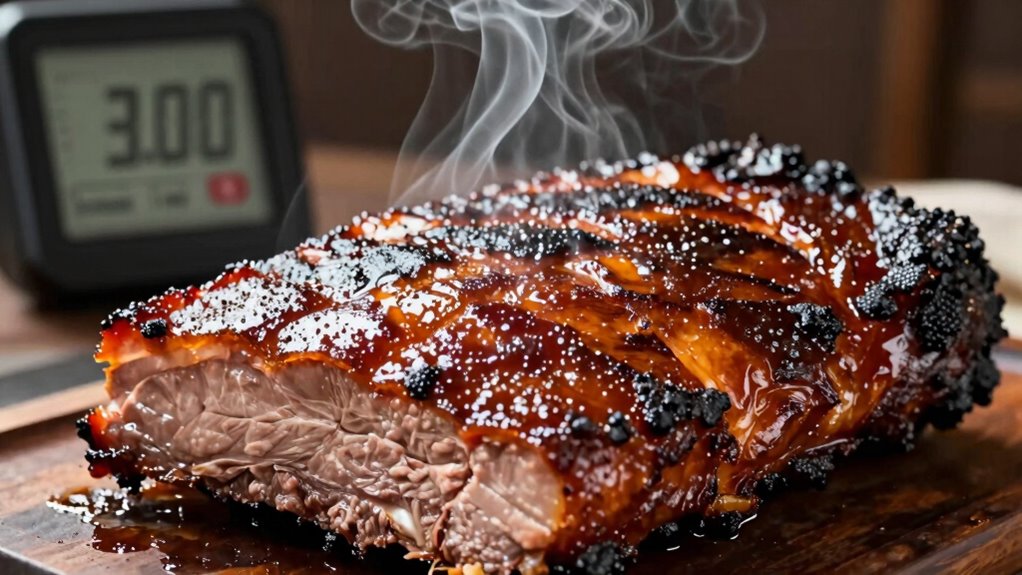

The main smoker temperature mistake that dries out meat is setting the smoker too high, which causes rapid protein contraction and moisture loss. When you cook above the ideal range of 225–250°F, the meat can overcook on the outside while remaining underdone inside, leading to toughness and dryness. To keep your meat juicy, you need to control the heat precisely. If you keep learning about proper temperature techniques, you’ll improve your smoked meat every time.
Key Takeaways
- Setting the smoker temperature too high causes rapid protein contraction, pushing out moisture and drying out the meat.
- Ignoring precise internal temperature monitoring can lead to overheating and moisture loss.
- Relying solely on visual cues instead of using a digital thermometer often results in overcooking and dryness.
- Failing to maintain a consistent, optimal smoking temperature (225°F–250°F) increases the risk of drying meat.
- Not adjusting airflow and vents during smoking can cause temperature spikes that dry out the meat.
Why Proper Temperature Is Key to Juicy Smoked Meat
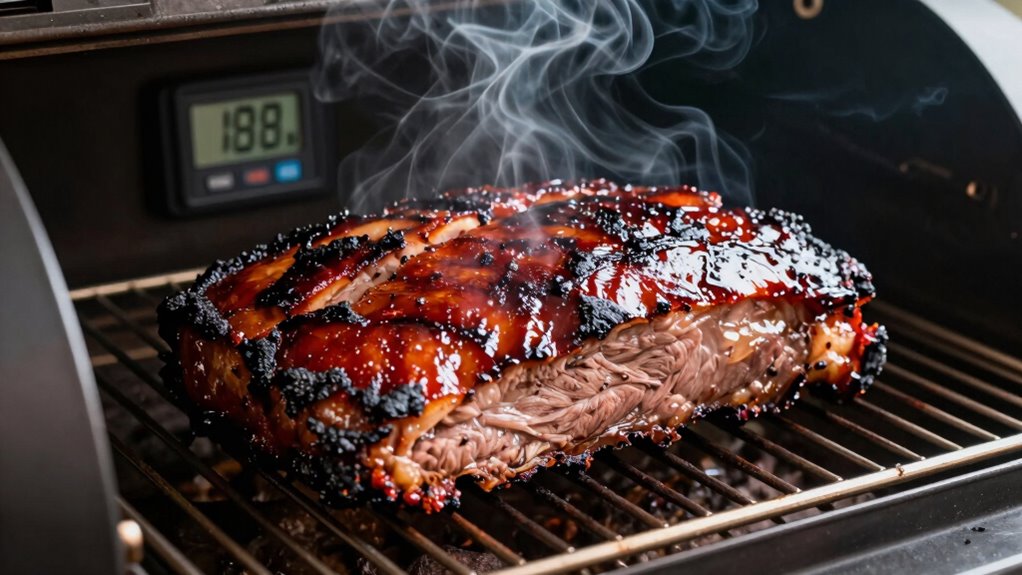
Maintaining the right temperature is essential if you want your smoked meat to stay juicy and flavorful. When your smoker operates at the proper heat, it promotes better smoke penetration, allowing the smoke to evenly infuse the meat with rich flavors. A consistent temperature guarantees that the meat absorbs the smoky aroma without losing moisture. If the heat is too low, you won’t get enough flavor infusion or proper smoke penetration, resulting in bland or underdeveloped taste. Conversely, if it’s too high, the outside can cook too quickly, preventing the smoke from deeply penetrating the meat’s surface. Keeping a steady, moderate temperature creates the ideal environment for the smoke to work its magic, helping your meat stay tender, moist, and bursting with flavor from the first bite. Proper temperature control also helps maintain the appropriate water chemistry, which is crucial for consistent results and food safety. Additionally, maintaining the correct temperature can prevent overcooking and ensure your meat reaches the desired internal temperature for safety and optimal texture. Using a reliable heat pump can help maintain those consistent temperatures efficiently, especially in varying weather conditions. Moreover, monitoring internal temperature with a good meat thermometer is vital for achieving perfect results every time. Proper temperature management can also support meat safety standards, ensuring your smoked meat is safe to eat without sacrificing quality.
How High Heat Causes Your Meat to Dry Out
While keeping the right temperature helps make certain your smoked meat remains juicy, cooking at too high a heat can quickly turn that moisture into dryness. High heat accelerates the cooking process, causing the meat’s proteins to contract rapidly. This contraction pushes out moisture, reducing overall meat moisture and leaving you with a dry, tough result. When you lose control of heat, the surface can overcook before the interior is done, further drying out the meat. Proper heat regulation is essential to maintain the ideal balance—allowing collagen to break down gently while preserving juiciness. Remember, even a slight increase in temperature can make a big difference in moisture retention. Keeping your smoker at a moderate, steady temperature ensures your meat stays tender, flavorful, and moist. Temperature control is key to avoiding dry, overcooked meat, and understanding cooking dynamics can help you fine-tune your technique. Additionally, airflow management plays a significant role in maintaining consistent temperature and moisture levels inside your smoker. Maintaining proper heat distribution prevents hot spots that can cause uneven cooking and drying. Being aware of cooking time adjustments based on temperature can further help prevent over-drying.
What’s the Perfect Smoking Temperature for Tender, Juicy Meat?
Finding the perfect smoking temperature is essential for achieving tender, juicy meat. Maintaining a temperature around 225°F to 250°F allows ideal flavor infusion and smoke penetration without drying out your meat. At this range, the smoke slowly works its magic, enhancing flavor while keeping moisture locked in. Proper temperature control is crucial for consistent results, especially since smoking temperature directly impacts moisture retention. When you keep the temperature within this range, you also promote better moisture retention, resulting in a more succulent end product. Additionally, maintaining this temperature range helps prevent overcooking, which can lead to dryness. Consistently monitoring your smoker settings ensures you stay within this optimal range for the best results. To help visualize, consider this guide:
| Temperature Range | Ideal for | Results |
|---|---|---|
| 200°F – 225°F | Juiciness & tenderness | Deep smoke flavor, moist texture |
| 225°F – 250°F | Balanced flavor & moisture | Perfect for ribs and brisket |
| 250°F – 275°F | Faster cooking, less tender | Less smoke penetration |
Simple Tips to Keep Your Smoker at the Right Temp
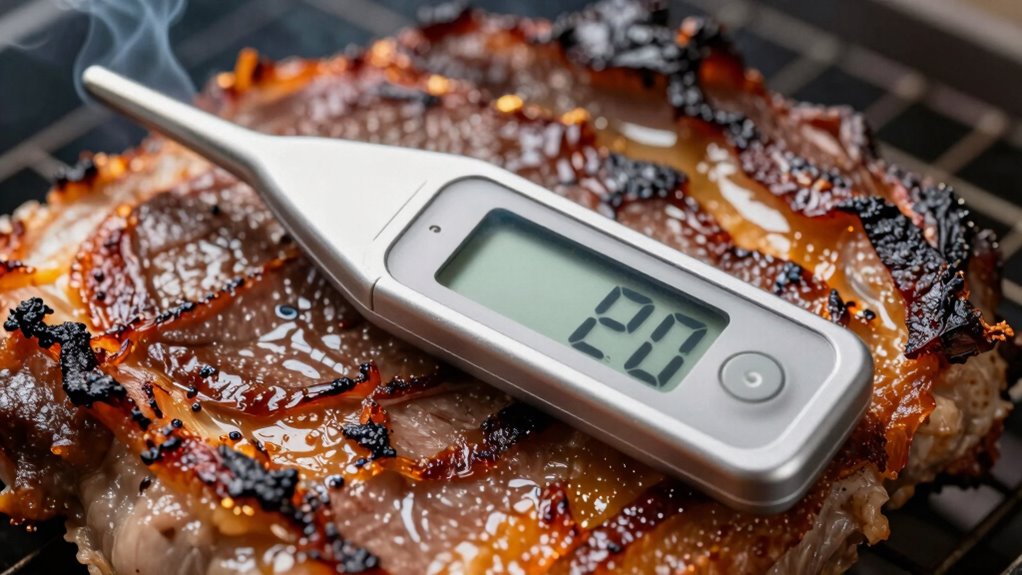
Keeping your smoker at the right temperature doesn’t happen by chance; it requires some simple, proactive steps. Start by maintaining a consistent fuel supply, checking vents regularly to control airflow, and adjusting your wood chips to avoid sudden temperature spikes. Using quality wood chips guarantees steady smoke production, which helps form those impressive smoke rings and enhances flavor. Keep a close eye on the thermometer, and don’t open the lid too often, as this releases heat and disrupts temperature stability. Using a water pan can also help maintain consistent heat and humidity. Additionally, understanding how modern temperature control techniques can optimize your smoking process is essential for perfect results. Implementing smart home technology such as connected thermometers and automated vents can further help you maintain precise temperatures effortlessly. Incorporating temperature monitoring devices allows you to track and adjust your smoker’s heat more accurately, preventing fluctuations that could dry out your meat. Paying attention to equipment maintenance ensures your smoker functions at optimal efficiency and maintains stable temperatures. By keeping these tips in mind, you prevent drying out your meat and ensure your smokehouse stays at that perfect temp for tender, juicy results every time.
Troubleshooting: Fix Dry Meat Caused by Temperature Mistakes
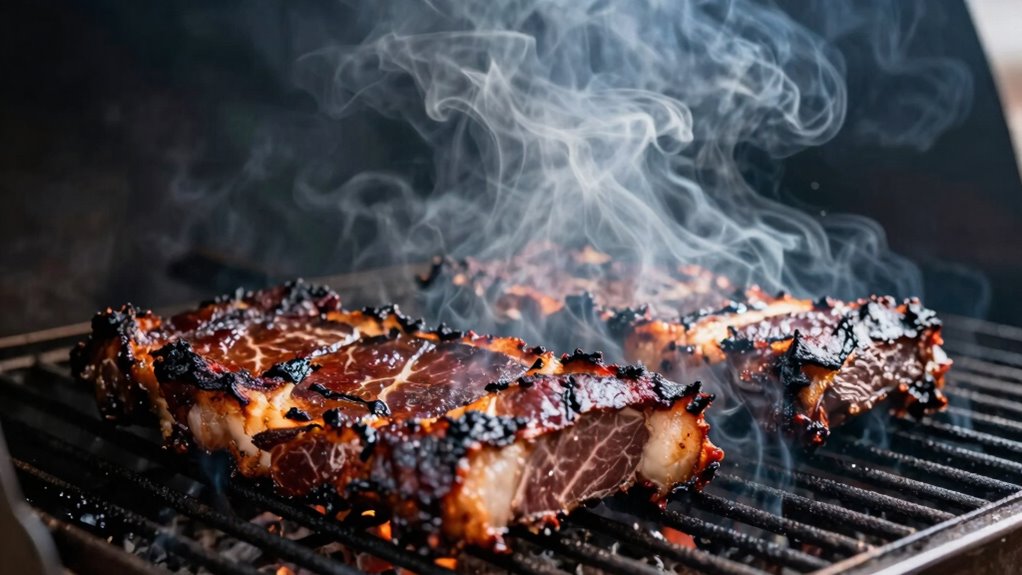
Dry meat often results from temperature mistakes during smoking, especially when the heat gets too high or fluctuates excessively. To fix this, start by checking your smoker calibration—ensure it maintains consistent temperature. Next, monitor ambient temperature, as it affects your smoker’s heat stability; use a reliable thermometer to track changes. Additionally, adjusting your vents or lid position to control airflow can help to stabilize the temperature. Here are some steps to troubleshoot: 1. Recalibrate your smoker to ensure accurate temperature readings. 2. Use a separate thermometer to monitor ambient temperature and prevent overheating. 3. Make small adjustments to airflow to keep the smoker steady during long cooks. Additionally, choosing a properly insulated smoker can help maintain a stable temperature throughout the smoking process. Ensuring your smoker has good thermal regulation can also prevent sudden temperature drops or spikes during extended smoking sessions, and investing in quality temperature controls can provide more precise heat management for consistent results. Proper ventilation and consistent heat are crucial for achieving tender, juicy smoked meat. Incorporating a digital temperature controller can further enhance your ability to maintain ideal cooking conditions and avoid drying out your meat.
Frequently Asked Questions
How Does Ambient Weather Affect Smoking Temperature Control?
Ambient weather impacts your smoking temperature critically. High humidity can make it harder to maintain steady heat, so you need to focus on humidity control. Wind and airflow management are also vital, as strong gusts can cool or heat your smoker unevenly. To keep a consistent temperature, adjust vents accordingly, shield your smoker from the wind, and monitor humidity levels, ensuring ideal conditions for perfectly smoked meat.
Can Using a Water Pan Impact Temperature Stability?
Using a water pan can positively impact temperature stability in your smoker. The water pan effects help regulate heat by absorbing and releasing moisture, which prevents sudden temperature fluctuations. This creates a more consistent environment, making it easier for you to maintain your desired smoking temperature. Keep the water level steady, and you’ll notice improved control over your smoking process, resulting in juicier, better-cooked meat.
Does Meat Thickness Influence Ideal Smoking Temperature?
Yes, meat thickness influences the ideal smoking temperature. Thicker cuts need a lower smoking temperature and longer cook time to guarantee even cooking without drying out. Thin cuts can handle higher temperatures for quicker smoking. Adjust your smoking temperature based on meat thickness to prevent overcooking or undercooking, ensuring juicy, tender results. Always monitor internal temperature and consider the size of your meat for perfect smoking outcomes.
How Often Should I Calibrate My Smoker’s Thermometer?
You should calibrate your smoker’s thermometer at least once every three to six months to guarantee accurate readings. Regular calibration maintains thermometer accuracy, preventing temperature fluctuations that can dry out meat. If you notice inconsistent temperatures or your meat’s cooking results seem off, it’s a sign to check and recalibrate immediately. Consistent calibration helps you maintain precise smoker temperatures, resulting in perfectly cooked, juicy meat every time.
Are There Safety Concerns With Temperature Fluctuations During Smoking?
Yes, temperature fluctuations can influence meat safety, so you should monitor your smoker closely. Sudden changes may cause the meat to stay in the unsafe temperature zone longer, risking bacteria growth. To prevent this, keep your smoker’s temperature steady and within recommended ranges. Regularly calibrate your thermometer, and avoid opening the lid too often. This ensures your meat stays safe, tender, and perfectly cooked every time.
Conclusion
Now that you know the importance of temperature control, you’ll never want to leave it to chance. Miss it, and your meat could turn dry and less inviting than you imagined. But the real secret lies in mastering that perfect balance—so what’s the next step? Stay attentive, keep experimenting, and soon you’ll discover the true art of juicy, tender smoked meat. Are you ready to elevate your smoking game beyond the basics? The delicious payoff awaits.