
TL;DR

Get kitchen staples and gadgets delivered free with Prime
- Fast, free delivery on millions of items
- Prime Video, Amazon Music and more included
- Member-only deals all year
School lunch containers vary widely in materials and design. Reusable options like stainless steel and silicone are safer and more eco-friendly, while insulated containers keep food fresh. Recent innovations make packing lunch easier and greener.
Ever opened your kid’s lunchbox and wondered if the container is safe or actually doing its job? You’re not alone. With so many options out there — from plastic to stainless steel, collapsible to insulated — choosing the right one can feel overwhelming.
In this guide, you’ll learn what makes a lunch container safe, how to pick the best design for your child’s needs, and what recent innovations are making packing lunch easier and more eco-friendly. Because a good container isn’t just about keeping food fresh — it’s about peace of mind too.
Choose BPA-free plastics, stainless steel, or glass for safety and durability.
Opt for leak-proof, compartmentalized designs to keep foods separate and prevent messes.
Insulated containers extend freshness, keeping hot foods hot and cold foods cold for hours.
Size containers to match your child’s appetite, avoiding waste or hunger.
Switch to eco-friendly options like stainless steel or silicone to reduce waste and save money long-term.
What Materials Keep Lunch Safe and Toxins Out
When it comes to school lunch containers, material matters. The safest options are BPA-free plastics, stainless steel, and glass. These materials won’t leach harmful chemicals into food, even after repeated use.
Imagine your child opening a container that’s durable and toxin-free. Stainless steel, for example, is non-reactive, meaning it won’t absorb odors or stains and won’t crack or break easily. Glass is another safe choice, especially for reheating or storing leftovers, but it’s heavier and breakable.
Plastic containers are lightweight and versatile. Just ensure they’re labeled BPA-free, as BPA is linked to hormone disruption. Silicone is flexible and lightweight, perfect for collapsible containers or lids, but check for food-safe, non-toxic coatings.
Choosing the right material isn’t just about safety; it also impacts durability and environmental footprint. Stainless steel and glass are more sustainable long-term because they withstand years of use without degrading or leaching chemicals. However, they can be heavier or more fragile, which might be a consideration for active children or for ease of transport. Plastic and silicone, while lighter and more flexible, often have a shorter lifespan and may require cautious handling to avoid cracks or degradation. The tradeoff lies in balancing safety and longevity with convenience and weight.
As an affiliate, we earn on qualifying purchases.
Design Features That Make Your Kid’s Lunch Spill-Proof and Easy to Use
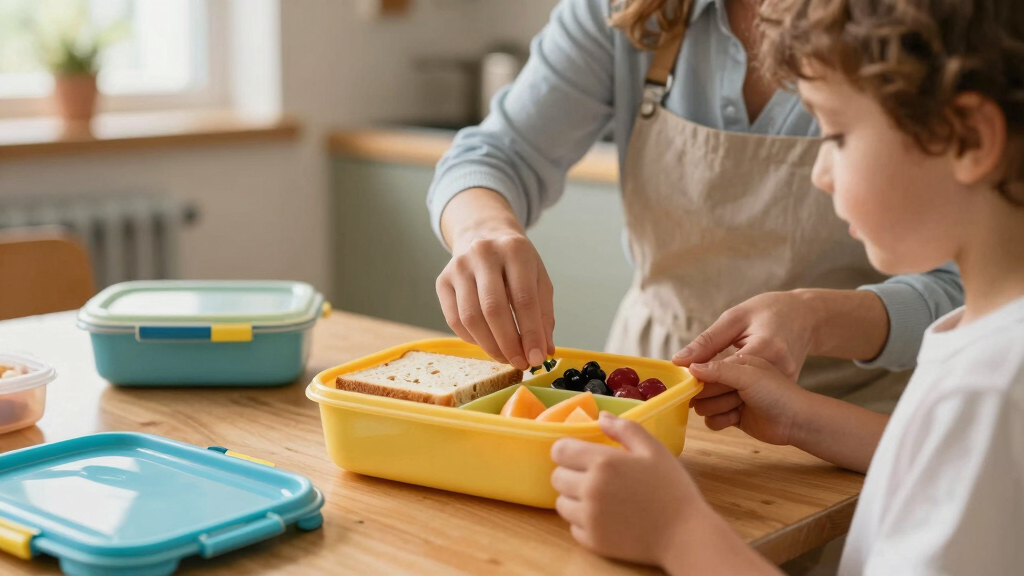
In a busy school hallway, a spill-proof container can save you a lot of cleanup. Look for containers with tight-sealing lids, locking mechanisms, and child-friendly openings. Compartments are also a game-changer — they keep foods separate and prevent sogginess or mixing.
Picture a lunchbox with three snug compartments — one for crunchy carrots, another for a sandwich, and a third for fruit. No cross-contamination, no mess.
Ease of use matters too. Kids should open and close containers without frustration. Some models feature push-button seals, while others have flip-top lids with tabs. Portability features like handles, straps, or lightweight design help kids carry their lunch comfortably.
Here’s a quick list:
- Leak-proof seals
- Multiple compartments
- Child-friendly closures
- Handles or straps
Beyond basic functionality, consider how the design impacts daily routines. For instance, containers with easy-to-open lids encourage independence, while those with fewer parts reduce the risk of losing pieces. The choice of compartments can also influence portion control and variety, making it easier to pack balanced meals. The right design not only prevents messes but also promotes good habits and convenience, which are essential for busy mornings and active kids.
Why Insulation and Temperature Control Matter
Ever gotten a cold lunch that’s warm or a hot meal that’s gone cold? Insulated containers solve that problem. They trap temperature inside, keeping food hot or cold for hours.
Imagine a thermos that keeps soup steaming at lunchtime, or a chilled box that keeps fruit salad crisp until noon. For kids with sensitive stomachs or perishable foods, insulation can make a big difference.
According to recent studies, insulated containers can maintain hot temperatures up to 6 hours and cold temperatures for even longer, reducing the need for reheating or extra ice packs. Pair them with thermal bags for extra efficiency.
Choosing an insulated container isn’t just about convenience; it can also impact food safety and quality. Hot foods that cool down too quickly may promote bacterial growth, while cold foods that warm up can spoil faster. Proper insulation helps maintain the intended temperature, ensuring that meals stay safe and enjoyable. However, insulation adds weight and cost, so weighing the benefits against practicality is important. The tradeoff involves investing in a more expensive, heavier container that offers better temperature control versus simpler options that may require additional cooling or reheating.
Choosing the Right Size for Your Child’s Appetite
Size matters when packing lunch. Too big, and the container feels bulky; too small, and it leaves your kid hungry. A good rule of thumb? Match the container to your child’s age and appetite.
For preschoolers, a container holding around 200-300 ml works well. For older kids, 400-600 ml gives enough room for a balanced meal. Think about whether they need space for snacks or drinks too.
Picture a 12-year-old with a full-sized sandwich, a side of grapes, and a juice box — a 500 ml container fits comfortably in their backpack without bulking it up.
Pro tip: measure portions and compare to container sizes before buying. It helps avoid overstuffed or underwhelming lunches.
Choosing the right size also influences how much food is actually consumed versus wasted. An appropriately sized container encourages kids to finish their meals without feeling overwhelmed or restricted. Oversized containers can lead to leftover food that spoils or gets thrown away, while too-small containers might leave them hungry. Balancing capacity with portion control helps develop healthy eating habits and reduces waste, making the lunch both satisfying and sustainable.
Eco-Friendly Options That Save the Planet and Your Wallet
Reusable is the new black. Reusable containers cut waste and save money in the long run. Stainless steel and silicone are leaders here — tough, sustainable, and dishwasher safe.
Imagine switching from disposable plastic bags to a sleek stainless steel box that lasts for years. Not only do you reduce trash, but you also avoid chemicals leaching from cheap plastics.
According to environmental reports, switching to reusable containers can cut a family’s plastic waste by over 80% annually. Plus, many eco-friendly brands now offer vibrant colors and playful designs to appeal to kids.
Key options include:
- Stainless steel containers
- Silicone collapsible bowls
- Recyclable or biodegradable plastics
Choosing eco-friendly containers isn’t just about reducing waste; it also means investing in products that can withstand daily use, which ultimately lowers replacement costs. The tradeoff is that some eco materials may have a higher upfront price or require special care, but their long-term benefits outweigh these initial investments. By making sustainable choices, you’re helping reduce the environmental footprint of each lunch, encouraging responsible habits in children, and saving money over time.
What’s New? The Latest in Lunch Container Tech
Innovation is making packing lunch smarter and simpler. From containers with built-in temperature sensors to stackable, space-saving designs, the latest tech is impressively practical.
One recent trend: smart containers with digital temperature indicators that alert you if food is getting too warm or cold. Others have modular pieces that fit together like a puzzle, giving kids options for different meals.
Imagine a container that tracks how long food has been stored and sends a reminder to toss or eat. According to industry reports, smart lunch tech is expected to grow by 20% annually over the next five years.
These innovations aim to address common concerns like food safety, portion control, and convenience. For example, temperature-sensitive containers help prevent foodborne illnesses by ensuring foods stay within safe temperature ranges. Modular designs maximize space and organization, making it easier for kids to access their meals. While these high-tech options may come at a higher price point, they offer peace of mind and efficiency that traditional containers might lack. As technology advances, expect more features that integrate with smartphones or digital assistants, further simplifying lunch packing and safety monitoring.
Frequently Asked Questions
What materials are safest for school lunch containers?
BPA-free plastics, stainless steel, and glass top the list for safety. They won’t leach harmful chemicals and are easy to clean, making them ideal for daily use.
Are insulated containers worth it for keeping food hot or cold?
Absolutely. Insulated containers can keep food hot for up to 6 hours and cold for even longer, reducing the need for reheating or extra cooling packs, especially for perishable foods.
How do I choose the right size and capacity?
Match the container size to your child’s age, appetite, and meal components. Measure typical portions and pick a container that fits comfortably without overstuffing or leaving room for empty space.
Are collapsible or stackable containers better?
They save space and are easy to store, but may compromise a bit on durability or insulation. Consider your needs for convenience versus longevity before choosing.
What are the best eco-friendly options?
Stainless steel and silicone containers lead the way for sustainability. They last for years, are recyclable, and help reduce plastic waste significantly.
Conclusion
Picking the right school lunch container isn’t just about keeping food fresh — it’s about making mindful, safe, and eco-friendly choices. The best containers combine safety, convenience, and sustainability, turning lunchtime into a moment your child looks forward to.
Next time you shop, picture a container that lasts for years, keeps food perfect, and helps the planet. After all, a good lunch container is a small investment with a big impact.
Halloween Picks
halloween
As an affiliate, we earn on qualifying purchases.