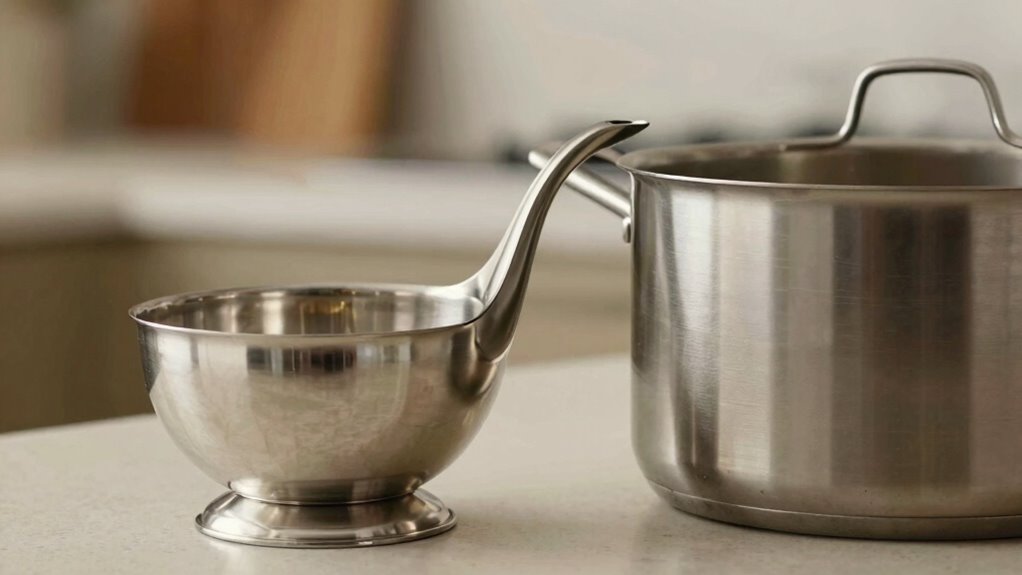

The main shape difference between a saucier and a saucepan affects how you stir and handle ingredients. A saucier has rounded, curved sides that make it easy to whisk and incorporate delicate sauces smoothly. A saucepan features straight sides, ideal for boiling and simmering with less splashing. This shape influences your stirring technique and control over textures. If you want to discover more about how these differences impact your cooking, keep exploring the details ahead.

Get kitchen staples and gadgets delivered free — and shop member deals
- Fast, free delivery on millions of items
- Access to Prime Big Deal Days deals on October 6–7
- Prime Video, Amazon Music and more included
Key Takeaways
- Saucier’s rounded, curved shape allows for more efficient stirring and whisking of delicate sauces, preventing splashes.
- Saucepan’s straight sides facilitate stirring liquids without spilling, ideal for boiling and simmering.
- The curved interior of a saucier provides better contact with ingredients, ensuring smoother mixing and quicker incorporation.
- The shape impacts handling; sauciers are easier to tilt and swirl for delicate stirring, while saucepans support straightforward stirring motions.
- The design difference influences the stirring technique, affecting the texture and consistency of the cooked ingredients.

When choosing cookware, understanding the differences between a saucier and a saucepan can help you cook more efficiently. The shape of each piece impacts how you handle your ingredients, influence cooking techniques, and even affect the durability of the material over time. A saucier has a rounded, curved shape with a wider, sloped sides, making it ideal for stirring and whisking delicate sauces. Its design minimizes hot spots, allowing heat to distribute evenly, which is essential for cooking smooth, consistent sauces without scorching or breaking. This shape also makes it easier to incorporate ingredients quickly, resulting in smoother textures and better control over the cooking process.
A saucier’s rounded shape ensures even heat distribution, perfect for smooth, delicate sauces and precise cooking control.
In contrast, a saucepan typically features straight sides and a flat bottom. Its shape lends itself well to boiling, simmering, and making larger quantities of liquids like soups or stews. Because of its vertical walls, a saucepan allows for easy stirring without splashing, and its high sides help contain liquids, reducing mess. This makes it versatile for various cooking techniques, especially those requiring prolonged simmering or reduction. When choosing between a saucier and a saucepan, consider how the shape directly impacts your stirring technique—whether you prefer the gentle, circular motions suited to sauces or the more straightforward stirring needed for liquids. Additionally, the design and shape of each piece influence how heat is transferred, impacting cooking performance. The material of the cookware also plays a crucial role in heat distribution and durability, further affecting the cooking outcome. Proper heat conduction is vital for achieving consistent results, especially in delicate sauces.
Material durability plays a critical role in your choice as well. Both types of cookware come in various materials, from stainless steel and aluminum to copper and non-stick coatings. Generally, stainless steel and copper are prized for their durability and excellent heat conduction, but they may require more careful handling to avoid scratches or warping. Aluminum, often used in saucepans, offers lightweight strength and quick heat response, but it can be prone to dents if not of high quality. When selecting cookware, think about how the material will hold up under your typical cooking techniques—whether you’ll be stirring vigorously, simmering for long periods, or frequently washing the pieces. Understanding cookware materials helps you choose pieces that will last longer and perform better over time.
Ultimately, the shape of the saucier versus the saucepan influences how you stir, heat, and manage your ingredients, shaping your overall cooking experience. If you often make sauces or delicate reductions, a saucier’s rounded design and material durability make it a smart investment. For broader tasks like boiling or preparing large quantities of liquids, a saucepan’s straight sides and sturdy construction are more practical. Recognizing these differences helps you choose the right piece for your kitchen, improving your efficiency and ensuring your cookware lasts longer.
As an affiliate, we earn on qualifying purchases.
Frequently Asked Questions
Which Cookware Heats Faster, a Saucier or a Saucepan?
A saucier heats faster than a saucepan because its rounded shape allows for better heat distribution, which helps it warm up more evenly and quickly. This shape also enhances cooking versatility, making it ideal for delicate sauces and stirring. The curved sides prevent hot spots and make stirring easier, ensuring your dishes cook thoroughly. So, if speed and even heating matter, a saucier is your best choice.
Can a Saucepan Replace a Saucier in Recipes?
Yes, a saucepan can replace a saucier in many recipes, especially if you have limited options. You just need to take into account alternative cookware options that offer good heat distribution. While a saucepan’s shape might not be as ideal for stirring delicate sauces, it remains compatible with most recipes. Just keep in mind that stirring and temperature control could be less precise, so adjust your technique accordingly.
What Materials Are Best for Sauciers and Saucepans?
Think of your cookware like a good partner — compatible and reliable. For sauciers and saucepans, stainless steel with an aluminum or copper core is ideal because it offers excellent material compatibility and superior heat retention properties. These materials guarantee even cooking and precise temperature control. Avoid cheap, thin metals that warp or heat unevenly, making your cooking less predictable and less enjoyable.
Are Sauciers Easier to Clean Than Saucepans?
Sauciers are generally easier to clean than saucepans because their rounded, sloped sides prevent food from sticking in corners. To keep them in good shape, follow maintenance tips like soaking after use and avoiding abrasive cleaners. Their smooth surfaces mean fewer crevices to scrub, making cleaning quicker. In contrast, saucepans with sharper corners might require more effort to remove stubborn residue, so choose a saucier for easier cleaning.
How Does Shape Affect Cooking Different Sauces?
The shape of your pan impacts how you cook different sauces by influencing sauce consistency and stirring techniques. A saucier’s rounded sides make it easier to achieve a smooth, velvety texture by preventing lumps, as you can stir gently and evenly. Conversely, a saucepan’s straight sides require more effort to stir thoroughly, which may affect the sauce’s consistency. Choose the shape that best matches your sauce and stirring style for ideal results.
Conclusion
Choosing between a saucier and a saucepan really depends on what you cook most often. For example, if you’re making delicate sauces or soups, a saucier’s rounded shape and sloped sides make stirring easier, preventing sticking. Imagine you’re preparing a creamy béchamel—using a saucier guarantees smooth, even results. So, pick the right pot for your kitchen adventures, and you’ll enjoy cooking more, with less mess and better results every time.
Fall Picks
fall essentials
As an affiliate, we earn on qualifying purchases.