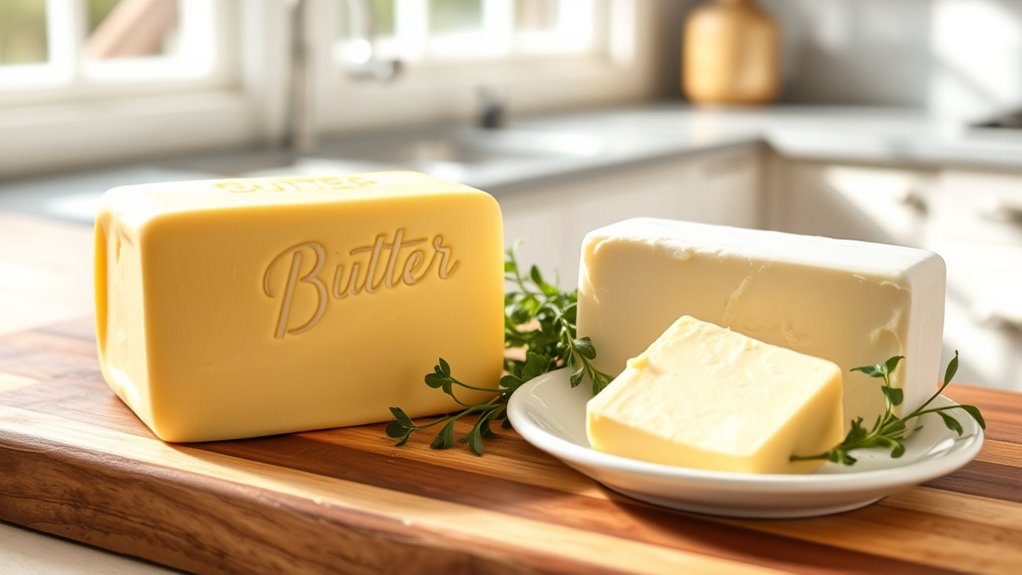

European-style butter packs about 82% fat, while American-style has around 80%, affecting both texture and flavor. The higher fat content in European butter gives it a creamier texture and richer taste, ideal for pastries and sauces. American butter offers a milder, straightforward flavor, making it versatile for various recipes. Often, European butter is unsalted, allowing for better control over seasoning. Understanding these differences can enhance your cooking adventures, so there’s more to discover.

Get kitchen staples and gadgets delivered free with Prime
- Fast, free delivery on millions of items
- Prime Video, Amazon Music and more included
- Member-only deals all year
Key Takeaways
- European-style butter contains about 82% fat, while American-style butter has around 80%, impacting texture and flavor.
- European butter offers a cultured, tangy flavor, enhancing pastries and sauces compared to American butter’s creamier taste.
- Typically sold unsalted, European butter allows for better salt control in recipes, unlike American butter, which is available in both salted and unsalted forms.
- The firmer consistency of European butter makes it easier to handle for doughs and pastries, resulting in superior flaky textures.
- Understanding the differences in production and characteristics helps choose the right butter for various culinary applications.
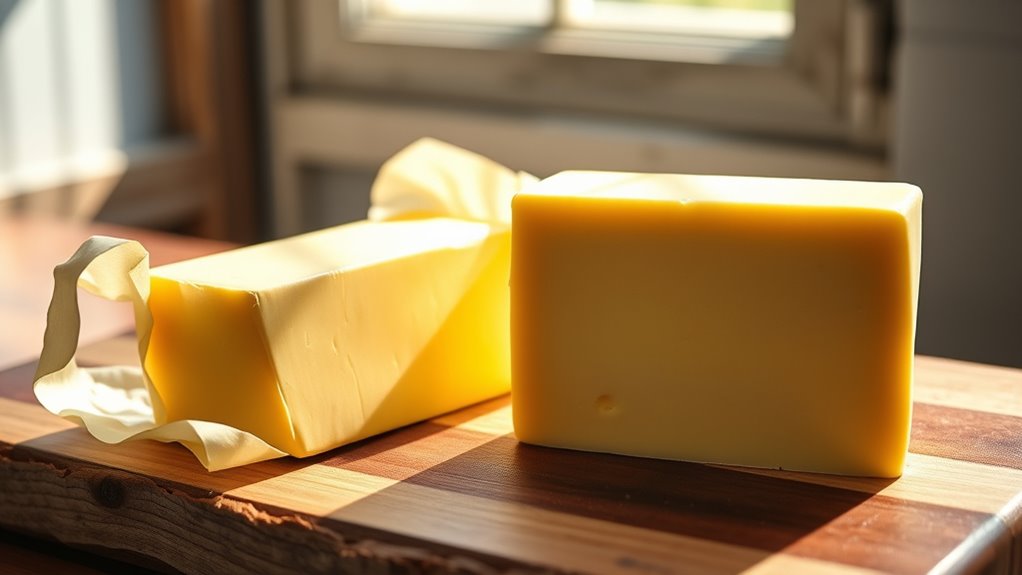
When it comes to butter, you might not realize that the style can dramatically influence your cooking and baking. European-style and American-style butter each have unique characteristics that can affect the outcome of your recipes. Understanding the butter production differences is essential for any home cook or baker wanting to achieve the best results.
European-style butter typically contains about 82% fat, while American-style butter hovers around 80%. This small difference in fat content can make a significant impact on your culinary uses comparison. The higher fat content in European butter translates to a creamier texture and richer flavor, which is why many chefs prefer it for sauces and pastries. When you’re making a flaky pie crust or a delicate puff pastry, using European-style butter can elevate your dish, providing that tender, melt-in-your-mouth quality.
European-style butter, with its 82% fat content, offers a creamier texture and richer flavor, enhancing pastries and sauces significantly.
Another factor to note is the salt content. American-style butter often comes in both salted and unsalted varieties, while European butter is usually sold unsalted. This distinction matters because using salted butter can alter the balance of flavors in your recipes. If you’re baking cookies or cakes, you might want to stick with unsalted butter to maintain control over the sweetness and saltiness of your final product. However, if you’re making a savory dish, salted American butter can enhance the flavor without needing additional salt.
Texture plays a pivotal role, too. European-style butter has a firmer consistency, which can be advantageous when you’re working with doughs that need to be chilled before baking. It’s less likely to soften at room temperature than American butter, making it easier to handle. If you’re whipping up a batch of cookies, using European butter can give you a sturdier dough that holds its shape better during baking.
In terms of flavor, the difference is also noteworthy. European butter is often cultured, leading to a tangy, complex flavor profile that can enhance your cooking. If you’re spreading it on warm bread or incorporating it into sauces, you’ll notice that added depth. On the other hand, American butter has a more straightforward, creamy taste that works well in various recipes, but it may lack the complexity you’d find in its European counterpart.
Ultimately, the choice between European-style and American-style butter depends on your recipe and personal preferences. By understanding these butter production differences and culinary uses comparison, you can make informed decisions that will elevate your cooking and baking endeavors. Additionally, incorporating music therapy can enhance your overall cooking experience by reducing stress and promoting creativity in the kitchen.
As an affiliate, we earn on qualifying purchases.
Frequently Asked Questions
Can I Substitute American Butter for European Butter in Recipes?
Yes, you can substitute American butter for European butter in recipes, but expect some butter flavor differences. European butter typically has a higher fat content, which can affect the texture and richness of your dish. If you’re aiming for that creamy, decadent taste, consider using less American butter or adding a bit of cream to compensate for the substitution effects. Experimenting can help you find the right balance for your specific recipe.
Which Type of Butter Has a Longer Shelf Life?
European butter usually has a longer shelf life than American butter due to its higher fat content and lower moisture levels. If you want your butter to last like a superhero, store it in the fridge and keep it tightly wrapped. Shelf life differences can be significant, so always check for freshness. When in doubt, use it up quickly, or consider freezing it to extend its life even more!
Is European-Style Butter Healthier Than American-Style Butter?
European-style butter might offer more health benefits than American-style butter, primarily due to its higher fat content. This richer butter often contains more healthy fats, which can be beneficial for heart health when consumed in moderation. However, it’s essential to contemplate your overall diet, as both types can fit into a healthy lifestyle. You should focus on balance and moderation to enjoy the flavors without compromising your health.
How Do I Store European-Style Butter Properly?
To store European-style butter properly, keep it in the fridge wrapped tightly in its original packaging or in an airtight container to prevent it from absorbing odors. If you plan to use it frequently, you can leave a small portion at room temperature for easy spreading, but don’t exceed a week. For long-term storage, consider freezing it. Just remember to slice it into portions before freezing for easier use later.
Are There Any Brands That Offer Both Styles of Butter?
Yes, some brands offer both styles of butter. For example, Kerrygold and Plugrá provide options that let you taste the distinct flavor profile differences between European and American butter. You might think it’s hard to find a brand that caters to both styles, but these brands excel in butter brand comparisons and make it easy for you to enjoy the rich creaminess of European-style alongside the familiar taste of American-style.
Conclusion
In the battle of European-style versus American-style butter, it really boils down to personal taste. If you’re after a richer flavor and creamier texture, European butter’s your best bet. But if you prefer a milder, more versatile option for everyday use, American butter fits the bill perfectly. So, whether you’re spreading it on toast or baking up a storm, each style has its own charm. Ultimately, it’s all about finding what spreads joy on your plate!
NFL season / tailgating Picks
team gear
As an affiliate, we earn on qualifying purchases.