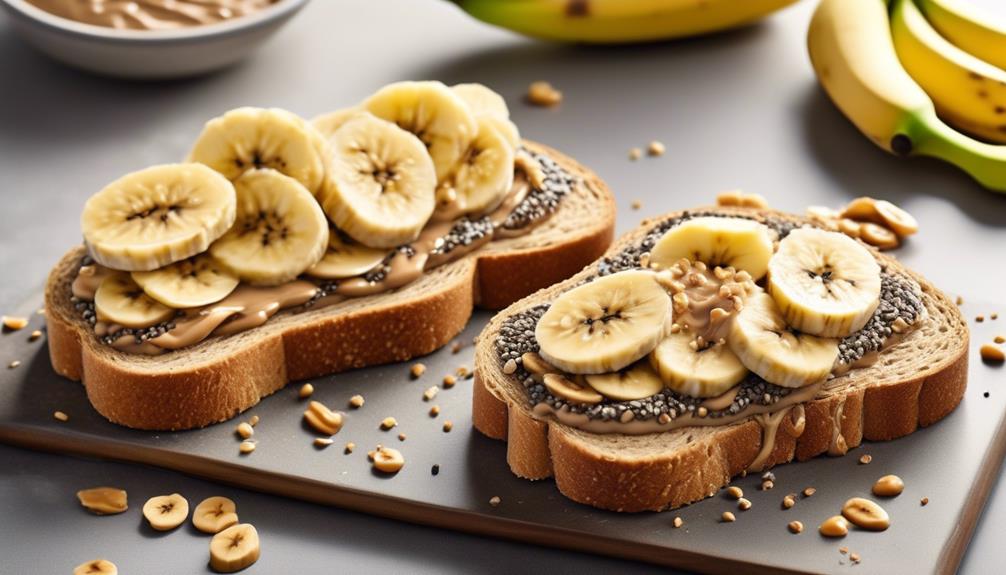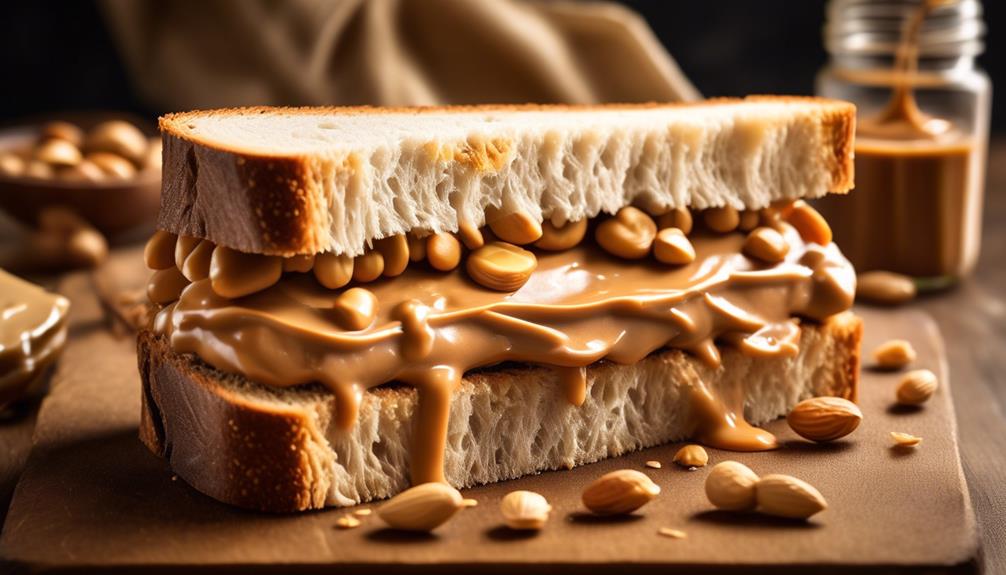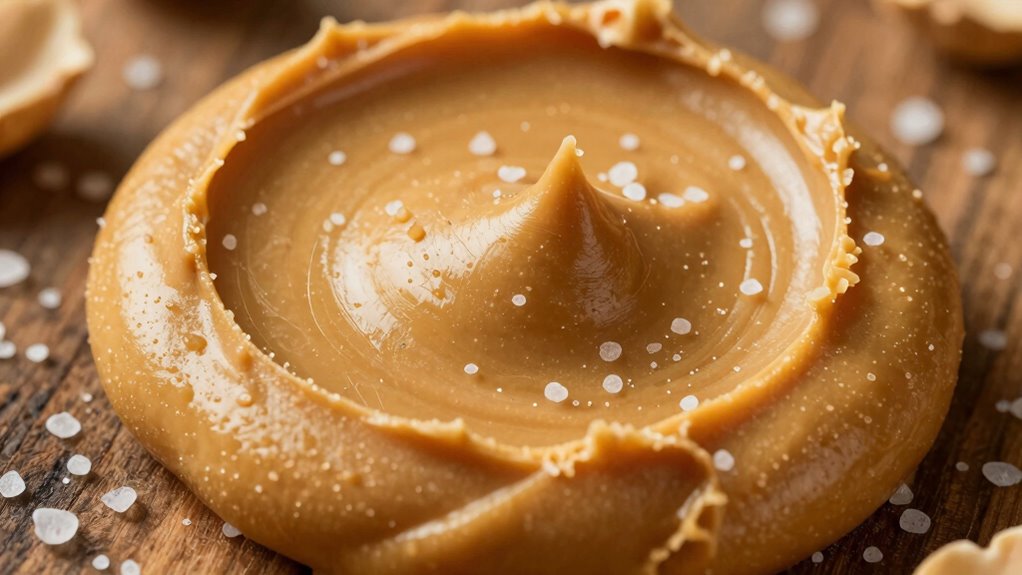

Salt in peanut butter does more than just boost flavor; it enhances nuttiness, balances sweetness, and prevents dullness. It also helps keep the product fresh by inhibiting bacteria and molds, extending its shelf life. Additionally, salt improves texture, making it easier to spread and maintaining the right consistency. Different recipes use varying amounts, so getting the balance just right is key. Keep exploring to uncover more about how salt transforms this beloved spread.

Get kitchen staples and gadgets delivered free with Prime
- Fast, free delivery on millions of items
- Prime Video, Amazon Music and more included
- Member-only deals all year
Key Takeaways
- Salt enhances peanut butter’s flavor by amplifying nutty richness and balancing natural sweetness.
- It acts as a preservative, inhibiting bacteria and extending shelf life.
- Proper salt levels improve texture, aiding smooth spreading and preventing oil separation.
- Salt’s subtle addition deepens aroma and flavor complexity without overpowering.
- Variations in salt content influence overall taste, making moderation essential for optimal flavor.
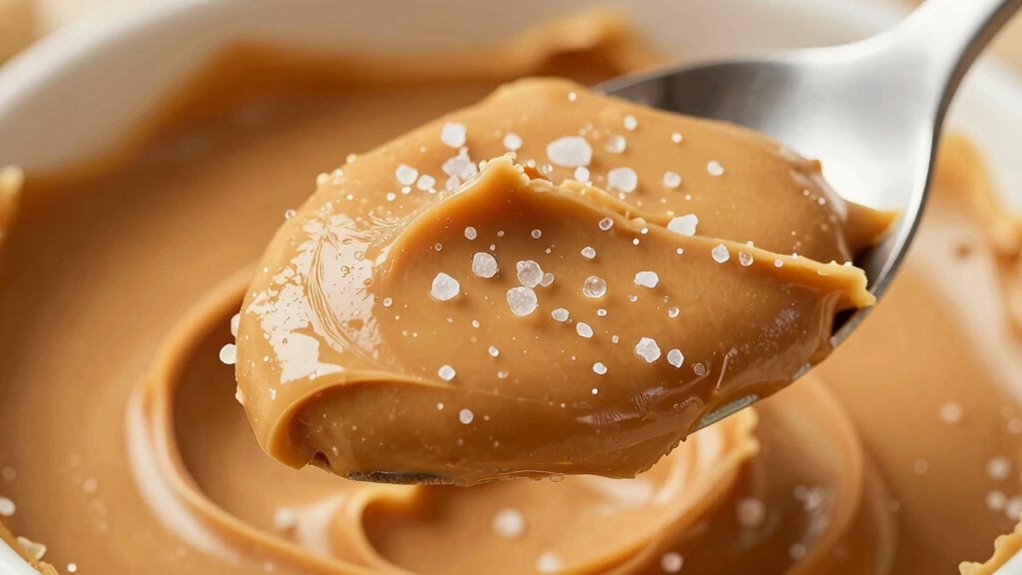
Salt is a key ingredient in peanut butter that enhances flavor and balances its natural sweetness. When you take a spoonful, it’s the salt that plays a pivotal role in making the taste more complex and satisfying. Salt’s impact on flavor goes beyond just adding a salty note; it amplifies the underlying nutty richness and makes the overall flavor profile more vibrant. Without enough salt, peanut butter can taste flat or dull, but with the right amount, it becomes more inviting and well-rounded. It’s a subtle yet powerful tool that transforms a simple spread into something much more flavorful.
Salt elevates peanut butter’s flavor, making it richer, more vibrant, and perfectly balanced.
But salt’s role isn’t limited to flavor enhancement. It also has a significant preservation role in peanut butter, especially in commercial varieties. Salt helps inhibit the growth of bacteria, molds, and yeast that can spoil the product over time. By reducing the risk of microbial activity, salt extends the shelf life of peanut butter, guaranteeing it stays fresh longer. This preservation aspect is particularly important in processed foods, where maintaining quality and safety over time is critical for both manufacturers and consumers. When you open a jar of peanut butter, you’re not just enjoying its taste—you’re also benefiting from the protective qualities that salt provides, which help prevent spoilage and maintain freshness.
You might not always notice salt’s effects explicitly, but it’s an essential component that influences both flavor and stability. When used in moderation, salt enhances the natural nutty aroma and balances the sweetness from the peanuts, making each bite more appealing. Too little salt, and the peanut butter might lack depth; too much, and it can overpower the delicate nutty flavor. This balance is key, especially since different brands and recipes vary in their salt content. You can often tell by taste whether a peanut butter has the right amount—just enough to boost flavor without dominating it. Additionally, salt can influence the texture of peanut butter, helping it spread smoothly and hold together well. Proper salt levels help maintain a desirable consistency, preventing the product from becoming too oily or too stiff. Moreover, salt’s role in food preservation is crucial for extending shelf life and ensuring safety in processed foods. Understanding the chemical properties of salt can also shed light on how it contributes to the overall stability of peanut butter. In fact, salt’s preservative qualities are a key reason why it has been used as a preservative for centuries. Recognizing the biochemical interactions between salt and other ingredients can deepen your appreciation for its importance. As you enjoy your peanut butter, remember that salt isn’t just a seasoning—it’s a crucial ingredient that assures the spread is flavorful, safe, and enjoyable with every scoop.
As an affiliate, we earn on qualifying purchases.
Frequently Asked Questions
How Does Salt Influence Peanut Butter’s Shelf Life?
Salt helps extend peanut butter’s shelf life by inhibiting microbial growth, which can cause spoilage. It also promotes shelf stabilization by preventing salt crystallization, keeping the texture smooth. When you add salt, it acts as a preservative, slowing down oxidation and mold development. So, the right amount of salt not only enhances flavor but also guarantees your peanut butter stays fresh longer and maintains a desirable consistency.
Are There Health Benefits to Salted Versus Unsalted Peanut Butter?
Salted peanut butter offers flavor enhancement, making it taste richer and more appealing, which can encourage you to enjoy it more often. While nutritional differences are minimal, salted versions may contain slightly more sodium, which could benefit your electrolyte balance if consumed in moderation. However, unsalted peanut butter is better if you’re watching your sodium intake. Overall, the health benefits depend on your dietary needs and preferences.
Does Salt Affect the Texture of Peanut Butter?
Salt crystallization influences peanut butter’s texture by promoting subtle texture alteration. When you add salt, it interacts with the oils and proteins, preventing them from separating completely and maintaining a smoother consistency. Like a silent composer, salt subtly shapes the harmony of texture beneath the surface, ensuring your peanut butter feels just right. Without it, you might notice a grainier or oilier feel, highlighting salt’s unseen yet essential role in texture.
What Types of Salt Are Used in Peanut Butter Production?
In peanut butter production, manufacturers typically use fine-grain table salt or sea salt. These salts influence salt crystallization, affecting texture and flavor. Sea salt, with its higher mineral content, adds subtle mineral notes and a more complex flavor profile. The mineral content also impacts the salt’s solubility, ensuring even distribution during mixing. Both types of salt help balance the nutty flavor while enhancing shelf stability.
How Does Salt Impact Peanut Butter’s Flavor Profile?
You might notice that a pinch of salt enhances peanut butter’s flavor, creating a richer, more balanced taste. Salt acts as a flavor enhancer, highlighting the nutty notes and rounding out sweetness. It also improves taste balance, preventing the product from tasting flat or overly sweet. Without salt, peanut butter can seem dull; with it, you get a harmonious blend of flavors that make every spoonful more satisfying.
Conclusion
Next time you enjoy peanut butter, remember that a pinch of salt isn’t just about flavor—it’s about balance and harmony. Sometimes, the smallest touches can reveal hidden depths and bring everything together in a way you might not expect. Embrace these subtle surprises, and you might find that the simplest ingredients hold the most meaningful secrets. After all, life, like peanut butter, is best enjoyed with a gentle touch of something extra.
Fall Picks
fall essentials
As an affiliate, we earn on qualifying purchases.