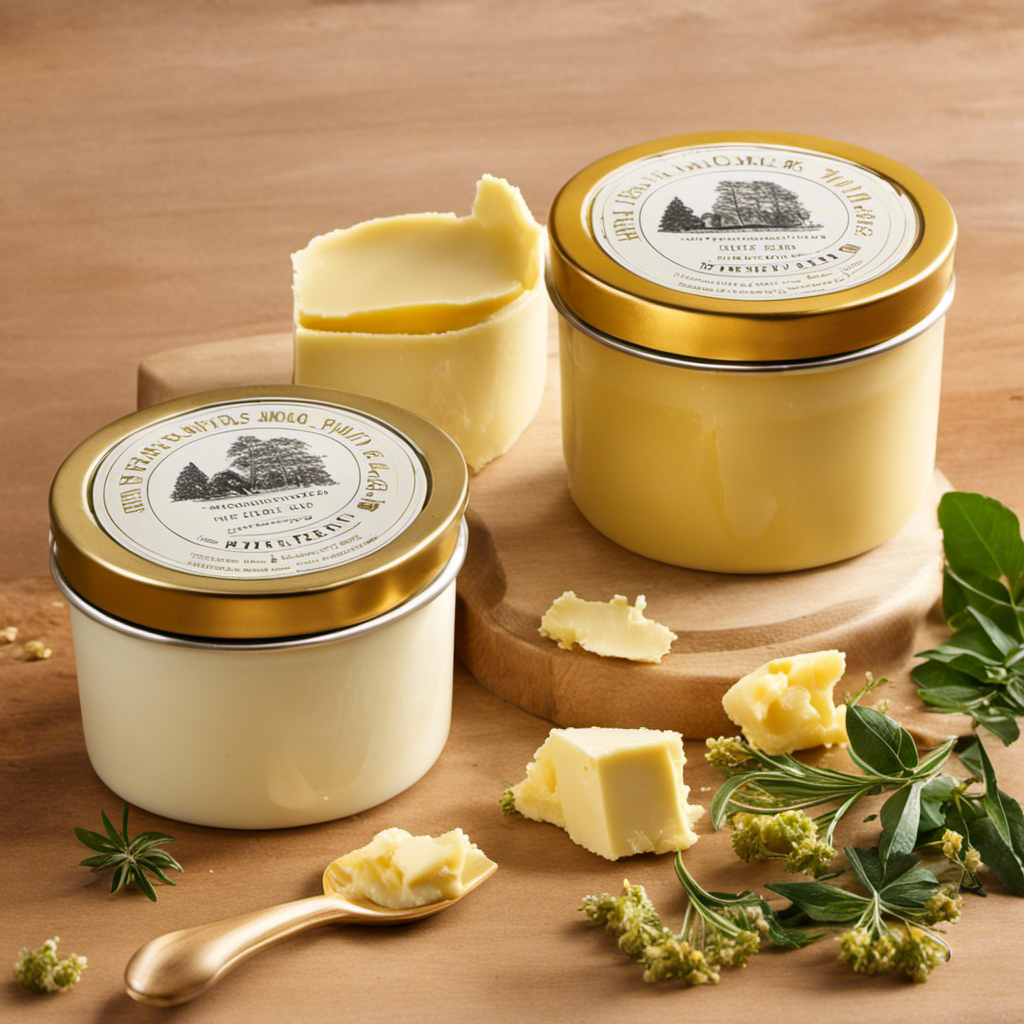
To ripen cream for cultured butter, start by using high-quality cream with a good butterfat content. Add a commercial starter culture or buttermilk from a previous batch. Let it sit at room temperature for 12-24 hours, maintaining a warm environment to encourage fermentation. You’ll notice the cream thickening and developing a tangy flavor. After the desired ripening time, you can begin churning. Discover more tips on achieving the perfect cultured butter as you go along!
Key Takeaways
- Use high-quality cream with a suitable butterfat content and freshness for optimal fermentation and flavor development.
- Introduce bacteria using commercial starter cultures or buttermilk from a previous batch to initiate fermentation.
- Allow the cream to ferment at room temperature for 12-24 hours to develop tangy flavor and complexity.
- Monitor the mixture for thickening and taste during fermentation to ensure desired flavor depth is achieved.
- Proper ripening enhances flavor, so wait until the cream shows a yellow hue before churning to separate butterfat from buttermilk.
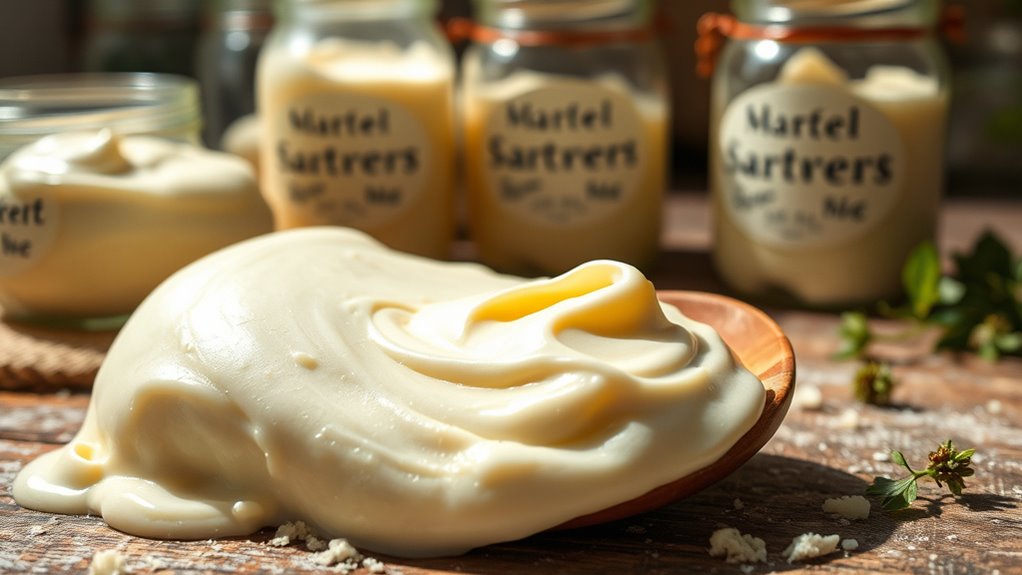
When you’re looking to create the perfect cultured butter, the ripening cream process plays a crucial role. This step isn’t just a formality; it’s where the magic begins. First, you need to choose the right cream. Look for high-quality, fresh cream with a high butterfat content to guarantee a rich, creamy product. Once you’ve got your cream, it’s time to introduce the right bacteria. This is where the fermentation process comes into play. You can use commercial starter cultures or opt for a few tablespoons of buttermilk from a previous batch. Both methods will kickstart the fermentation process and help in flavor development.
After adding your starter culture, you’ll want to let the mixture sit at room temperature for about 12 to 24 hours. This time allows the bacteria to multiply and ferment the lactose in the cream, creating lactic acid. As the lactic acid builds up, it lowers the pH, giving the butter that tangy flavor we all love. It’s during this period that the complexity of flavors starts to develop. You can taste the difference in your final product if you give this step the attention it deserves.
Allow the mixture to ferment for 12 to 24 hours for that delightful tangy flavor and complexity.
Pay attention to the temperature during this period. Ideally, you want to maintain a warm environment but not too hot, as extreme temperatures can kill the bacteria and halt the fermentation process. If you’re in a cooler climate, you might want to wrap your bowl in a towel or place it near a warm appliance to help maintain that cozy temperature.
Once the cream has ripened and has a pleasant tang, it’s time to churn. You’ll notice that the texture has become thicker and creamier, with a slightly yellow hue, indicating that the fermentation process has done its job. Churning breaks the emulsion, allowing the butterfat to clump together, separating from the buttermilk. As you churn, the flavor development continues, and you’ll find that your cultured butter has a depth that’s hard to replicate with regular butter.
Additionally, using a high-quality starter culture can significantly enhance the flavor profile of your butter.
Finally, after the churning is complete, rinse the butter under cold water to remove any remaining buttermilk. This step helps preserve your cultured butter and gives it a longer shelf life. You’ve now mastered the ripening cream process, and you can take pride in the delicious, tangy cultured butter you’ve created! Enjoy it on fresh bread or use it to elevate your culinary creations!
As an affiliate, we earn on qualifying purchases.
Frequently Asked Questions
Can I Use Pasteurized Milk for Cultured Butter Making?
Yes, you can use pasteurized milk for making cultured butter, but raw milk offers distinct advantages. Pasteurized milk lacks some beneficial bacteria found in raw milk, which can enhance flavor and fermentation. If you choose pasteurized milk, you’ll need to add a starter culture to kickstart the fermentation process. While both options can produce delicious butter, raw milk often yields a richer taste and texture, making it a preferred choice for many butter enthusiasts.
What Is the Ideal Temperature for Ripening Cream?
When it comes to ripening cream, you’ve got to hit the sweet spot—ideally, you want to maintain a temperature between 65°F and 75°F. This temperature control not only helps enhance flavors but also optimizes microbial activity, vital for developing that rich taste. Keep an eye on your thermometer, and don’t let it stray too far from this range. Your cultured butter will thank you for it!
How Long Can Ripened Cream Be Stored?
You can store ripened cream for about one to two weeks in the refrigerator. It’s essential to keep an eye out for spoilage signs like off odors, discoloration, or curdling. If you notice any of these issues, it’s best to discard the cream. For maximum freshness and flavor, try to use it within a week. Proper storage in an airtight container can help maintain its quality during this time.
Can I Add Flavors During the Ripening Process?
Yes, you can add flavors during the ripening process. By incorporating herbs, spices, or extracts, you enhance flavor infusion in your cream. Just make sure to add them in moderation, so the final product doesn’t become overwhelming. Experimenting with different flavors can lead to unique and delicious results. Remember, the ripening time may affect how the flavors develop, so keep an eye on the taste throughout the process. Enjoy your culinary adventure!
What Equipment Do I Need for Making Cultured Butter?
To make cultured butter, you’ll need a butter churn and a fermentation vessel. The butter churn helps you transform cream into butter through agitation. Choose a fermentation vessel to maintain the right environment for your cream to culture properly. You might also want a thermometer to monitor temperatures, a whisk for mixing, and some cheesecloth for straining. With these tools, you’re well-equipped to start your cultured butter-making journey!
Conclusion
In summary, using the right ripening cream and starter cultures can transform your cultured butter into a gourmet delight. For instance, imagine a local dairy farm that experimented with a unique blend of mesophilic starters and aged their cream for 24 hours. The result? A rich, tangy butter that won over customers at the farmers’ market. So, don’t hesitate to play around with your ingredients and timing—your perfect cultured butter awaits!