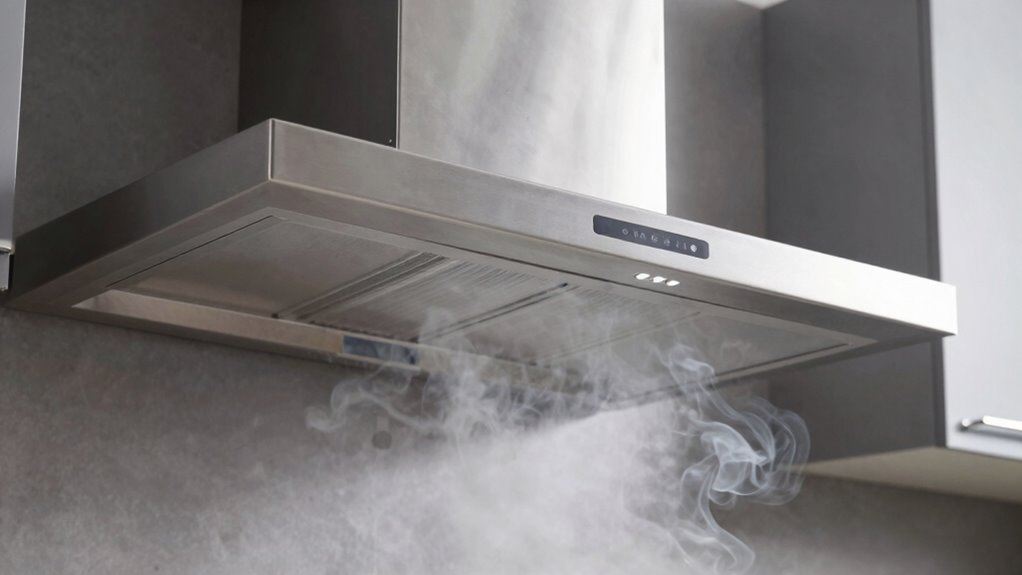
Your range hood’s power is mainly about capturing smoke, grease, and odors effectively, not just reducing noise. A higher CFM helps guarantee pollutants are removed quickly while you cook, improving air quality and preventing lingering smells. Noise levels may decrease with lower CFM, but your ventilation suffers. Matching your hood’s capacity to your cooking style and kitchen size is key. Keep going to find out how to choose the right power for your needs with confidence.
Key Takeaways
- Higher CFM ratings improve smoke and odor removal, ensuring effective capture regardless of noise levels.
- Noise levels are secondary; the focus should be on the hood’s airflow capacity to maintain air quality.
- Adequate power prevents smoke from lingering, enhancing kitchen cleanliness and comfort.
- Properly rated hoods match your cooking habits and kitchen size for optimal smoke capture.
- Effective ventilation depends on power capacity, not just noise reduction, to maintain healthy indoor air.
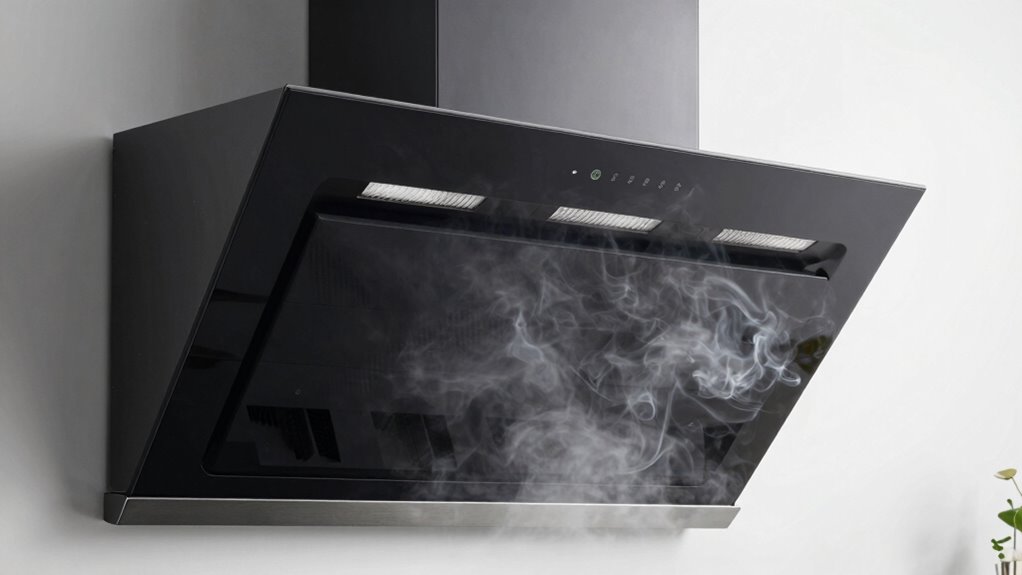
Ever wondered how much power your range hood needs to effectively clear your kitchen air? The truth is, it’s not just about noise levels or flashy features; it’s about how well your range hood captures cooking smoke and promotes air circulation. When you’re cooking, smoke, grease, and odors are released into the air. If your range hood isn’t strong enough, these pollutants linger, making your kitchen uncomfortable and potentially affecting indoor air quality. The key is choosing a hood that matches your cooking habits and kitchen size to guarantee optimal smoke removal.
Power is measured in cubic feet per minute (CFM), which indicates how much air the hood can move. If you’re cooking often, especially with heavy frying or grilling, you need a higher CFM to keep smoke and fumes under control. A lower CFM might seem quieter, but it won’t do the job of effectively capturing cooking smoke. Good air circulation is essential—it pulls in contaminated air, filters it, and exhausts it outside or recirculates it through filters. Without adequate power, your kitchen air remains stagnant, and odors settle into surfaces and fabrics. Understanding airflow is crucial for choosing the right range hood for your needs. Additionally, considering the effective airflow in relation to your kitchen’s layout can help ensure optimal performance. Proper ventilation is vital for maintaining a fresh cooking environment and reducing indoor pollutants. Ensuring that your range hood has the appropriate power capacity for your cooking style can significantly improve your kitchen’s air quality and overall comfort. Properly sized and adequately powered range hoods are essential for effective smoke and odor removal, especially in larger or more heavily used kitchens.
high CFM range hood for smoke removal
As an affiliate, we earn on qualifying purchases.
As an affiliate, we earn on qualifying purchases.
Frequently Asked Questions
How Do I Measure a Range Hood’s Smoke Capture Efficiency?
To measure a range hood’s smoke capture efficiency, you test how well it removes smoke during cooking. Follow ventilation standards to set up controlled conditions, then generate smoke and observe how much is pulled into the hood. Use airflow measurements and air filtration effectiveness to quantify performance. This process helps guarantee your range hood meets safety and air quality standards, effectively reducing airborne contaminants and improving your kitchen’s air quality.
What Is the Ideal CFM for My Kitchen Size?
For your kitchen size, an ideal CFM depends on your cooking styles and kitchen layout. If you do a lot of high-heat cooking or frying, aim for at least 300-600 CFM for better smoke capture. In open or larger kitchens, go higher to guarantee proper ventilation. Consider your specific setup, and choose a range hood that matches your cooking habits and space to effectively remove smoke and odors.
Does Higher Noise Level Mean Better Smoke Removal?
Think of noise levels as the volume knob on a busy street—louder doesn’t always mean clearer. Higher noise levels don’t necessarily boost smoke removal; instead, focus on the hood’s CFM and design. A quieter fan with good airflow can be just as effective. So, don’t be swayed by noise alone—prioritize smoke removal efficiency to keep your kitchen fresh.
How Often Should I Clean or Replace Range Hood Filters?
You should clean your range hood filters every 1 to 3 months to maintain ideal filter maintenance and odor control. If you notice grease buildup or lingering smells, replace them sooner. Regular cleaning prevents grease fires and keeps your kitchen smelling fresh. For metal filters, hand wash or run them through the dishwasher. Charcoal filters, used for odor control, generally need replacing every 6 to 12 months for effective performance.
Are More Powerful Hoods Louder or Quieter?
More powerful hoods are generally louder because increased ventilation design involves higher fan speeds, which produce more noise. However, modern kitchen decor often features sleek, quieter models with advanced insulation. Investigating this, you’ll find that manufacturers balance power and noise, so look for hoods with noise reduction features. Ultimately, a well-designed ventilation system enhances your kitchen decor while minimizing sound, making your cooking experience more comfortable.
Conclusion
Remember, a range hood’s true power lies in its ability to capture smoke, not just silence noise. Focus on its airflow capacity and filtration efficiency to keep your kitchen clean and healthy. As the saying goes, “Don’t judge a book by its cover,” so don’t be fooled by a quiet hood alone—look for one that genuinely performs. Choosing wisely guarantees your kitchen stays fresh, proving that substance often beats style.